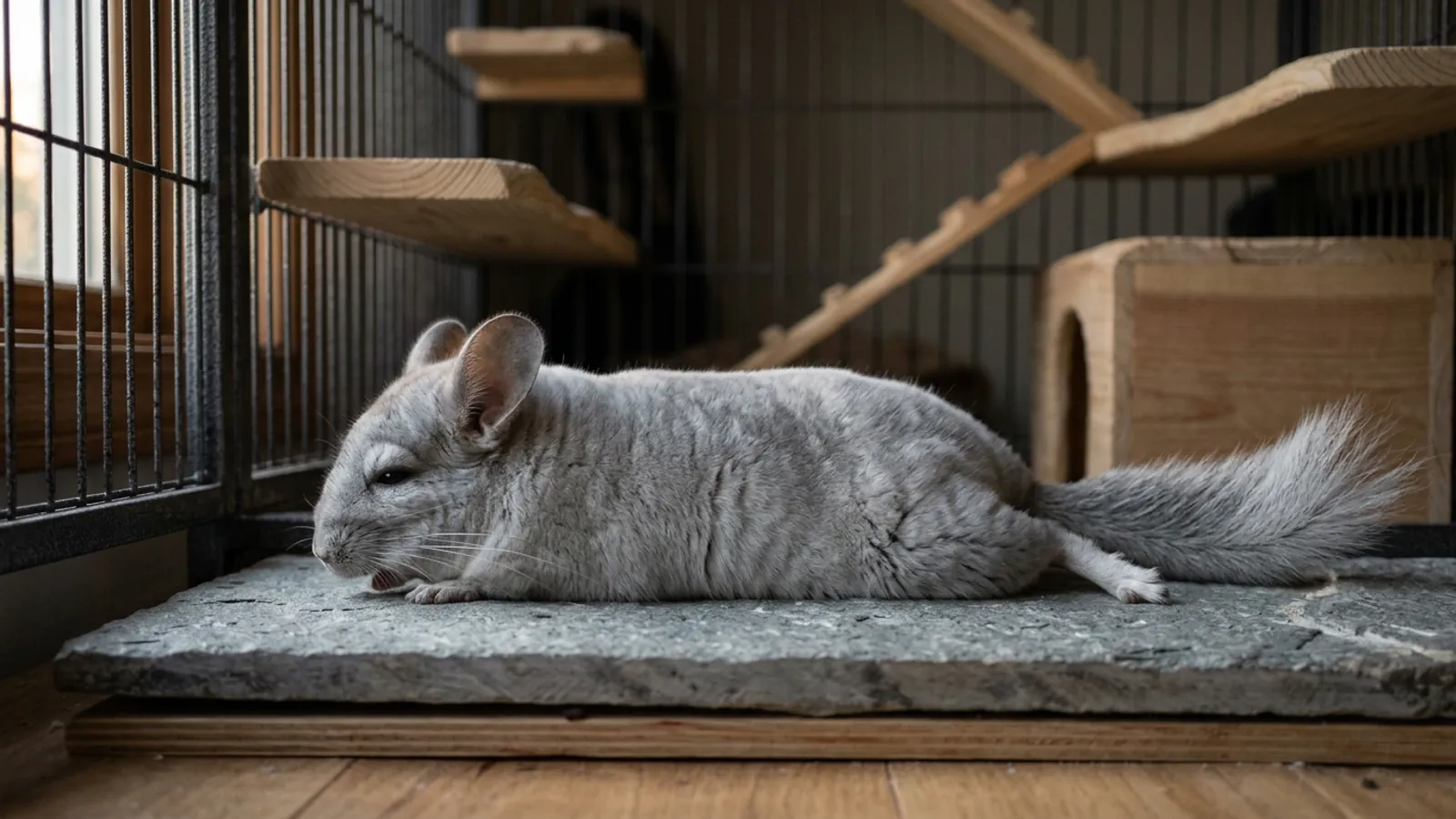
Heat is the fastest killer in chinchilla care, and I learned it the hard way. Pebble, my first chinchilla, came out of a rehome in an overheated attic, and Pebble's first summer with me nearly ended in a heatwave: a night at the emergency vet I still replay every time the thermometer climbs. A room that feels merely warm to you can push a chinchilla into heat stroke in a single afternoon, and by the time one looks obviously sick, you are already in an emergency. This guide covers the warning signs in order, what to do the moment you see them, and how to make sure you never see them at all.
Why chinchillas overheat so easily
Chinchillas evolved high in the Andes, where nights are cold and even summer days stay cool. Their answer to that climate is the densest fur of any land mammal: dozens of hairs grow from a single follicle, forming a coat so thick that fleas cannot live in it. Wonderful at 50°F, dangerous at 80°F.
They also have almost no way to dump heat. Chinchillas do not sweat, and panting does little for them. The main heat outlet is the thin skin of their large ears, where blood runs close to the surface. When the air itself is warm, that outlet stops working.
The practical numbers:
- Comfortable: 60 to 70°F (15 to 21°C)
- Risky: above 75°F (24°C)
- Emergency territory: 80°F (27°C) and up, faster in humid air
Humidity matters as much as the thermometer. A muggy 72°F room can be more dangerous than a dry 78°F one, because damp air traps even more heat inside that coat. If you want the combined number for your own room, the chinchilla heat danger calculator does the sum, and the rest of my heat safety guides build on it.
The warning signs, early to late
Learn these in order. The early ones are your window to act.
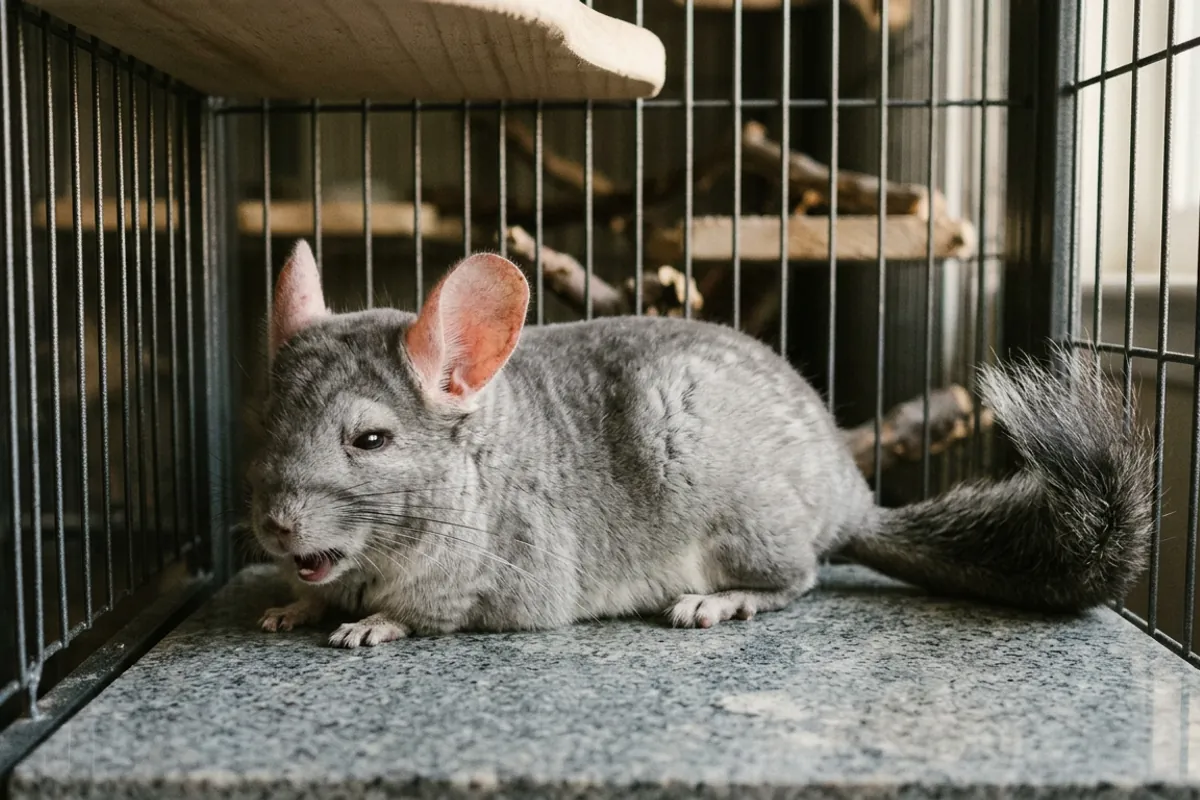
- Bright red or flushed ears. The ears are dumping heat as hard as they can. This is the earliest visible sign.
- Lying stretched out and unwilling to move. A chinchilla flattened on its side or belly, ignoring things it normally investigates, is trying to shed heat through the floor.
- Fast, shallow breathing. Sometimes with the mouth slightly open.
- Drooling or a wet chin.
- Staggering, limpness, or seizures. These are late signs. At this stage, minutes matter.
What to do right now
The summer Pebble nearly overheated, this is the order I moved in, and the order matters.
- Move the chinchilla to the coolest room in the house. Basement, tiled bathroom, the room with the air conditioner.
- Cool the ears and paws with cool (not ice-cold) water. A damp cloth works. Never dunk a chinchilla in cold water; the shock can kill an animal that was surviving the heat.
- Offer a cool surface. A ceramic tile or a granite slab lets the animal dump heat through its belly.
- Offer cool drinking water, but do not force it.
- Call an exotics vet, even if your chin seems to recover. Heat stroke can damage organs in ways that only show up over the following days.
Prevention beats every rescue
- Air conditioning is care equipment, not a luxury. Fans do not cool a chinchilla, because there is no sweat to evaporate; a fan just moves warm air past an animal that cannot use it.
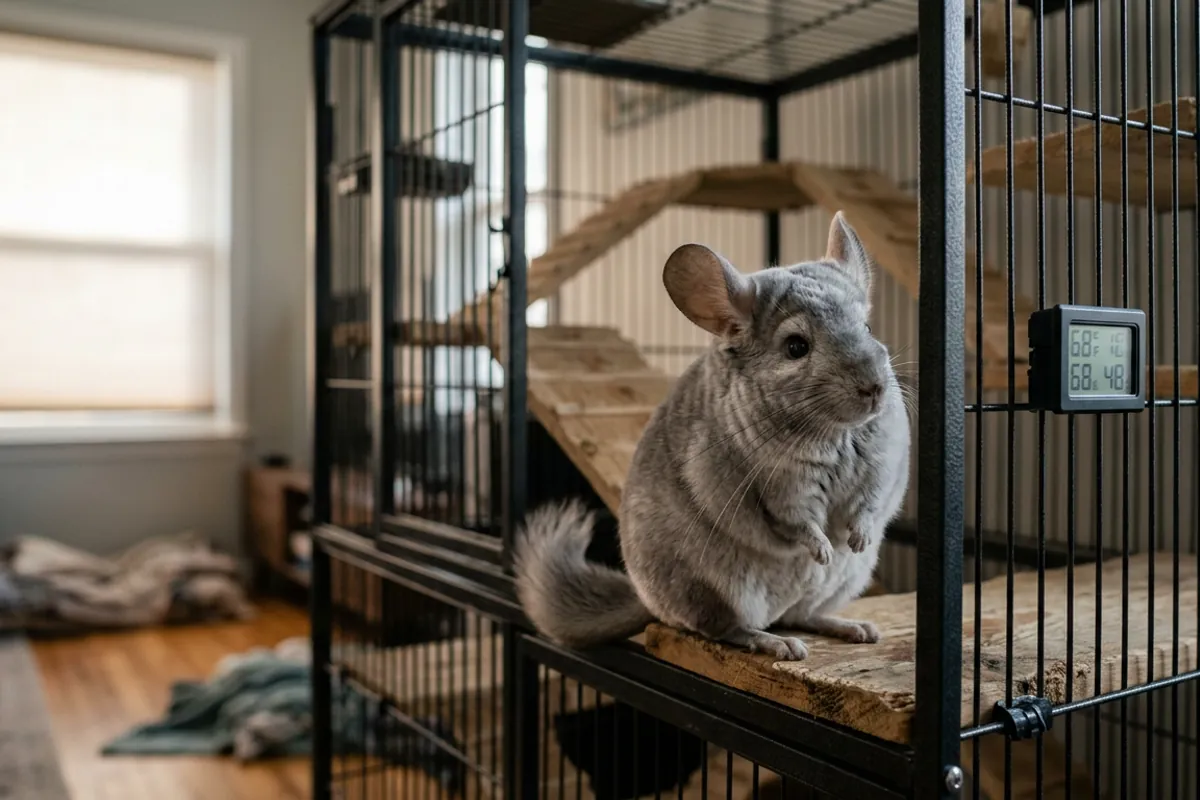
- Put a thermometer at cage height and check the daily maximum, not just the temperature when you happen to walk by. Cages near windows or upper floors run warmer than the hallway thermostat admits.
- Give them a cooling slab. A granite or marble tile in the cage is cheap and chinchillas use it on their own.
- Never place the cage in direct sunlight, and think twice about summer car trips without air conditioning running the whole way.
The rule that keeps chinchillas alive is simple: if you are warm, your chinchilla is already too warm. Pebble taught me to check the thermometer before anything else, and I still do.