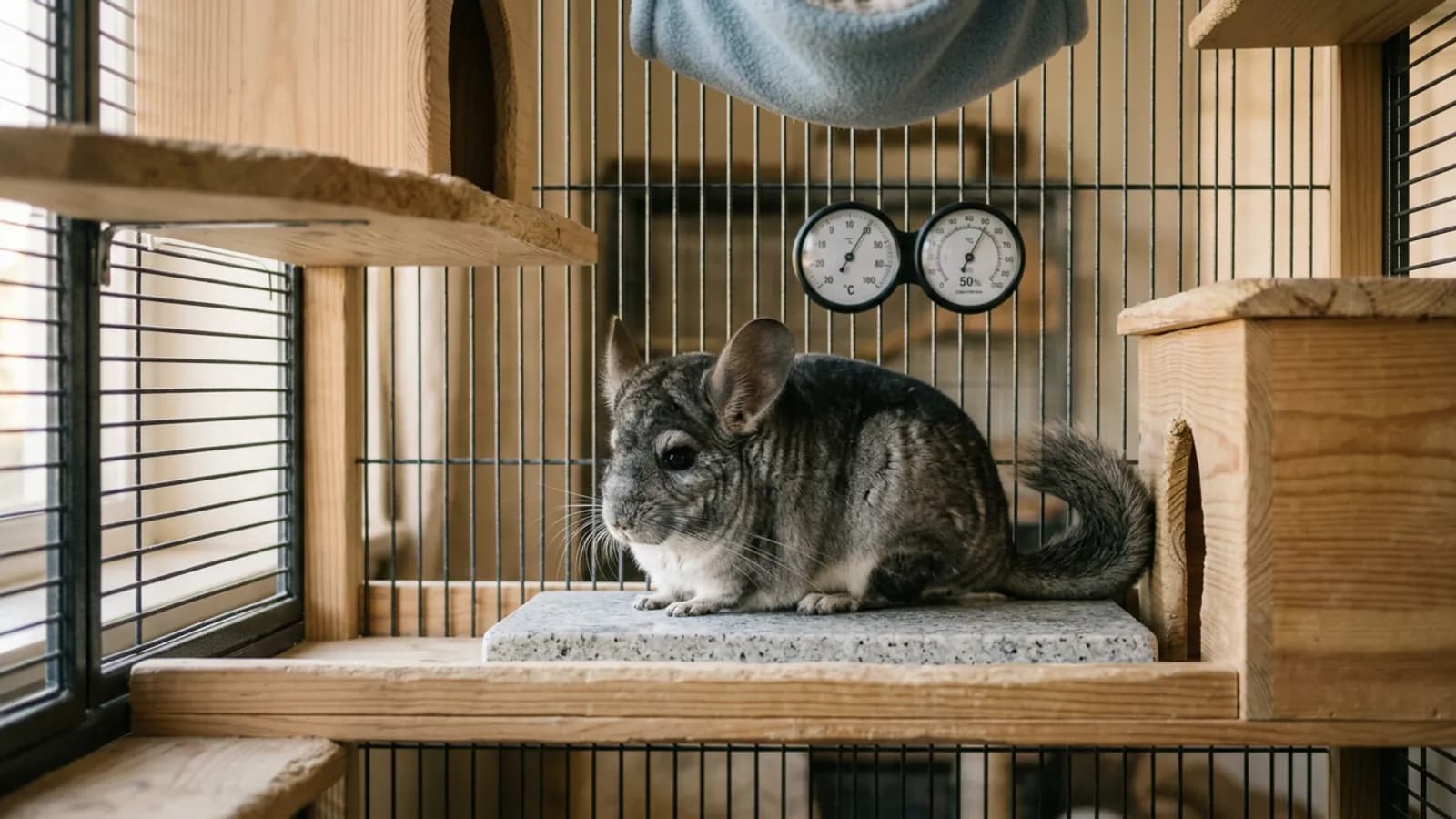
The single number I care most about in this whole hobby is chinchilla temperature. Not fur color, not cage brand, not the cute name someone picked. Temperature. A chinchilla wears the densest fur of almost any land mammal, packed so tight that a flea cannot move through it, and that coat was built for the cold, dry heights of the Andes. It is a superb blanket and a terrible radiator. What keeps a chinchilla warm on a freezing mountain is exactly what gets it killed in a warm living room, because the animal cannot shed heat the way a dog or a person can. Pebble taught me this the hard way in her first summer, and I have been relentless about it ever since. If you take one thing from this site, take the numbers below and treat them as law.
The range that keeps a chinchilla alive
A chinchilla is comfortable between 60 and 70°F, which is 15 to 21°C. That is the band I aim to hold in the room where my chinchillas live, all day, every day, not just when I happen to be home. It is not a suggestion or a preference. It is the window their body is designed for.
Above 75°F, or 24°C, you are in risky territory and the animal is already working harder to stay cool than it should. At 80°F, or 27°C, and up, you are in an emergency, and heatstroke can set in fast. Those upper numbers get worse, and arrive sooner, when the air is humid, because a chinchilla offloads a little heat through its ears and its breath, and damp air blunts even that small margin. I treat 80°F in a humid room as more dangerous than 80°F in a bone-dry one, and I do not gamble on the difference.
Notice how narrow the safe band is. There is only about ten degrees between comfortable and risky, and only a few more before emergency. That is why I do not eyeball it. A room that "feels fine" to me in a t-shirt can be sitting at 78°F, and my comfort tells me nothing about a chinchilla's. If you want to see how quickly the risk climbs as heat and humidity stack, the chinchilla heat danger calculator does that math for you.
Why the fur is the whole problem
People assume a chinchilla, being small and furry, is basically a hardy little rodent. The fur is the point, and it works against you in heat. A single follicle grows fifty or more hairs where a person grows one. That density is why chinchillas cannot get wet and dry normally, and it is why they bathe in dust rather than water. It is also why they overheat in conditions that would not bother a cat.
A chinchilla has no efficient way to dump heat. It does not sweat across its body. It does not pant well. It cannot lick itself cool to any meaningful degree. What it has are those large, thin, well-vascularized ears, which act as its main radiator, and its breathing. That is a small toolkit for a big problem. When the surrounding air gets close to the animal's own body temperature, the ears stop being able to give heat away, and the chinchilla has essentially run out of options. Understanding this one fact, that the coat traps heat and the body can barely release it, is what makes every rule that follows make sense. If you want the fuller picture of how a chinchilla's biology drives its care, I wrote about that in what a chinchilla really is.
How to read the danger on the animal itself
A thermometer tells you the room. The chinchilla tells you the emergency, and by then you are already behind, so learn the signs anyway.
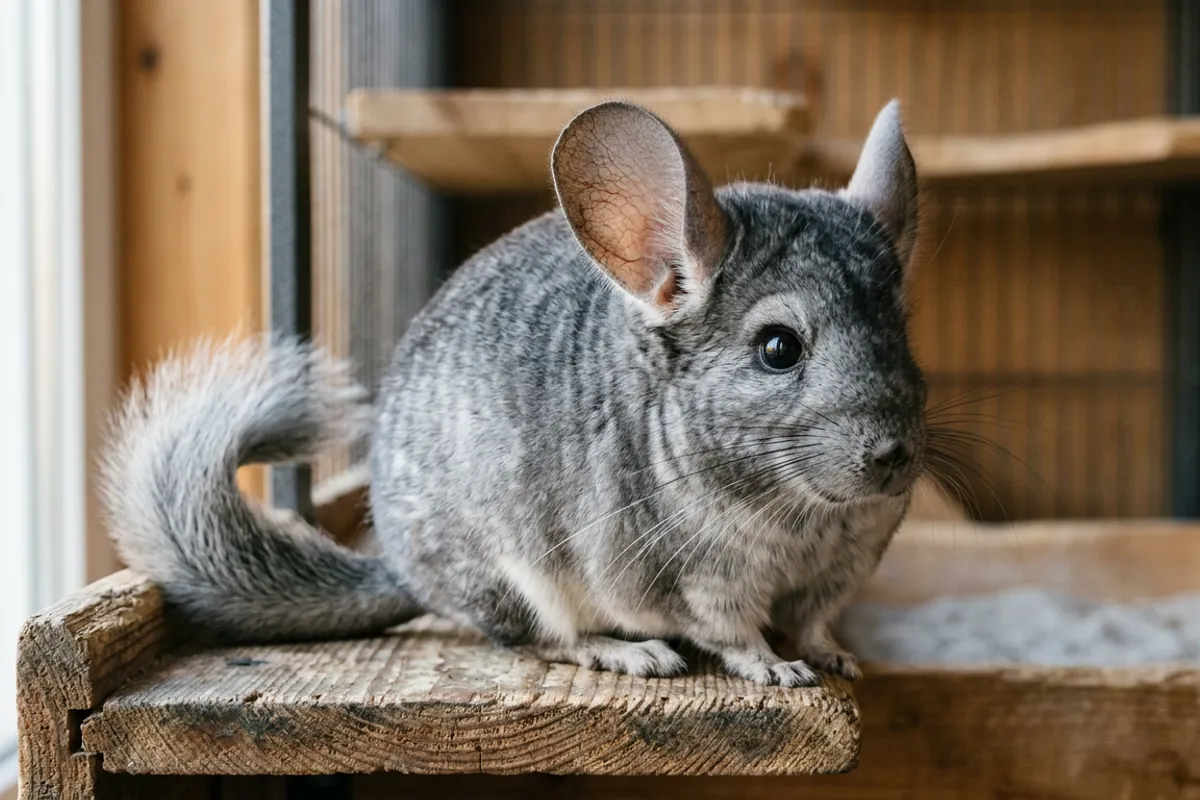
The ears are your early warning. Cool, pale ears are normal. Ears that have gone bright red or deep pink, and feel hot to a light touch, mean the animal is dumping heat as hard as it can. That is your cue to act, not to wait and see. Beyond that, watch for a chinchilla lying stretched flat out on its side or belly, limbs splayed, trying to press as much surface as possible against a cool floor. A resting chinchilla is usually tucked into a loaf. A pancaked, listless one in warm conditions is a chinchilla trying to survive.
Then come the true emergencies: drooling or a wet chin, fast or labored breathing, obvious weakness or wobbling, unresponsiveness. Those are late signs. A chinchilla with a wet chin or a soaked look in the heat is not having a minor moment. Heatstroke can kill within hours once it takes hold, and organ damage can continue even after the animal looks like it has cooled off. I keep a proper list of the warning signs where I can see it, and I would rather you overreact to a red ear than talk yourself out of a real one. There is a fuller breakdown in my guide to chinchilla heat stroke warning signs.
Building a genuinely cool chinchilla cage
The phrase "cool chinchilla cage" gets thrown around like it means a stylish one. I mean it literally: a cage placed and built so the air around the animal stays in that 60 to 70°F band. The cage itself matters less than where you put it, but both count.
Start with location. Keep the cage out of direct sunlight, always, at every hour, because a sunbeam that is harmless at nine in the morning can turn a corner into an oven by two in the afternoon. Keep it away from radiators, heating vents, kitchens, and any electronics that throw off heat. Avoid the top floor of a house in summer, since heat rises and an upstairs room can run several degrees hotter than the one below it. An interior room, or the coolest room you have, beats a bright pretty one every time.
Now the cage material, because it plays into heat too. A chinchilla cage should be tall, made of metal and wood, with wooden ledges, and no plastic tubs or plastic hideouts, which trap heat and hold it against the animal. A well-built metal and wood cage with open bar sides lets air move through it instead of sealing warmth in. Critter Nation double unit small animal cage As an Amazon Associate I earn from qualifying purchases. Good airflow is free cooling. A plastic-walled setup is a box that fights you. If you are still choosing hardware, I go through the whole decision in my guide to setting up a chinchilla cage the right way.
One more thing on cool chinchilla cages: do not crowd them into a stuffy closet in the name of keeping them out of the sun. Still, warm, humid air is its own hazard. You want cool and moving, not cool and trapped.
The tools I actually trust, and the one number to measure
You cannot manage what you do not measure, so the first tool is not a cooling gadget at all. It is a thermometer and a humidity gauge, mounted at cage height, in the room, not out in a hallway. digital thermometer and humidity gauge with remote probes As an Amazon Associate I earn from qualifying purchases. Buy one that shows both temperature and humidity, because in a chinchilla's world those two numbers travel together, and a model that logs the day's high tells you what happened while you were at work. That reading is the whole game. Everything else is a response to what it says.
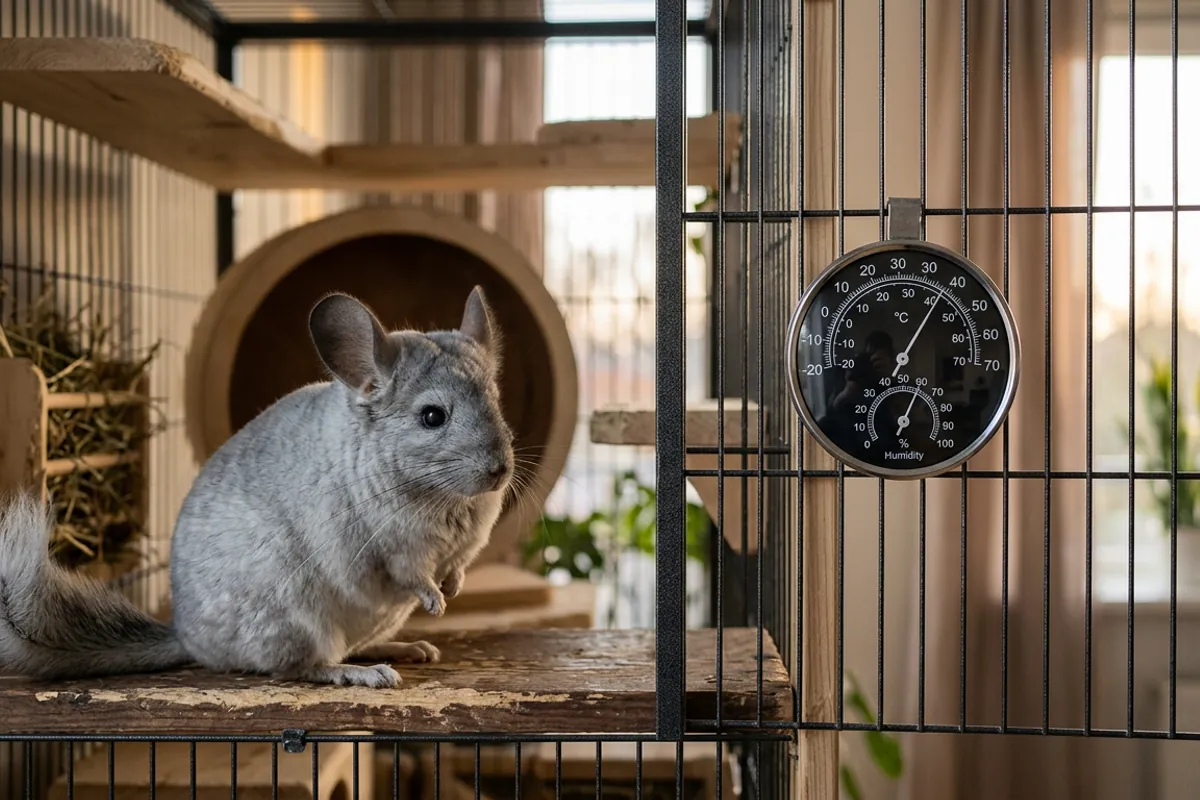
For active cooling, the honest hierarchy goes like this. The best cooling for a chinchilla is a properly cooled room, full stop. Air conditioning that holds the room in range is the gold standard, and nothing on a shelf replaces it. If a room simply cannot hold the range, that room is not a chinchilla room in summer, and no accessory changes that.
Below whole-room cooling, there are aids that buy comfort and a little margin. A chilled solid stone gives the animal a cool surface to lie against and pull heat into. Kaytee Chinchilla Chiller granite stone As an Amazon Associate I earn from qualifying purchases. I keep a couple in the freezer and rotate them, because a stone that has warmed to room temperature is just a rock. Granite or marble offcuts work on the same principle if you have them. These help; they do not substitute for a room in range. I have also frozen a water bottle, wrapped it in a towel so the coat never touches condensation, and set it where a chinchilla can choose to lean against it or move away. The key word is choose. The animal must always be able to leave the cool spot, never be forced onto it.
What does not belong anywhere near heat management: a wet chinchilla. You never cool a chinchilla by wetting its fur. That coat holds water against the skin, will not dry, and you can turn a heat problem into a chilled, sick, fungus-prone animal on top of it. Cooling is about the air and the surfaces, never the coat.
Humidity, airflow, and the traps people fall into
Temperature is the headline, but humidity is the co-conspirator. Because a chinchilla loses a sliver of heat through moisture in its breath, damp air makes every degree feel and act hotter to the animal. I aim to keep humidity comfortable and on the lower side, and I watch the combined reading rather than the temperature alone. This is the same reason a dust bath, and never a water bath, is the only right way to keep the coat clean: a chinchilla and standing moisture do not mix, in the bath or in the air. If you are new to that, the dust bath done right covers it.
A few traps I see over and over. The first is trusting a fan the way you would trust it for yourself. A fan cools a person by evaporating sweat, and a chinchilla does not sweat, so a fan blowing on the cage does far less than you think and can dry the animal's eyes and stress it. Moving air in the room to prevent a stuffy pocket is fine; a fan aimed at the animal as your cooling plan is not.
The second trap is the daily temperature swing. A room that is a perfect 68°F at breakfast can climb into the danger zone by mid-afternoon while the house is empty, then settle back down before you get home, so you never see the peak that put your animal at risk. This is exactly what the max reading on a good gauge catches, and it is why I insisted on one that remembers the high.
The third trap is a heatwave you did not plan for. Pebble came to me out of an overheated attic, and her first summer here still brought a heat spike that ended in a night at the emergency vet. That scare is the reason this whole part of the site exists. Have a plan before the hot week arrives, not during it: know your coolest room, have your stones frozen, and know the road to an exotics vet who sees chinchillas.
When cooling is no longer your job
There is a line, and past it this stops being a husbandry problem and becomes a medical one. If a chinchilla is drooling, breathing fast or with effort, lying limp, unsteady, or unresponsive, you are past the point where a cool stone fixes anything. Begin gentle cooling on the way, do not plunge the animal into water, and get to an exotics vet immediately. I am an experienced keeper, not a vet, and heatstroke is precisely the kind of thing where that distinction matters: the internal damage can keep going after the surface looks better, and only a vet can assess and treat that.
Move the animal to the coolest spot you have. Offer a cool surface it can lie against. You can lightly dampen the ears, and only the ears, since they are the radiator, but never soak the coat. Then get real medical help. Do not wait to see if it passes. With chinchillas and heat, waiting is the mistake that becomes a loss.
I would rather you finish this article slightly scared of summer than comfortable with it. The good news is that this is one of the most controllable risks in chinchilla keeping. You cannot change the fur, but you own the thermostat. Hold the room between 60 and 70°F, measure it honestly, keep the coat dry, give the animal cool surfaces it can choose, and know your vet's number before you need it. Do that, and the scariest thing about keeping a chinchilla becomes the one thing you have completely handled.