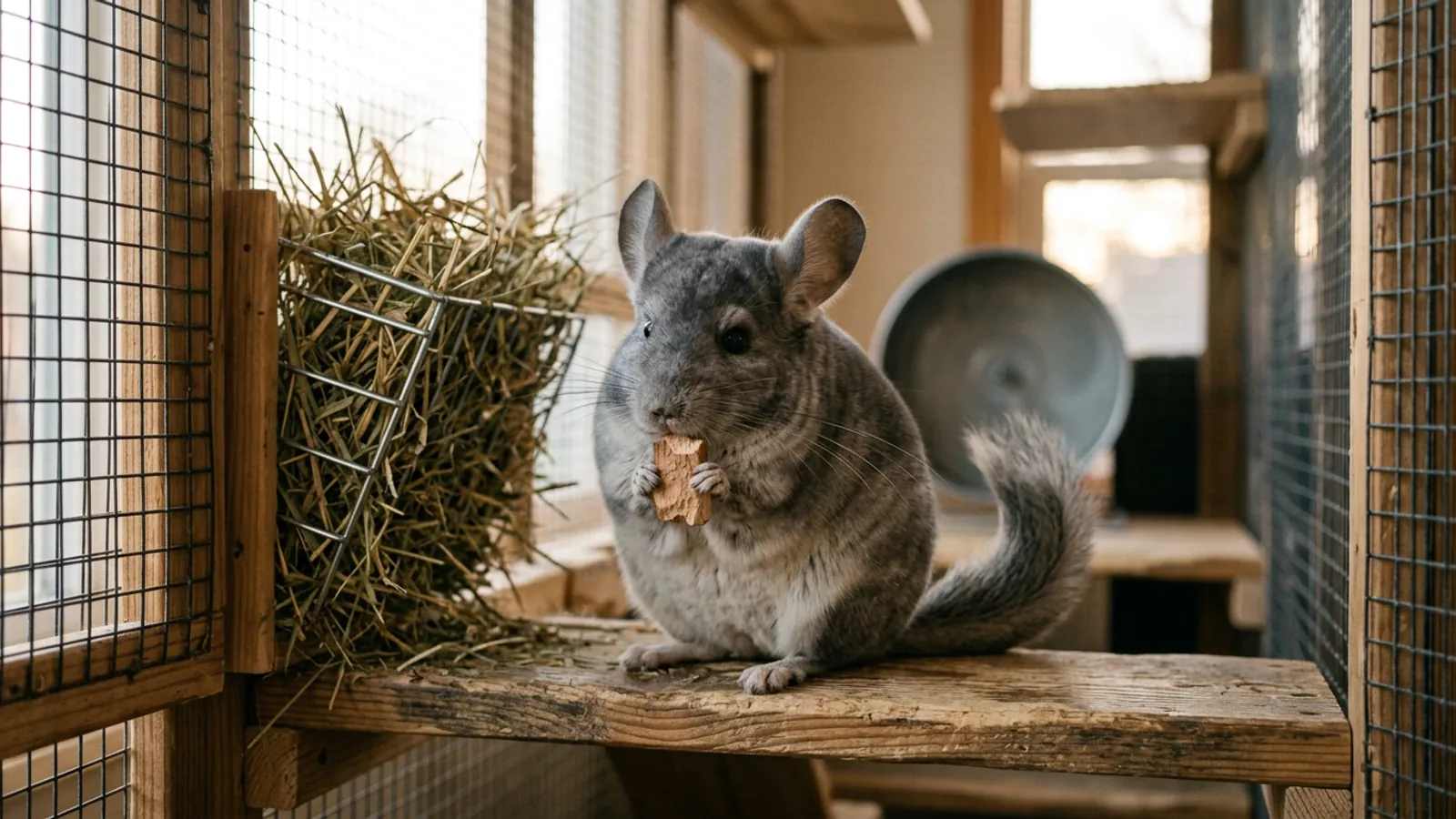
Ten years in, I still get two completely different questions that both start with the phrase chinchilla wet. One is from someone who let their chinchilla out and it got splashed, or who read somewhere that a bath means water, and now the animal is soaked and shivering. The other is from someone who has noticed the fur under their chinchilla's chin is damp, matted, stained, and they cannot work out why. These are not the same problem, and this article is mostly about the second one, because a wet chin on a chinchilla is almost never about water. It is a tooth problem wearing a disguise, and by the time you can see it, the animal has usually been hurting for a while. I learned that reading Juniper, a rescue whose dental disease I manage every single day. So I will cover the water version first, quickly and plainly, and then spend the rest of this on the wet chin that should send you looking at teeth.
A chinchilla should never be wet with water at all
Start from the fur, because the fur is the whole reason. A chinchilla's coat is absurdly dense. Where a dog or a cat grows one or a few hairs from a single follicle, a chinchilla grows dozens, something on the order of fifty or more hairs from one point in the skin. That density is what makes the coat feel like nothing else you have touched, and it is also what makes water a genuine danger. Get that coat wet to the skin and it does not dry the way an ordinary animal's does. Water gets trapped down against the skin, held there by the sheer number of hairs, and it stays. A wet chinchilla can stay damp for a long time, and damp warm skin under a dense mat is exactly where fungus takes hold. Chinchillas also chill fast when wet, because that trapped water pulls heat straight out of them.
This is why the bath is dust and only dust. When I say a chinchilla bathes, I mean it rolls in fine volcanic pumice powder that lifts oil and moisture out of the coat mechanically. If you have never seen how that works, I wrote it up in the chinchilla dust bath, done right from dust to schedule. A proper dust and a shallow bath house sorts the whole thing out.
Lixit Blue Beauty chinchilla dust, 3 lb As an Amazon Associate I earn from qualifying purchases.
You do not shampoo them, you do not rinse them, you do not "just this once" put them under a tap. If your chinchilla does end up genuinely wet, skip to the section near the end on drying one out, because that is a small emergency in its own right. But most people who search chinchilla wet are not looking at a soaked animal. They are looking at a chin that is wet on its own, and that is the part that matters more.
The wet chin is a symptom, and it has a name
Keepers call it slobbers. The technical picture is drooling, and it shows up as damp, matted fur running down the chin and often onto the chest and the inside of the front legs, where the chinchilla wipes its face with its paws. The fur there looks stained and stuck together, sometimes crusted, sometimes so wet you can see it glisten. Because the coat holds moisture so well, once the chin starts getting wet from saliva it stays wet, and the matting builds up day over day.
A chinchilla drools for one core reason: it cannot manage its own mouth normally, so saliva that should be swallowed spills out instead. In practice that almost always traces back to the teeth. When I first got Juniper, the wet, rusty-looking fur under her chin was the thing that told me, before any vet did, that her mouth was in trouble. I have watched that same sign appear in enough animals to treat a wet chin as a teeth problem until an exotics vet proves otherwise, not the reverse.
So if you have arrived here because your chinchilla's chin is wet and you were hoping it was a grooming or a bath issue, I am going to be blunt in the way that keeps animals alive: it is probably not. Damp chin fur that keeps coming back is one of the clearest outward signals of dental disease a chinchilla gives you, and dental disease does not fix itself.
Why teeth are behind almost every wet chin
Here is the biology that makes chinchillas different from a dog or a cat, and it is the single most important thing to understand about their health. A chinchilla's teeth never stop growing. Not the front teeth you can see, and not the cheek teeth grinding away out of sight at the back. They grow continuously for the animal's whole life, and the only thing that keeps them the right length and shape is constant wear from chewing the right food. This is exactly why I am uncompromising about diet, and why the biology sets the care rule rather than the other way around. There is more on the mechanism in chinchilla teeth and health and in chinchilla teeth problems, spotting malocclusion before it turns serious.
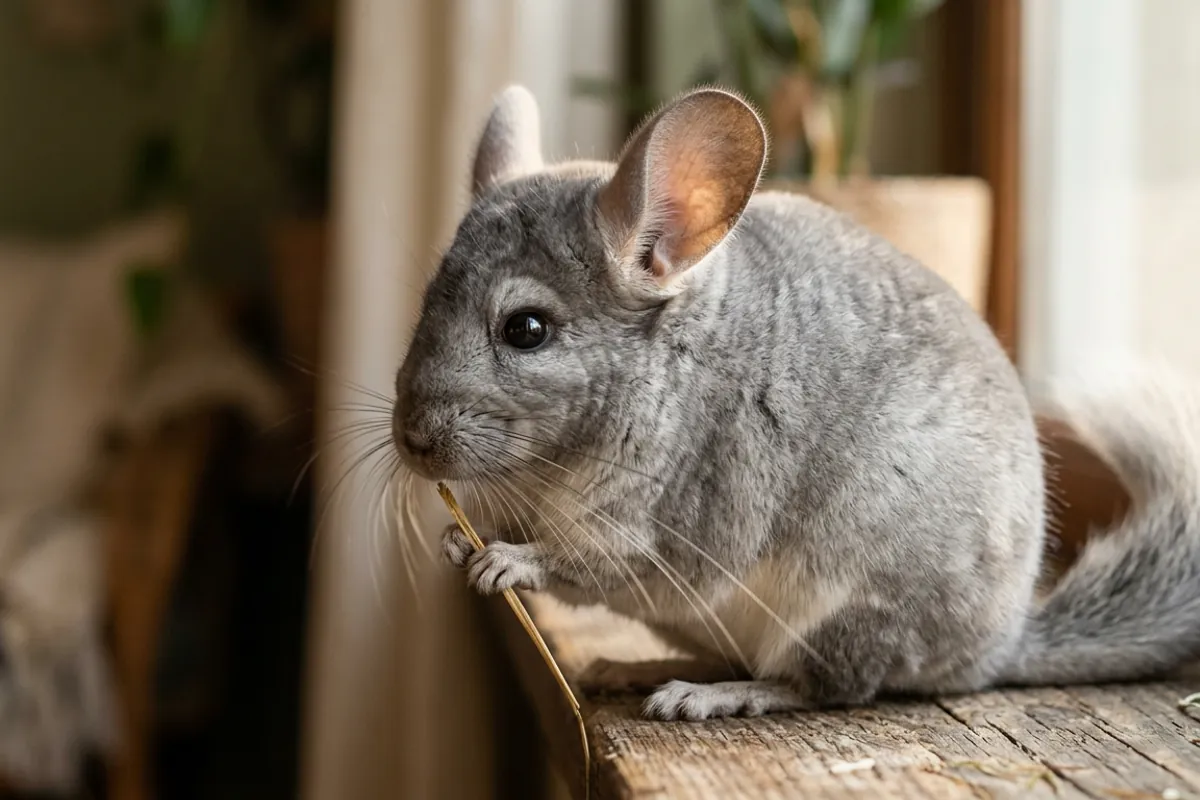
When the wear does not keep up with the growth, the teeth go wrong. The word for it is malocclusion, which just means the teeth no longer meet and grind correctly. The front teeth can overgrow and curve. The cheek teeth can grow into points, called spurs, that dig into the tongue or the cheek and cut the soft tissue. Sometimes the roots grow the wrong way and push where they should not, including up toward the eye sockets, which is why some dental chinchillas also get a watery, weepy eye, another kind of wet that points at the same underlying problem. All of this hurts, and a mouth that hurts cannot close and swallow normally. That is the drool. That is the wet chin.
So the chin is downstream. The chin gets wet because the mouth stopped working, and the mouth stopped working because the teeth overgrew, and the teeth overgrew because something in the wear-and-tear balance failed. Following that chain backward is how you help the animal instead of just wiping its face.
What else shows up alongside the wet chin
Slobbers rarely travels alone, and the other signs matter because they tell you how far along things are. Watch for a chinchilla that goes to the hay, seems interested, picks food up, and then drops it, or that eats pellets but leaves the long strands of hay because chewing them hurts. Watch the droppings: fewer, smaller, drier droppings mean less is going through, and a chinchilla's gut is not built to sit idle. Weight loss is a big one, and it hides under all that fur, so I go by feel along the spine and hips rather than by looking. You may hear teeth grinding done in obvious discomfort rather than the soft contented tooth-purr, and you may see the animal paw at its mouth or sit hunched.
None of these is subtle once you know to look, but all of them are easy to miss for weeks if you are not looking, because chinchillas are prey animals and they hide illness hard. A chinchilla that has started drooling has usually been compensating in silence for some time. That is the part that catches people out, and it is why a wet chin is not a "keep an eye on it" sign. It is a "start acting now" sign.
What you can safely do at home, and what you cannot
Let me draw the line cleanly, because this is where good intentions do harm. What you can do at home is observe carefully and. You can note when the wet chin started and whether it is getting worse. You can weigh the animal, ideally on a small kitchen scale, and track it, because a downward trend is real evidence a vet will want. You can check that the front teeth, the ones you can see by gently lifting the lip, look even and are a normal healthy orange-yellow rather than pale, without forcing the mouth open. You can make sure hay is unlimited and fresh and that the animal has proper hard chews available.
What you cannot do at home is treat the actual problem. You cannot see the cheek teeth without the tools a vet has, and those back teeth are where most malocclusion lives. You must never file, clip, or cut a chinchilla's teeth yourself, and you must never let anyone without exotics training do it either. Clipping overgrown incisors with a nail tool can shatter the tooth lengthwise and open the pulp to infection, and it does nothing for the cheek teeth that are usually the real culprit. Trimming or filing overgrown teeth is a veterinary procedure, often done under sedation or anesthesia so it can be done accurately and safely, and it belongs with an exotics vet who does it properly.
You also cannot fix an established dental problem with diet alone. Good diet prevents malocclusion and supports an animal being managed for it, but once the teeth have gone wrong, hay does not un-grow a spur. Do not let anyone, including a well-meaning forum, talk you into "just give it more hay and wait." Wait is the one thing a drooling chinchilla does not have room for.
When it is a vet visit, and it is a vet visit
A wet chin is the line. When I see fresh drool matting on a chinchilla, that animal goes to an exotics vet, not a general small-animal clinic that mostly sees dogs and cats. Ask specifically whether the practice treats chinchillas or exotics, because dental work on a mouth this small and specialized is not general-practice territory. Say clearly on the phone that you are seeing drooling and possible dental disease so they book the right length of appointment and the right person.
Expect the vet to want a proper look at the cheek teeth, which usually means sedation, and often to want imaging, because a lot of what goes wrong with chinchilla teeth is happening at the roots below the gumline where even a good oral exam cannot see it. That imaging is not the vet padding the bill. Root elongation is common in dental chinchillas and it changes the whole picture of what treatment will look like and whether the problem is a one-time trim or something you will manage for the rest of the animal's life, as I do with Juniper.
Go sooner rather than later. A chinchilla that has stopped eating properly can slide into gut stasis fast, and a drooling animal that is also off its food is closer to an emergency than a routine appointment. If the chin is wet and the animal is also not eating and not passing normal droppings, treat it as urgent and get seen the same day if you can. Keeping a real vet fund is part of owning this animal and I broke down why in what a chinchilla really costs, from the price tag to the vet fund.
Keeping the chin dry: wear the teeth down for life
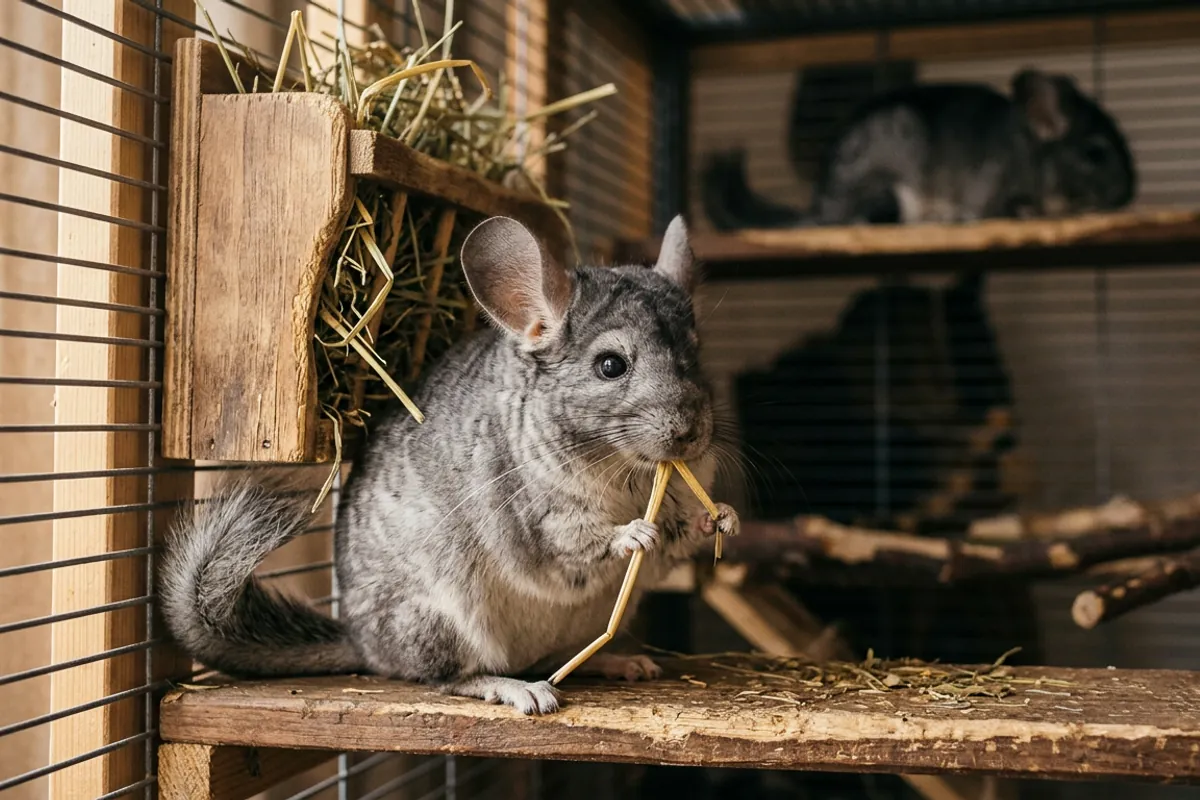
Almost everything you do to prevent a wet chin comes down to keeping those constantly growing teeth worn to the right length, and that is a daily job, not a one-off. The single most important thing is hay. Grass hay, mostly timothy, available all the time and never running out, is not a snack for a chinchilla. It is the main food, and the long fibrous strands are what the cheek teeth grind against side to side. That grinding is the wear. A chinchilla eating enough good hay is filing its own teeth every day, which is exactly what nature built the system to do. I keep it coming in bulk so it is always fresh and there is never a gap.
Oxbow Western Timothy Hay, 9 lb box As an Amazon Associate I earn from qualifying purchases.
A hay feeder that keeps it clean and accessible earns its place too.
Oxbow Western Timothy Hay, 40 oz bag As an Amazon Associate I earn from qualifying purchases.
Pellets are a supplement, a small measured amount of plain pellets on top of unlimited hay, never the bulk of the diet, because a chinchilla that fills up on soft pellets eats less hay and wears its teeth less. That is the logic of hay-first, and I lay out the rest in chinchilla diet, food, and hay and what can a chinchilla eat, and what should you never feed it.
After hay comes chew variety. Chinchillas need hard safe things to gnaw, and different shapes and hardnesses wear the teeth in different ways, which is why I push variety rather than one type. Untreated apple wood and other safe woods give them real work for the incisors.
emours apple wood chew sticks, 40 count As an Amazon Associate I earn from qualifying purchases.
Skip anything plastic, anything painted or treated, and anything soft enough to just squash. Those give a chinchilla nothing to grind against and some of them are dangerous swallowed. The point of a chew is resistance, so the tooth meets something hard enough to wear.
None of this guarantees a chinchilla never develops dental disease. Some animals, Juniper among them, come to you with damage already done or with a jaw that was always going to struggle, and no diet undoes that. What hay-first, chew-variety, water-never care does is stack the odds hard in the animal's favor and give you the best shot at a mouth that stays healthy for the long life a chinchilla can have. And it means that on the day you do see a wet chin, you can be confident it is a signal worth acting on, not something you caused, and you already know where it is pointing: at the teeth, and at the phone number of a vet who knows this animal.
If your chinchilla does get wet with water
Back to the other meaning, briefly, because it does happen. If a chinchilla gets wet, from a spill, a splash, an escape into somewhere it should not have been, treat it as real. Get the animal somewhere warm and draft-free and gently towel off as much water as you can, pressing the towel into that dense coat rather than rubbing, because rubbing tangles it. Do not use a hairdryer on hot; the coat can hold heat against the skin and a chinchilla overheats dangerously fast, and heat is the one risk I never soften. A warm room and time is safer than forced heat. Once the coat is dry to the touch, a normal dust bath helps finish lifting moisture and resets the fur.
Watch a previously wet chinchilla for the next while for shivering, lethargy, or any skin that looks red, flaky, or is losing fur in patches, which can mean a fungal infection has taken hold in the damp coat. Any of that, or an animal that seems unwell after a soaking, is a call to your exotics vet. The coat that makes a chinchilla so soft is the same coat that makes water a hazard, which is the whole reason the bath is dust and the answer to chinchilla wet is, almost always, keep it dry.