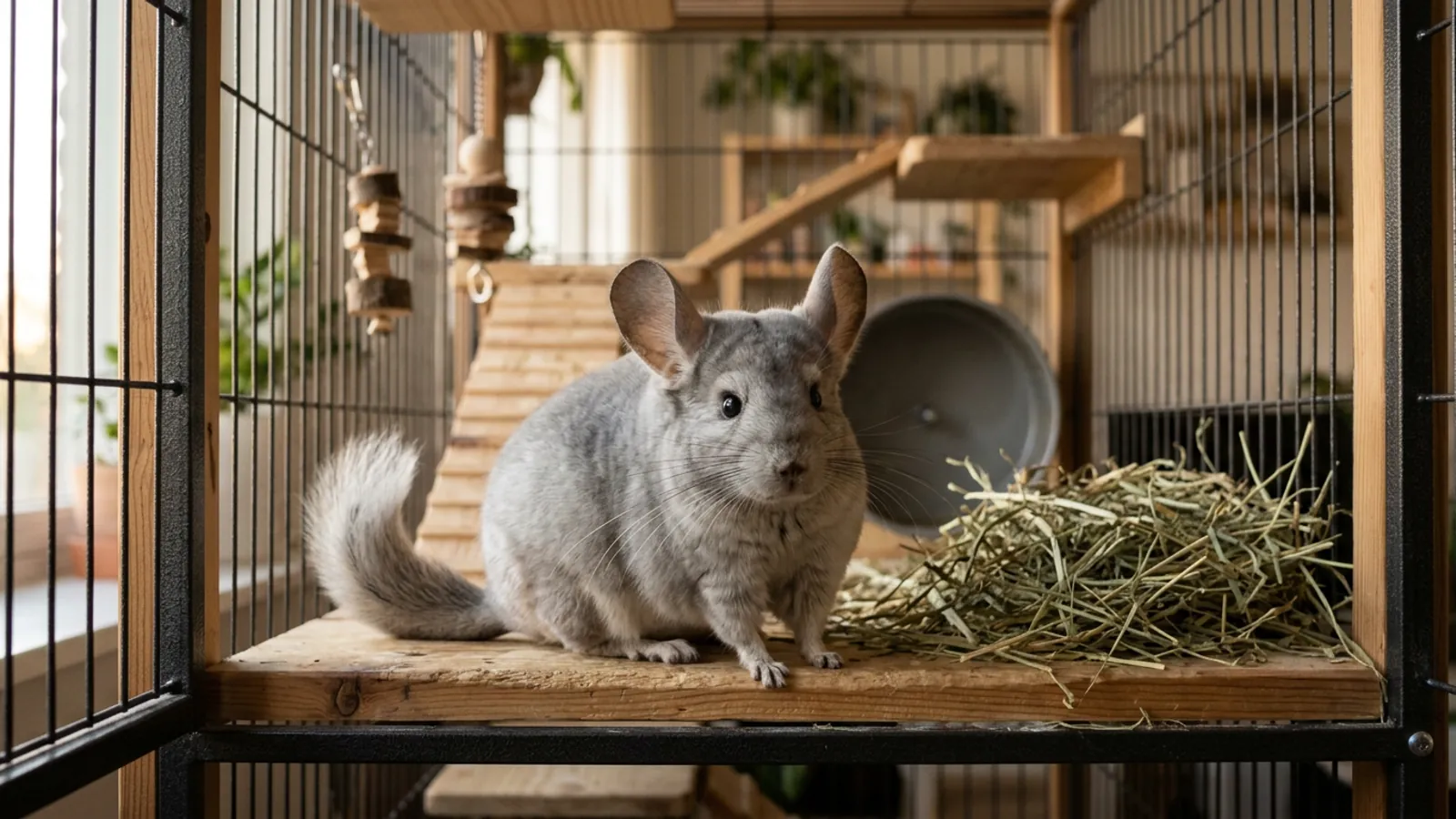
The best time to find a chinchilla vet is the quiet week you bring the animal home, not the night at ten o'clock when something has already gone wrong. I know that because I did it backwards. When Pebble came to me out of an overheated attic, I had a cage, a bag of hay, and no idea who I would call if she stopped eating. Her first summer settled the question for me at an emergency clinic I had never phoned before, at a price I had not planned for, with staff who had to work out how to dose a two pound rodent. Every owner reading this can skip that scramble. Finding the right vet is a thing you do on a calm afternoon, and it is one of the most important care decisions you will make for a chinchilla you plan to keep for fifteen years or more.
Why a chinchilla needs an exotics vet, not the family cat vet
A chinchilla is an exotic animal in the eyes of veterinary medicine, and that word is not marketing. It means the drugs, the doses, the anesthesia protocols, and the anatomy are different enough from a dog or cat that a general practice vet often cannot safely treat one. Plenty of clinics will politely tell you so, and the plain ones do. The vet you want calls themselves an exotics vet, or a small mammal or exotic companion mammal vet, and sees rabbits, guinea pigs, rats, and chinchillas regularly rather than once a year by accident.
This matters most with the two things chinchillas are prone to: their teeth and their guts. A chinchilla's molars grow continuously and can grow wrong in ways you cannot see without the right equipment. Anesthesia in an animal this small carries real risk, and a vet who does it often is far safer than one who does it rarely. When people ask me whether any vet for a chinchilla will do, the answer is no, not for anything past a nail trim. Find someone who already knows the species, because the middle of an emergency is the wrong moment for a vet to be learning it.
How to find a chinchilla vet near me before you need one
The search that works is boring, and it works. Start by typing "exotic vet" or "chinchilla vet near me" into a map and calling the clinics that come up, because a website that lists "small mammals" is not the same as a vet who books them. Ask the receptionist directly: does a vet here see chinchillas, and how often. "Vets that take chinchillas" is the real question, and it is completely fine to ask it plainly. The wording of your search shuffles around, vet for chinchilla near me, vets that take chinchilla near me, but it all leads to the same short list in most towns, and that list is usually shorter than you would like.
If nothing turns up close, widen the circle. A chinchilla specialist vet near me might be an hour's drive, and that is still worth having on file. Ask other keepers where they go, because local rescues, breeders, and chinchilla groups online usually know which clinics in a region handle the species and which just say they do. National exotics veterinary associations keep member directories, and those are a better starting point than a plain map search. When you find a clinic, do a well visit early. A first appointment while your chinchilla is healthy gives the vet a baseline, gets you into their system, and means the day you call in a panic you are an existing client, not a stranger.
I keep the clinic's number and the nearest chinchilla emergency vet written on the fridge and saved in my phone. It sounds paranoid until the night you need it and your hands are shaking too much to search.
What to ask before you trust a vet with a chinchilla
Not every clinic that takes chinchillas is equally good with them, so it is fair to ask questions before you commit. I ask how many chinchillas the practice sees in a typical month, whether they do dental work on them and take dental x-rays, and who covers emergencies after hours, because a lot of day practices hand nights off to a separate emergency hospital you would need to find on your own. I ask what a routine exam costs and roughly what dental work runs, so the numbers are not a shock later.
A good exotics vet answers these without getting defensive. If a clinic bristles at "how often do you treat chinchillas," that is your answer, and you can cross them off without guilt. You are not being difficult. You are the person who has to trust them with an animal that hides illness until it is serious, and a few honest questions on the phone are worth more to you than any five star review.
What a first chinchilla vet visit looks like
Booking that first well visit is worth doing even when nothing is wrong, and knowing what happens takes the fear out of it. A good exotics vet weighs the chinchilla, because weight is the single most useful number in this species and a drop of even a few grams over a couple of weeks can be the first sign of dental trouble. They listen to the heart and lungs, feel the belly, check the eyes and nose for discharge, and look at the front teeth for color and alignment, though the molars at the back cannot be fully examined in an awake chinchilla. They will ask about diet, and the right answer is unlimited grass hay with measured pellets and no sugary treats.
Ask them to show you how to hold and handle your chinchilla safely, and how to check the front teeth yourself at home so you learn what normal looks like on your own animal. Ask what weight they recorded, then start weighing at home on a small kitchen scale so you build your own trend line. That baseline is the thing that makes every future visit faster, because a vet who has seen your chinchilla healthy can spot what has changed. A first visit is cheap insurance, and it turns the clinic from strangers into your chinchilla's vet.
Teeth are why most chinchillas end up at the vet
If you keep chinchillas long enough, you learn that the visit you are most likely to face is a dental one. Their teeth never stop growing, and when the top and bottom molars stop meeting correctly, the condition is called malocclusion. The animal can no longer file its own teeth down by chewing, so the molars overgrow, form sharp spurs that cut the tongue and cheeks, and the roots can push up into the jaw and the eye sockets. I live with this. Juniper came to me neglected, with dental disease I now manage day to day, and she is the reason I will not compromise on hay or on a real variety of chews.
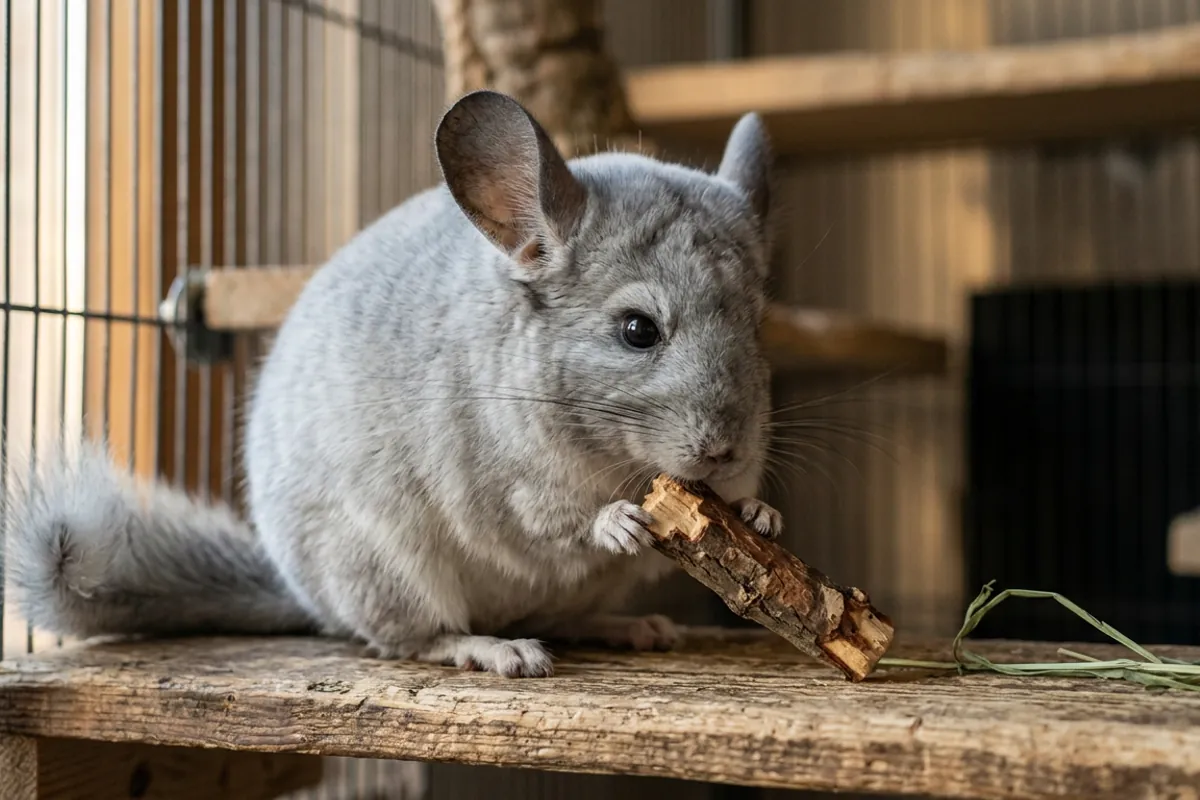
The signs are quiet at first: dropping food, eating slower, drooling that leaves a wet chin and matted fur down the chest, weight loss, pawing at the mouth, picking at hay but leaving pellets or the reverse. Any of that is a call to the vet, not a wait-and-see. Malocclusion is diagnosed properly with an oral exam under sedation and dental x-rays, which is exactly why a general vet without the gear can miss it. I have written more on this in Chinchilla Teeth Problems: Spotting Malocclusion Before It Turns Serious and the broader chinchilla teeth guide.
The prevention is not glamorous and it is not optional: unlimited grass hay, always, because the long sideways chewing motion of eating hay is what wears the molars evenly. Pellets are a measured supplement, not the meal. I go through timothy hay by the box. Oxbow Western Timothy Hay, 40 oz bag As an Amazon Associate I earn from qualifying purchases. Alongside it, a real variety of safe wood chews gives the front teeth work to do, and apple wood is a staple in my cage. emours apple wood chew sticks, 40 count As an Amazon Associate I earn from qualifying purchases. None of this cures malocclusion once the roots have gone bad, but good even wear from the start is the single biggest thing standing between your chinchilla and the dental chair.
When it becomes a chinchilla emergency vet call
Some things cannot wait for a regular appointment, and knowing which is the difference between a scare and a loss. Call a chinchilla emergency vet, day or night, if your chinchilla stops eating and stops passing droppings, because a gut that goes quiet in a chinchilla is a genuine emergency and they go downhill fast. The same goes for labored breathing, a seizure, a prolapse, obvious pain, an injury, or a female straining in labor with nothing born.
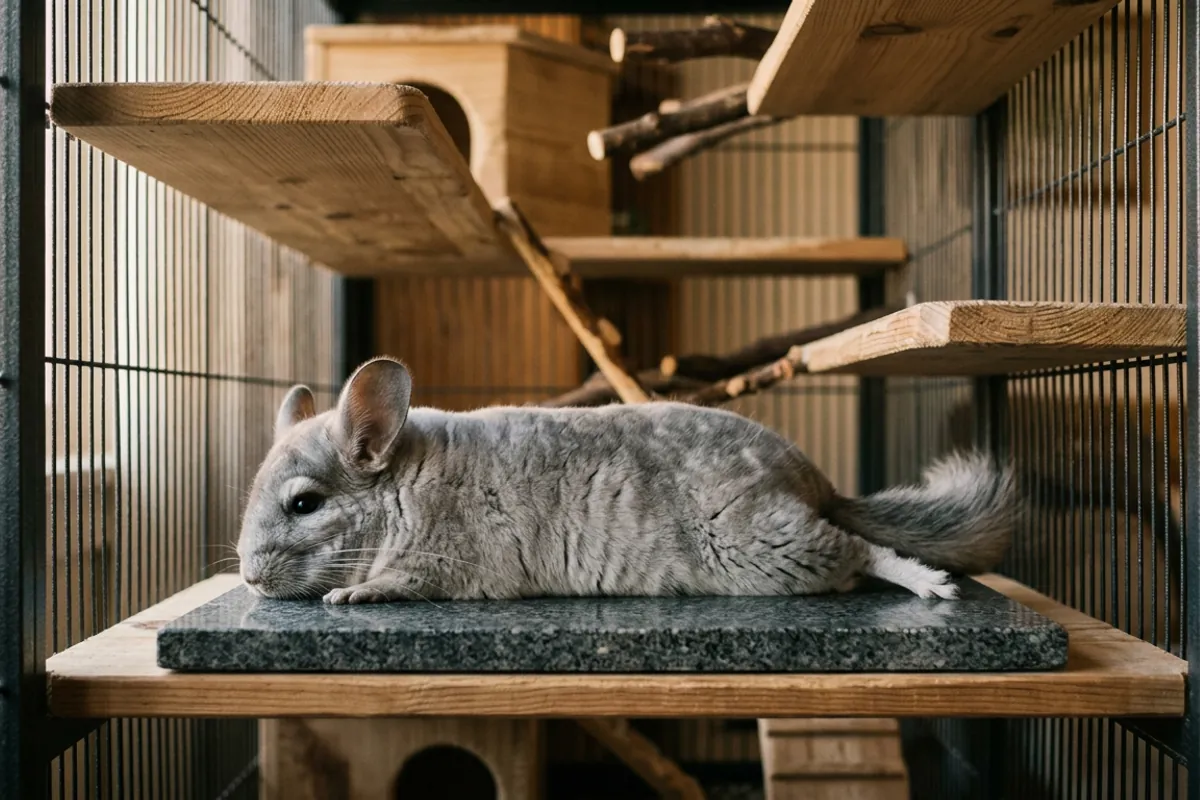
Heat is its own emergency, and it is the one that scares me most because it is so preventable. Chinchillas are comfortable between 60 and 70°F (15 to 21°C). Above 75°F (24°C) is risky, and 80°F (27°C) and up is an emergency, faster in humid air, because the dense fur that makes them beautiful traps heat and they cannot shed it. Pebble's near miss was heat, and it is why I am relentless about it. The signs of heat stroke are a chinchilla lying stretched out and flat, bright red ears, drooling, and lethargy. Get the temperature down and get to a vet. I keep a thermometer with a humidity reading on the wall right by the cage so I am never guessing. digital thermometer and humidity gauge with remote probes As an Amazon Associate I earn from qualifying purchases. A granite or ceramic cooling stone gives them a cool surface to lie on and buys real margin on a warm day. Kaytee Chinchilla Chiller granite stone As an Amazon Associate I earn from qualifying purchases. If you want to see exactly where your room sits, the chinchilla heat danger calculator will tell you, and Chinchilla Heat Stroke: Warning Signs Every Owner Should Know walks through the signs in detail. Cooling a chinchilla is first aid, not a cure. The vet visit still happens.
What chinchilla vet care costs
I will be straight with you, because nobody was straight with me: chinchilla vet cost is higher than most people expect, and it varies a lot by region and clinic, so I am not going to invent a precise figure that would be wrong for half the people reading. What I can tell you is the shape of it. An exotics exam usually costs more than a routine cat or dog visit, because fewer vets do it and the appointments take longer. Dental work is the big one, because it is done under anesthesia with imaging, and for a chinchilla with ongoing malocclusion it is not a one time bill but a recurring one, sometimes every few months for the rest of the animal's life. Emergency and after hours care costs more again.
None of that means you should skip the vet. It means you should plan for it. I keep a dedicated chinchilla vet fund, money set aside before I need it, so that a dental or an emergency is a withdrawal and not a crisis. Pet insurance for exotics exists and is worth pricing out, though coverage varies and you should read exactly what is excluded before you trust it. If chinchilla vet care near me turns out to cost more than you budgeted, that is normal for exotics, and it is far better to meet that number now than in a waiting room. I break down the wider picture in what a chinchilla really costs.
The vet fund and the carrier by the door
Here is what a decade with these animals has taught me to have ready before anything goes wrong: a named exotics vet you have already visited once, the number of the nearest emergency clinic that takes chinchillas, a small carrier you can grab without hunting for it, and a fund that means money is never the reason you hesitate. That is the plan, and it is not complicated. The complicated version is the one where you try to assemble all of it at the worst possible moment.
Chinchillas hide illness until it is advanced, so the owner who watches closely and acts early is doing most of the medicine themselves. But the line where a keeper stops and a vet starts is real, and I have never once regretted crossing it too soon. When in doubt about anything past a nail trim or a single missed meal, call the vet. An older chinchilla especially earns closer watching, and I have written about that in what an old chinchilla really is. The animal cannot tell you it is in trouble. Having the right vet already saved in your phone is how you answer for it.
If a procedure ever comes up, chinchilla anesthesia is worth reading before the appointment, not after.