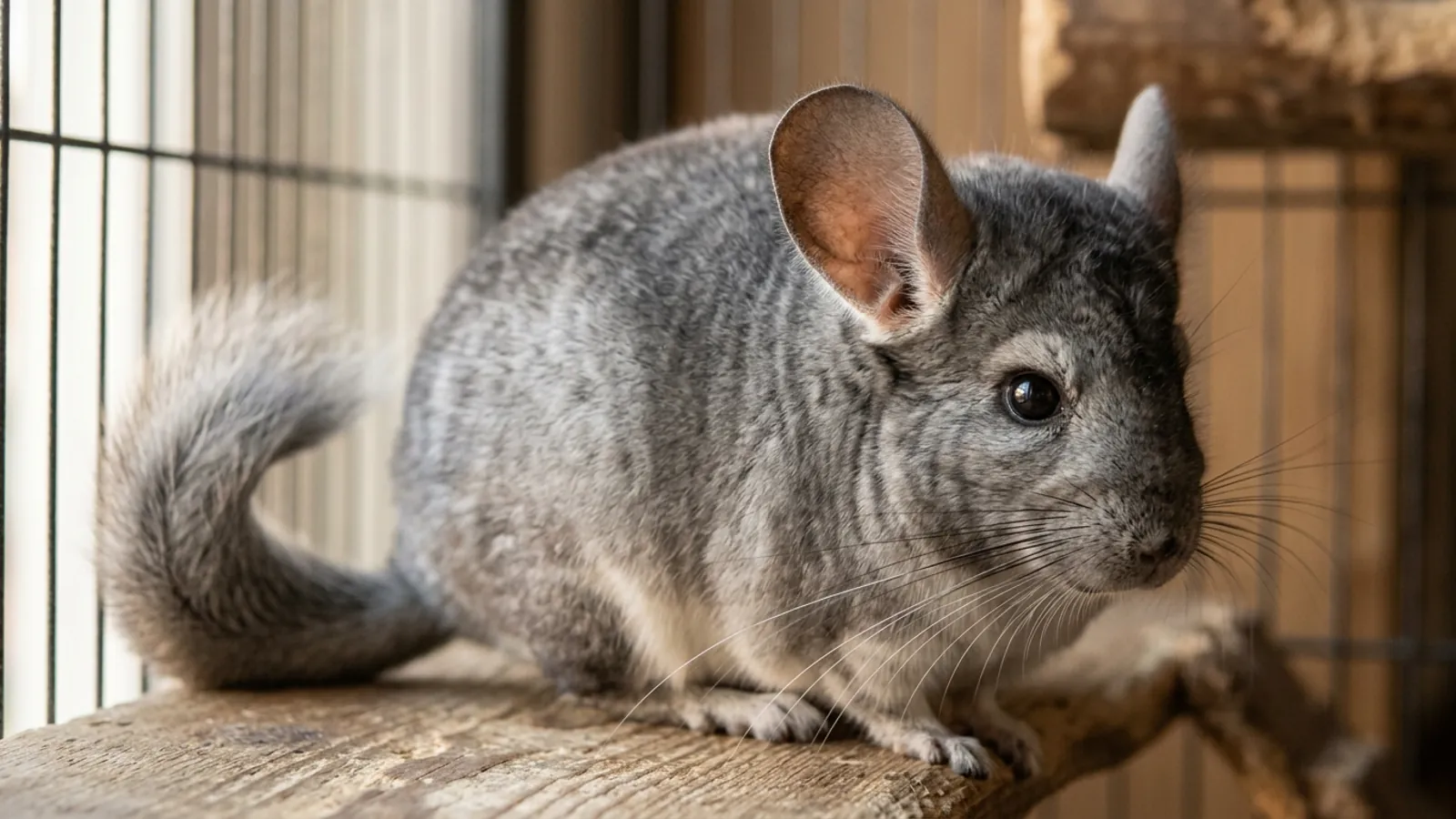
A bald patch on a chinchilla's nose is the kind of thing you spot late at night, when the vet is closed and there is nothing to do but stare at it, and then spend an hour talking yourself out of. Don't. Chinchilla ringworm is the skin problem I hear about most from other keepers, it is not a worm at all but a fungus, and if you leave it alone it tends to spread across the animal, to any cagemate, and to the person cleaning the cage. The upside is that it is treatable and the diagnosis is neither expensive nor complicated. The downside is that most of what gets recommended in owner groups either does nothing or makes the picture harder for a vet to read afterwards.
I have kept chinchillas for about ten years. I am an experienced keeper, not a vet, so what follows is where the line sits: what you can see and do yourself, and where you stop and pick up the phone.
What chinchilla ringworm is
Ringworm is dermatophytosis, an infection by fungi that live on keratin. Keratin is what hair shafts, the outer layer of skin, and nails are made of, so the fungus grows in exactly the places you can see. Nothing burrows, nothing crawls. The name comes from the ring shaped lesion it makes on human skin, which is a poor description of what it does on an animal buried in fur.
In chinchillas, the organism most often cultured is Trichophyton mentagrophytes. Microsporum species show up too, less often. This matters for one practical reason I will come back to: the species involved changes which tests are useful.
A chinchilla coat is the reason this infection behaves the way it does. Dozens of hairs come out of a single follicle, which is what makes the fur feel like a cloud and what makes it impossible for fleas to move around in there. It also means a fungal infection has an enormous amount of keratin to work through, and that a small patch of thinning fur is easy to miss until it is no longer small. Dense fur holds moisture near the skin, too, and moisture is what the fungus wants.
Dermatophytes are opportunists. They take hold when something has tipped the balance: high humidity, heat, a damp corner of the cage, poor ventilation, crowding, a stressful move, a young animal whose immune system is still catching up, or an older one already fighting something else. A healthy adult in a dry, cool, clean cage is a bad host. That is not a guarantee, but it is most of the prevention.
What it looks like, starting at the nose
The first sites are predictable. The bridge of the nose and the skin around the nostrils, the rims around the eyes, the edges and backs of the ears, the feet, and the base of the tail. Chinchilla ringworm nose lesions are the classic opening move, and it is not a coincidence: those are the thinnest fur, the most contact with the cage, the most rubbing against a dust house rim.
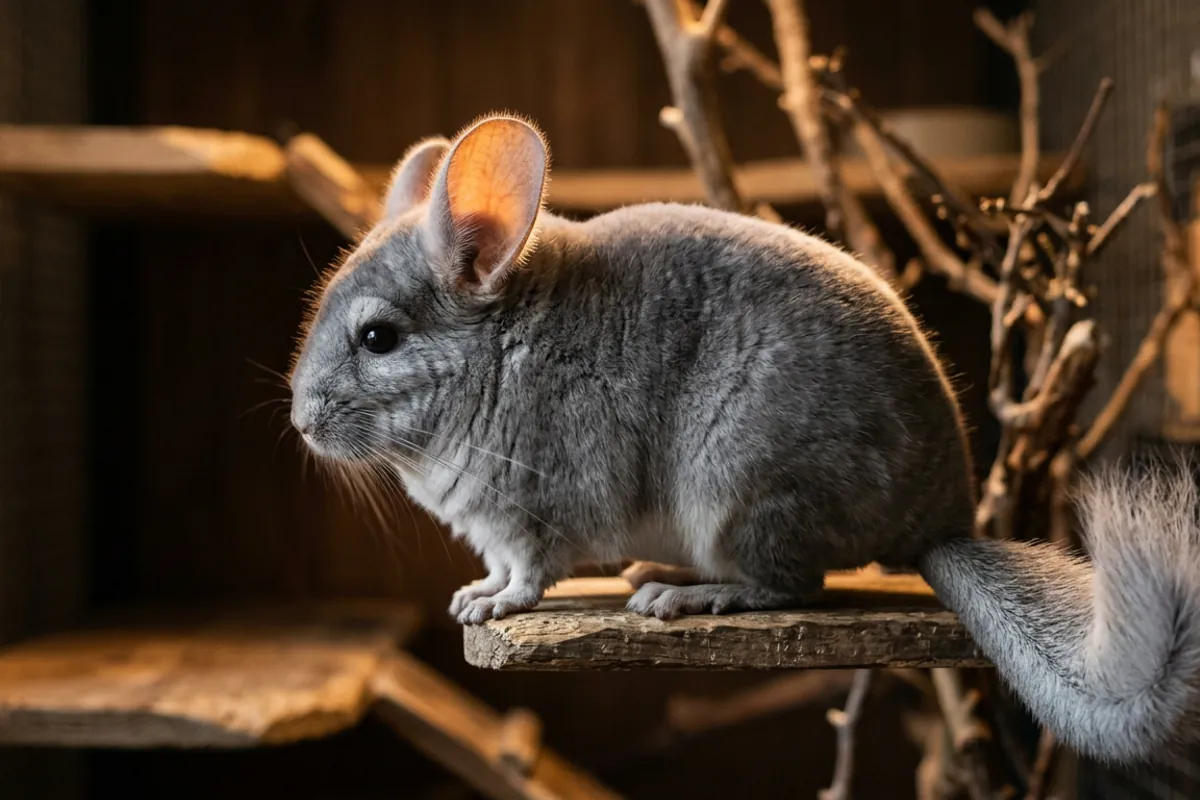
What you are looking for is a patch where the fur is thin, broken, or gone, and where the skin underneath is not normal. Fungal skin is dry and flaky, often with a grayish white scurf like fine dandruff, sometimes crusted, sometimes a little reddened at the edge. The boundary tends to look moth eaten rather than cleanly cut. Hairs at the margin snap off short instead of pulling out whole. On the ears, what keepers call chinchilla ear fungus usually starts as scaly, bald edging along the outer rim, which is easy to see if you look at the ear against a light.
Itching is unreliable as a sign. Some chinchillas scratch and rub, plenty do not seem bothered at all, and I have known keepers to dismiss a lesion for weeks because the animal was behaving normally. Behavior will not tell you. Your eyes will.
Two habits help enormously. First, look at the nose, ears, and feet every time you handle your chinchilla, which for most of us is every dust bath anyway. Second, the moment you find anything, photograph it in the same light from the same angle and date it. A patch that is the same size in nine days is a different conversation with your vet than one that has doubled.
What looks like fungus but is not
Most bald patches I get asked about are not fungal at all, and treating the wrong thing wastes the weeks that matter.
Fur chewing, or barbering, leaves fur that looks cut short and blunt, often with the darker undercoat showing, on parts of the body the chinchilla can reach: flanks, shoulders, forearms, the base of the tail. The skin underneath is normal. That is a husbandry and stress problem, not an infection.
Fur slip leaves a clean, empty patch with healthy skin and no scale at all, usually right after the animal was grabbed or startled. It is a defense mechanism, and it grows back.
Mechanical loss comes from the cage. A chinchilla that sleeps wedged in a tight hut, or squeezes past the same shelf edge fifty times a night, wears fur off in a spot that matches the geometry of the furniture. Look at where they sit, not just at the animal. My hairless chinchilla piece goes through the full list of bald patch causes.
The one I want keepers to take seriously, because it is the reason this article sits in the teeth cluster, is drool. Dental disease makes a chinchilla slobber, and constant damp under the chin mats and then destroys the fur there, down the chest and sometimes onto the forelegs. That is not fungus. That is a mouth problem showing up on the outside, and it is urgent in a way ringworm is not. Juniper came to me as a neglected rescue with dental disease, and I manage her mouth every single day, so I know exactly what a wet chin means. If the bare skin is around the mouth and chin and the fur there is damp or stained, read chinchilla wet and chinchilla teeth problems and book an exotics vet, not a fungal culture.
The prevention for that one is the same as it has always been: unlimited grass hay, all day, every day, because chewing is what wears the teeth down.
Oxbow Western Timothy Hay, 40 oz bag As an Amazon Associate I earn from qualifying purchases.
If the animal is scratching rather than going bald, chinchilla mites works through that differential, and the short answer there is that it is very rarely mites. A rough sorting rule, and it is only rough: clean skin under a bald patch points away from fungus, scale and crust point towards it. Neither is diagnostic. A lab is.
How a vet confirms it
Do not skip this step because a photo in a forum looked similar. Three tests get used, and only two of them are worth much.
A Wood's lamp is the ultraviolet light some vets shine on the coat. Its reputation is far better than its performance. Microsporum canis fluoresces reliably, and that is where the lamp's reputation comes from, but it is not the fungus usually found on chinchillas, and the one that is does not glow at all. Scale, dust, and topical products can also glow and fool you. A dark result rules out nothing, so treat a negative lamp check as no information rather than good news.
Fungal culture on dermatophyte test medium is the traditional reference. Plucked hairs and scale go on a plate and grow, or don't, over roughly one to three weeks. It is slow, but it identifies what you are dealing with.
PCR testing is now widely available through exotics vets and turns around in days rather than weeks. It detects fungal DNA, including from organisms no longer alive, which is a strength for a first diagnosis and a weakness if you are trying to prove a treated animal is finally clear.
Your vet may also pluck hairs and look at them under a microscope for spores on the shaft, which is quick and sometimes conclusive.
One thing to tell them without being asked: anything you already put on the skin. Antifungal creams, powders, and medicated shampoos suppress growth on a culture plate and can turn a real infection into a negative result. If you have been dabbing something on for a week, say so. If you have not found a vet who sees exotics yet, do that before you need one; how to find a chinchilla vet covers what to ask.
Chinchilla fungus treatment, and the part I leave to the vet
Real chinchilla fungus treatment is prescription work. The systemic antifungals exotics vets reach for in small mammals are usually itraconazole or terbinafine, given by mouth for weeks. Griseofulvin is the older option and has largely fallen out of favor with the vets I have dealt with, partly because it must never go near a pregnant animal. Dose and duration are the vet's call, based on the drug, the animal's weight, and what the lab found. I am not going to publish numbers for that, and you should be suspicious of anyone who does.
Topical antifungals get used alongside, on small localized patches. The catch is obvious once you have watched a chinchilla groom: whatever you put on the nose goes into the mouth within the hour. That is why topicals here are vet chosen, applied thinly, and often to a spot the animal cannot easily reach.
Then there is the advice that gets handed around and needs a flat answer. Lime sulfur dips are standard practice for ringworm in cats and rabbits, and you will find them recommended for chinchillas. A chinchilla must not be soaked. That coat takes hours to dry to the skin, a damp chinchilla chills badly, and trapped moisture is what fungus wants in the first place, which makes a dip a strange way to treat it. If a vet who knows the species prescribes one with a real drying plan, that is their judgment to make. On my own, I would ask for another route.
Some keepers add antifungal powder to the dust bath, and in the old ranching literature that meant agricultural fungicide. I do not do that and I would not tell you to. Those are garden chemicals, not licensed veterinary treatments for a small animal that inhales dust by design. If a powder belongs in your dust, your vet should be the one naming it.
Two things I do insist on. Do not stop early. Treatment commonly runs four to six weeks or longer, and vets often continue past the point where the coat looks perfect again, sometimes retesting before calling it done. And ask specifically whether to pause dust baths during treatment. Opinions genuinely split here, because dust is how a chinchilla keeps the coat dry and grease free, and stopping it has its own costs. That trade off depends on which treatment you are on, so let the vet decide rather than the internet.
Cleaning the cage, the dust, and everything porous
Treating the animal and not the environment is how people end up doing this three times. Dermatophyte spores survive off the host for many months, and figures beyond a year get quoted for some species. They are in the loose fur, the bedding, the dust, and the wood.

Throw out the dust that was in the bath house, and the scoop if you cannot disinfect it. Fresh dust for the rest of treatment, and never tip used dust back into the bag.
Lixit Blue Beauty chinchilla dust, 3 lb As an Amazon Associate I earn from qualifying purchases.
Hard surfaces get scrubbed. Metal cages have a real advantage here, because bare metal and a hosed down tray can be cleaned properly, while scratched plastic holds spores in every groove. It is one more entry on the long list of reasons the cage should be metal, for the reasons I set out here, not a plastic bin.
Critter Nation double unit small animal cage As an Amazon Associate I earn from qualifying purchases.
A dilution of one part household bleach to ten parts water is the usual recommendation against these spores. Use it with the chinchilla out of the room and the windows open, give it contact time, then rinse thoroughly and let everything dry completely before the animal goes back. Never mix it with other cleaners.
Wood is the problem. Ledges, huts, and chews are porous and cannot be reliably disinfected, so during an active infection the cheap wooden furniture gets binned and replaced. Replacing a handful of safe wood chews and a ledge costs less than another six weeks of medication, and chews are not optional anyway. Juniper's teeth are the reason I always have spares in the cupboard.
emours apple wood chew sticks, 40 count As an Amazon Associate I earn from qualifying purchases.
Vacuum loose fur daily, wash fleece and fabric hot and dry it hot, and repeat the deep clean weekly while treatment runs. My clean chinchilla cage routine is the baseline; during a fungal outbreak, tighten it.
Cagemates are almost certainly exposed already by the time you notice a lesion on one animal, so ask your vet whether to treat both rather than assuming separation solves it.
Yes, it can spread to you
Ringworm from rodents is zoonotic, and Trichophyton mentagrophytes is a well documented human infection source. On people it looks like the textbook version: a reddish, scaly, often ring shaped itchy patch, usually on forearms, hands, neck, or face, which is to say exactly where a chinchilla sits when you carry one.
Wear long sleeves while an animal is being treated, wash your hands and forearms after every handling and every cage clean, and stop letting them ride on your shoulder for a few weeks. Wash the clothes you wore. Children, older adults, and anyone immunocompromised are at higher risk, so keep handling limited while treatment is running. If a patch appears on your skin, see a doctor. I am a keeper, not a vet, and certainly not yours.
Dogs, cats, and rabbits in the house can pick it up as well, in both directions.
Keeping fungus out in the first place
Quarantine every new arrival for about 30 days, ideally in a different room, with its own dust, its own scoop, and handling last in the daily round. This single habit prevents more disease than anything else you will do, and a rehome or pet shop animal is exactly where dermatophytes travel from.
Then control the air, because fungus is a moisture problem wearing a skin disease costume. Chinchillas evolved in dry, cool, thin air, and they want the same at home: 60 to 70°F (15 to 21°C), with low humidity. Above 75°F (24°C) becomes risky, and 80°F (27°C) and up is an emergency, faster in humid air. Veterinary reference guidance gives a rule you can do in your head: the temperature in Fahrenheit plus the relative humidity should stay under 150. The exact cutoff is a guideline rather than a physiological constant, but it points the right way, and it explains why a muggy 74°F room is worse than a dry one. Put a thermometer with a humidity readout at cage height, where the animal lives, not by the door.
digital thermometer and humidity gauge with remote probes As an Amazon Associate I earn from qualifying purchases.
The heat rules on this site come from Pebble, who was rehomed out of an overheated attic and spent a night at an emergency vet during her first summer. I am not softening them for anyone. Full detail sits in chinchilla temperature and the heat safety guide.
The rest is ordinary good keeping. Never bathe a chinchilla in water, only in dust, roughly two or three sessions of 10 to 15 minutes a week. Keep bedding dry and change damp corners immediately. Ventilate, and skip the enclosed fabric hides that trap warm humid air against a sleeping animal. Feed unlimited grass hay so the immune system and the teeth both have what they need.
Look at the nose and the ear edges every time you have your chinchilla in your hands. Finding one small scaly patch is a manageable few weeks. Finding five is a different animal and a much longer clean up.