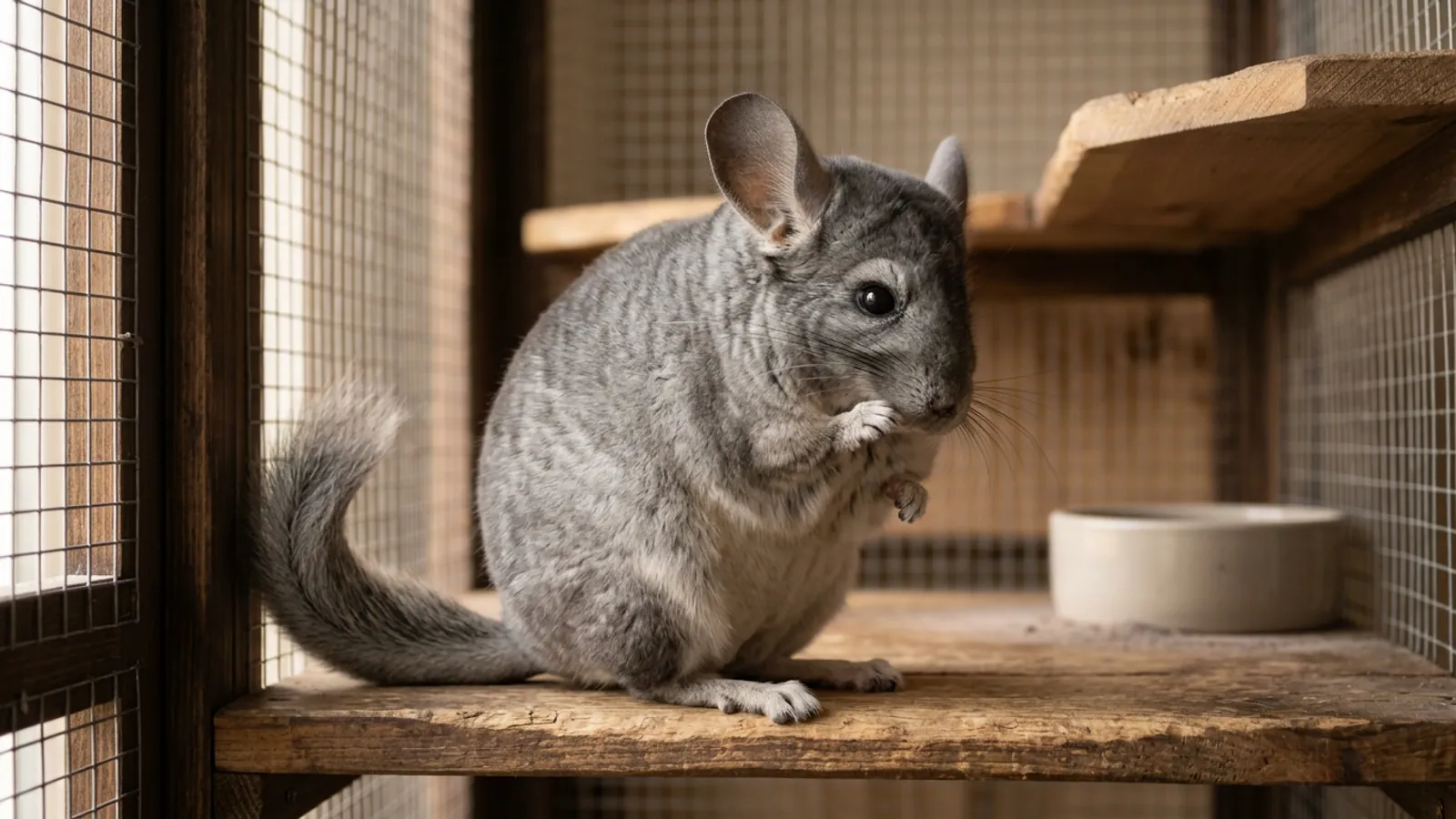
Almost every time someone writes to me about chinchilla mites, the animal in front of them does not have mites. The itching is real. The flaky skin is real. The thin patch behind the shoulder is real. The parasite, most of the time, is not. After about ten years of keeping chinchillas I have learned to treat the word mites as a description of a symptom rather than a diagnosis, because the coat these animals wear is close to the worst place on earth for a small crawling insect to try to make a living.
That is not the same as saying chinchilla parasites do not exist. It means the odds are stacked, and that reaching for a treatment before you have a diagnosis is how people end up dosing an animal that weighs about a pound for a problem it never had. So this is the sorting job: what mites and fleas can do on a chinchilla, what causes the itching when they are not the culprit, what you can safely check yourself tonight, and the point where you stop guessing and call an exotics vet.
Why chinchilla mites are rarer than the internet makes them sound
Search the phrase and you get a stack of near identical pages: scratching, hair loss, crusty ear edges, restlessness, a recommendation to buy a spray. Read four of them in a row and you start to notice that the symptom lists are the same lists that appear on dog, cat, and rabbit pages with the species name swapped out. Very little of it was written from chinchillas.
The plain position is that published information on external parasites in pet chinchillas is thin, and I am not going to invent precision that nobody has. What I can tell you is what turns up instead, every time I have chased one of these down or read through a proper workup. Ringworm, which is a fungal infection and not a parasite at all. Fur chewing, which is behavioral. Fur slip after a grab or a fright. Dry, flaky skin from bathing too often. Irritation from the wrong bedding. Sore feet being scratched at. Occasionally a genuine skin infection under a mat of damaged fur.
Juniper arrived here as a neglected rescue with a coat rough enough that parasites were my first thought too. They were not the answer. What she had was years of bad husbandry and dental disease, and her coat was reporting on both. That is the pattern I now expect: in a chinchilla, the skin and fur are usually a readout of something else going on, and a crawling passenger is near the bottom of the list rather than the top.
What that coat does to a parasite
A chinchilla grows many hairs from a single follicle. The figure I am willing to give you is the one the veterinary manuals print: up to about sixty hairs from each follicle, against the one to three a human grows. You will see much bigger numbers online, hairs per square centimetre quoted to the thousand and league tables of the densest coats in the animal kingdom, and I have not been able to find a real measurement study behind any of them, so I am not going to repeat them here. The follicle figure is enough to make the point, and the point is what matters.
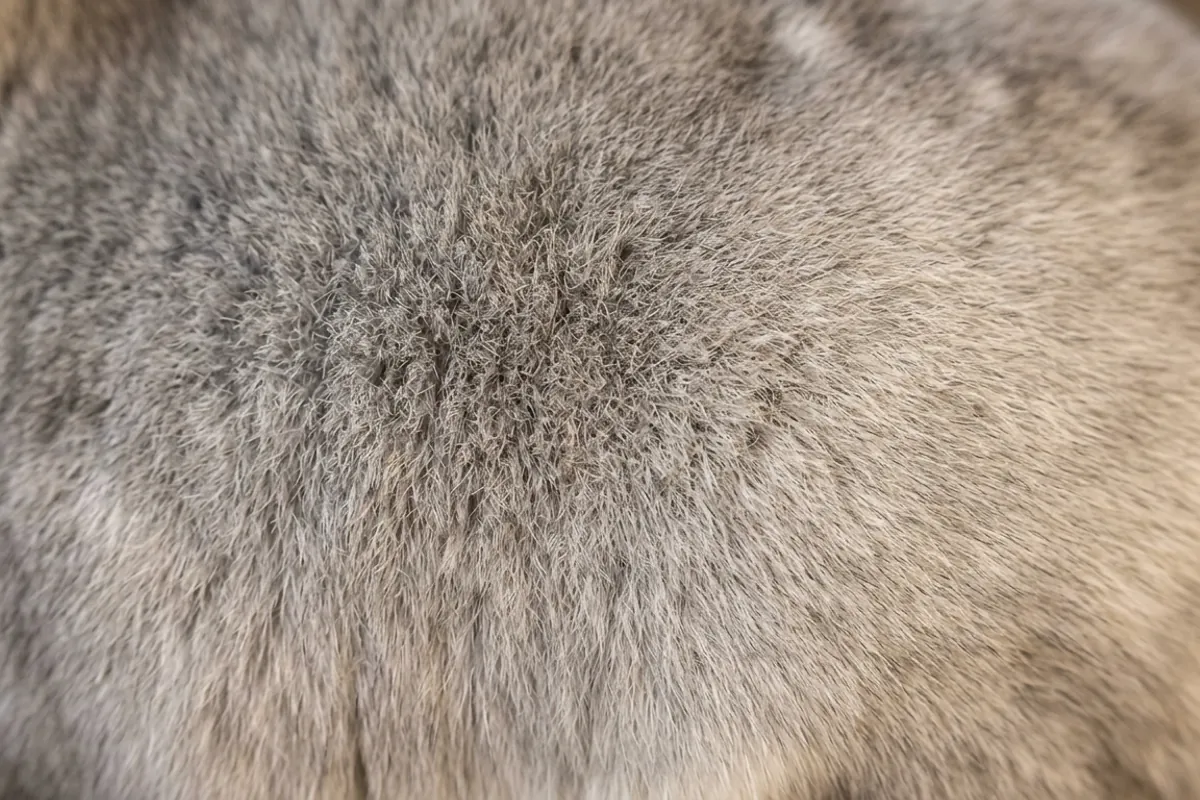
Think about what that means from a flea's point of view. A flea's body is built to move between the hairs of a dog or a cat, where there are lanes to run down and skin to reach at the bottom. A chinchilla coat has no lanes. There is no exposed skin at the surface, no route down, and no dry landing spot that stays undisturbed for long. On top of that the animal grooms constantly, and a coat worked over that thoroughly every day is a hard place to go unnoticed.
This is not immunity, and I would not sell it as one. There are situations where I take external chinchilla parasites seriously rather than dismissing them: animals coming out of hoarding or heavy neglect, animals kept in barns or sheds alongside other species, and homes where a chinchilla lives near poultry or a wild bird nest in the eaves. If your chinchilla lives in a normal room in a normal house, none of that applies, and the itching almost certainly has another cause.
Chinchilla fleas, and the one household where I would look
Chinchilla fleas are the same story with the volume turned up. I could not find a single published report of fleas on a chinchilla, which is not proof they never happen but is the plain state of what is known. A chinchilla is a poor host for the coat reasons above: hard to reach, and hard to stay on.
The exception is a house that already has a flea problem. If a dog or cat in the home is infested and the carpets are loaded, a hungry flea will bite whatever it lands on, including you. In that situation I would not rule it out, and it is worth checking rather than assuming. The check is simple, costs nothing, and I describe it in the home inspection section below.
If you do find fleas, the fix is mostly not on the chinchilla. It is treating the dog or cat properly with their own vet prescribed product, treating the environment, vacuuming hard and often, and washing soft furnishings hot. Keep the cage up off carpet level while you deal with it. What you must not do is bath the chinchilla in water or in flea shampoo. Chinchillas never bathe in water at any time, for any reason. That coat takes a very long time to dry to the skin, and a damp chinchilla is a fungal infection and a chilled animal waiting to happen.
Chinchilla ear mites, and what head shaking usually means
Chinchilla ear mites come up constantly, and almost always because someone has read a cat article. The classic ear mite of pets is a cat and dog parasite. No chinchilla case has been documented, and it is not what is behind a chinchilla shaking its head or working at an ear with a hind foot.
Those big thin ears are a cooling organ, and the ear canal is a place where dust does end up. A chinchilla that scratches at an ear after a bath, or shakes its head a few times and then goes back to normal, is usually clearing dust. What worries me is persistent scratching at one ear, discharge, a smell, crusting inside the ear, a head that tilts, or a chinchilla that has lost its balance. Those need a vet, not a home remedy.
There is a specific reason I never treat a chinchilla ear complaint casually. The chinchilla middle ear is susceptible enough that this species is the standard laboratory model for studying middle ear infection, which I read as a reason to take an ear complaint to a vet rather than as a reason to expect one; that literature is deliberately induced disease and says nothing about how often a pet gets one. The other reason is dental disease, because the tooth roots of a chinchilla sit close to the structures of the skull and grow throughout life. A chinchilla with an ear problem may really have a mouth problem. That link is why the answer here is an otoscope and a proper oral exam rather than drops bought off a shelf.
Do not poke a cotton bud into a chinchilla ear. Do not put mineral oil, cat ear cleaner, or an ear mite treatment down there. You can drive debris deeper, damage the canal, and destroy the sample the vet needs.
What is really behind chinchilla itching
When I work through a case of chinchilla itching, this is roughly the order I consider things, most likely first.
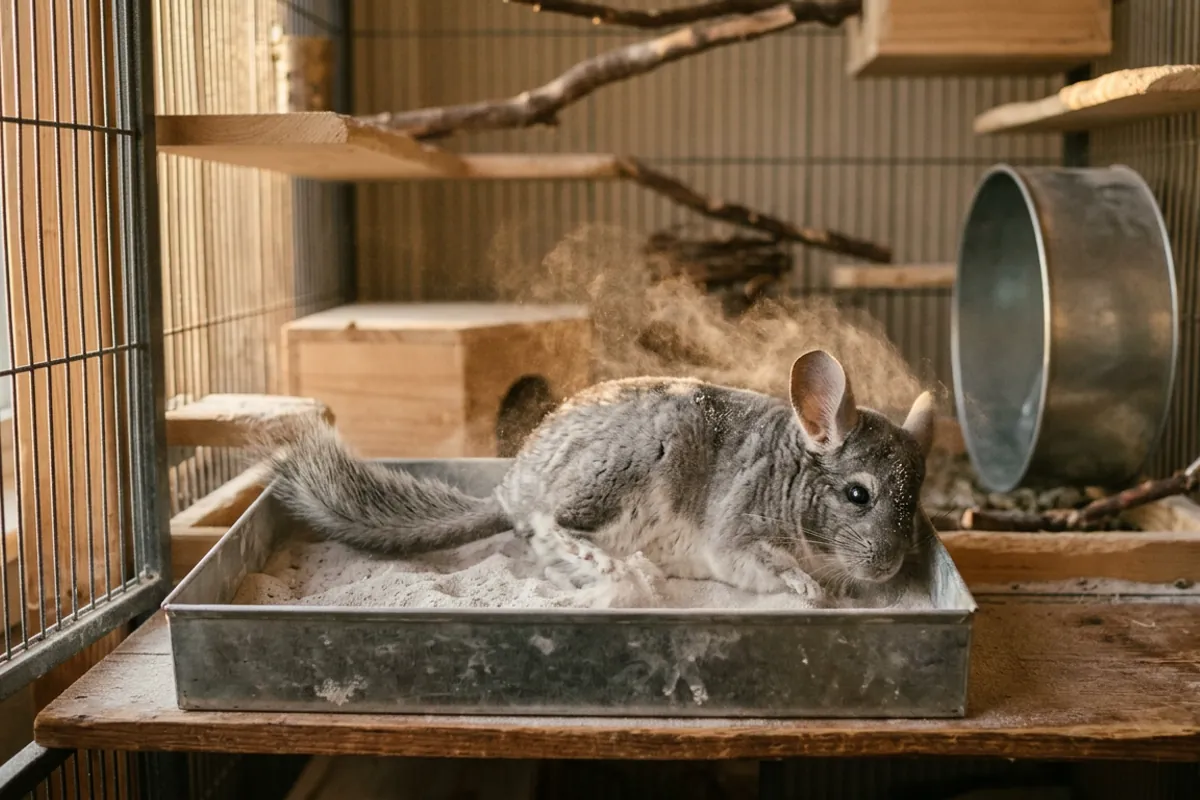
Too much bathing. This is the single most common cause I see. Dust absorbs oil, which is the entire point, and a chinchilla bathed daily or left with the bath house in the cage will end up with dry, flaky, itchy skin. Two to four baths a week, ten to fifteen minutes each, then take the bath out again.
Ringworm. A fungal infection, not a parasite, and the thing most often mistaken for mites. It typically shows as patchy hair loss with scaling or crusting, often starting around the nose, eyes, ear edges, or feet, and the broken hairs look stubbly rather than cleanly gone. It is contagious to you as well as to other pets, and it needs a fungal culture to confirm. There is a full write up on chinchilla ringworm on this site.
Bedding and irritants. Cedar shavings and other aromatic softwoods have no place in a chinchilla cage, and dusty low grade shavings irritate skin and airways both. Kiln dried aspen or plain paper bedding is what I use. If the itching started when the bedding brand changed, you have your answer. My notes on chinchilla safe bedding go through the materials in detail.
Fur chewing. Chewed fur looks like short, uneven, slightly darker stubble, because you are seeing the under fur. The giveaway is geography: a chinchilla cannot chew its own face or the top of its head, so a chewer stays immaculate there while the flanks, shoulders, and forearms go patchy. It is driven by stress, boredom, a cage that is too small, or pain, including dental pain.
Rough equipment. Fur breaks and feet get sore on the wrong surfaces. Wire wheels are the worst offender in the cage and I will not have one in the house; a wheel needs a solid running surface. 15 inch Chin Spin solid surface chinchilla wheel As an Amazon Associate I earn from qualifying purchases. Sore feet get licked and scratched at, and that can tip into bumblefoot if you leave it.
Actual mites. Last, not first, and confirmed with a microscope rather than a guess.
What to check at home, in order
None of what follows is a diagnosis. It is the information that makes a vet visit short and useful instead of long and vague.
Pick a quiet time in the evening when your chinchilla is awake and settled, sit under a bright light, and part the fur gently with your fingers at the rump, the base of the tail, along the spine, and behind the ears. You are looking at the skin itself, which should be pale, smooth, and clean, with no flaking, no redness, and no crusts.
Then run the flea dirt test, because it is the one home test that tells you something. Comb or rub the coat over a sheet of white kitchen paper and look for tiny black specks. Dampen the paper slightly. Flea dirt is digested blood, so it smears rust red. Ordinary dust and dirt stay black or gray. If nothing smears red, that is reassuring but it is not proof. A light burden leaves very little behind, and an animal that grooms as constantly as a chinchilla removes a lot of the evidence, so a clean sheet of paper means you have not found fleas rather than that there are none.
Next, characterize any hair loss. Chewed stubble points to fur chewing. A clean bald patch with intact, healthy skin, appearing right after handling or a fright, is fur slip and it regrows. Crusty, scaly, spreading patches point at a fungal problem. Symmetrical thinning with no skin change is something else again, and worth a vet's eyes; there is more on that in the piece on a hairless chinchilla.
Then look outward. Does the dog or cat have fleas. Has the bedding, dust, or hay supplier changed. Is anyone in the house itching. Is there a bird nest in the roof above the room.
Finally, take photographs of anything you find, weigh your chinchilla weekly on a kitchen scale in grams, and check the droppings daily. Weight loss and shrinking, drier droppings turn a skin complaint into an urgent one, because they say the animal is not eating properly.
Why I will not hand you a dog or cat flea product
Every few months someone tells me they used a spot on treatment from the pet aisle, and I hold my breath. Chinchillas are small, they groom obsessively, and anything you put on the coat goes into the mouth within the hour. Doses that are trivial on a dog are not trivial here, and some products sold for other species are outright dangerous in small mammals. A flea product that is fine on a cat is not fine on an animal a fraction of the weight with a completely different metabolism.
There are drugs that exotics vets do use for confirmed mite infestations in small mammals. They are prescription, they are dosed against an exact body weight, and they follow a diagnosis made by looking down a microscope at a skin scraping or a tape sample. That sequence matters. A skin scraping is cheap and done in the visit; a fungal culture is the slow half, growing or not growing over roughly one to three weeks. Either way they mean you treat the actual problem instead of stacking treatments on a healthy animal until something breaks.
I would also skip the natural mite sprays. Essential oils on an animal that grooms this much, with a coat that holds anything oily for weeks, is a bad trade against a parasite you probably do not have. You will also read about adding antifungal powder to the dust bath. I do not do that and I would not tell you to, which is the same line I take on the ringworm page, because in the old ranching literature that practice meant agricultural fungicide. What lives in my cupboard is plain bathing dust and nothing else. Lixit Blue Beauty chinchilla dust, 3 lb As an Amazon Associate I earn from qualifying purchases.
My rule is short enough to remember: no diagnosis, no drug. If you cannot name what you are treating, you are experimenting on your pet. Find an exotics vet before you need one, so that the day you do need one you are not phoning around.
The husbandry that ends most of this
Almost every skin complaint I have dealt with came back to the environment, so that is where the durable fix lives.
Get the climate right first. Chinchillas are comfortable at 60 to 70°F (15 to 21°C). If the room climbs past 75°F (24°C) the danger starts, and 80°F (27°C) and up is an emergency that goes faster when the air is humid. Pebble came to me from an overheated attic, and her first summer here still ended with a heatwave near miss and a night at the emergency vet. That is why this is not negotiable. Humidity matters for skin as well as for heat: damp air and damp bedding are what fungal problems want, so keep the room dry and use a thermometer and hygrometer inside the cage rather than trusting the wall thermostat in the hall. digital thermometer and humidity gauge with remote probes As an Amazon Associate I earn from qualifying purchases. If you want to see how temperature and humidity combine, the heat danger calculator does the arithmetic for you.
Keep the cage dry and metal, with wooden ledges and no plastic. Spot clean daily, strip and dry the base weekly, and never let a corner stay damp under bedding.
Bath properly. Fresh dust, two to four times a week, ten to fifteen minutes, bath house out afterwards, and the dust discarded once it is soiled rather than topped up forever. In a very dry home, drop to twice a week if the skin starts flaking. The full dust bath routine is written up separately.
Quarantine every new arrival in a separate room, with its own dust and its own bathing house, and book a vet check during that window. I give it about a month, which is my own practice rather than a period any veterinary source names for this species. This is the single most effective thing you can do about chinchilla parasites, and it also catches the ringworm that a new rescue is far more likely to bring in.
And keep the animal well fed on unlimited grass hay with measured plain pellets, plus real variety in chews. Juniper is the reason I bang on about that. A chinchilla in pain, especially dental pain, grooms badly, chews its own fur, and looks like it has a skin problem. Fix the mouth and the coat often follows.
If you work through all of that and your chinchilla is still scratching, still losing fur, or has crusts that are spreading, stop reading and make the appointment. A scraping is done during the visit; a fungal culture is the slow part, growing or not growing over roughly one to three weeks, which is worth knowing so the wait does not read as nothing happening. Guessing at chinchilla mites for three weeks does not.