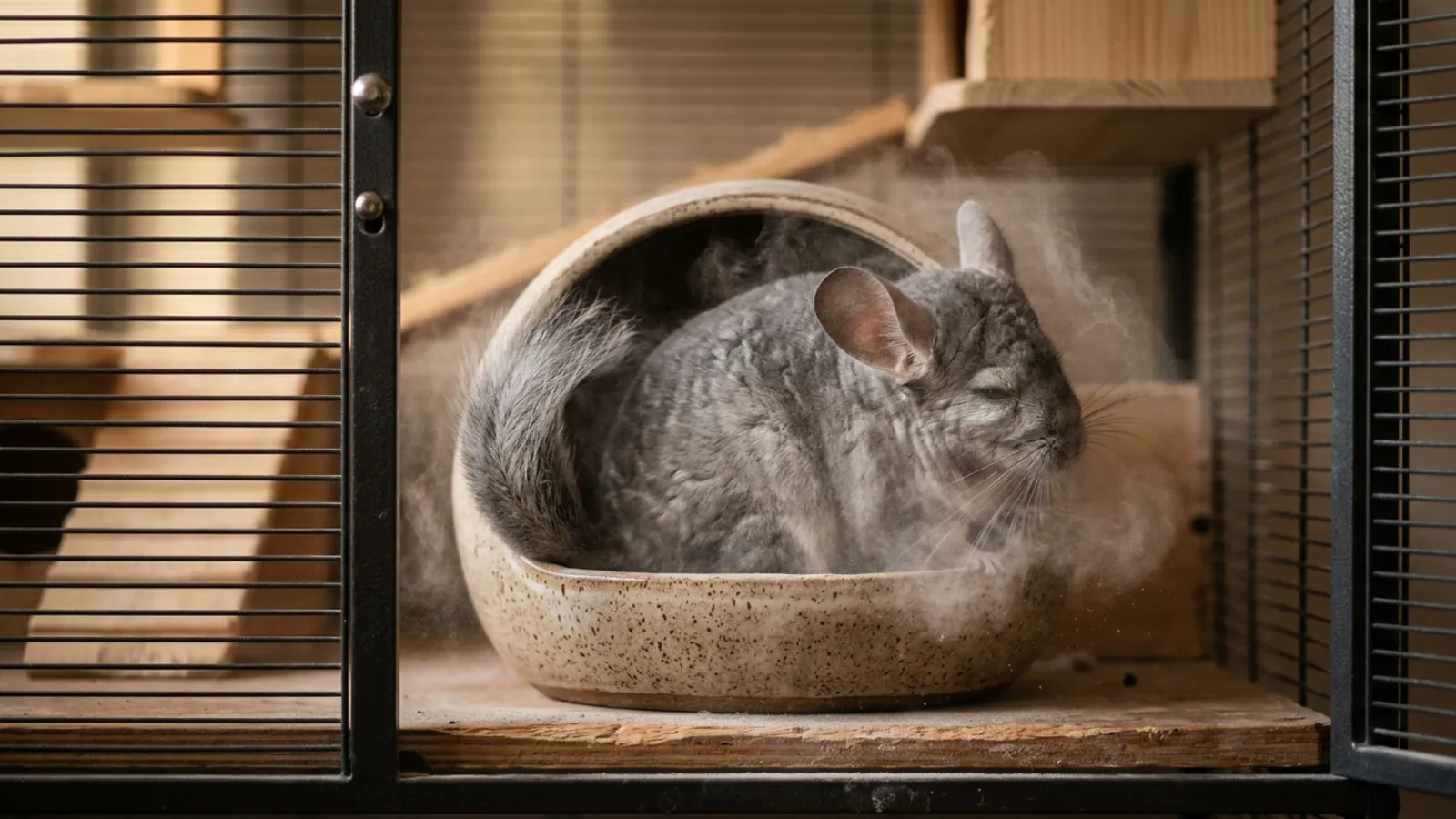
Chinchillas do not wash in water. A chinchilla dust bath is not a treat or an enrichment extra you can skip on a busy week; it is the only way this animal keeps its coat clean and healthy. When I first brought Pebble home from a rehome out of an overheated attic, her fur was dull and clumped, and the fix was not a bath in the sink but a bowl of fine volcanic dust and the freedom to roll in it. Ten years of keeping chinchillas later, I still treat the dust bath as core husbandry, on the same level as unlimited hay and a cool room. This is how I run it, what dust I use, what I put it in, and the mistakes that cost coats and sometimes eyes.
Why a chinchilla needs a dust bath at all
If you have ever wondered chinchilla dust bath why, the answer is in the fur itself. A chinchilla has one of the densest coats of any land mammal, with somewhere around fifty to eighty hairs growing from a single follicle, depending on which source you read. That density is what makes them so soft, and it is also what makes water a disaster. When that coat gets soaked, the water cannot evaporate out fast enough. The undercoat stays damp against the skin, and damp dense fur is a perfect place for fungal infection to take hold. A wet chinchilla can also chill dangerously, because that trapped moisture ruins the very insulation the coat is built to provide.
So the reason chinchilla why dust bath comes up so often is that dust does the job water cannot. The fine particles work their way down to the skin, absorb excess oil and moisture, and then fall away carrying the dirt with them. It is a dry-cleaning system, essentially. In the wild, high in the Andes, chinchillas roll in fine volcanic ash and pumice to manage exactly this. A chinchilla bath in dust is not us imposing a quirky habit on a pet; it is us recreating something the species has always done. Skip it, and the coat goes greasy, then matted, and the skin underneath suffers.
This ties into the wider picture of what a chinchilla is, and why its biology dictates the care. If you want the full grounding, I wrote about that in what a chinchilla really is. In short: nearly every rule with these animals, from the cool room to the unlimited hay to the dust bath, comes straight from a body built for a cold, dry, high-altitude life.
What the dust is, and what to avoid
The dust is not sand, and it is not talcum powder. Proper chinchilla bath powder is a fine, dry powder made from ground volcanic pumice or a similar mineral. Good dust feels almost impossibly soft between your fingers, like flour but lighter, and it puffs into the air at the smallest disturbance. That fineness is the point. A coarse, gritty product will not penetrate the coat, and it can scratch. If you searched for a dirt bath, that word is the misconception itself.
When people ask me about the best chinchilla dust, my answer is that a few well-known brands are all fine and the differences between them are small. Oxbow chinchilla dust is one I have used and trust, and Blue Cloud is the other name you will hear constantly in chinchilla circles. Either one is a safe default. What you are looking for on the label is a pure pumice or volcanic-origin dust with no added fragrance. I avoid anything scented. Chinchillas have no need for it, and perfumes are a pointless irritant to lungs and eyes.
A quick word on that dust cloud. This is very fine mineral powder, and it does get airborne. It is not something I would breathe in a small closed room for an hour, and if anyone in your home has asthma, place the bath somewhere ventilated and step back once your chinchilla starts rolling. This is not a scare, just common sense about fine powder.
The best dust for chinchillas is also dust you keep dry and clean. Store the bag sealed. If dust gets damp it clumps and loses the fine texture that makes it work. And do not confuse a chinchilla powder bath product with the "sand" sold for other small pets. Some of those are heavier silica sands that are wrong for a chinchilla coat and, in the case of certain fine silica dusts, genuinely bad to breathe. Stick with a pumice-based product marketed for chinchillas specifically.
Picking the bath house
You need something to put the dust in, and this matters more than people expect. The container has to be big enough for a full roll and heavy or enclosed enough that your chinchilla does not simply flip it and fling dust across the room. I have used a few designs over the years.
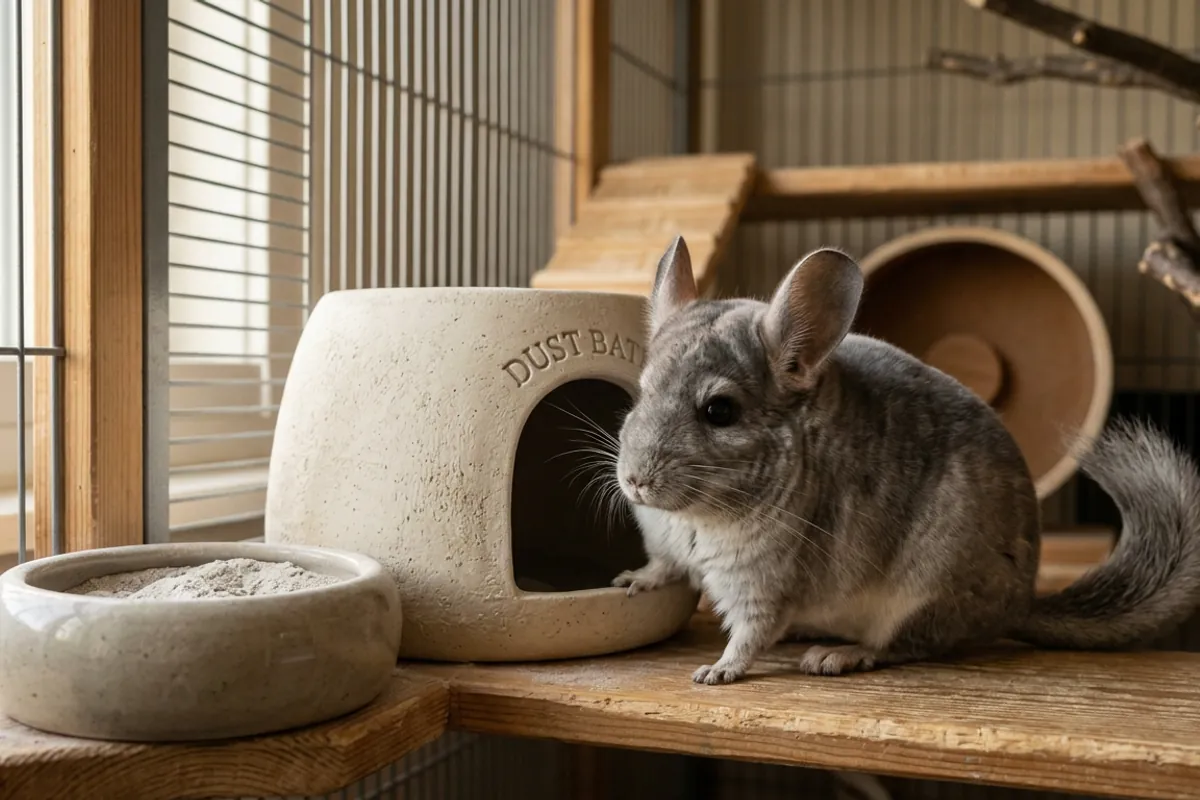
A ceramic chinchilla bath is my long-term favorite. Ceramic is heavy, so it stays put when an enthusiastic chinchilla throws its whole body into a spin, and it is easy to wipe clean. The weight is the selling point: a light plastic dust bath bowl gets tipped and skated around the cage, and then you have dust everywhere and an empty bowl. If you go the open-bowl route, a wide, low, heavy chinchilla dust bath bowl works, but be ready for more mess, because an open bowl throws dust further than an enclosed house does.
The enclosed house style, the kind with a single round entry hole, contains the mess far better and doubles as a place your chinchilla feels tucked away. The tradeoff is cleaning, since you have to reach inside. For most people, especially a first chinchilla, I would point you at a solid, weighted enclosed bath.
Lixit Blue Beauty chinchilla dust, 3 lb As an Amazon Associate I earn from qualifying purchases.
Whatever you choose, size it for the animal. Your chinchilla should be able to flip completely over inside it. Cramped baths give you a half-hearted roll and a coat that never really gets clean. And keep it out of the cage between sessions, which I will come back to, so the container itself is more about the bath than about permanent furniture. For how the bath fits into the rest of the enclosure, I put the details in the cage setup guide.
How often, and for how long
This is where I see the widest range of advice, so let me be plain about what is settled and what is judgment.
Settled: a chinchilla needs regular dust baths, not occasional ones, and each session is short. Two or three baths a week is the range most keepers land on, and it is where I sit for a healthy adult in a normal home. Each session runs about ten to fifteen minutes. That is enough for a chinchilla to roll, flip, and work the dust through the coat several times over.
Judgment: the exact frequency depends on your home and your animal. In a humid stretch of summer, or if your chinchilla's coat looks or feels oily, I bump it up toward daily. In a very dry winter, or if the fur is getting flaky and dry, I cut back, because too much dust strips the coat and leaves the skin irritated. You are watching the animal, not obeying a fixed number. A coat that looks dull and clumped wants more bathing; skin that looks flaky and dry wants less.
The reason I pull the bath after ten or fifteen minutes rather than leaving it in is twofold. First, chinchillas will often use a left-in bath as a toilet, and then you have a filthy dust box they keep rolling in, which defeats the entire purpose. Second, a chinchilla that can bathe all day tends to overbathe, and I have seen the dry, itchy skin that follows. Offer it, let them enjoy it, take it away. That rhythm has served Pebble and Juniper both.
Keeping it clean, and reusing dust
Dust is not free, and the instinct is to reuse it. You can, within reason, but with limits.
After a session, I sift out the obvious debris, the droppings and the clumps, before the bath goes back in the bag or bin. A little kitchen sieve does the job. If the dust still looks and smells clean, it gets another use or two. The moment it looks gray and tired, smells at all, or has been peed in, it goes in the bin and I start fresh. Dust that has absorbed oil and moisture stops absorbing, so tired dust is just expensive dirt you are rubbing back into a clean coat.
The depth in the bath matters too. You do not need a deep pool of it. About an inch, or two to three centimeters, is plenty for the roll to work. More than that just wastes dust and makes a bigger cloud. Between baths, I wipe the ceramic or empty the house out completely rather than leaving old dust sitting in it collecting cage dust and hair.
One habit worth building: keep the bath as its own item, brought out for the session and stored clean. A dedicated chinchilla and dust bath routine, done at the same rough time on the same days, means your chinchilla learns to expect it and dives straight in. Pebble hears the dust bag rustle and is already at the cage door.
Heat, humidity, and when not to bathe
This is the part that matters most, because it is the part that nearly cost me Pebble. Her first summer brought a heatwave and a night at the emergency vet, and heat is the thing I am relentless about.
A dust bath is physical exercise. A chinchilla rolling and flipping generates body heat, and this animal cannot shed heat well, because that magnificent coat is built to hold warmth in. That animal is comfortable only from 60 to 70°F (15 to 21°C) or so. Above 75°F, or 24°C, you are into risky territory. At 80°F, 27°C, and up you have an emergency, and it comes on faster in humid air. So I do not offer a bath when the room is warm. On a hot day, the bath waits until evening when the room has cooled, or it waits for another day entirely. A chinchilla flipping enthusiastically in an 80-degree room is a chinchilla you can push into heat stroke.
If you are not certain where your room sits, measure it. I keep a thermometer and hygrometer on the cage rather than guessing, because a room that feels fine to me can be several degrees warmer up where the cage is.
digital thermometer and humidity gauge with remote probes As an Amazon Associate I earn from qualifying purchases.
Humidity matters alongside temperature, and not only for heat. Damp air makes the dust clump and work poorly, and it makes any warmth far more dangerous. If your summers are hot, sort the cooling before you worry about anything else. A chinchilla can lie against a chilled stone to dump heat, which is a useful tool in a warm spell.
Kaytee Chinchilla Chiller granite stone As an Amazon Associate I earn from qualifying purchases.
For the full picture of what heat does to these animals and how to read the early signs, I wrote it out in detail in chinchilla heat stroke warning signs, and there is a heat danger calculator that takes your temperature and humidity and tells you where you stand. If you take one thing from this whole article, let it be that the dust bath never comes before heat safety.
The mistakes I see most
The single biggest one is water. It bears repeating because new owners do not know: never put a chinchilla in water. No baths in the sink, no spot-cleaning with a wet cloth on the fur, no "just this once because she got something sticky on her." If a chinchilla gets something stuck in the coat that dust will not shift, you spot-clean the smallest possible area with a barely damp cloth and dry it immediately, and for anything more than that you call an exotics vet. A soaked chinchilla is a fungal infection and a chill waiting to happen.
The second mistake is the wrong product. Craft sand, play sand, scented "small animal bath sand," anything gritty or perfumed. If it does not say pure pumice or volcanic chinchilla dust on it, it is not going near my animals. Oxbow chinchilla dust or Blue Cloud, unscented, and nothing exotic.
The third is leaving the bath in the cage full time. I covered why above, but I list it here because it is so common. It leads to overbathing, dry skin, and a dust box used as a litter box.
The fourth is ignoring what the bath is telling you. A chinchilla that stops bathing, or whose coat stays greasy no matter how often you offer dust, may be unwell, in pain, or too hot to bother. Chinchillas hide illness well, and a change in bathing behavior is one of the few early tells you get. Juniper, my dental rescue, went off her normal bathing rhythm when her teeth were bothering her, before other signs showed. If something changes and stays changed, that is a vet conversation, not a wait-and-see. For the dental side specifically, I keep chinchilla teeth problems close, because with these animals so much traces back to the mouth.
Get the dust right, the container heavy, the schedule sensible, and the heat respected, and the dust bath becomes the easiest, most reliable part of chinchilla keeping. It is also lovely to watch. Ten years in, I still stop what I am doing when Pebble goes for a roll.