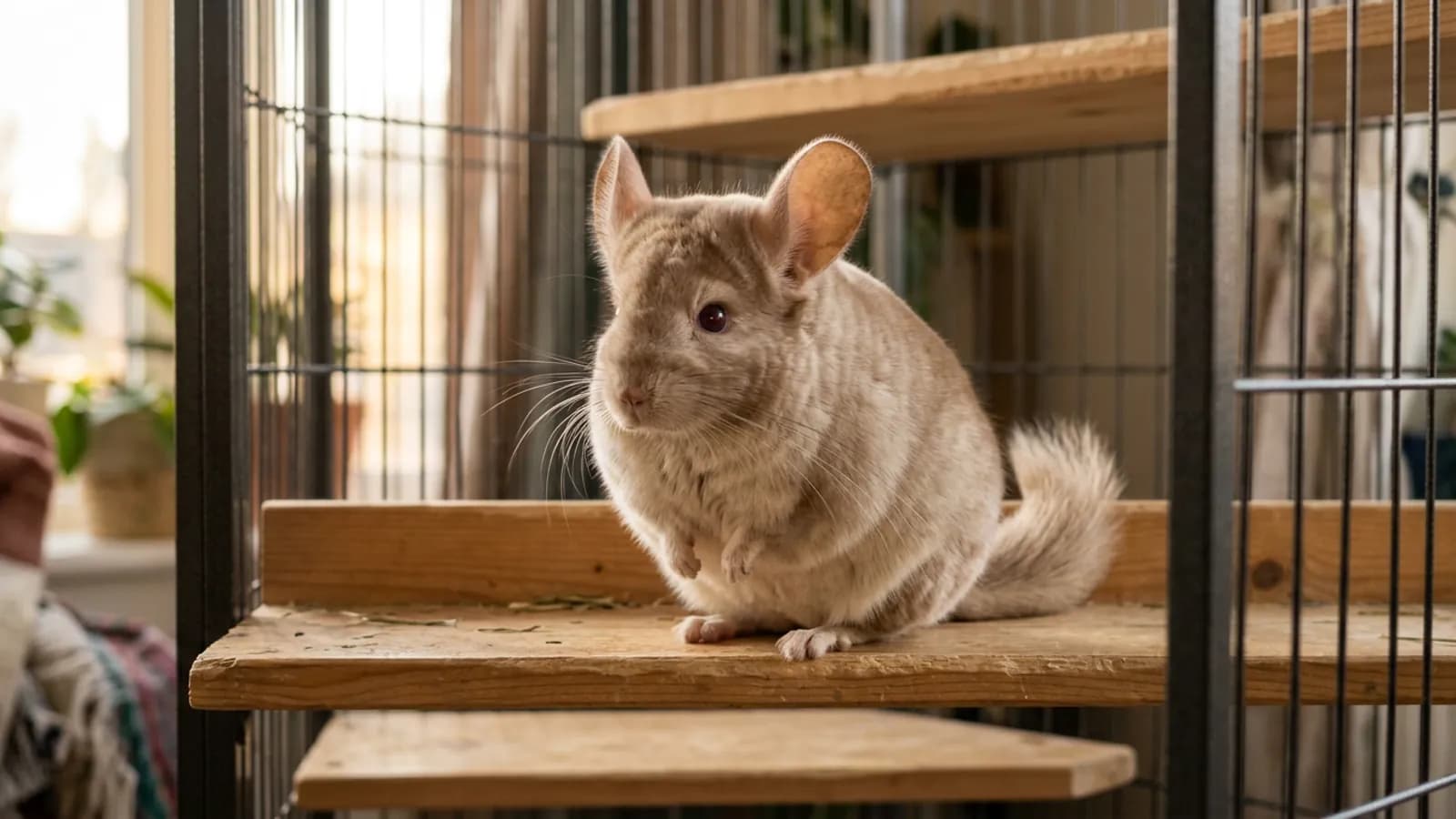
There is no such thing as a red chinchilla in the way the phrase makes people picture one, and that is the honest place to start. When someone searches for red chinchillas they are usually imagining a rich rust or ginger coat, something close to a red squirrel or an Irish setter. That animal does not exist in the species I keep. What does exist is a family of warm toned mutations, some genuine ruby colored eyes, and a lot of photographs that read redder on a screen than they ever did in the room. I have kept chinchillas for about ten years, and I have watched the same misunderstanding play out again and again: a keeper falls for a colour word, pays a premium for it, and brings home an animal whose care is identical to every other chinchilla on the shelf. So let me walk through what red actually means here, where the warmth comes from, and why the label matters far less than the listing wants you to believe.
Is there such a thing as a red chinchilla
The short answer is no, not as a distinct colour the way people mean it. The wild chinchilla, and the standard grey pet chinchilla descended from it, is a banded silver grey called agouti. Every domestic colour you will ever see is a mutation off that grey base, and the palette those mutations produce runs through charcoal, cream, tan, off white, a smoky blue grey, and a soft mauve. It does not include a true red. There is no known mutation in domestic chinchillas that floods the coat with the deep red pigment you would need for a genuinely red animal.
What people are almost always reacting to is one of two things. The first is a warm toned coat, a beige or champagne animal that photographs with a rosy cast. The second is the eyes. Some mutations carry ruby or deep red eyes, and a person who sees those glowing red in a photo will describe the whole animal as red even when the fur is plainly cream or tan. Neither of those is a red chinchilla. They are a warm coat and a red eye, and it is worth keeping the two separate in your head, because a seller who blurs them is either confused or counting on you being confused. If you have already gone down the rabbit hole of a supposed chinchilla orange, you have met the same story wearing a different coat.
Where the warm colour actually comes from
To understand why some chinchillas look warm and none look truly red, it helps to know a little about the pigment itself. Mammal coat colour is built from two kinds of melanin. One is eumelanin, which gives black and brown and grey. The other is pheomelanin, which gives the warmer yellow to reddish tones. In a standard grey chinchilla the coat is dominated by eumelanin, which is why the animal reads as cool silver grey with a white belly.
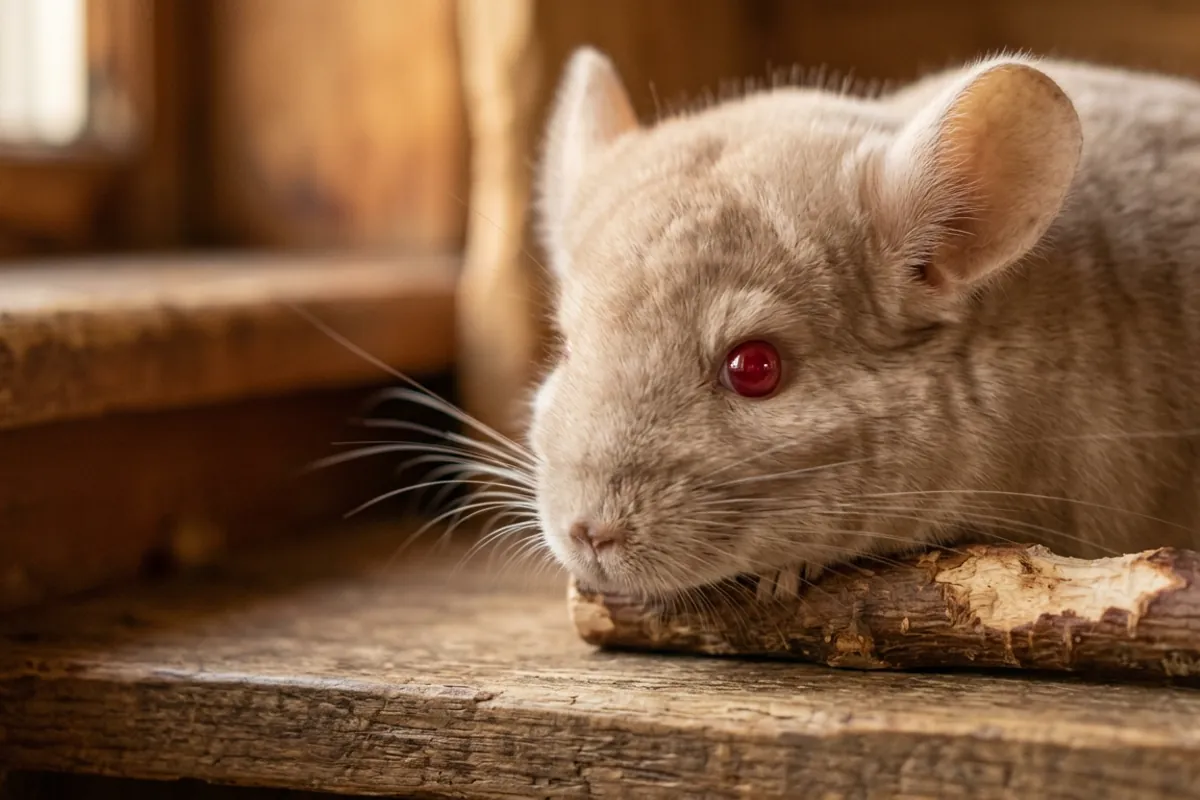
The beige mutation, which is the single biggest source of warmth in the species, works by reducing the dark eumelanin. With less of the cool dark pigment laid down, the warmer underlying tones come forward, and the coat shifts toward tan, cream, and champagne. That is the whole trick. Nobody added red pigment. A mutation subtracted the dark pigment that was hiding the warmth. This is the same pattern I describe with the brown chinchilla, which is really a warm toned animal built from beige combined with other mutations rather than a separate brown gene.
Beige also tends to bring lighter eyes, often a ruby or red that catches the light. That is the honest origin of most red talk. A beige animal in warm indoor lighting, with red eyes glowing back at the camera, can genuinely look reddish in a snapshot. It is still a beige chinchilla. The warmth is real, the redness is mostly a trick of pigment reduction and lighting, and the animal underneath is an ordinary chinchilla with ordinary needs.
The mutations people mean when they say red
When someone insists they have seen a red chinchilla, they are usually pointing at one of a handful of real, named mutations. It is worth knowing them so you can translate the marketing back into biology.
Beige is the first and most common. It comes in lighter and darker expressions depending on whether the animal carries one copy of the mutation or two, and the darker, richer beiges are the ones most likely to get called red or apricot. Champagne is a term some breeders use for a pale, warm cream animal, typically a beige combined with white. Pastel is another word that floats around for warm beige tones, and like champagne it is a description more than a rigid genetic category, so two sellers can use it to mean slightly different things.
Then there are the cool coloured mutations that are sometimes lumped into loose colour talk even though they are nowhere near red. A chinchilla sapphire is a soft blue grey. A chinchilla violet is a gentle mauve. A black velvet chinchilla is a dark animal with a veiled charcoal cast. None of these are warm, let alone red, but they show up in the same conversations because colour listings tend to throw every fancy word into one pile. If you want the full spread of what is genuinely out there, I keep a plainer accounting in rare chinchilla colors, and it is a useful reality check against any listing that promises a colour the species does not make. One thing worth saying flatly: a true albino chinchilla is also far rarer and more complicated than the label suggests, and the same skepticism applies to red.
Why a photo can look redder than the animal
A huge amount of the red chinchilla confusion is not biology at all. It is photography. I have taken enough pictures of my own chinchillas to know how far a coat can drift between the room and the screen.
Warm indoor lighting is the biggest culprit. Ordinary household bulbs throw a yellow to orange cast, and a beige or champagne coat soaks that up and reads warmer, sometimes distinctly reddish. Camera white balance makes it worse. A phone left on automatic will often overcorrect, pushing neutral greys warm and turning a mild tan into something that looks almost ginger. Then there is the eye flash. A chinchilla with ruby eyes will bounce red straight back at a flash or a bright ring light, and a single glowing red eye in an otherwise cream photo is enough to make a buyer type the words red chinchilla into a search bar.
None of this is dishonest on its own. It is just how cameras behave. But it does mean you should never buy a colour off a photograph. If a listing hinges on how red the animal looks in one warmly lit shot, ask for pictures in daylight, near a window, with no flash. The warmth will still be there if the animal is genuinely beige, but it will settle down into an honest tan rather than a screen ready red. A coat that only looks red under a specific bulb is telling you about the bulb.
What red never changes about care
Here is the part I care about most, because it is the part that keeps animals alive. Colour changes nothing about how a chinchilla must be kept. A warm toned beige, a cool sapphire, a standard grey, and whatever a seller wants to call red all need exactly the same things, and none of those things bend for a fancy coat.
They all need to stay cool. Chinchillas evolved in a cold, dry, high altitude climate, and they carry the densest fur of almost any land mammal, which means they hold heat and shed it poorly. The comfortable range is 60 to 70°F, which is 15 to 21°C. Above 75°F, which is 24°C, you are into risky territory, and 80°F, which is 27°C, is an emergency, faster still if the air is humid. That number does not care what colour the animal is. My Pebble came out of an overheated attic and spent a night at the emergency vet during her first summer, and that scare is the reason I am relentless about temperature. If you want to know exactly where your room sits, a plain cage thermometer and hygrometer on the wall by the cage tells you more than any colour ever will. digital thermometer and humidity gauge with remote probes As an Amazon Associate I earn from qualifying purchases.
They all eat the same way. Unlimited grass hay first, always, as the entire foundation of the diet, with a measured amount of plain pellets as a supplement and nothing more. My Juniper is a dental rescue, and watching her teeth up close is why I will not compromise on hay: those teeth grow continuously, and it is the grinding of coarse hay that wears them down. Good timothy hay by the box is not optional gear, it is the diet. Oxbow Western Timothy Hay, 40 oz bag As an Amazon Associate I earn from qualifying purchases. The colour of the coat has no say in any of it. You can read the fuller version in the chinchilla diet guide, and it reads the same for every colour on the site.
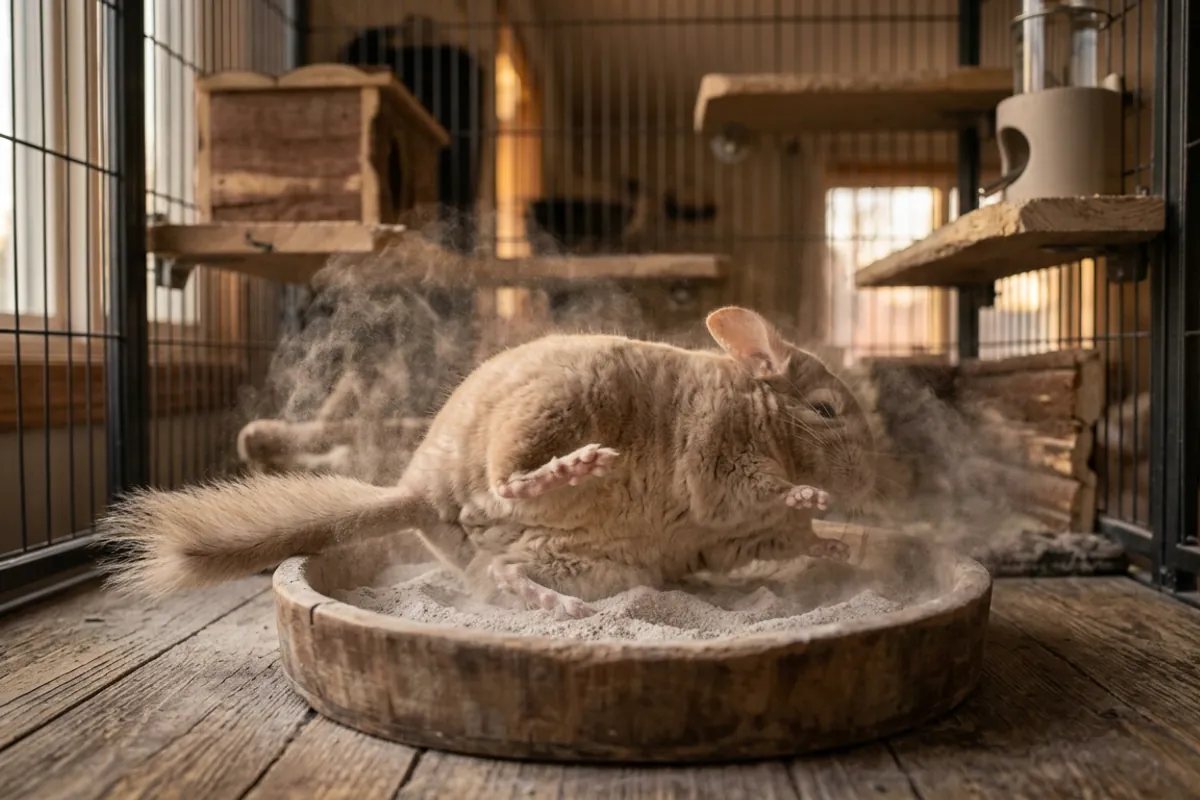
And they all bathe in dust, never water. Every chinchilla, red toned or grey or blue, keeps that dense coat clean by rolling in fine volcanic pumice dust, which pulls oil and moisture out of the fur. Water is the opposite of what that coat needs, because it soaks in, stays trapped against the skin, and invites fungal trouble. A tub of proper chinchilla dust two or three times a week does the job for any colour. Lixit Blue Beauty chinchilla dust, 3 lb As an Amazon Associate I earn from qualifying purchases.
Buying a red chinchilla without getting fooled
If you go shopping specifically for a red chinchilla, you are shopping for a word that the species does not really deliver, and that puts you in exactly the spot a sharp seller wants you in. Colour words carry price premiums, and premiums attract exaggeration. So here is how I would keep my head.
Treat red as a flag, not a feature. A listing that leans hard on the word red, especially with one dramatic photo, is more likely selling you excitement than an unusual animal. Ask what the actual mutation is. If the honest answer is beige, or champagne, or pastel, then you know you are looking at a warm toned chinchilla, which is a perfectly nice animal, just not the mythical red one. If the seller cannot name the mutation and only repeats the colour word, that tells you something about how much they know or how much they are willing to say.
Care about the things that outlast the coat far more than the coat. Ask how old the animal is, whether it has ever had dental trouble, how it has been housed, and at what temperature. Ask to see it eating hay. Ask about the parents. A warm coat on a chinchilla with untreated teeth or a heat history is a bad trade at any price. The colour will not comfort you at the exotics vet, and dental disease in particular is expensive, chronic, and quietly common, which is why I go into it at length in chinchilla teeth problems. If any of this feels like a lot to weigh, my general buy a chinchilla guide is the calmer, colour blind checklist I actually use.
And be ready to walk away from the word entirely. The best chinchilla I could point you toward might be a plain standard grey with clean teeth, a good appetite, and a keeper who kept it cool. That animal will outlive a fashionable colour every time, because none of what keeps it alive was ever about the shade of its fur.
The colour is the least important thing about the animal
I understand the pull of a red chinchilla. A warm, glowing coat is genuinely lovely to look at, and there is nothing wrong with liking beige or champagne for what they are. What I want you to leave with is the difference between a colour you can enjoy and a colour you should buy on. Red, as a true rich rust coat, is not a colour this species makes. The warmth you are seeing is a real mutation subtracting dark pigment, sometimes paired with ruby eyes and flattered by a warm bulb and an automatic camera.
Under that coat, whatever shade it lands on, is the same demanding little animal with the same non negotiable needs. It needs a cool room in the sixties Fahrenheit, unlimited hay, plenty of safe wood to chew, dust instead of water, and a tall metal and wood cage with real space to move. Meet those, and the colour becomes what it always should have been: a nice detail on an animal you are keeping well. Chase the colour instead, and you can end up with a warm toned chinchilla and a cold set of problems. If you are still early in learning what this animal actually is, start with the plain biology in what a chinchilla really is, because that is the part that never changes, no matter what the coat is called.