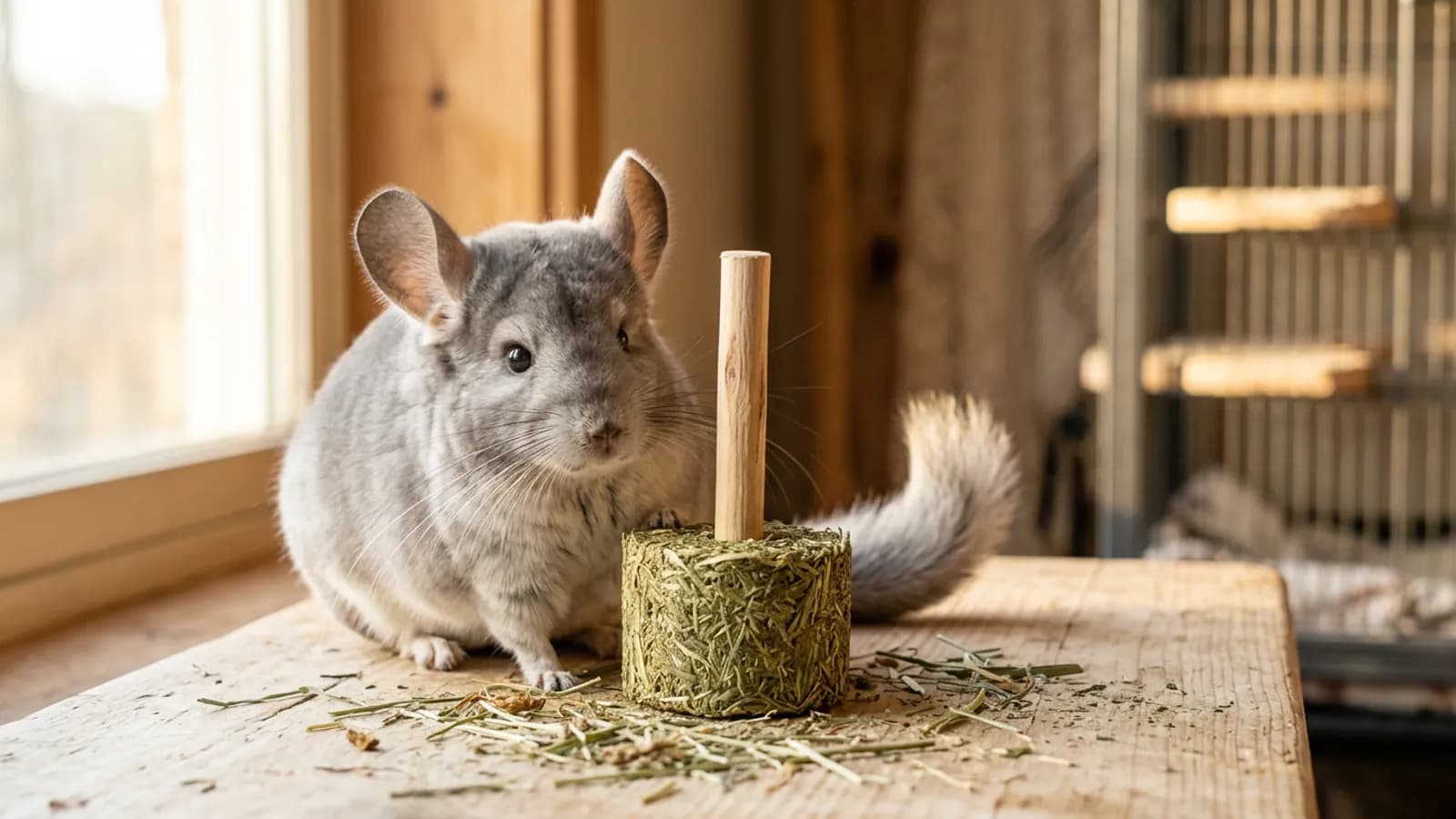
If you have typed "chinchilla cakes" into a search bar, you have landed in one of two very different places, and it matters a great deal which one you meant. Some people are hunting for the little pressed treat cakes sold in pet shops, the ones stacked in cellophane with a bow. Others want to make a birthday cake for their chinchilla, a proper cake-shaped thing with a candle on top. I have kept chinchillas for about ten years, and I have opinions on both, because both can quietly hurt an animal if you follow the packaging instead of the biology. So let me walk through what a chinchilla cake actually is, which versions are safe, which ones I would not let near Pebble or Juniper, and how to make something festive that does not cost your chinchilla its gut or its teeth.
The two things people mean by chinchilla cakes
The first meaning is a commercial product: a small compressed cake, sometimes called a treat cake or a forage cake, marketed as a chew or a snack. These range from perfectly harmless pressed hay to sugary bricks of seeds and dried fruit glued together with honey. The label almost never tells you which end of that range you are holding, which is the whole problem.
The second meaning is a celebration cake, the kind people make for a chinchilla's adoption anniversary or "birthday". Sometimes that is a genuinely lovely idea built entirely from hay and safe chews. Sometimes it is a slice of actual human cake pushed toward a small animal that cannot process sugar or fat, and that is where I start waving my arms.
Both meanings share one honest truth: a chinchilla does not need a cake of any kind to be healthy or happy. A cake is a want, not a need, and the moment you treat it as food rather than the rare novelty it is, you are working against a digestive system built for dry grass. Keep that framing and you will make good decisions. Lose it and the marketing will make them for you.
Why a chinchilla cannot eat like the rest of us
To judge any chinchilla cake you have to understand what a chinchilla is built to eat. In the wild these animals live in a harsh, sparse, high-altitude environment, and their gut evolved for a diet that is almost all coarse, fibrous, dry plant material. High fiber, very low fat, very low sugar. That is the entire design brief. Everything about a healthy chinchilla diet follows from it, and I have written the long version in what can a chinchilla eat if you want the full picture.
In practice that means unlimited grass hay first, as the base of everything, with a measured amount of plain pellets as a supplement and nothing else doing any heavy lifting. Hay is not a side dish here. It is the meal. A good timothy hay is the single most important thing in the cage, and I go through it constantly.
Oxbow Western Timothy Hay, 9 lb box As an Amazon Associate I earn from qualifying purchases.
Sugar and fat are the two ingredients a chinchilla handles worst. Their digestive tract is a slow, fiber-fermenting system that does not cope with rich food. Feed it sugar and fat and you get bloat, soft stools, gas that a chinchilla physically cannot pass easily, and over the longer run obesity and liver strain. None of that is a maybe. It is the predictable result of feeding a grass-eater like a hamster. So when I read a treat cake ingredient list, I am really reading it for two words: how much sugar, how much fat. Almost everything else is noise.
What is actually inside most commercial treat cakes
Here is where the pet shop shelf earns my suspicion. A lot of products sold as small-animal treat cakes are formulated for the whole rodent aisle at once, which means they are built for hamsters, gerbils, and rats as much as chinchillas. Those species can handle seeds, nuts, and a bit of fruit. A chinchilla cannot.
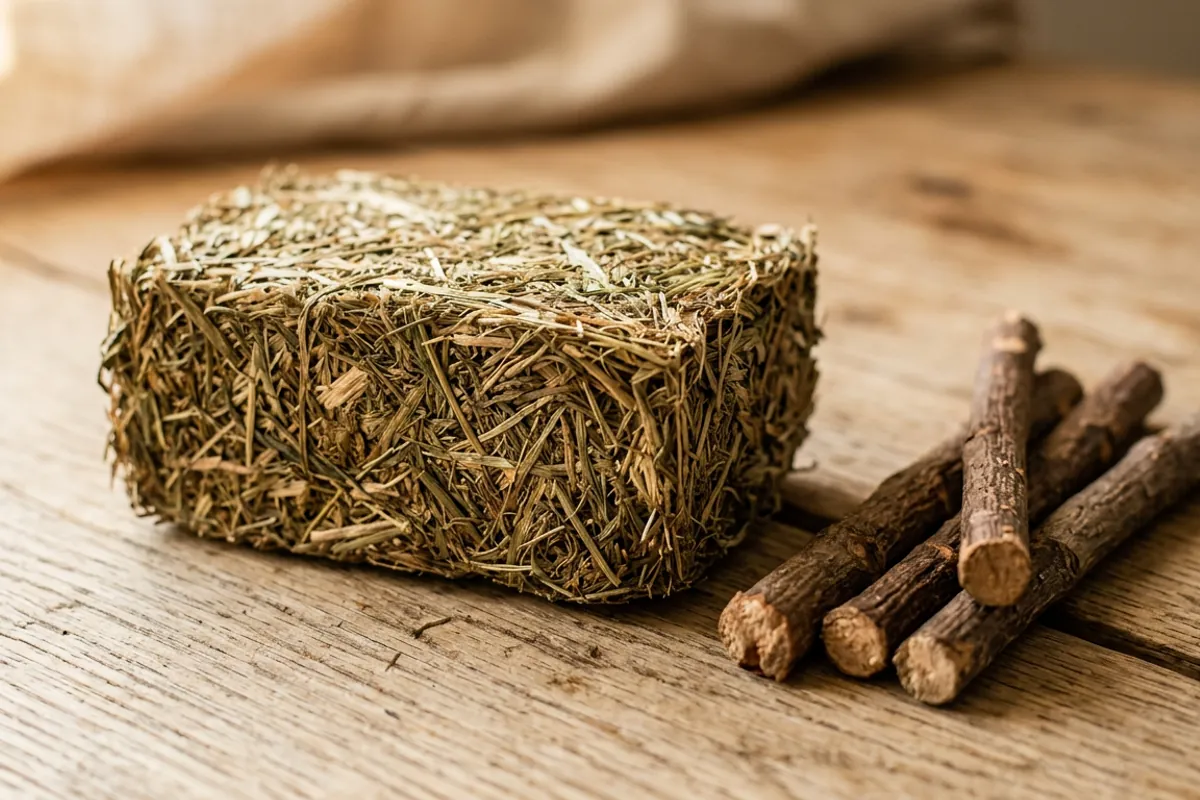
So you will find these cakes bound together with honey or molasses, studded with sunflower or other seeds, dotted with dried fruit, and sometimes coated in yogurt drops. Every one of those is a problem for a chinchilla. Honey and molasses are concentrated sugar. Seeds and nuts are concentrated fat. Dried fruit is concentrated sugar again, and the "yogurt" coating is sugar and fat wearing a healthy-sounding label. A cake like that is not a treat, it is a small sugar bomb aimed at an animal that cannot defuse it.
The tricky part is that the packaging will happily show a chinchilla on the front while listing ingredients no chinchilla should eat. A picture on a bag is marketing, not a feeding recommendation. I have said the same thing about treats in general in chinchilla treats, because the pattern repeats across the whole category: the cute packaging and the safe contents are two separate questions, and only one of them keeps your animal well.
If you flip a cake over and see honey, molasses, seeds, nuts, corn, dried fruit, or yogurt anywhere near the top of the list, put it back. That is not me being precious. That is me keeping a rescue with dental disease alive, and knowing exactly how little margin these animals have.
The one safe kind of chinchilla cake
There is a version of the treat cake I am genuinely fine with, and it is the boring one: a cake that is nothing but compressed grass hay, or hay plus a plain safe herb, with no binder beyond the hay itself. A pressed timothy cube is basically a chinchilla cake that happens to be shaped like a brick. It is hay in a fun format, and hay in a fun format is just hay.
These do two good things at once. They give a chinchilla something to work at, which is enrichment, and the working itself grinds the teeth down, which is dental care. A chinchilla's teeth grow continuously for its whole life, and the only thing that keeps them from overgrowing is constant abrasion from chewing coarse material. That is not optional maintenance, it is the difference between a healthy mouth and the slow misery of malocclusion. Juniper is my daily reminder of that. Her dental disease is managed, not cured, and I watch what happens up close when teeth do not get worn down.
So if you want to buy something called a cake, buy the plainest hay-based one you can find, or just keep a box of good timothy hay and let that be the whole treat.
Oxbow Western Timothy Hay, 40 oz bag As an Amazon Associate I earn from qualifying purchases.
The other thing worth more than any commercial cake is a proper rotation of wood chews. Plain untreated apple wood and other safe woods give the teeth the hard, varied surfaces they need, and a chinchilla will happily gnaw them for the sheer job of it.
emours apple wood chew sticks, 40 count As an Amazon Associate I earn from qualifying purchases.
I have written the case for chews as dental care rather than decoration in chinchilla chew toys, and it is the same logic as the hay cake: the value is in the chewing, not the shape.
The birthday cake question, answered honestly
Now the other meaning. People want to celebrate a chinchilla's birthday or adoption day with a cake, and I completely understand the impulse. The good news is you can, and it can be genuinely charming, as long as you build it from the right materials.
A safe chinchilla birthday cake is made of hay and nothing but hay and safe chews. Pack timothy hay into a small round shape, or stack a couple of pressed hay cubes into tiers, and use a plain untreated wood chew standing up as the candle. If you want a bit of colour, a single dried rose hip or two on top is the kind of thing most keepers consider a reasonable rare treat, though even there I keep it to a tiny amount because rose hips still carry sugar. Then take your photos, let the chinchilla shred the whole thing, and call it a party. The chinchilla does not know it is a cake. It knows it is a satisfying pile of hay, which is exactly what you want it to think.
What you must not do is feed your chinchilla actual cake. Human birthday cake is flour, sugar, fat, and often dairy and chocolate, and every one of those ranges from unsuitable to outright dangerous for a chinchilla. Chocolate in particular is toxic to them, the same way it is to dogs, and there is no safe nibble. A crumb of frosting is not a sweet gesture, it is a real risk to a small animal that cannot handle any of it. If the cake is for a human party and the chinchilla is nearby, keep the two apart completely.
The honest summary is that the celebration is for you, and the hay version lets you have it without asking the animal to pay for it later.
How to give a treat without doing harm
Even with the safe options, the amount matters as much as the ingredient. A treat is a rare thing, not a daily ritual, and the safest treats for a chinchilla are almost aggressively boring. A single plain rolled oat, a small piece of plain shredded wheat with no sugar coating, a pinch of plain dried herb, or a little extra hay in a new shape. That is the whole menu I would trust, and even those go in tiny amounts and not every day.
The reason for the restraint is that a chinchilla is small, and its whole diet has to stay balanced around unlimited hay and a measured amount of plain pellets. If you can find good plain pellets and treat them as the supplement they are, you have the base right, and I get into the detail of that in chinchilla pellets. Every extra you add competes with that base. Fill a chinchilla up on cake, even a safe hay cake, right before its normal food, and it eats less of the hay and pellets that actually keep it well. So I offer treats after the main eating, in small pieces, and I stop well before it looks like a meal.
Watch the animal, too. If a new treat is followed by soft droppings, a smaller appetite, or a quiet, hunched chinchilla, stop the treat entirely and go back to hay and water only. A chinchilla that is genuinely off its food, bloated, or not passing droppings is not a wait-and-see situation. That is an exotics vet call, and the sooner the better, because these animals hide illness until it is advanced and they go downhill fast.
What a cake can never replace
I want to close on the thing the cake conversation quietly distracts from. No cake, safe or otherwise, is what keeps a chinchilla healthy. The husbandry is what does that, and it is unglamorous. Unlimited grass hay. Plain pellets in a measured amount. Fresh water. Plenty of hard things to chew. A dust bath a few times a week, in fine volcanic dust and never in water, because water ruins their dense coat and a wet chinchilla is a genuine problem, not a cute one.
Lixit Blue Beauty chinchilla dust, 3 lb As an Amazon Associate I earn from qualifying purchases.
And above all, temperature. Chinchillas are built for cold, and heat is the thing most likely to kill one before its time. The comfortable range is 60 to 70°F, which is 15 to 21°C. Above 75°F, meaning about 24°C, you are into risky territory, and 80°F, about 27°C, is an emergency, faster still if the air is humid. That is not a number I soften to sound friendly. Pebble's first summer brought a heatwave and a night at the emergency vet, and the heat rules on this whole site come straight out of that scare. A birthday hay cake is a nice afternoon. A cool room is the thing that lets the chinchilla have another birthday at all.
So make the cake if you want the photos. Build it from hay, skip the sugar, keep the chocolate on the other side of the room, and treat the whole thing as the small novelty it is. Then put the animal back in front of its hay, check the thermometer, and get on with the care that actually counts.