If you have ever stood in a pet store aisle weighing a chinchilla and hamster against each other, you are not alone. They sit near each other on the shelf, both small and furry, both sold as pocket pets, and the assumption is that they land in roughly the same care bracket. They do not. After about ten years with chinchillas, I can tell you that a chinchilla and a hamster are two of the most different small animals you could put side by side, and the places where they differ are exactly the places where getting it wrong hurts the animal. This is the honest owner-to-owner rundown of what the two share, where they split, and why a few common ideas about mixing them are dangerous.
Why people compare a chinchilla and hamster at all
The comparison makes sense on the surface. Both are rodents, both are small enough to hold, and both get shelved as beginner pets in the same corner of the store. If you are new to keeping animals, "chinchilla hamster" reads like a single category of low-effort, cage-dwelling companion.
That is where the resemblance ends. A hamster is a small, mostly solitary, short-lived burrowing rodent from warm dry regions. A chinchilla is a long-lived, highly social, high-altitude Andean animal built for cold, with a coat so dense it cannot shed heat the way most mammals do. Treating them as interchangeable is how people end up with a chinchilla in a hamster-sized setup, or a chinchilla ball rolling across a warm floor, or two animals in one cage that should never meet. If you are still deciding whether a chinchilla is right for you at all, the honest version of chinchillas as pets is a better starting point than any hamster comparison.
I want to walk through the real differences, because each one is a decision you will actually make: how much space, what temperature, what food, whether they can share a home, and which toys are safe.
The size and lifespan gap nobody mentions
A hamster lives around two to three years. That is the number that shapes everything about hamster keeping, from how you bond with the animal to how you plan around vet costs. A chinchilla, kept well, lives ten to twenty years, and fifteen is not unusual. I have seen the fifteen-plus figure enough to take it seriously, and it changes the whole shape of the commitment. If you want the fuller picture, I wrote it up in how long chinchillas really live.
So the first honest thing to say is that a chinchilla is not a short experiment. When someone tells me they are choosing between a chinchilla and hamster because they want something low-commitment, the hamster is the animal that fits that description, not the chinchilla. A chinchilla is a decade-plus responsibility, closer to a cat in duration than to the hamster it sits beside on the shelf.
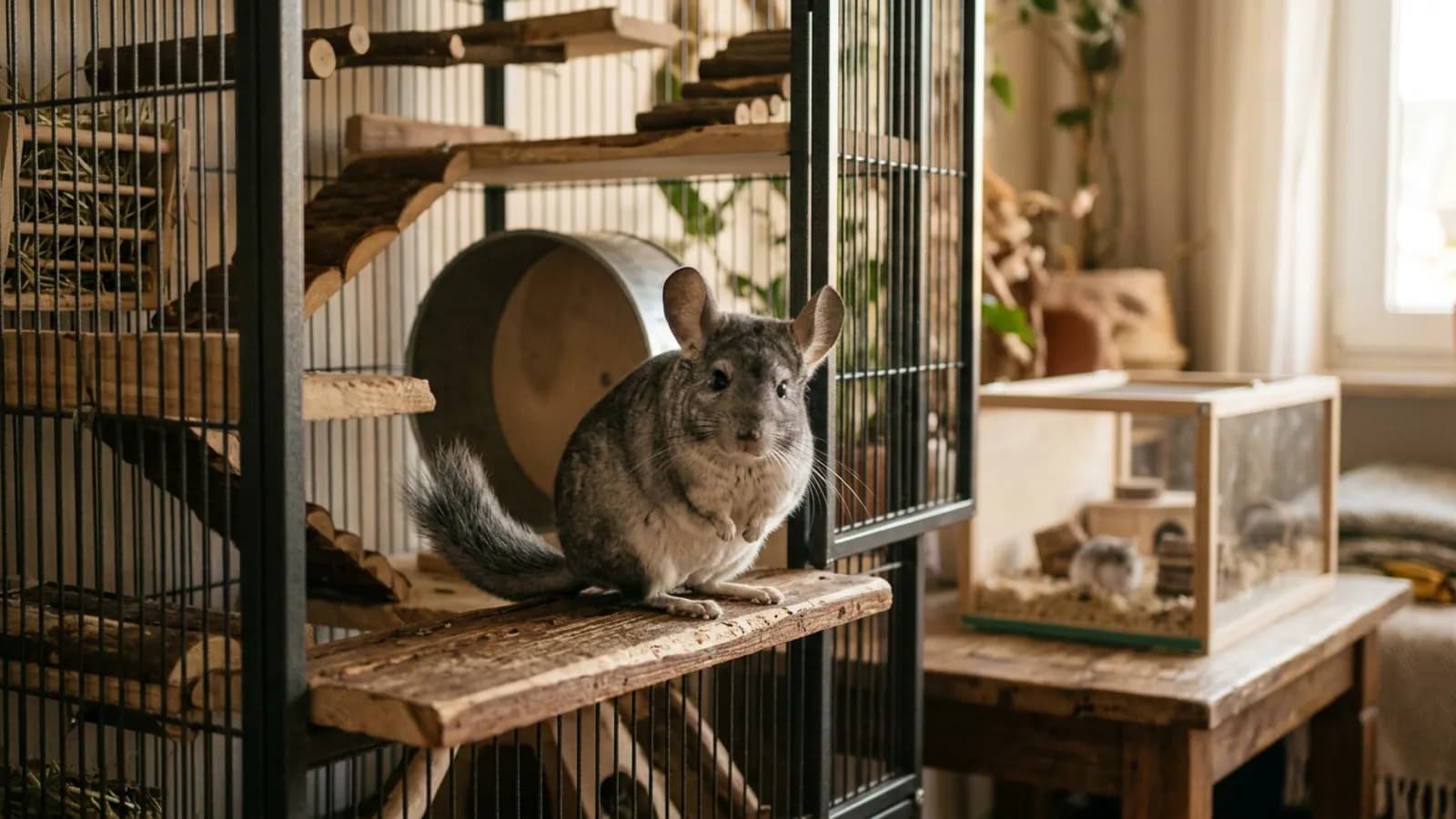
Size follows the same pattern. A hamster does most of its living inside a modest tank or cage. A chinchilla needs height, real height, because they are jumpers and they need vertical space to feel and behave like themselves. A tall metal-and-wood cage with wooden ledges at different levels is the baseline, not the upgrade.
Critter Nation double unit small animal cage As an Amazon Associate I earn from qualifying purchases.
I go deep on this in how to choose a chinchilla cage, but the short version is that anything marketed as a small-rodent cage, the kind that suits a hamster, is far too small for a chinchilla. The floor space, the bar spacing, the height, all of it is wrong. A hamster habitat and a chinchilla habitat are not the same product scaled up or down. They are different builds for different bodies.
Temperature is where the two split hardest
This is the difference I care about most, and it is the one that gets a chinchilla killed. Pebble came to me from a rehome out of an overheated attic, and her first summer brought a heatwave near-miss and a night at the emergency vet. That scare is why I am relentless about heat, and why I refuse to soften this section to sound friendlier.
A hamster comes from warm, dry country and tolerates ordinary household temperatures without much drama. A chinchilla does the opposite. That dense coat, the thing that makes them so soft, is insulation built for cold mountain nights, and it traps heat brutally well. A chinchilla cannot pant effectively and does not sweat across its body the way you might hope. When the room gets warm, the heat has nowhere to go.
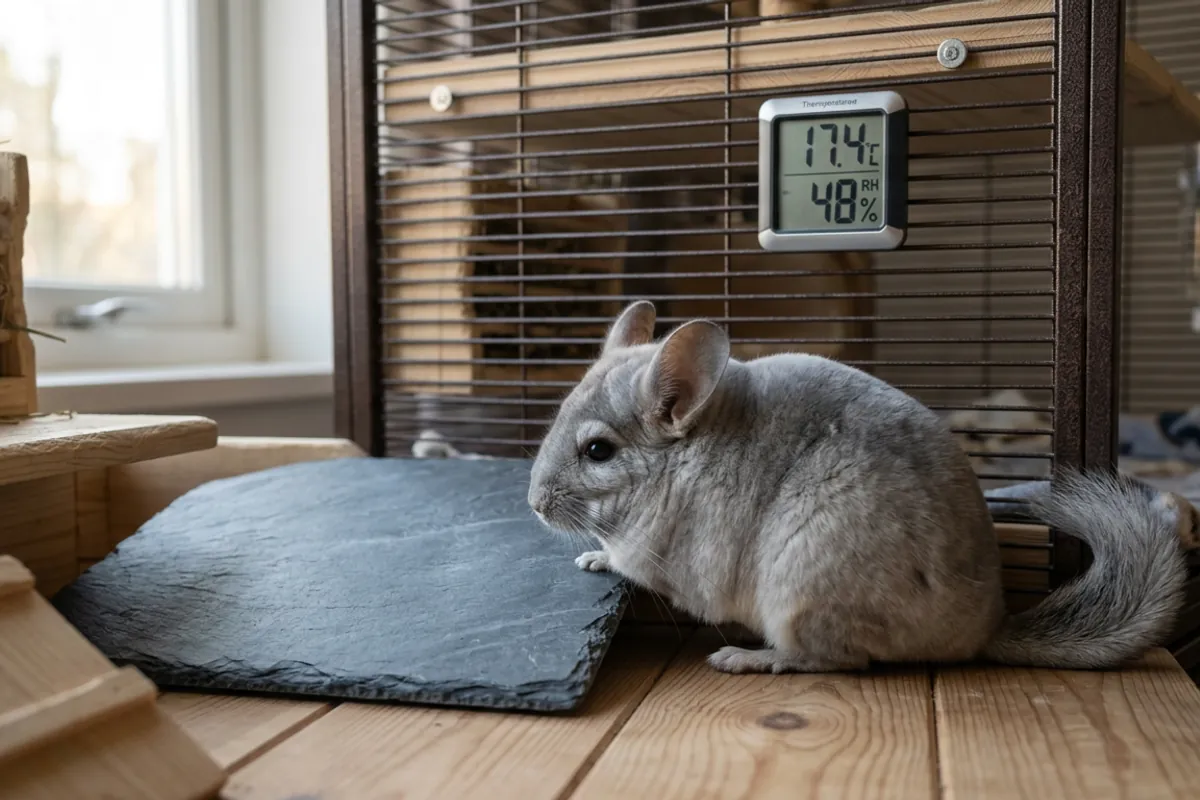
The comfortable range for a chinchilla is 60 to 70°F, which is 15 to 21°C. Above 75°F, or 24°C, you are into risky territory. At 80°F, 27°C, and up, you are in an emergency, and it comes on faster in humid air because humidity blocks what little cooling the animal can manage. Those numbers are not preferences. They are the line between a healthy chinchilla and heat stroke.
A hamster in an 80°F room is warm. A chinchilla in an 80°F room is in danger. If you keep both in one home, you are keeping the whole space at chinchilla temperatures, full stop, because the chinchilla is the one that cannot survive the compromise. I keep a thermometer and hygrometer on the cage so I am reading the actual air the animal breathes, not guessing from the wall thermostat across the room.
digital thermometer and humidity gauge with remote probes As an Amazon Associate I earn from qualifying purchases.
For the days the room creeps up anyway, a chinchilla can lie against a chilled solid stone to shed some heat, which is a thing a hamster never needs.
Kaytee Chinchilla Chiller granite stone As an Amazon Associate I earn from qualifying purchases.
Learn the warning signs before you need them: chinchilla heat stroke warning signs and the wider heat safety guidance exist because this is the fastest way to lose a chinchilla. There is also a heat danger calculator if you want to check your own room against real thresholds. A hamster owner rarely thinks about any of this. A chinchilla owner thinks about it every warm day of the year.
Diet: hay first versus the seed bowl
Feeding is another place where the two animals ask for opposite things, and mixing up the rules does slow, real damage.
A hamster is an omnivore. Its diet leans on a formulated seed-and-grain mix with some fresh bits and the occasional bit of protein. That seed bowl is normal and appropriate for a hamster.
A chinchilla is a hindgut fermenter built to grind through fibrous grass all day. The foundation of a chinchilla diet is unlimited grass hay, timothy or a similar grass hay, available at all times. That constant chewing is not just about nutrition, it is how the teeth stay worn down, and I will come back to why that matters so much.
Oxbow Western Timothy Hay, 9 lb box As an Amazon Associate I earn from qualifying purchases.
On top of unlimited hay, a chinchilla gets a measured amount of plain, grass-based pellets. Measured, not a full bowl, and plain, not the colorful mixes with dried fruit and seeds and bright pieces. Those muesli-style mixes let the animal pick out the sugary bits and skip the fiber, which is the opposite of what a chinchilla needs. I lay out the specifics in chinchilla pellets and what a chinchilla can eat, but the headline is simple: hay first, plain pellets in a small measured amount, and treats kept genuinely rare.
Here is the trap. A seed mix that is perfectly fine for a hamster is bad for a chinchilla. If you keep both and you are not careful, the chinchilla ends up nosing into hamster food, which is far too rich and fatty for its gut. A chinchilla digestive system is sensitive, and sugar or fat it is not built for can trigger real trouble. So the diets do not just differ, they actively conflict, and a shared feeding routine puts the chinchilla at risk.
Never house a chinchilla and hamster together
Let me be blunt, because this is the question people actually type: no, you cannot house a chinchilla and hamster together, and you should not try.
Start with social needs. Hamsters, most of the common ones, are solitary and territorial, and they can be aggressive toward other animals in their space. Chinchillas are social and do well with their own kind under the right introductions, but a chinchilla is not company for a hamster and a hamster is not company for a chinchilla. They do not speak the same behavioral language.
Then there is the sheer size mismatch. A chinchilla is many times the size of a hamster, moves fast, and jumps. A hamster underfoot in a chinchilla cage is at risk of being injured, intentionally or not. Run it the other way and a startled or territorial hamster can still bite. Neither animal reads the other's warning signals, so a scuffle escalates with no off-ramp.
The environments cannot be reconciled either, which I have already covered: the temperature the chinchilla requires, the height and bar spacing it needs, the hay-based diet, the dust bath. None of that overlaps with a hamster setup. Even if the two animals somehow tolerated each other, you would be trying to run one enclosure at two incompatible sets of rules.
There is also the plain matter of stress and disease. Prey animals kept in close quarters with an unfamiliar species stay on alert, and chronic stress wears an animal down. Cross-species contact carries its own health risks. The responsible answer is separate cages, separate rooms if you can manage it, and separate everything. If you want a companion for your chinchilla, the right move is a properly introduced second chinchilla, not a different species sharing the bars.
The chinchilla hamster ball problem
This one deserves its own section because it comes up constantly and the answer surprises people. A chinchilla hamster ball, meaning one of those clear plastic exercise balls sized for a hamster or even a larger version marketed for bigger pets, is not safe for a chinchilla. Do not use one.
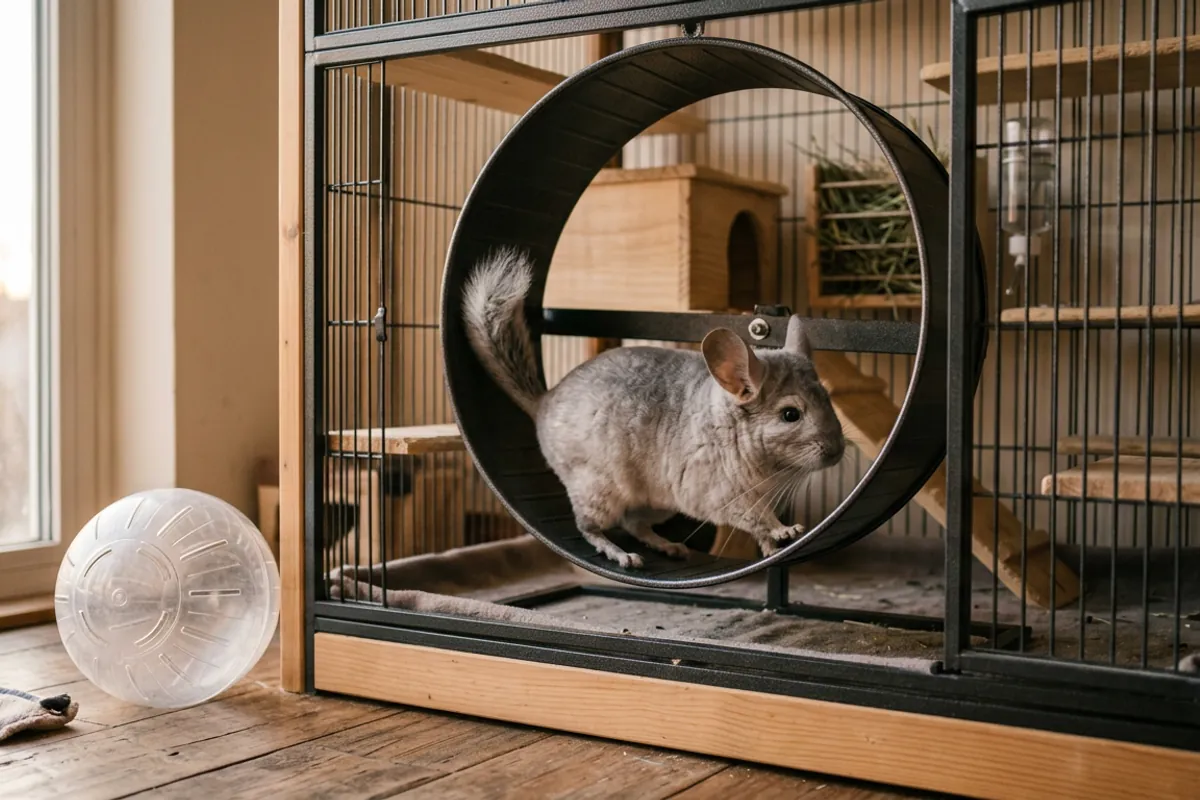
There are a few reasons stacked on top of each other. First, heat. A chinchilla generates warmth when it runs, and a sealed plastic ball has almost no airflow. You have taken an animal that already cannot shed heat and put it inside a plastic sphere that traps even more. That is a heat-stroke device, not an exercise toy.
Second, the plastic itself. Chinchillas chew, constantly and instinctively, and plastic is not safe for them to ingest. A chinchilla in a plastic ball will gnaw it, and swallowed plastic can cause a dangerous gut blockage. I say no plastic anything around chinchillas for exactly this reason.
Third, the fit and the feet. A hamster ball is built for a small hamster body. A chinchilla does not fit the same way, cannot move naturally inside it, and the ventilation slots and seams can catch feet and legs. Chinchilla legs are delicate and a caught limb is a serious injury.
So skip the ball entirely. A chinchilla gets its exercise a different way: inside a large cage with room to jump, through supervised time in a fully chinchilla-proofed space where nothing electrical or chewable is in reach, and on a proper wheel with a solid running surface. Never a wire-runged wheel, which catches toes and tails, and never a plastic one. A large solid-surface wheel is the only kind I would put in a cage.
15 inch Chin Spin solid surface chinchilla wheel As an Amazon Associate I earn from qualifying purchases.
The idea that a chinchilla and a hamster can share an exercise toy is one of the more common and more harmful crossovers, precisely because the ball looks harmless. It is not.
Dust baths, chews, and the gear that does not cross over
A couple more differences worth naming, because they shape what you buy.
Chinchillas do not bathe in water. Ever. Their dense coat holds water against the skin instead of drying, and a wet chinchilla can develop fungal problems and dangerous chilling. Instead, a chinchilla rolls in fine dust, actually a very fine volcanic pumice powder, that works its way through the fur and carries out oil and moisture. That dust bath, a few times a week in a suitable container, is how a chinchilla stays clean.
Lixit Blue Beauty chinchilla dust, 3 lb As an Amazon Associate I earn from qualifying purchases.
I cover the how and how-often in the chinchilla dust bath done right and what bathing dust really is. A hamster manages its own coat and sometimes uses sand, but the chinchilla dust routine is specific and non-negotiable, and it is not something a hamster setup prepares you for.
Then there are the teeth. A chinchilla's teeth grow continuously for its whole life, and if they are not worn down by constant chewing they overgrow into painful malocclusion. My Juniper came to me as a neglected rescue with dental disease, and I manage it day to day, so I am uncompromising here: unlimited hay plus a real variety of safe wood chews is dental care, not decoration. A rotating set of apple wood and other safe chews gives the teeth the work they need.
emours apple wood chew sticks, 40 count As an Amazon Associate I earn from qualifying purchases.
I lay this out in chinchilla chew toys and, if you want to know what dental trouble looks like early, spotting malocclusion before it turns serious. A hamster's teeth also grow, so chews matter for both, but the chinchilla's dependence on all-day hay chewing is on another level, and it ties straight back to that hay-first diet.
The through-line across every one of these differences is the same. A chinchilla and a hamster look like neighbors on the pet-store shelf, but they are built for opposite conditions and ask for opposite care. Keep them cold, feed them hay, give them dust and wood and vertical space, and never expect a hamster's rules to keep a chinchilla alive. For anything that crosses from husbandry into medicine, a swollen jaw, a chinchilla that stops eating, signs of overheating that do not resolve fast, an exotics vet is the right call, every time. That is the honest bottom line: enjoy both animals if you like, but keep them as the very different creatures they are.