What a sand chinchilla really needs is dust, not sand
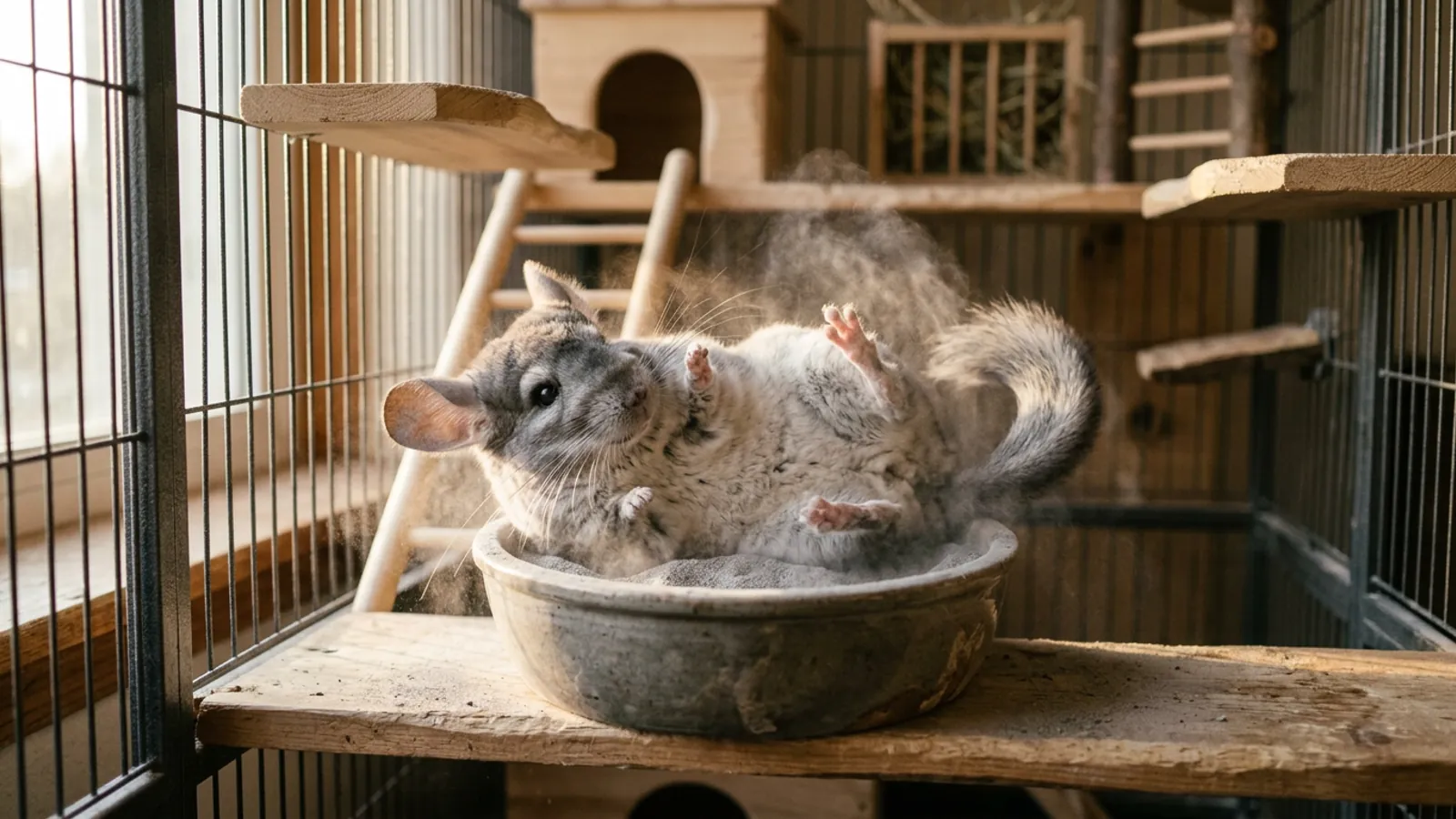
If you searched for a sand chinchilla, you probably pictured the same thing I did when I first brought Pebble home: a small gray animal rolling on its back in a tray of sand, kicking up a little cloud, cleaning itself the way a hamster scuffs through a sandbox. The rolling part is real, and it is one of the best things you will ever watch a chinchilla do. The sand part is where I want to stop you, because the word sand is doing a lot of quiet damage. What your chinchilla needs is dust, not sand, and the difference is not fussy pedantry. It is the difference between a coat that stays clean and dry and one that gets scratched, greasy, or worse.
I have kept chinchillas for about ten years, and the bath is the single piece of care people most often get half right. They know the animal does not bathe in water. They just reach for the nearest bag labeled sand and assume it is the same thing. Let me walk you through what is really going on, what to put in the bath, and how to run it so the coat stays the way it should.
Why people say sand when they mean dust
The phrase sand chinchilla comes from a reasonable place. When a chinchilla bathes, the fine powder it rolls in looks and pours a bit like sand, and plenty of shops stock it on the same shelf as reptile sand and hamster bedding. Some products are even sold as chinchilla sand, which does not help. So you end up with a word that describes the wrong material for the right behavior.
Here is the behavior it is describing. A chinchilla flips onto its side or back, wriggles hard, spins, and works powder down through its coat right to the skin. In the wild, the animals of the high Andes do this in fine volcanic grit, not in beach or sandbox sand. The rolling is grooming. It is how the coat gets cleaned without a drop of water, and a chinchilla that cannot do it will look and feel wrong within days.
So when I say do not use sand, I am not telling you to skip the bath. I am telling you the bath is essential and the material most people grab for it is wrong. If you want the deeper version of this, I wrote it up in the chinchilla sand bath is really a dust bath, and here is what to buy.
What a chinchilla is bathing in
The right material is fine dust made from volcanic pumice, ground down to a soft powder that feels almost like flour between your fingers. It is often sold plainly as chinchilla dust or chinchilla bath dust. A good chinchilla bathing dust is light, extremely fine, and dusty enough to hang in the air for a second when you stir it. That fineness is the whole point.
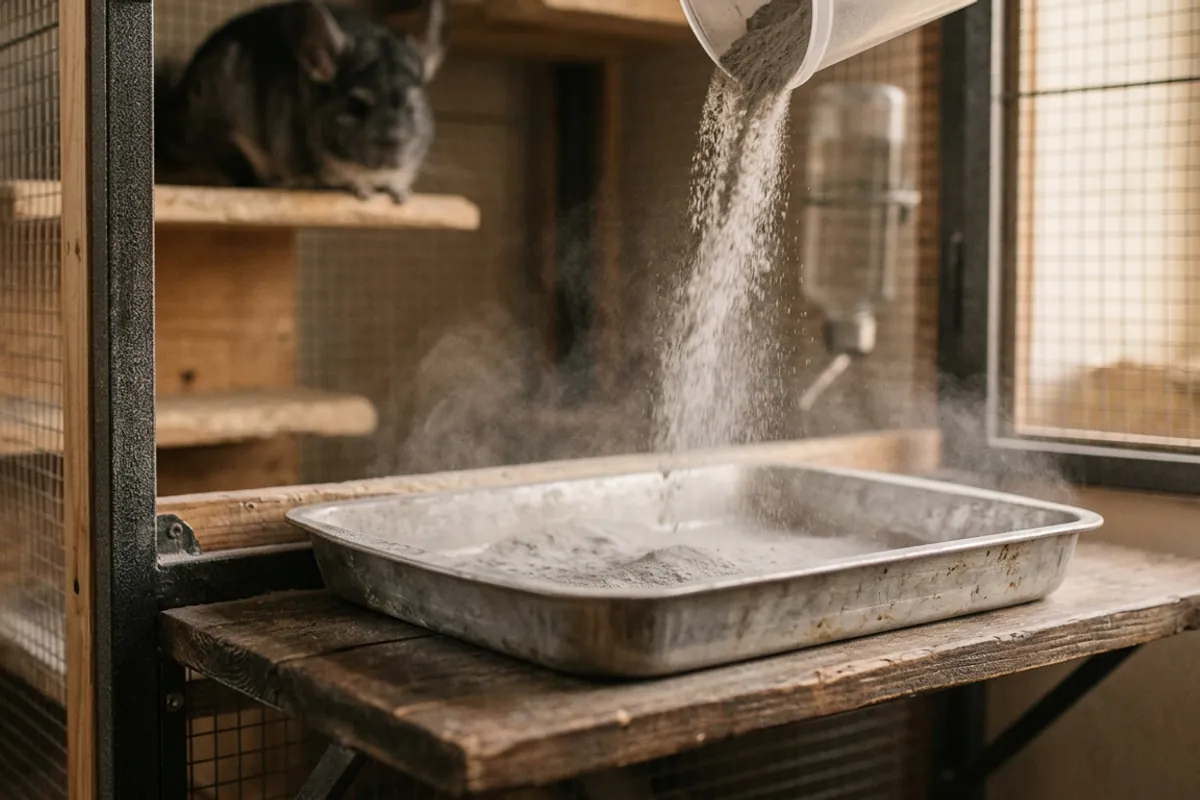
A chinchilla's coat is unlike almost any other pet's. Dozens of hairs grow from each follicle, packed so densely that water cannot easily reach the skin and, worse, cannot easily leave it. That density is why they never bathe in water: a soaked coat stays damp against warm skin and turns into a breeding ground for fungus. Fine dust solves the problem the coat creates. The particles are small enough to slip between the hairs, travel down to the skin, absorb excess oil and moisture, and then get flung back out when the animal shakes. Coarser grit simply cannot do that. It sits on top, scratches, and never reaches the skin where the cleaning has to happen.
If you want to understand why nothing but real volcanic dust does the job, I go into it in chinchilla volcanic dust, and why nothing else does the job. Briefly: the particle size and shape matter as much as what it is made of.
Why literal sand is the wrong thing to put in the bath
Reach for play sand, builder's sand, or reptile calci-sand and you cause a handful of specific problems, none of them minor.
The grains are too big and too hard. Instead of sliding between hairs, they drag across the coat and against the skin, and over time that abrasion dulls and damages the very fur you are trying to protect. Sand also does a poor job of lifting oil, so the coat can end up greasy even after a bath, which defeats the purpose.
Then there is the eye and airway issue. Chinchillas bathe with their whole face in it, and coarse or sharp grains scratch the eyes far more readily than fine dust does. Calci-sand marketed for reptiles is a particular trap: it is made of calcium carbonate, and a chinchilla that nibbles or ingests it can run into gut trouble. None of that belongs anywhere near an animal that dives face first into the tray several times a week.
One caveat, because labels lie in both directions. A bag sold as chinchilla sand is sometimes genuinely fine dust under a misleading name, and it may be perfectly fine. What matters is the material in the bag, not the word on it. If it is soft, floury, and made from volcanic pumice, it is dust and you are fine. If it feels gritty between your fingers or the grains are visible and hard, it is sand, and it does not go in the cage no matter what the front of the package says.
How the dust bath keeps a chinchilla clean
It helps to picture what the bath is doing, because it changes how you run it. The dust is not decoration and it is not just enrichment, though the animals plainly enjoy it. It is the entire hygiene system for a coat that cannot get wet.
Every time a chinchilla rolls, powder works down to the skin and pulls oil and moisture out of the dense fur. When it shakes off, most of that dust comes back out carrying the oil with it. That is why the same tray of dust gets dirtier the more it is used, and why leaving a permanent bath in the cage is a bad idea: the animal keeps rolling in progressively filthier powder, and it also tends to overbathe, which strips the coat too far and leaves the skin dry and flaky. A chinchilla will bathe far more than is good for it if you let it, the same way a chinchilla will eat treats past the point of sense.
This is also the reason a wet chinchilla is a genuine problem rather than a minor mess. If your chinchilla ever gets damp, from a spilled water bottle or a humid room, the coat holds that moisture against the skin. I wrote about what a soaked coat and a drooling chin each mean in chinchilla wet, and it is worth knowing the difference before it happens.
How to run the bath: how often, how much, how long
Keep it simple and keep it on a schedule. Offer the bath two to four times a week, for about ten to fifteen minutes each time, then take it out. That frequency suits most chinchillas in a normal home. In a dry climate you may lean toward the lower end, and in humid weather you may need the higher end because the coat picks up more moisture from the air.
Use enough dust to bathe in, not a swimming pool of it. Around one to two inches in the bottom of the container is plenty. You do not need to change all of it every single time. Scoop out droppings and clumps, top it up, and replace the whole lot when it stops looking clean or stops doing its job, which for most people means every week or two depending on how many chinchillas share it.
Watch the animal, not just the clock. A chinchilla that flips, spins, and comes out looking fluffed and bright is done. Take the bath away once it has finished so it cannot sit in dirty dust or turn the tray into a toilet. If you want the full routine laid out step by step, the chinchilla dust bath, done right from dust to schedule covers it.
I would gently push back on one common instinct: more is not better. Daily baths, or a bath left in the cage all day, are the fastest way to a chinchilla with dry, itchy, flaky skin. If you see flaking, cut the frequency first before you do anything else.
The container, and where the bath goes
You can bathe a chinchilla in almost anything deep and heavy enough that it will not tip, but two options work best. An enclosed dust bath house, with a single opening the animal climbs into, keeps most of the cloud inside and off your floor. An open bowl or tub is cheaper and easier to clean but throws dust everywhere, so it wants to go somewhere you do not mind a fine gray film. A purpose made chinchilla dust bath in a sturdy, easy to wipe material does the job well and lasts. Lixit Blue Beauty chinchilla dust, 3 lb As an Amazon Associate I earn from qualifying purchases.
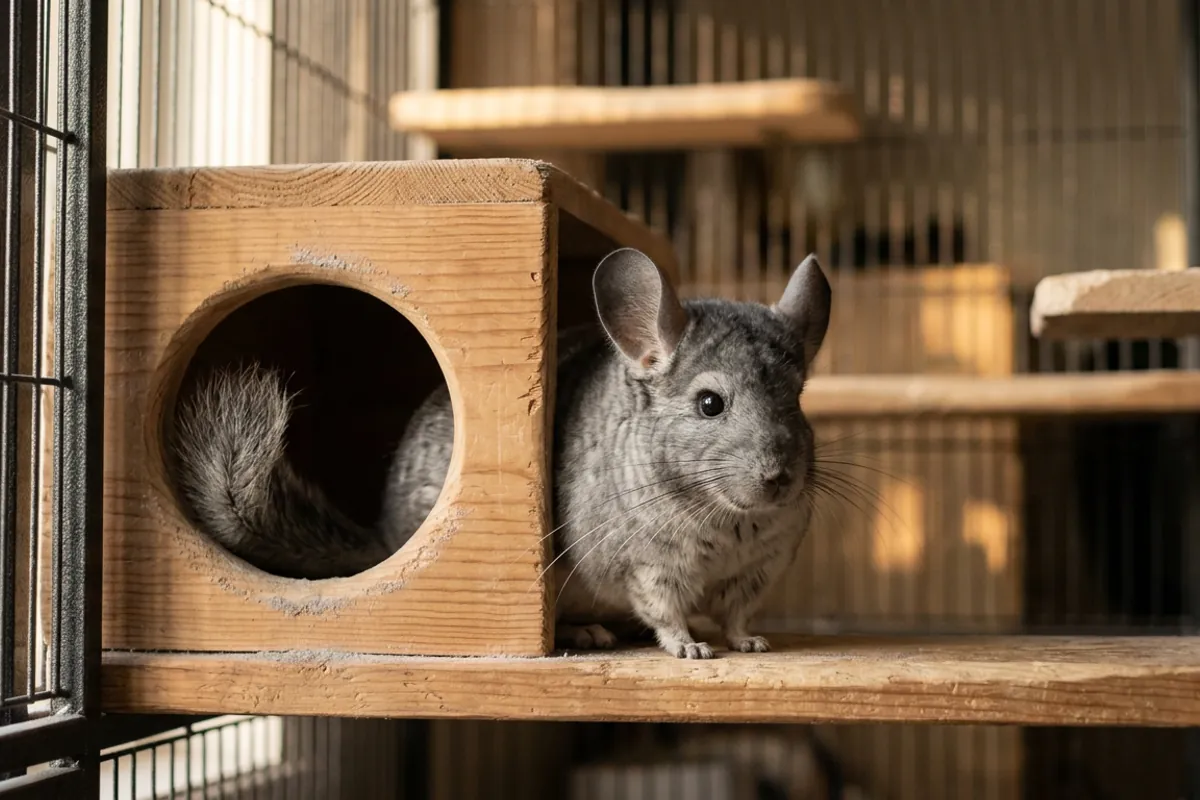
Whatever you use, favor metal, glass, ceramic, or heavy solid material over thin plastic. Plastic gets chewed, cracks, and holds static that makes the mess cling. Give it enough room that the chinchilla can fully flip over inside without cramping, and set it on a level surface so an enthusiastic roll cannot flip the whole thing. If you would rather buy something built for the purpose, the chinchilla dust bath house, and how to choose one that lasts walks through what holds up.
Give the bath its own moment rather than leaving it in permanently. I bring it out, let Pebble and Juniper have their ten minutes, and take it away. It keeps the dust clean, keeps them from overbathing, and the little ritual is one of the nicer parts of the day.
Time the bath around the heat, not the hottest part of the day
This is where my rules get strict. Chinchillas are built for cold, dry mountain air, and they do not shed heat well. Comfortable is 60 to 70°F (15 to 21°C). Above 75°F (24°C) starts to get risky, and 80°F (27°C) and up is an emergency, faster still if the air is humid.
Dust bathing is exercise. The animal is flipping, spinning, and working hard for those ten minutes, and that generates body heat. On a warm day, offering the bath in the hot afternoon stacks activity on top of an already stressed thermoregulation system. So on hot days I bathe in the cool of the morning or late evening, never at the peak, and if the room is too warm I skip the bath entirely and deal with the heat first. A clean coat is not worth a heat emergency.
If you are anywhere with real summers, keep a cage thermometer and hygrometer where you can read it at a glance and learn the warning signs cold, because they move fast. digital thermometer and humidity gauge with remote probes As an Amazon Associate I earn from qualifying purchases. Our chinchilla heat safety guide and the heat danger calculator will both tell you when a given temperature and humidity have crossed the line. A cooling stone in the cage helps on the margins too, but ventilation and the actual room temperature matter far more than any gadget. Kaytee Chinchilla Chiller granite stone As an Amazon Associate I earn from qualifying purchases.
When the coat or skin is telling you to change something
The bath is also a window into the animal's health, so pay attention to what it shows you. A good coat after a bath is dense, even, and springs back when you part it. The things that should make you adjust or worry are specific.
Flaky or dry skin usually means too much bathing or dust that is too drying, so cut the frequency and see if it settles within a week or two. Greasy, clumped, or matted fur can mean the dust is not fine enough, is dirty, or that the chinchilla cannot bathe properly for some reason. Bald patches are a different matter. A clean, ring shaped bald patch, especially with flaky or crusty skin, can be a fungal infection, and that is a vet visit, not a dust problem. Chinchillas can also drop a patch of fur on purpose when grabbed or frightened, called fur slip, which is not an emergency but tells you something scared them.
I am an experienced keeper, not a vet, and this is the line I will always draw the same way: anything that looks like infection, does not clear when you correct the bathing, comes with a change in behavior or appetite, or just worries you, goes to an exotics vet. Skin and coat problems are easy to guess at and easy to get wrong, and a chinchilla that stops eating for any reason is a same day call. The dust bath keeps a healthy coat healthy. It does not fix a sick one, and pretending otherwise costs animals.
Get the material right, keep the schedule sane, mind the heat, and read the coat. Do those four things and the sand chinchilla you went looking for turns into the real one: a bright, clean, ridiculously soft animal doing the single most satisfying thing in its whole routine, in dust, never in sand, and never in water.