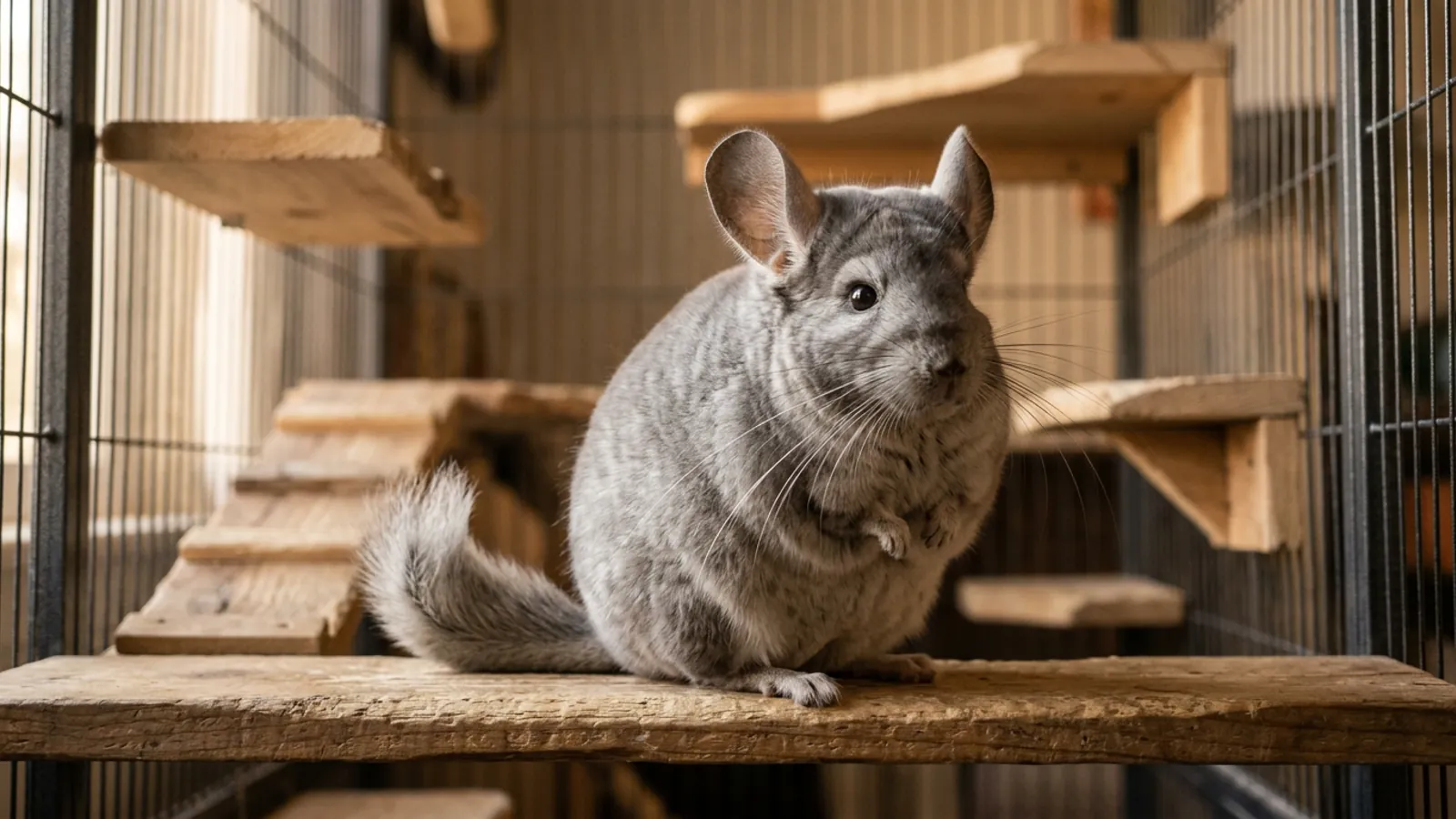
If you have typed chinchilla giant into a search bar, you were probably picturing an oversized version of the small gray animal I have kept for about ten years. I want to be straight with you before you read any further: there is no giant breed of pet chinchilla. The phrase points at three separate things depending on who is using it, and only one of them is even a rodent. After a decade with Pebble and Juniper, and a lot of hours reading breeder listings that lean on the word giant to sound special, I can tell you what is real, what is marketing, and what is a different animal wearing a borrowed name.
What people mean when they type chinchilla giant
In my experience the search splits three ways, and it helps to know which one you are chasing.
Some people want a giant version of a pet chinchilla, the way there are giant rabbits and teacup dogs. They have seen a photo of a chinchilla mid stretch or fresh out of a dust bath, all fur and no bones, and assumed there must be a supersized line out there. There is not, and I will get to why.
Others have half remembered a real animal. There are two wild chinchilla species, and one of them genuinely is bigger and heavier built than the pet you see in shops. It is the closest thing to a giant chinchilla that nature ever made, and almost nobody keeps one.
And a large share of these searches are not about my animal at all. They are about the Giant Chinchilla rabbit, a big rabbit breed that borrowed the chinchilla name because of its coat. Same word, completely different animal, opposite care. If that is what brought you here, I will point you to the right place. Let me take the three in turn.
How big a pet chinchilla gets
A healthy adult pet chinchilla, the long-tailed kind you find in shops and rescues, usually weighs somewhere between 400 and 600 grams. That tops out around a pound and a third. Some individuals, almost always females, carry more and reach 700 to 800 grams, and a stocky, well grown chinchilla can surprise you when you lift it. Head and body run roughly 10 to 14 inches, and then there is the bushy tail on top of that. That is the plain size picture. There is no hidden tier above it.
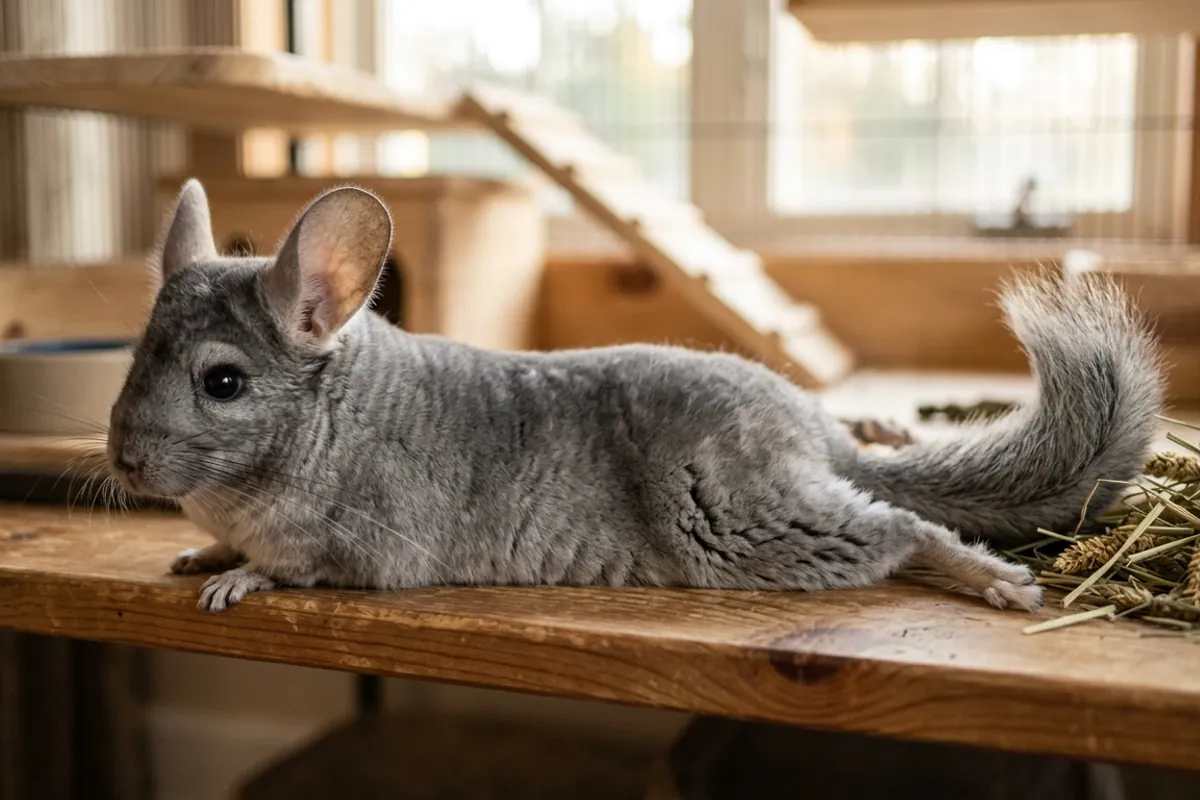
Here is what fools people. A chinchilla looks about twice the animal it is, because the fur is doing the talking. That famously dense coat, with dozens of hairs growing from a single follicle, puffs the outline out well past the actual body. When a chinchilla flattens down to squeeze under a ledge, you suddenly see how slight the real frame is. If you want the other side of that same coin, I wrote about how small a chinchilla really is, fur and all.
If size is on your mind, the most useful thing you can do is weigh rather than guess. A cheap kitchen scale with a small container tells you far more than a look at a fluffy silhouette ever will. I weigh mine on a regular schedule, because a chinchilla that is quietly losing or gaining is telling you something before it shows in the fur. That habit turns the whole giant question into a number you can track, and it catches trouble early.
One biology note that matters for anyone hunting a giant chinchilla: in this species the females are the larger sex. It is the opposite of what most people expect. The biggest chinchilla in a bonded pair is almost always the female, and she is usually the boss too. So if a breeder shows you an unusually large animal and calls it a giant, the plain explanation is often just that it is a big, mature doe.
The short-tailed chinchilla, the closest thing to a giant in the wild
Nearly every pet chinchilla alive is a long-tailed chinchilla, Chinchilla lanigera. But there is a second species, the short-tailed chinchilla, Chinchilla chinchilla, and that one is the real heavyweight of the family. It is bigger and blockier, with a thicker neck and shoulders, smaller ears, and the short tail its name promises. Stood next to a pet chinchilla it looks like the same animal that has been through a rugby season.
If any chinchilla deserves the word giant, it is this one. But you will almost certainly never keep it, and you should not want to. The short-tailed chinchilla was hunted close to extinction for its fur and is critically endangered in the wild, clinging to high, cold stretches of the Andes. It is not a pet species, it is not sold as one, and the animals in the pet trade descend from the long-tailed side. Anyone advertising a short-tailed chinchilla as a pet is either mistaken or selling you a story.
What the wild species does give you is context for the care I bang on about. Both chinchillas evolved in a high, dry, cold, thin-aired place. That is why the heat rules are not negotiable and why the diet is so plain. If you want that background, I put it together in what a chinchilla in the wild is really like. The size difference between the two species is real, but it changes almost nothing about how you would keep either one.
The Giant Chinchilla that is a rabbit
Now the one that trips up the most searches. The Giant Chinchilla is a recognized rabbit breed, and it is a large rabbit, comfortably over ten pounds on a good adult. It was created in the United States in the early 1920s by crossing chinchilla-coated rabbits with Flemish Giants, and it took the chinchilla name purely because its fur mimics the silvered, ticked look of the rodent's coat. That is the entire connection. It is a rabbit. It is not related to my animal any more than a house cat is.
It also helps to know the Giant Chinchilla is only one of a small family of rabbits that borrowed the coat name. There is a standard-sized one, an American one, and a Soviet one, and they are all rabbits, sorted mostly by size. The word chinchilla in every one of those names is a description of fur color, not a claim of kinship. If you got here holding a rabbit pedigree, that is your world, and it is a good one, just not mine.
This matters because the two need opposite care in the ways that count. A rabbit is a social grazer that mostly tolerates a wider temperature band, and it is built around a very different digestive setup. A chinchilla is a solitary-leaning, heat-fragile rodent from a cold desert mountainside that will die in a warm room. Feed, house, or handle one like the other and you get an animal in trouble.
So if you came here because of a big rabbit, you want the rabbit guides, not this one. The whole tangle of chinchilla-named rabbits (the standard, the American, the giant) is a separate family of animals: rabbits bred for a coat that mimics chinchilla fur. None of them is the rodent I keep.
Why breeders and listings lean on the word giant
Once you know there is no giant chinchilla breed, the listings that use the word start to read differently. Giant, oversized, king, and jumbo are marketing, not size classes. There is no registry of giant chinchillas and no standard that a big one is measured against. Selective breeding for a larger body does exist, mostly a leftover from the fur trade where a bigger pelt was worth more, and a few pet lines do run heavier than average. But a heavier chinchilla is still a chinchilla with the exact same needs, the same fragile gut, and the same fragile heat tolerance.
I would be careful with any listing where the size is the headline. It tells you what the seller thinks will make you click, not that the animal is healthy, well socialized, or honestly represented. The things that decide whether you are getting a good animal are age, temperament, how it has been housed, and whether the seller can talk sensibly about diet and heat. A number on a scale is near the bottom of that list. If you are weighing a purchase, I put the real questions in what buying a chinchilla really asks of you, and I unpicked what a chinchilla price tells you separately.
The other thing worth saying is that bigger is not automatically better for the animal. Pushing any small mammal toward an unusually large size can come with its own costs, and I would rather have a bright, active, correctly built chinchilla than a heavy one bred for a number. When someone sells size as the whole selling point, ask what else that line was selected for, and whether temperament and health came along with the bulk. Often they did not.
Pay a premium for the word giant and you are paying for the word, not for a better pet.
What a bigger chinchilla needs from its cage
Say you do end up with a large, stocky chinchilla, a big mature female or one of those heavier lines. Good news: you do not need special giant equipment. You need what every chinchilla needs, which is already a lot of space, so a bigger animal simply uses it well.
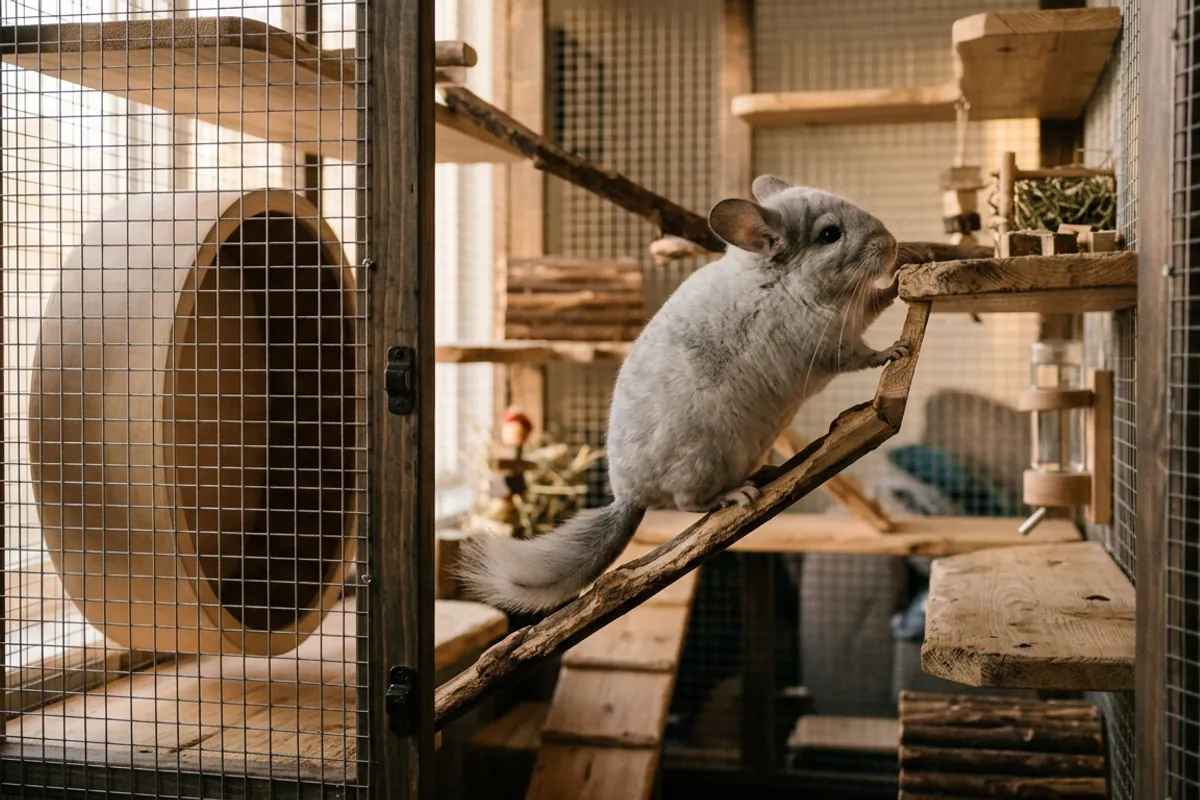
Height is the thing that matters, more than floor area. Chinchillas are built to climb and to leap, and a tall cage with ledges set at different levels gives even a heavy one somewhere to launch. I want metal and wood, never plastic, because a bored chinchilla chews everything and plastic both breaks and blocks a gut. A tall metal and wood cage with solid wooden ledges is the baseline, not a luxury. Critter Nation double unit small animal cage As an Amazon Associate I earn from qualifying purchases. If you are working out dimensions, I laid out why height beats floor space in its own piece.
If you add a wheel, and a big chinchilla often loves one, it has to be a solid running surface, never wire or bars. 15 inch Chin Spin solid surface chinchilla wheel As an Amazon Associate I earn from qualifying purchases. A larger animal is even more likely to catch a foot or a tail on an open wheel, and the injuries are ugly. Size the wheel to the animal too. A cramped wheel forces the spine into a curve, and that is worse the bigger the chinchilla is. Skip anything with rungs or a mesh track no matter how it is marketed.
Heat, hay, and teeth do not scale with the animal
This is the part that matters most, because it is where the myth of the tougher giant chinchilla does real harm. A bigger body does not make a chinchilla more heat tolerant. If anything a dense, heavy animal sheds heat slightly worse. The comfortable range is 60 to 70°F, which is 15 to 21°C. Above 75°F, or 24°C, you are into risk, and 80°F, 27°C, is an emergency that comes on faster in humid air. Pebble taught me this the hard way in her first summer, with a heatwave and a night at the emergency vet, and nothing about a chinchilla's size changes those numbers by a single degree.
So watch the room, not the animal. I keep a thermometer and hygrometer on the cage and read it in warm weather. digital thermometer and humidity gauge with remote probes As an Amazon Associate I earn from qualifying purchases. A chilled stone gives a heavy chinchilla somewhere to dump heat on a hot afternoon, and mine use one gladly. Kaytee Chinchilla Chiller granite stone As an Amazon Associate I earn from qualifying purchases. If you want the warning signs written out, they are in chinchilla heat stroke warning signs.
The diet does not scale either. Big or small, a chinchilla lives on unlimited grass hay, ideally a good timothy, with plain pellets as a measured extra, never the main event. Oxbow Western Timothy Hay, 9 lb box As an Amazon Associate I earn from qualifying purchases. Hay is not a side dish, it is the meal. And the reason hay is non-negotiable is teeth. Chinchilla teeth grow for life, and the only thing that keeps them worn down is the long grinding chew of hay and safe wood. Juniper, my rescue, came to me with dental disease, and I manage it day to day, so I am relentless about this. A good variety of safe wood chews earns its place in any cage, giant or not. emours apple wood chew sticks, 40 count As an Amazon Associate I earn from qualifying purchases. If you ever see drooling, weight loss, or a chinchilla dropping food, that is a vet call, and it needs an exotics vet who knows the species. I cover the whole picture in chinchilla teeth.
The word giant will keep showing up in searches and listings, but now you know what sits behind it. A pet chinchilla is a small animal in a big coat. The genuine heavyweight is a wild species you will never own. The Giant Chinchilla with the capital letters is a rabbit. And a big pet chinchilla is just a chinchilla, owed the same cold room, the same endless hay, and the same tall cage as the smallest one in the litter.