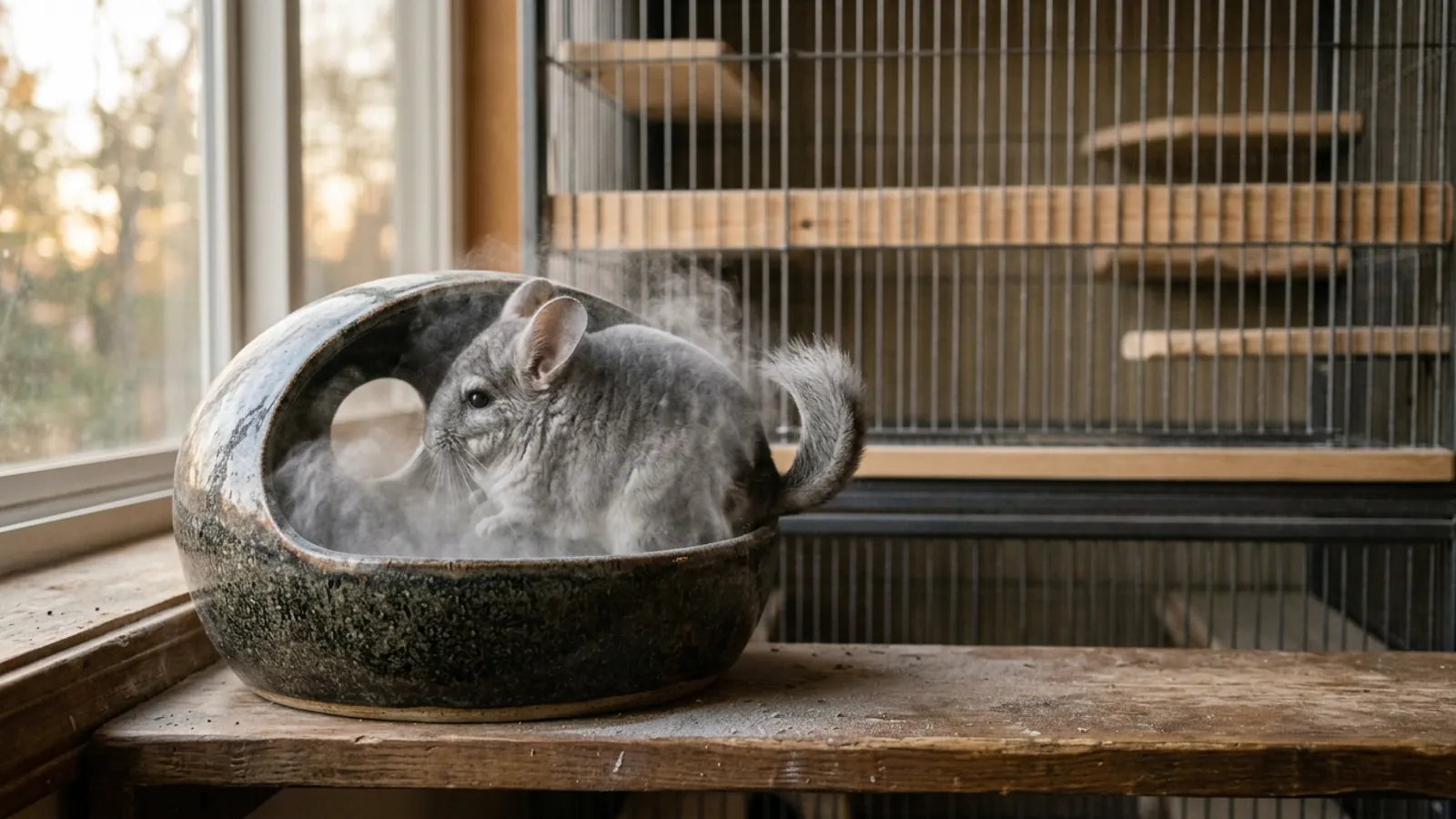
A chinchilla dust bath house is the container your chinchilla dives into to roll in its dust, and it is one of those small purchases people manage to overthink in exactly the wrong direction. They agonize over the brand and the shape, then fill it with the wrong thing or leave it in the cage for a week straight. The house matters, but only once you understand that it is a vessel for one very specific behavior: a chinchilla flinging itself around in fine volcanic dust to keep that dense fur clean and dry. Chinchillas never bathe in water, only in dust, and the house is just where that happens. I have been running this routine with Pebble and Juniper for about ten years, so here is what works, what to skip, and how to choose a chinchilla dust bath house you will not have to replace.
What a dust bath house is
The names get muddled because every seller labels the same object differently. A dust bath house, a chinchilla bath house, a chinchilla dust house, a bathing dome, a sand bath (which is a misnomer, because it is never sand) all point to the same thing: an enclosed or open container that you fill with bathing dust so your chinchilla can roll in it. The house is the furniture. The dust is the point.
That distinction saves people a lot of confusion. The house does not clean your chinchilla; the dust does. What the dust does is wick oil and moisture out of a coat so thick that water cannot dry out of it, which is exactly why you keep water away from it. If you want the full picture of the powder itself, I have written it up separately in what bathing dust for chinchillas really is. Here I am staying on the container, because a good house makes the whole routine faster and cleaner, and a bad one makes a mess you will resent by week two.
So think of the house as solving three problems: it holds enough dust to bathe in, it contains as much of the flying dust as it reasonably can, and it survives being chewed, kicked, and wiped out several times a week. Everything below comes back to those three jobs.
Why I use an enclosed house, not an open dish
A chinchilla in a dust bath is not a delicate thing. It flips onto its back, kicks, spins, and throws dust in every direction at once. That is the behavior you want, because a hard, full roll is what drives dust down to the skin. The downside is a cloud that settles on everything within a couple of feet.
An enclosed house, meaning one with a roof and a single round opening, catches most of that cloud and keeps it inside the walls. You still get some drift out the door, but the difference between an enclosed dome and an open bowl on your carpet is night and day. That is the main reason I reach for a house shape rather than a bowl.
I want to be clear that an open dish works perfectly well for the chinchilla. A deep bowl, a glass baking dish, even a large heavy tub does the job as far as your chinchilla is concerned. The choice is really about your mess tolerance and where the bath happens. If you bathe inside a roomy playpen or a bathtub you do not mind wiping down, an open container is genuinely fine. If the bath happens in the cage or in a corner of a carpeted room, an enclosed house earns its place. Neither is wrong. I use an enclosed one because I bathe them in the living room and I like keeping the dust corralled.
Ceramic, metal, plastic, and glass, ranked
Material is where a bath house is won or lost, so here is my order after buying the wrong ones.
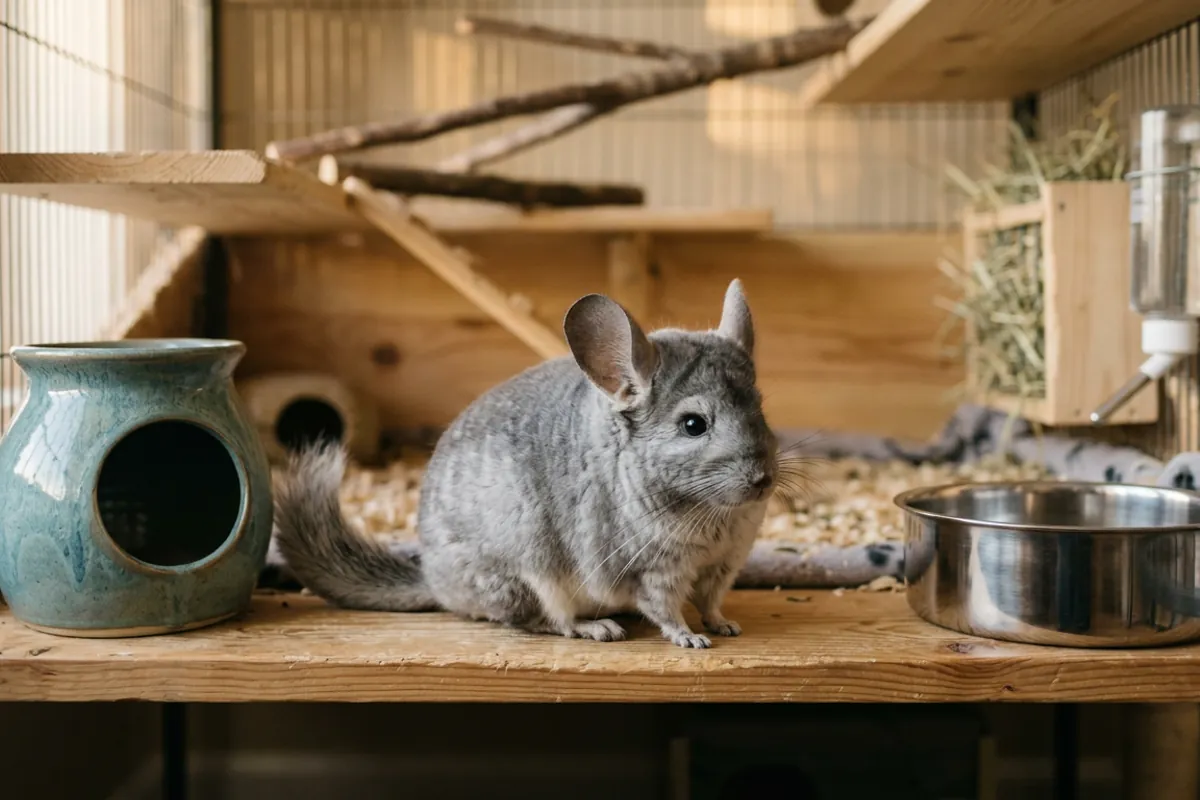
Ceramic first. A glazed ceramic chinchilla dust bath house is my default. It is heavy, so an enthusiastic chinchilla cannot tip or skate it across the floor. The glaze is non-porous, so it wipes clean and does not soak up urine smell if your chinchilla decides to use it as a toilet. And it cannot be chewed into edible shards, which matters more than people think. The trade-offs are real but minor: ceramic is heavy to lift and it will crack if you drop it on a hard floor. A chinchilla bath house in ceramic is the one I recommend most often, and "chinchilla dust bath house ceramic" is worth searching precisely because the material does the work.
Metal second. A stainless bath house is durable, chew-proof, easy to sanitize, and lighter than ceramic, which is a plus for carrying it to the sink and a small minus for stability if the piece is small. It is a solid choice and my pick if I want something I can toss in a bag for a vet trip or a move.
Glass third, with a caveat. A large glass container, the cookie-jar or fishbowl style laid on its side, is heavy, non-porous, and lets you watch the roll, which is delightful. The caveat is obvious: glass breaks, and a cracked edge is not something you want in a cage. If you go glass, it lives out during the bath and goes away between baths, never left in the cage.
Plastic last, and reluctantly. I am blunt about plastic in general, and a bath house is no exception. Chinchillas chew plastic, and ingested plastic can cause a gut blockage that turns into an emergency vet visit fast. Plastic also scratches, and those scratches trap grease and odor that you cannot fully scrub out. It builds static, and it is light enough to tip. The only reason to consider it is price and the fact that many enclosed houses are sold in plastic, which brings me to the one everyone asks about.
Wood, for completeness, is a no here. I love wood for ledges and chews, but as a bath house it absorbs urine and moisture and cannot be sanitized. Keep wood in the cage, not in the dust.
Getting the size and depth right
A bath house that is too small is the most common mistake I see, and it quietly ruins the bath. Your chinchilla needs room to lie on its back and flip fully over without its feet hitting the walls the whole time. If the animal can only crouch and paw at the dust, it is not really bathing, it is just sitting in powder.
As a rough guide, the interior should be wider than your chinchilla is long with room to spare, and tall enough that a mid-roll flip does not bang its head on the roof. Bigger is better here; there is no such thing as a bath house that is too roomy, only ones that are too heavy for you to carry. If you keep a bonded pair, size up further or bathe them one at a time, because two chinchillas in a small house means squabbling instead of rolling.
Depth of dust is the other number. I use about one to two inches of dust in the bottom, enough that a chinchilla can bury its feet and belly in it and enough to survive a good kicking without exposing the bare floor of the house. More than that is just wasted dust that ends up flung out the door. Less than an inch and there is not enough to work into the coat.
The Kaytee chinchilla bath house
People ask about this one constantly, so let me give it a straight answer. The Kaytee chinchilla bath house is a widely sold enclosed house, and its shape is good: a proper dome with a single opening that contains dust well and is roomy enough for most chinchillas to roll. If the design were the whole story, I would recommend it without hesitation.
The catch is that the common version is plastic, and that puts it in the same bucket as everything else plastic in the cage. Some chinchillas ignore it and use it for years with no trouble. Others treat the doorway edge as a chew toy, and a chinchilla that swallows plastic can end up with a blockage. You cannot always tell in advance which chinchilla you have, and I would rather not find out the expensive way.
So my position: if you already own the Kaytee house, use it, but only during the bath and under a bit of an eye, then take it out. Do not leave a plastic bath house sitting in the cage as a chew-it-when-bored fixture. And if you are buying fresh, I would spend the small extra on ceramic or metal and never think about the chewing question again. The shape is not unique to Kaytee; you can get the same enclosed dome in materials that do not worry me.
Dust, schedule, and how long to leave it in
The best house in the world is useless with the wrong dust or the wrong routine. Use fine volcanic pumice dust made for chinchillas, nothing else. Not sand, not craft dust, not "chinchilla sand" that is gritty and abrasive. If you want the reasoning, chinchilla volcanic dust and why nothing else does the job covers it, and blue cloud chinchilla dust is the specific one many keepers reach for. A good bagged dust and a solid house are the two things worth buying properly. Lixit Blue Beauty chinchilla dust, 3 lb As an Amazon Associate I earn from qualifying purchases.
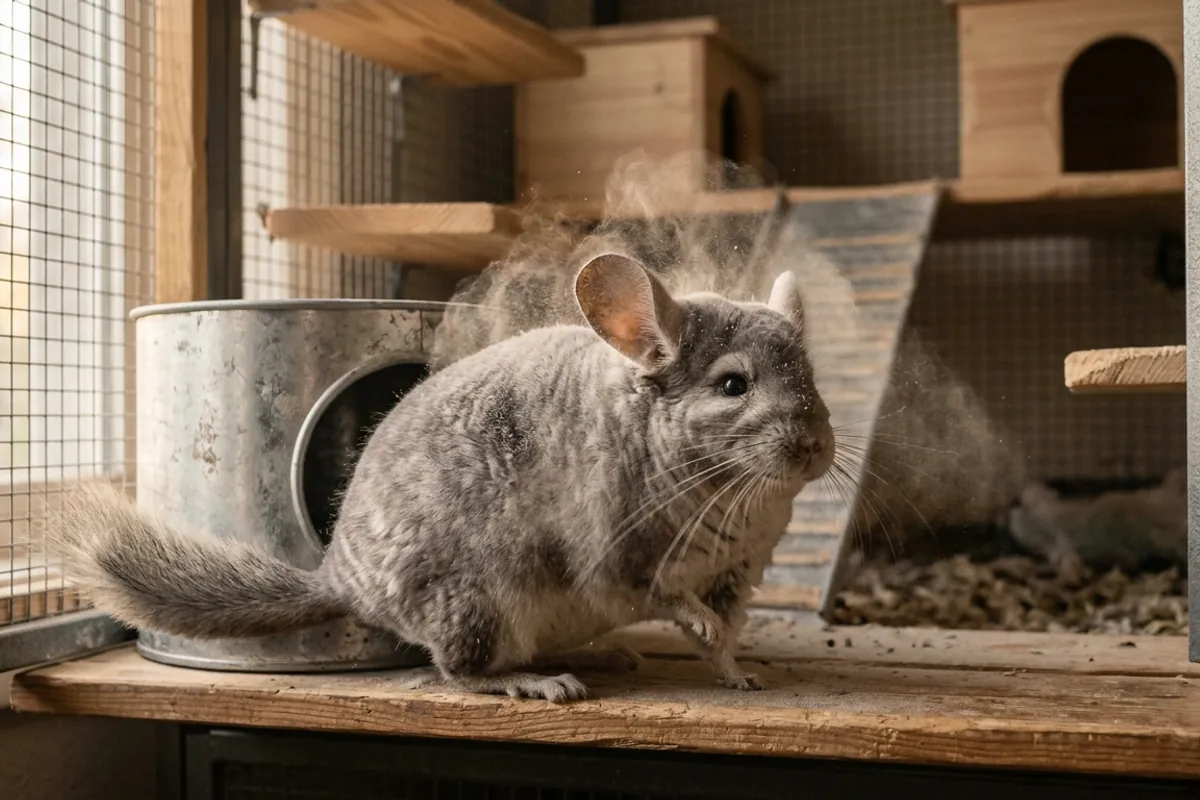
On schedule, two to three baths a week suits most chinchillas in a normal home. That is a starting point, not a law. If your air is very dry, you may find every three or four days is plenty, and you will see it in the coat. If your home is humid, the coat holds moisture longer and you may lean toward the higher end, but watch the eyes: over-bathing can dry and irritate them, and squinty or gunky eyes after baths mean back off the frequency. There is real disagreement among keepers on the exact number, and that is fine; adjust to the animal in front of you rather than a fixed rule.
Timing inside the house is where people go wrong most. Put the house in, let your chinchilla roll for about ten to fifteen minutes, then take it out. Do not leave a dust bath in the cage all day and all night. Left in, a chinchilla will keep bathing to the point of dry skin and sore eyes, and will almost certainly start peeing and pooping in it, which turns your clean dust into a litter box. In and out is the whole discipline. One important exception to note on scheduling: skip the bath during a heat spell. Warm dust and an already stressed chinchilla is a bad combination, and heat is the one thing I never gamble on. If your room is drifting above the safe 60 to 70°F (15 to 21°C) range, deal with the temperature first and bathe later.
Cleaning it, and the best chinchilla bath house to buy
Cleaning a bath house is not much of a chore if the material is right, which is half the reason I push ceramic and metal so hard. Between baths, I sift out the droppings and lumps with a small fine sieve and top the dust back up, reusing it until it looks visibly dirty or clumpy rather than dumping fresh dust every time. Every week or two I empty it completely, wipe the inside with a damp cloth, let it dry fully, and refill. No soap residue, no lingering damp, because a chinchilla is going to roll its clean coat in whatever is left behind. Porous or scratched materials, which is to say plastic and wood, are exactly what make this step frustrating, because odor and grime settle into surfaces you cannot fully wipe.
So, the best chinchilla dust bath house. Buy a heavy glazed ceramic or a stainless metal enclosed house, sized so your chinchilla can flip fully over inside it, with a single opening that keeps most of the dust contained. Lixit Blue Beauty chinchilla dust, 3 lb As an Amazon Associate I earn from qualifying purchases. That is the pick that solves all three jobs at once: it holds the dust, it contains the cloud, and it shrugs off years of chewing and wiping. Skip plastic unless it is what you already own, skip wood entirely, and treat glass as a supervised, out-of-cage option. Pair it with proper volcanic dust, an in-and-out routine of ten to fifteen minutes a few times a week, and you have the entire dust bath handled. It really is that simple once the vessel and the schedule are right, and a chinchilla rolling itself silly in clean dust is one of the better things you will watch all week.