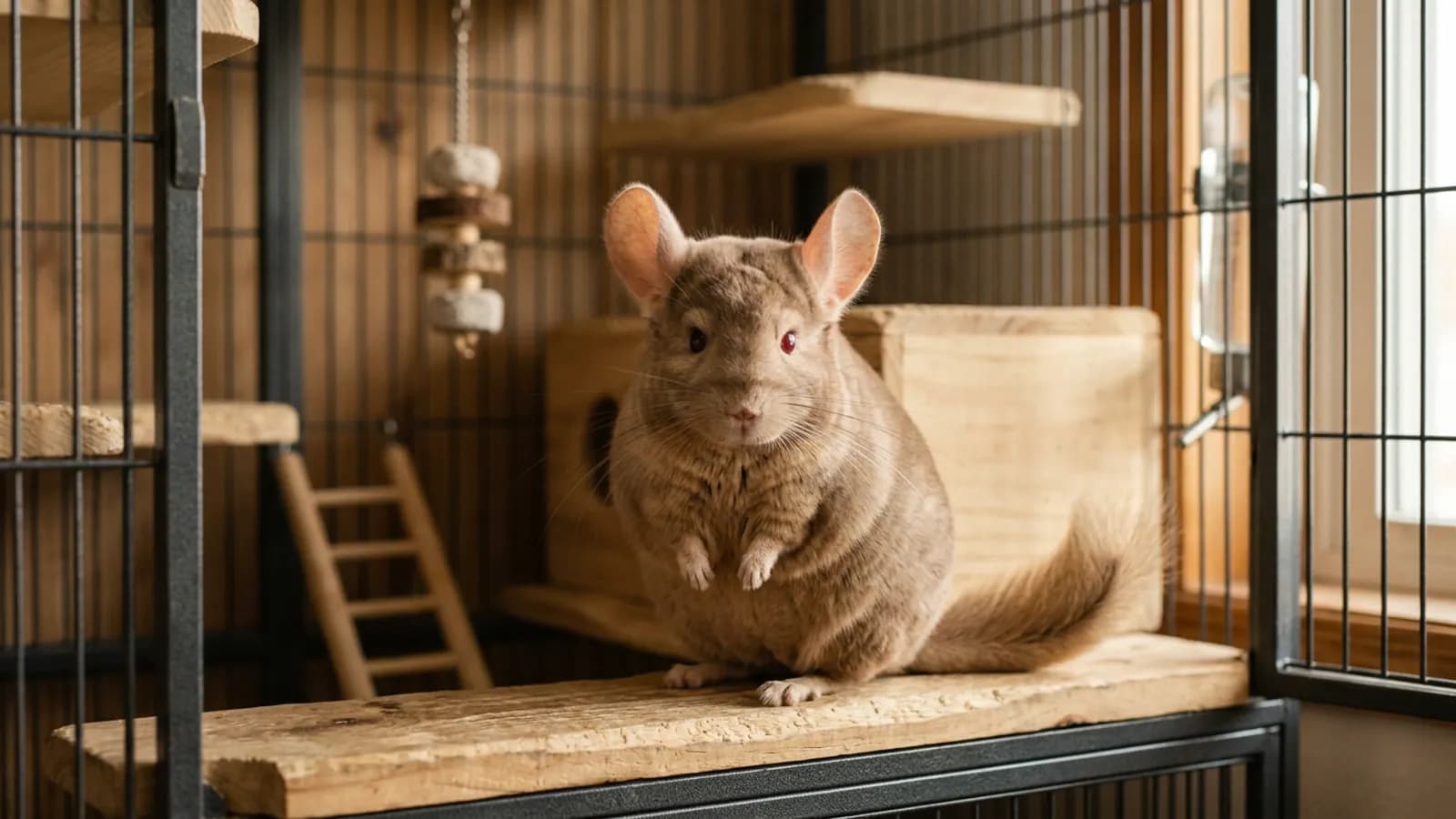
A chinchilla tan is not a separate breed, not a rare find that justifies a wild markup, and not an animal that needs anything different from the grey one sitting in the next cage. It is a colour, and a fairly specific one: a tan chinchilla is what you get when the beige gene and the ebony gene both turn up in the same animal. That is the whole trick. I have kept chinchillas for about ten years, and I open every colour article the same way because it matters more than the colour ever will: the coat tells you almost nothing about how to keep the animal alive. Tan is one of the warmer, prettier combinations to look at, and one of the more muddled ones in the way people talk about it, so it is worth getting straight before you go looking for one.
What a chinchilla tan actually is
Tan is a combination mutation, which is a fancy way of saying it takes two separate colour genes to make it. The first is beige, sometimes called Wilson beige after the breeder credited with it. The second is ebony. Stack them in one animal and you get the warm, sandy, brownish coat that the fancy calls tan. Neither gene on its own makes a tan. A beige without ebony is just a beige. An ebony without beige is a dark grey to near-black animal with colour wrapped around its belly. Put both in the same chinchilla and the beige lightens and warms the coat while the ebony deepens and spreads it, and the result reads as tan.
That is the definition most breeders agree on, and it is the one I would go by. Where the terminology gets slippery is at the edges. Some people fold a beige carrying the black velvet gene, more properly called a pastel, into casual talk about tans. Others add black velvet on top of a true beige-ebony tan and call the result a tan velvet or a touch-of-velvet tan. The honest thing to say is that the core meaning is solid, beige plus ebony, and that once you start adding a third gene the labels drift from breeder to breeder. If a seller uses the word tan, it is fair to ask exactly which genes they mean, because tan is a description of a genetic recipe, not a trademark anyone polices.
None of this is like the rare colours people oversell. Beige is common and ebony is common, so a tan is not exotic. It is two ordinary genes meeting, and the price should reflect that.
The beige gene and the ebony gene, working together
It helps to look at the two halves separately, because they do very different jobs.
Beige is a dominant mutation, which means an animal needs only one copy to show it. It lightens the coat to a warm pinkish-fawn, gives the eyes a red or ruby cast in the right light, and turns the ears a soft pink instead of the dark grey of a standard. Beige also has a homozygous form, an animal carrying two copies, which comes out noticeably paler, sometimes almost cream, with pinker ears and lighter eyes still. Homozygous beige is where some keepers report more light sensitivity, and while I would not overstate it, it is a reason not to park any pale-eyed chinchilla in a bright, sun-facing spot.
Ebony is the stranger of the two. It behaves less like a simple on-or-off switch and more like something that builds up over generations, which is why breeders talk about it as cumulative or polygenic. A little ebony gives you a darker grey with some colour creeping down the sides. A lot of ebony, bred up carefully over several generations, gives you a deep, glossy, wrap-around coat with no white belly at all. That belly is the tell. A standard grey chinchilla has a clean white underside; ebony pulls colour right around the body so the belly matches the back. When ebony meets beige in a tan, that same wrap-around effect is what stops a tan from looking like a plain pale beige. The warmth comes from the beige, the depth and the coloured belly come from the ebony.
Light tan, dark tan, and why the shade varies
Because ebony comes in degrees, tan does too. This is where the supporting terms come in. A chinchilla light tan, or a light tan chinchilla if you prefer the phrase the other way round, is simply a tan carrying less ebony, or a single beige copy rather than two, so the warm sandy tone stays pale and the belly may only be lightly shaded rather than fully wrapped. At the other end you get medium tan, dark tan, and extra dark tan, each one carrying progressively more ebony until the coat is a deep chocolate-brown with barely any lightening left visible.
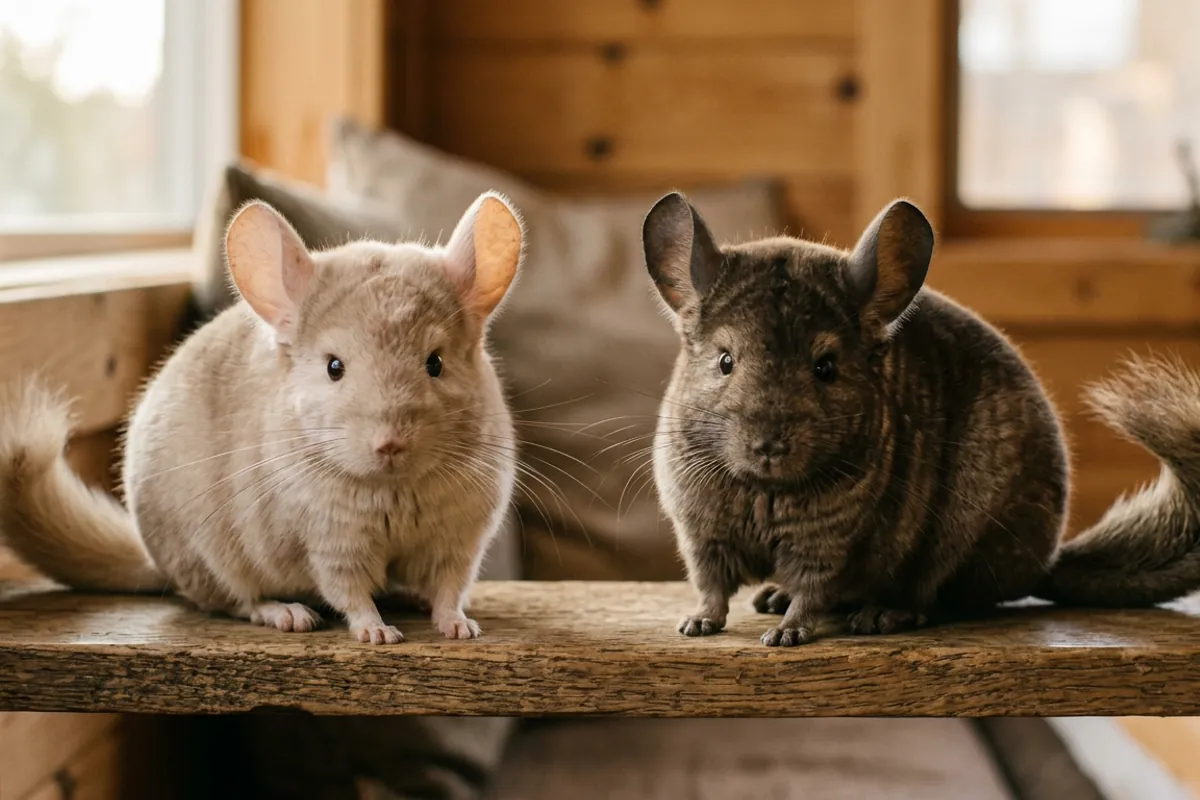
I want to be plain about what that range means and what it does not. A light tan chinchilla is not a different or gentler animal than a dark tan, and it is not worth more or less on any grounds except looks. The shade is cosmetic. It tells you roughly how much ebony sits behind the animal and, if you care about breeding, what it might pass on, but it changes nothing you feed, nothing about the temperature it can tolerate, and nothing about its teeth. Two tans of very different shades will need exactly the same care down to the gram of hay.
It is also worth knowing that ebony shade can settle as a young chinchilla matures. A kit sold as a light tan can carry more ebony than its baby coat is showing yet, and darken over its first year. That is normal, not a bait-and-switch, but it is a reason not to pay a premium for one precise shade of a colour that has not finished arriving.
How to tell a tan chinchilla apart
If you are trying to read a chinchilla in front of you, tan has a few honest markers. Look for the warm, brownish-fawn cast rather than the cool blue-grey of a standard. Check the belly: a tan's underside is shaded to match the body rather than clean white, which is the ebony showing. Look at the ears, which tend toward pink rather than dark grey, and the eyes, which usually carry a red or ruby tone from the beige, most obvious when light catches them from the side.
Those same markers are how tan gets confused with its neighbours. A brown chinchilla is often just a tan or a beige-ebony under a looser name, and the labels overlap freely. A plain beige without ebony keeps the white belly and looks paler and cooler. A true self-coloured dark animal without beige will not have the red eyes or pink ears. And none of this is the same conversation as an albino or a true white, which are different mutations entirely, or the patterned mosaic coats that come in patches rather than an even wash of colour. If you find the naming genuinely confusing, you are not doing anything wrong. The chinchilla colour world is a tangle of breeder names layered over a smaller number of actual genes.
What the colour changes about care: nothing
Here is the part I will not soften. A tan chinchilla has the same body, the same metabolism, and the same fragile heat tolerance as any other chinchilla, and the tan coat changes not one number in its care.
Temperature first, always, because it is the one that kills fastest. Chinchillas are comfortable between 60 and 70°F, which is 15 to 21°C. Above about 75°F, or 24°C, you are into risky ground, and 80°F, 27°C, and up is an emergency, faster still if the air is humid. That range is not a suggestion and it does not flex for a warmer-coloured coat. My Pebble came to me out of an overheated attic and spent a night at the emergency vet in her first summer over exactly this, and that scare is why I am relentless about it. A tan is carrying the same dense fur that makes any chinchilla so bad at shedding heat. Keep a real thermometer on the cage so you are reading the room, not guessing.
digital thermometer and humidity gauge with remote probes As an Amazon Associate I earn from qualifying purchases.
On the hottest days a chilled solid stone the animal can lie against gives it somewhere to dump heat, which is a genuine help, not a gimmick.
Kaytee Chinchilla Chiller granite stone As an Amazon Associate I earn from qualifying purchases.
If you want the full picture, the temperature guide and the heat-stroke warning signs both go deeper than I can here, and the heat danger calculator will put a number on your own room.
Diet is the next thing the colour does not touch. A tan eats unlimited grass hay as the base of its whole diet, timothy or another good grass hay, in front of it all day every day.
Oxbow Western Timothy Hay, 9 lb box As an Amazon Associate I earn from qualifying purchases.
Plain pellets go on top as a small measured supplement, not the main event, and treats stay tiny and rare. The full diet rundown covers what is safe and what will hurt them, and the short version is that a tan's stomach is a grey chinchilla's stomach.
Teeth are the quiet killer that hay is really protecting against. Chinchilla teeth grow for life, and constant chewing on hay and wood is what wears them down; when they do not wear evenly you get malocclusion, which is miserable and needs a vet. My Juniper came to me with dental disease I manage day to day, and she is the reason I never run low on chews. A varied set of safe wood keeps a tan grinding the way it needs to.
emours apple wood chew sticks, 40 count As an Amazon Associate I earn from qualifying purchases.
If your chinchilla is drooling, dropping food, or losing weight, that is not a colour question, that is a call to an exotics vet, and the teeth-problems guide will help you spot it early.
The coat is the same coat, so the dust bath is too
A tan coat is exactly as dense as any other chinchilla coat, which means it is cleaned the same way, with dust and never with water. Chinchillas do not bathe in water; a soaked coat holds damp against the skin, it does not dry properly, and it invites fungal trouble. They roll in fine volcanic dust instead, which lifts oil and moisture out of that thick fur without wetting it.
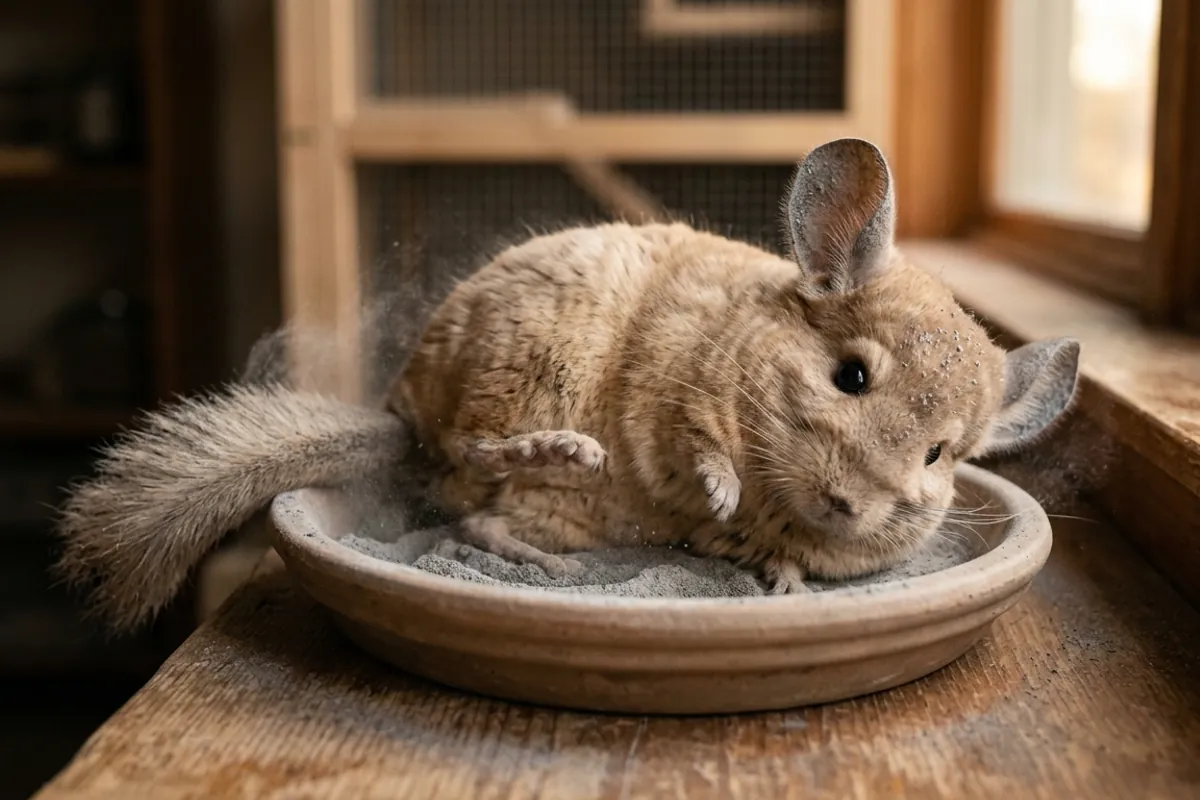
Lixit Blue Beauty chinchilla dust, 3 lb As an Amazon Associate I earn from qualifying purchases.
A tan needs the same schedule as everyone else, a few dust baths a week rather than daily, pulled sooner in humid weather and removed after the roll so the animal is not sitting in a dusty pan. The colour makes no difference to any of it; a warm sandy coat gets no dirtier and no cleaner than a grey one. If you have never set this up before, the dust-bath walkthrough covers the how and the how-often.
The cage is the last piece the colour leaves untouched. A tan wants what any chinchilla wants: a tall metal cage with wooden ledges, room to climb, and no plastic to gnaw and swallow.
Critter Nation double unit small animal cage As an Amazon Associate I earn from qualifying purchases.
If you use a wheel, it has to have a solid running surface, never wire that can catch a foot or a tail. The cage guide goes through the sizing so you buy it once.
Buying a tan chinchilla without getting burned
If you have decided you want a tan, buy the animal, not the adjective. The colour is common enough that it should never carry a big premium on its own, and any seller leaning hard on the word tan as though it were rare is selling you a story. Ask which genes they mean, since tan is a beige-ebony recipe and honest breeders will happily tell you, and be ready for a young light tan to darken as it grows. What actually matters is the same checklist you would run for a standard grey: bright eyes, a clean dry bottom, no drooling or matted chin, an animal that moves well and is a sensible weight, and a keeper who can tell you what it eats and how it has been housed.
Where you buy matters more than what shade you buy. A calm, well-raised tan from someone who keeps their animals in cool rooms on unlimited hay is worth far more than a pale, pretty coat from somewhere that cannot answer a basic care question. If you are working out where to look, the honest guide to buying a chinchilla walks through the questions to ask and the warning signs to walk away from. Spend your attention on husbandry and health, and let the tan be the pleasant bonus it actually is. A good chinchilla is a good chinchilla in any colour, and the tan is only ever the wrapping.