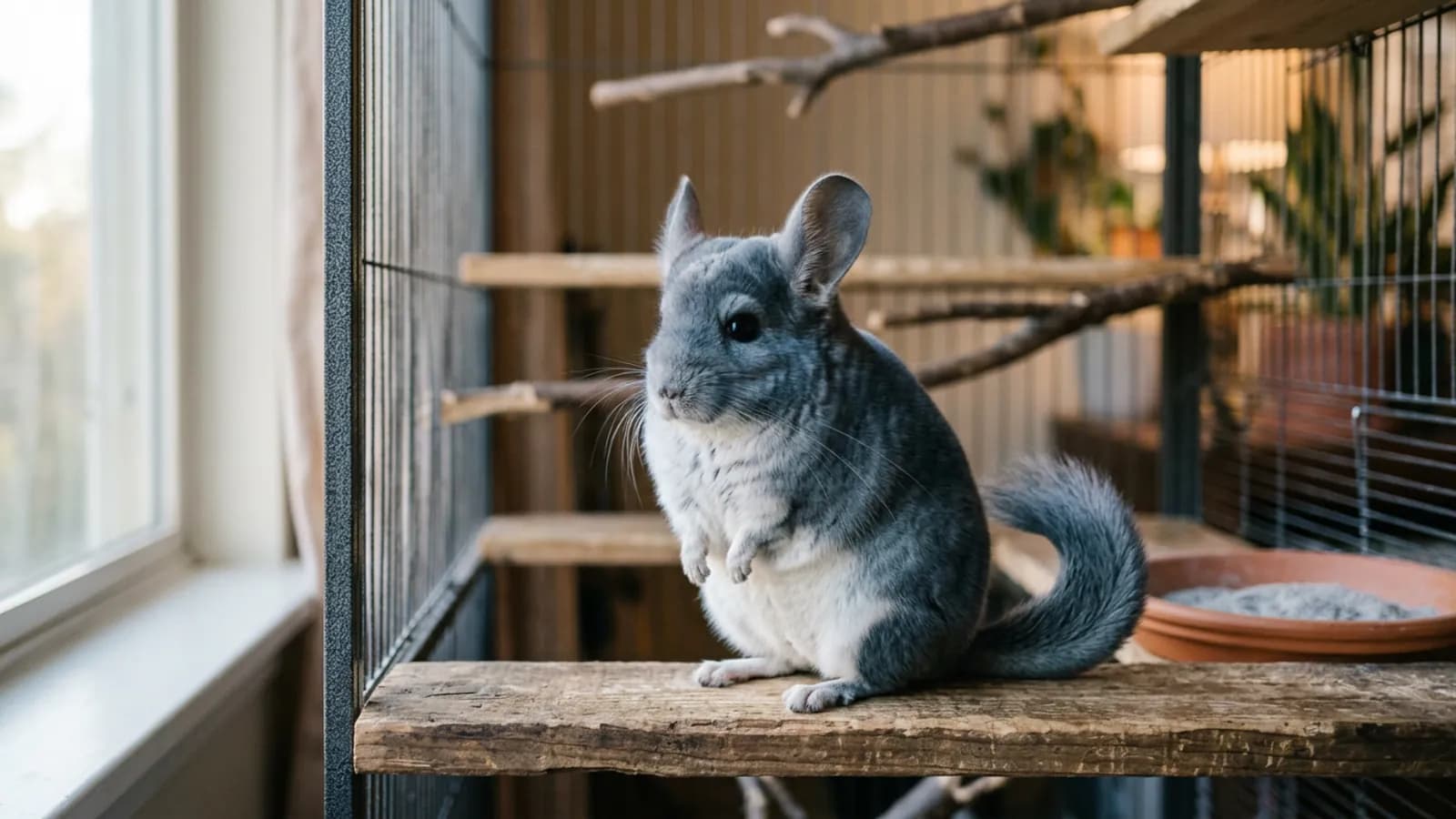
A chinchilla sapphire is one of those colours that stops people in their tracks, and I understand why. It is a soft, clean blue-gray, cooler and quieter than a standard chinchilla's slate coat, the kind of tone that looks almost lit from inside under good light. But I want to be honest with you before you fall the rest of the way in: sapphire is a fur colour and nothing more. It does not change what the animal needs, what it costs to carry through a summer, or how careful you have to be with its teeth. After about ten years with chinchillas, including my own Pebble and Juniper, the thing I most want a new sapphire owner to hear is that the colour is the least important fact about the animal you are bringing home.
What a sapphire chinchilla actually is
Sapphire is a colour mutation, one of a handful that breeders have selected for on top of the wild-type standard gray. Where a standard chinchilla is a neutral, peppery slate that fades to a white belly, a sapphire carries a distinct blue cast through the coat. It reads as a lighter, softer gray with a genuine cool tone rather than the warm or neutral gray you see on most chinchillas. The belly stays white, and the overall effect is a pale, dusty blue rather than anything saturated. If you have ever tried to photograph one, you will know the colour shifts with the light, which is part of why it is prized.
It helps to place sapphire next to the mutations it gets confused with. It is not the same as violet, which carries a warmer, more lilac-gray tone, and it is not what people mean when they chase a purple chinchilla, because there is no truly purple animal, only these soft dilutions of gray. It is also not a white or an albino animal, which are different genetics entirely. Sapphire sits in its own lane: a blue-toned dilution of the standard, recognisable once you have seen a few side by side but easy to mistake in a single photo on a bad screen.
One thing I will flag plainly, because I would rather you hear it from a keeper than a seller. Colour names in this hobby are not tightly regulated. A listing that says "sapphire" is telling you what the breeder believes the animal carries, not a certified fact. Combinations exist too, so you will see things advertised as sapphire crossed with other mutations, and the visual result can drift a long way from a clean, single-gene sapphire. The colour is real, but the label is only as reliable as the person applying it.
The genetics behind the blue
Sapphire is a recessive mutation, and that single fact explains most of what is strange about the colour, including the price. Recessive means an animal has to inherit the sapphire gene from both parents to actually show the blue coat. A chinchilla can carry one copy of the gene, look like an ordinary standard gray, and pass sapphire on to its offspring without ever showing a hint of it itself. These carriers are invisible to the eye, which is why sapphire can appear to skip around a family line and surface unexpectedly.
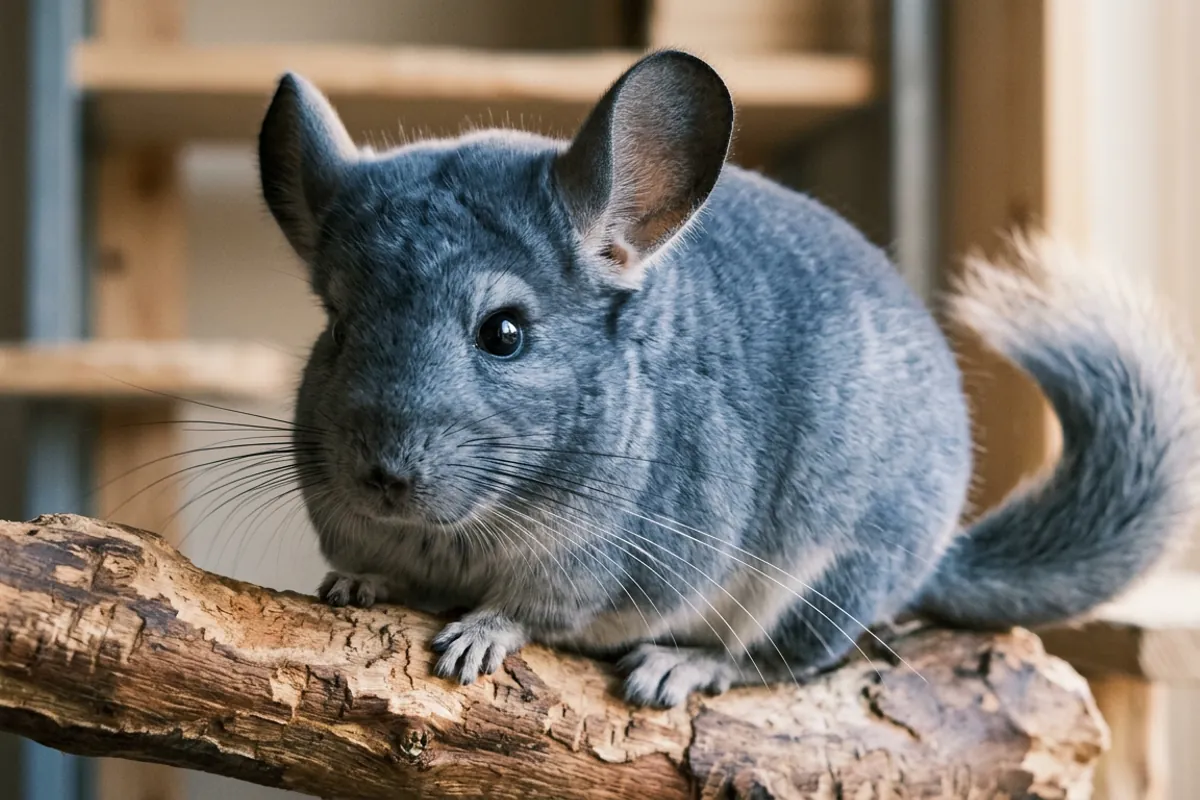
To reliably produce visible sapphire kits, a breeder generally needs both parents to be sapphire or to carry it. That narrows the breeding pool sharply compared with a dominant mutation, where a single copy shows and one parent can pass the colour on. The narrower the pool, the fewer animals, and the higher the price, which is the honest reason a sapphire tends to cost more than a standard from the same breeder. You are paying for scarcity created by the genetics, not for a better or hardier animal.
I want to be careful here and admit the edge of what is well established. Among keepers there is longstanding talk that some of the recessive mutations, sapphire included, can come from tighter breeding lines and that thoughtless pairing for colour can concentrate weaknesses. What is genuinely agreed is that breeding purely for a rare recessive, generation after generation, narrows the gene pool, and a narrow gene pool is where problems hide. What is not settled is any claim that sapphire as a colour is inherently sickly. I have not seen solid evidence for that, and I would not repeat it as fact. The safe reading is simpler: a well-bred sapphire from someone who breeds for health first is a normal, robust chinchilla, and a sapphire bred by someone chasing the colour at any cost is a gamble, exactly as it would be for any mutation.
If the genetics of colour interest you at all, it is worth understanding that every one of these mutations only ever touched the fur. The underlying animal, its needs and its fragilities, is the same one described in what a chinchilla really is. The blue is paint. The machine underneath is unchanged.
What the colour changes, and what it never touches
Here is the part I repeat in every colour article, because it is the part that keeps animals alive. The mutation that makes a sapphire blue affects pigment. It does not touch the digestive tract, the teeth, the temperature tolerance, or the temperament. A sapphire eats the same, overheats at the same temperature, grows the same continuously erupting teeth, and needs the same care as a standard gray, a brown beige, a black and white, or a mosaic. Colour is the one thing about a chinchilla that changes nothing else.
I labour this because the market does the opposite. A rare colour gets marketed as if it were a rare pet, something special that deserves a special this or that. It does not. The sapphire in front of you is a chinchilla with a blue coat, and every rule that governs an ordinary chinchilla governs it without a single exception. If anything, the money people are willing to spend on the colour would be far better spent on the setup that actually determines whether the animal thrives.
So spend the next few sections with me on what actually matters, because none of it is about the colour, and all of it is about keeping this specific animal healthy for the fifteen or more years a well-kept chinchilla can live.
Heat safety does not care what colour it is
This is the one I will never soften, because I nearly learned it the hard way. Pebble came to me from a rehome out of an overheated attic, and her first summer brought a heatwave that ended in a night at the emergency vet. That scare is why I am relentless about temperature, and why the heat rule on this site is written as a rule and not a suggestion.
Chinchillas are built for a cold, dry, high-altitude climate, and that dense coat that makes a sapphire so beautiful is exactly what makes it dangerous in the heat. The animal cannot shed that fur to cool down and it does not sweat. The comfortable range is 60 to 70°F, which is 15 to 21°C. Above 75°F, roughly 24°C, you are into risky territory. At 80°F and up, about 27°C, you are in an emergency, and humid air makes it hit faster and harder because it strips away what little cooling the animal can manage. A sapphire has no more heat tolerance than any other chinchilla. The blue coat is just as thick and just as deadly in a hot room.
Practically, that means the room your chinchilla lives in has to hold that range, not the room next door and not the average across the day. I keep a thermometer on the cage itself so I am reading the animal's actual air, not a guess.
digital thermometer and humidity gauge with remote probes As an Amazon Associate I earn from qualifying purchases.
I also give a cool hard surface the animal can choose to lie against when it wants to dump heat, which for chinchillas means a chunk of stone rather than anything plastic or gimmicky.
Kaytee Chinchilla Chiller granite stone As an Amazon Associate I earn from qualifying purchases.
Learn what heat stress looks like before you ever need to, because by the time it is obvious it is already an emergency. The warning signs of heat stroke are worth reading in full, and if you want a single number to anchor everything, chinchilla temperature is the piece I would point a new owner to first. A gorgeous sapphire in a room that hits the low eighties is a chinchilla in danger, and the colour will not save it.
Hay, teeth, and the dust bath stay identical
Juniper, my other girl, is a neglected rescue whose dental disease I manage day to day, and she is the reason I am uncompromising about the two things that keep a chinchilla's mouth working: unlimited grass hay and a real variety of chews. A chinchilla's teeth never stop growing. The only thing that keeps them worn to a healthy length is the long, grinding chewing action of hay, hour after hour, every day. A sapphire's teeth grow exactly the same way and go wrong in exactly the same way when the diet slips.
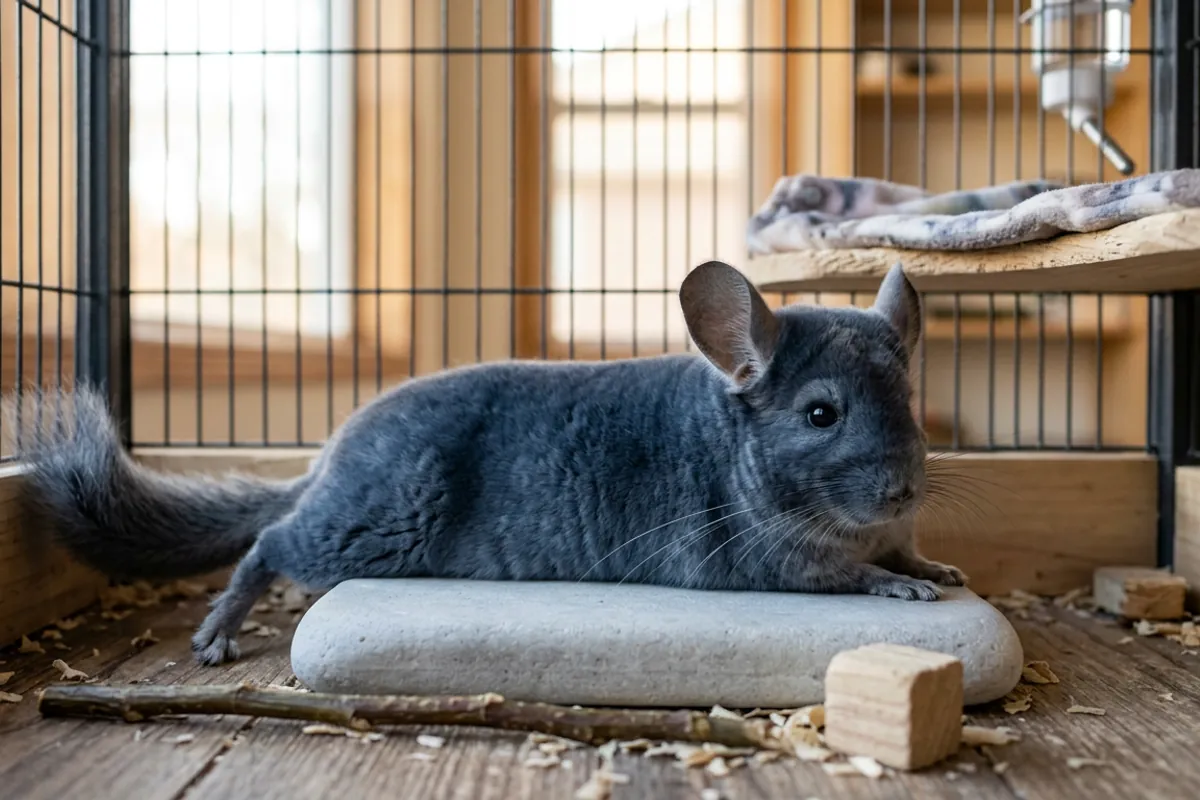
So the base of the diet is grass hay, available all the time, never running out. Timothy is the usual choice and I buy it in bulk because a chinchilla that is doing its job goes through a startling amount of it.
Oxbow Western Timothy Hay, 9 lb box As an Amazon Associate I earn from qualifying purchases.
Pellets are a measured supplement on top of the hay, plain chinchilla pellets in a small daily amount, not a bowl to graze from. Treats are tiny and rare. If you want the honest long version of what is safe and what is not, what a chinchilla can eat covers it, but the short version is hay first, hay most, hay always.
Chewing is dental care, not decoration. I keep a rotation of safe wood chews going at all times so the teeth have something to work against beyond the hay, and variety matters because a bored chinchilla ignores a single stale chew.
emours apple wood chew sticks, 40 count As an Amazon Associate I earn from qualifying purchases.
If you ever see drooling, weight loss, dropped food, or a change in how the animal eats, that is not something to wait out. Dental disease is the thing that most often shortens a chinchilla's life, and it is a vet call, specifically an exotics vet, every single time. Chinchilla teeth problems walks through what to watch for before it turns serious.
The dust bath is the last non-negotiable, and it is another place the colour is irrelevant. Chinchillas clean that dense fur by rolling in fine dust, never in water. A sapphire coat gets exactly the same treatment: a dish of proper chinchilla bathing dust, offered a few times a week, taken away between baths so the animal does not sit in soiled dust or overdry its skin.
Lixit Blue Beauty chinchilla dust, 3 lb As an Amazon Associate I earn from qualifying purchases.
Never bathe a chinchilla of any colour in water. A wet chinchilla is a serious problem, because that thick coat holds damp against the skin and does not dry, which is a route to fungal trouble and chilling. If you want the full method, the chinchilla dust bath done right lays out the dust and the schedule.
The cage and the wheel, unchanged by the colour
I will keep this short because it is the same advice I give for every chinchilla, which is rather the point. A sapphire needs a tall cage with plenty of vertical space to climb and jump, built from metal and wood with wooden ledges, and no plastic anywhere the animal can reach it, because chinchillas chew and plastic is dangerous when eaten.
Critter Nation double unit small animal cage As an Amazon Associate I earn from qualifying purchases.
If a wheel goes in, and I think one should, it has to have a solid running surface. Wire-runged wheels catch feet and legs and cause horrible injuries, and no colour of chinchilla is exempt from that. A solid surface is the only kind I will recommend.
15 inch Chin Spin solid surface chinchilla wheel As an Amazon Associate I earn from qualifying purchases.
The point of listing this is not the gear. It is that a person who has just paid a premium for a rare blue coat sometimes economises on the cage, and that is exactly backwards. The setup is what keeps the animal healthy for a decade and a half. The colour is what it looks like while it lives there. Spend accordingly, and read how to build a cage setup that keeps the animal healthy before you buy, so you buy it once.
Buying a sapphire without getting burned
If you have decided you want a sapphire specifically, go in with clear eyes. First, the price will be higher than a standard, and that premium is buying scarcity created by recessive genetics, not a healthier or friendlier animal. Decide honestly whether the colour is worth it to you, because the animal underneath is the same one you could adopt in plain gray, often for less and sometimes free from a rehome. Mine both came from rescues, and I would not trade them for the rarest coat in the world.
Second, buy the breeder, not the colour. Ask what they breed for. Someone whose first answer is health, temperament, and sound teeth is worth ten times someone whose first answer is how rare their sapphires are. Ask to see the parents. Ask about the line. A good breeder will happily talk about the health of their animals and will be upfront about the limits of the colour label. Someone who only wants to talk about how special and rare the blue is has told you where their priorities sit, and it is not with the animal.
Third, judge the animal in front of you, not the listing. A healthy chinchilla, sapphire or otherwise, is bright, active in the evening, eating steadily, with clean eyes and nose, a dry rear, and a good body under all that fur. If the animal looks unwell, no colour makes up for it. How to buy a chinchilla goes through the checks in detail, and what a chinchilla really costs is worth reading before the premium tempts you into skimping on the vet fund you will genuinely need.
A sapphire is a beautiful thing to look at, and I am not going to pretend the colour has no pull, because it clearly does. But ten years in, the animals I love are not the ones with the rarest coats. They are the ones I kept cool through the summer, fed hay until they were sick of the sight of me, and got to a vet the moment something looked off. Bring home the sapphire if the colour delights you. Then care for it exactly as if it were the plainest gray in the world, because to its body, that is precisely what it is.