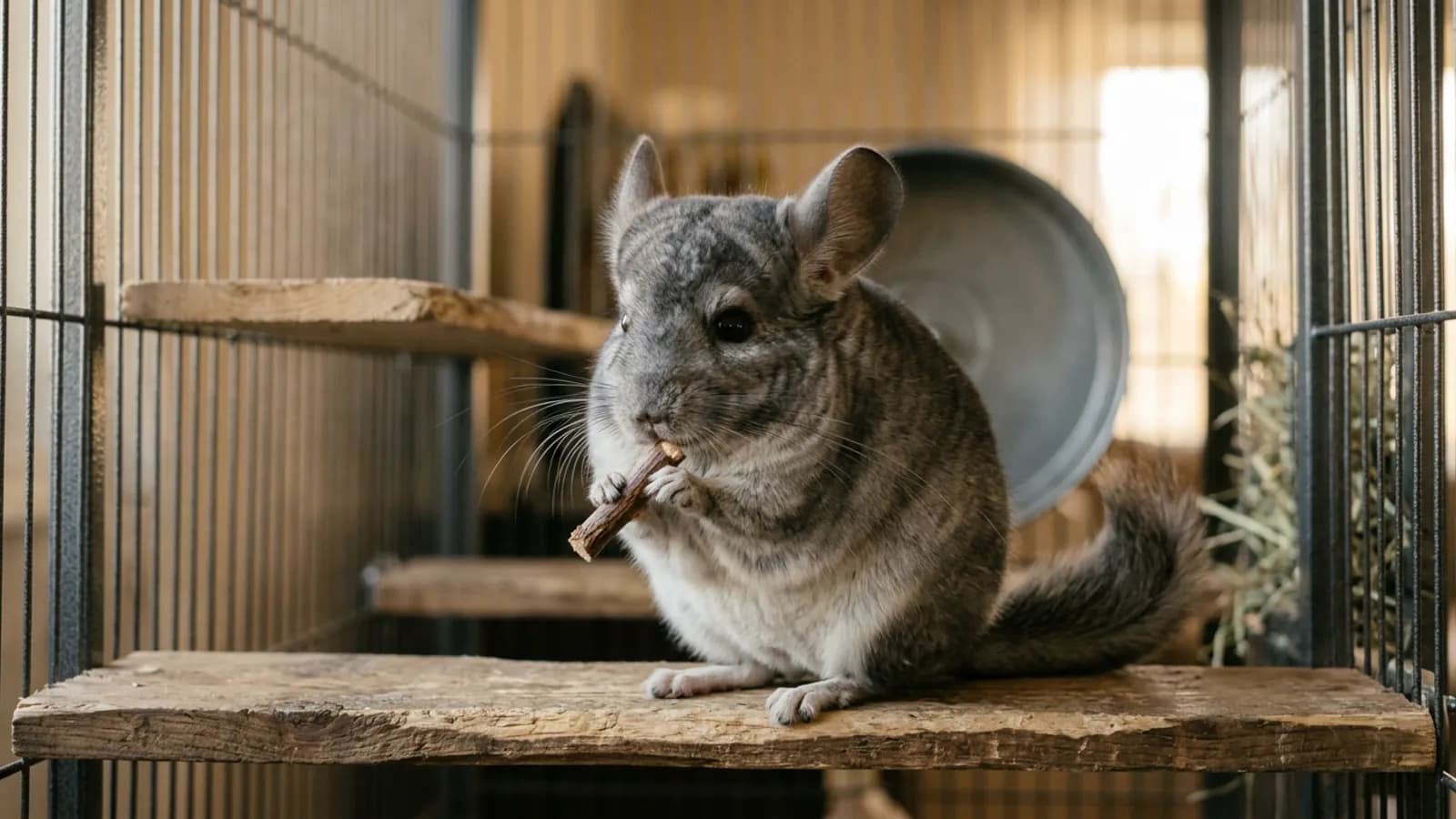
Chinchilla biting is one of the first things a new owner panics about, and almost every time I get a worried message, the animal has done something far short of an actual bite. A chinchilla mouth on your finger can mean a dozen things, and only one of them is aggression. Over about ten years of keeping these animals, I have learned to read the mouth the way you read a sound or a posture: as information, not as a verdict on whether your chinchilla likes you. So before you decide you have a mean chinchilla on your hands, slow down. Most biting is fear, overstimulation, curiosity, or an animal in pain trying to tell you something. Sorting out which one you are looking at is the whole job, and it changes everything about what you should do next.
A nibble is not a bite, and the difference matters
The single most useful thing I can teach you is to tell a nibble from a nip from a real bite, because owners lump all three together and then treat a friendly gesture like an attack.
A nibble is soft, rapid, and does not hurt. Your chinchilla takes a fold of your skin or a fingertip and works it gently with the front teeth, often while sitting calmly. This is grooming behavior. In a bonded pair they do it to each other, working through fur to clean and to reassure. When your chinchilla does it to you, it is close to a compliment, and the worst thing you can do is yank your hand away and startle the animal into thinking hands are unpredictable.
A nip is quick and sharper, a single pinch with a bit of pressure behind it. It usually means stop. You are holding too tight, you have caught a sore spot, the animal is overstimulated, or it simply wants down. A nip is communication, not malice, and the right response is to listen: loosen your grip, put the animal back, give it space.
A real bite is unmistakable. It is hard enough to break skin, the jaw commits, and it comes with a frightened or cornered animal, not a relaxed one. A chinchilla that truly bites is almost always terrified or in pain. I have been bitten hard exactly a handful of times in a decade, and every single time I could point to the reason afterward: I had grabbed too fast, trapped the animal, or handled one that turned out to be hurting.
If you can hold those three apart, you are already ahead of most of the frantic advice online, which treats a grooming nibble and a fear bite as the same emergency.
Why a chinchilla bites in the first place
Chinchillas are prey animals, and that fact sits underneath nearly every behavior they have. In the wild, a small rodent that lets a large warm thing grab it from above does not pass on its genes. Your hand descending into the cage is, to a nervous chinchilla, a hawk. The instinct to escape or defend is not a character flaw. It is the animal working exactly as designed, and a bite is the last item on a long list of warnings it would rather you had heeded.
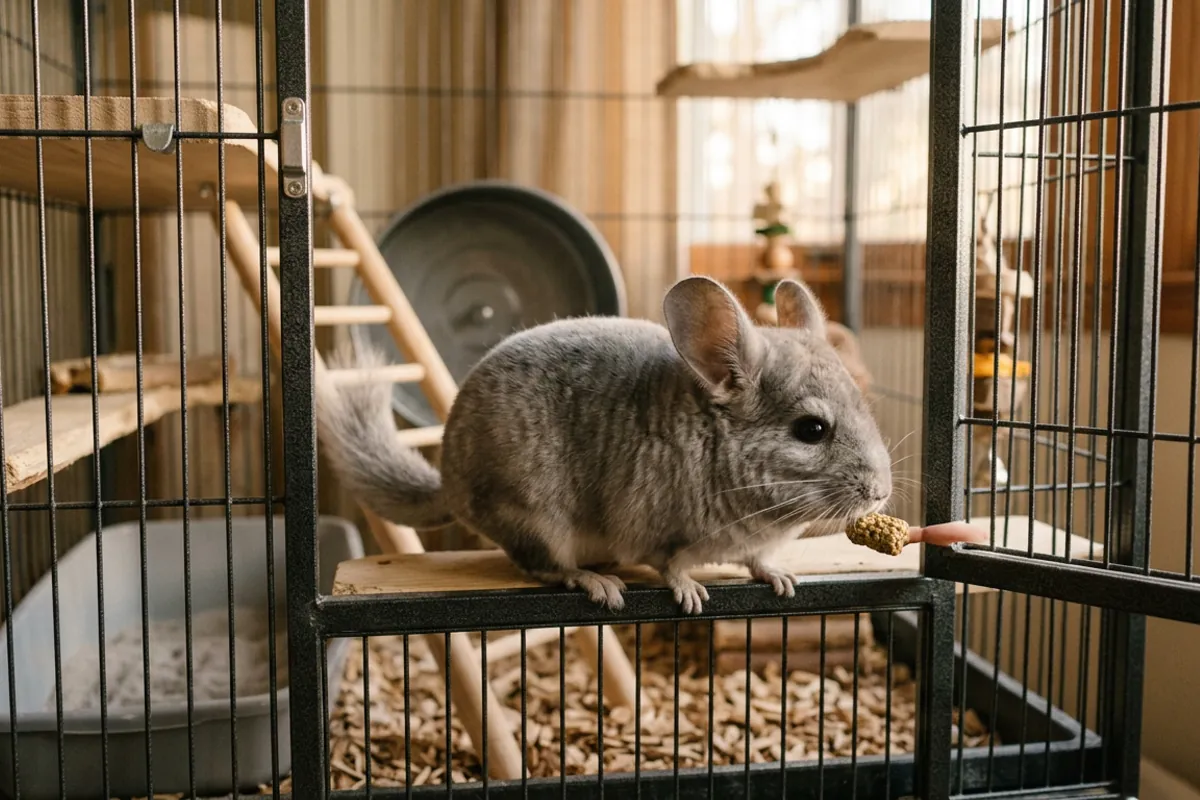
Fear is the biggest driver. A new chinchilla that has not learned your hands are safe will bite out of pure self-protection, and no amount of insisting you are gentle will convince it faster than patience does. Overstimulation is the next most common cause: a chinchilla that was enjoying being held right up until it was not, and gave you a nip when the petting went on too long or landed somewhere it did not want touched.
Then there is the cage-territory bite. Many chinchillas that are perfectly sweet outside the cage will lunge or nip when a hand comes through the door, because the cage is the one space they own and defend. Hormones play a part too, especially in intact animals and around the stress of a new cagemate. And a chinchilla that has learned biting makes the scary hand go away will keep doing it, because from its point of view it works every time. That last one is the trap: if you retreat the instant you are bitten, you have taught the lesson yourself.
Understanding the why is not an excuse for the animal. It is the map. You cannot fix a fear bite and a territorial bite the same way, and you certainly cannot fix a pain bite with any amount of trust-building, because the problem is not trust at all.
Cage biting, bar chewing, and what it is really about
There is a whole other kind of biting that has nothing to do with your hands, and owners confuse the two constantly. When a chinchilla grabs the cage bars and gnaws, or chews the wooden ledges down to nubs, that is not aggression and it is not directed at you. That is a rodent doing what a rodent must.
A chinchilla's teeth never stop growing, for its entire life. The front incisors and the back cheek teeth grow continuously, and the only thing that keeps them at a safe length is constant grinding against tough, fibrous material. An animal that chews the bars is often an animal that does not have enough of the right things to chew, or one that is bored, or one that has learned that rattling the bars brings you running with attention or a treat. Sometimes it is all three at once.
Bar biting is worth taking seriously for two reasons. First, gnawing on metal or, worse, on any painted or plastic-coated surface can damage the teeth and expose the animal to material it should never ingest, which is one more reason I will not keep a chinchilla in anything with plastic shelves or coated wire. A cage should be tall, metal, and fitted with wooden ledges, nothing you have to worry about them eating. If you are still choosing one, I have written honestly about how to pick the best chinchilla cage without buying the wrong one twice, and the same logic rules out most of what a big-box store will sell you. Critter Nation double unit small animal cage As an Amazon Associate I earn from qualifying purchases.
Second, bar biting is a symptom worth reading. An under-enriched chinchilla with nothing legal to grind on will find the bars, and the fix is rarely to scold it. The fix is to give the teeth a better job, which I will come back to at the end.
Fur biting is a different problem entirely
There is one more thing people call biting that is not about the mouth meeting you or the cage at all, and it is the most misread of the lot: fur biting, also called barbering. This is a chinchilla chewing off patches of its own fur, or a dominant chinchilla trimming a cagemate's coat, leaving short, oddly even patches, often along the flanks, shoulders, or the base of the tail.
Fur biting is not the same as fur slip, where a frightened chinchilla releases a clean tuft of fur to escape a grip. Barbering is deliberate and repeated, and the patches have a chewed, mown look rather than a bald release point. The honest truth is that the causes are debated. Stress is the one most keepers point to first: a cage that is too small, too hot, too loud, too close to a predator smell, or too boring. Boredom and lack of enrichment come up constantly. Some keepers and vets suspect diet, hormones, or a genetic tendency in certain lines, and I will not pretend the research gives us a clean answer, because it does not.
What I do when I see barbering is work through the fixable things in order. I check the temperature first, always, because a chronically overheated chinchilla is a stressed chinchilla and heat is the one variable I never gamble on. I make sure the cage is big enough and richly furnished, that the animal has hiding places and chews and floor time, and that nothing in the environment is frightening it around the clock. If the coat keeps disappearing after the environment is genuinely right, that is a conversation for an exotics vet, because persistent barbering can shade into a medical problem rather than a behavioral one, and it is not something you diagnose from a forum.
When biting means pain, not attitude
This is the section I most want you to read, because it is the one that can save an animal. A chinchilla that suddenly starts biting, when it never used to, is telling you something changed, and one of the most common changes is pain.
The teeth are the usual culprit. Chinchillas are prone to dental disease, and when the cheek teeth overgrow or the roots elongate and press where they should not, the animal is in real, grinding discomfort every time it tries to eat. My Juniper came to me as a neglected rescue with dental disease I manage day to day, and I have watched up close what a mouth in trouble does to behavior. An animal that hurts when it chews will refuse to be handled near the face, will flinch and nip when it never did before, and will change how it eats long before the pain shows on the outside.
The warning signs I watch for run together: drooling or a wet, matted chin, dropping weight, eating less or slowly, leaving hard foods and hay it used to demolish, pawing at the mouth, and a new short temper. If your previously gentle chinchilla turns biter alongside any of those, do not read it as the animal turning mean. Read it as pain, and get to an exotics vet, because dental disease is not something you fix at home and it does not resolve on its own. I have written more about what to look for in chinchilla teeth problems and spotting malocclusion before it turns serious, and the short version is that early is always better than late.
Pain from anywhere else counts too. A sore foot, an injury hidden under that dense coat, an ear infection, anything that hurts can turn a calm animal defensive. The rule I follow is simple: a real change in temperament is a medical question until proven otherwise. Behavior is often the first symptom you get, and it is worth trusting.
How I earn a chinchilla out of biting
Once you have ruled out pain, and you are dealing with a fear or territory biter rather than a hurting one, the work is patience, and there is no shortcut I have ever found. If you are starting from a frightened animal rather than a biting one, how to tame a chinchilla is the process from the beginning. You cannot rush a prey animal into trusting you, and every time you try, you set yourself back.
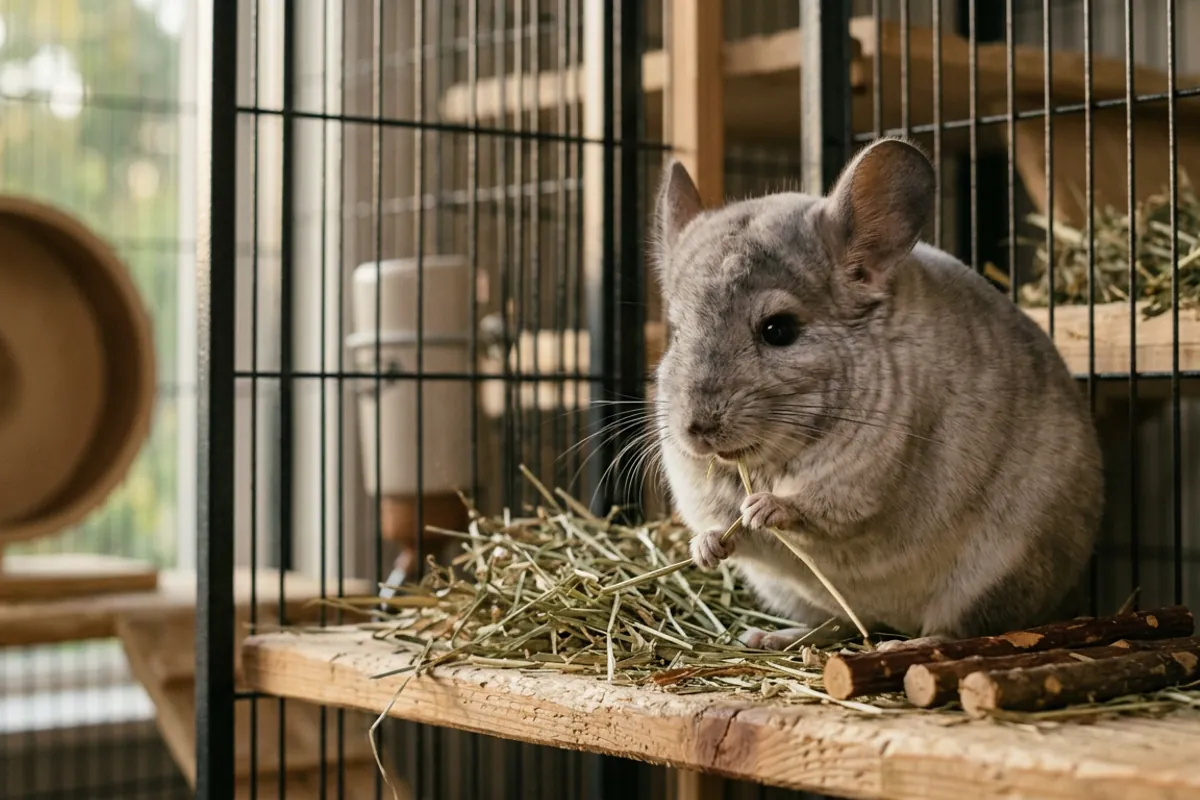
I start below the cage door, not above it. Coming in from overhead is the hawk again, so I bring my hand in low and let the animal come to me rather than reaching for it. For a serious biter, I do not even start with hands in the cage. I start by simply existing quietly nearby, sitting by the cage and talking so my presence stops being an event. Chinchillas learn your voice and your rhythm, and a lot of trust is built by doing nothing threatening for long enough that boredom beats fear.
The bridge into contact, for me, is the dust bath and food. Offering a chew or a small piece of the animal's normal food from a flat, open hand teaches that hands bring good things and no grab follows. I keep the hand still and let the chinchilla choose. When it takes food calmly, that is the currency I build on. I never chase, never corner, never pin an animal that is trying to get away, because every forced grab confirms the exact fear I am trying to undo.
When I do get bitten during this work, I try hard not to jerk back, because snatching my hand away rewards the bite and teaches the animal it worked. A steady hand and a calm removal, on my terms rather than the bite's terms, is what breaks the pattern. And I never, ever hit, flick, or shout at a chinchilla for biting. It does not understand punishment the way you intend it, it only learns that hands and voices are dangerous, and you will have traded a fear biter for a worse one. Floor time in a safe, chinchilla-proofed space does more for a nervous animal than any amount of in-cage handling, because the animal is not defending territory and is free to approach on its own terms.
Some chinchillas stay a little bitey their whole lives, and that is worth accepting honestly. Ten years in, I would still rather have a slightly nippy chinchilla that trusts me than a shut-down one that has learned struggling is pointless.
Giving those teeth something legal to do
A great deal of biting, both at the bars and out of sheer restless boredom, comes down to teeth that have no proper job, and this is the one area where the fix is concrete and cheap. Those incisors and cheek teeth grow for life, and they need constant work to stay healthy.
Unlimited grass hay is the foundation, not optional and not a supplement. The long, coarse fibers of good timothy hay are what wear the back teeth down through the sideways grinding motion, and a chinchilla that eats hay all day is doing dental maintenance with every mouthful. I keep hay in front of mine at all times, and I buy it in enough bulk that I never run short. Oxbow Western Timothy Hay, 40 oz bag As an Amazon Associate I earn from qualifying purchases.
On top of the hay, a real variety of hard chews gives the front teeth their outlet and keeps a bored animal off the bars. I say variety deliberately, because a single wooden block gets ignored within a week, but a rotating mix of untreated apple wood and other safe woods, plus pumice and other legal textures, holds interest far longer. An apple wood chew variety pack is an easy way to keep that rotation stocked. emours apple wood chew sticks, 40 count As an Amazon Associate I earn from qualifying purchases. Juniper taught me not to cut corners here: watching what happens when teeth do not get worn down properly is exactly why I am uncompromising about hay and chews. For the fuller picture I have written about chinchilla chew toys and why they are dental care, not decoration.
Enrichment beyond chewing matters too. A tall cage with ledges to climb, a solid-surface wheel to run on rather than any wire deathtrap, floor time, and things to explore all drain the restless energy that otherwise goes into gnawing bars and testing your fingers. 15 inch Chin Spin solid surface chinchilla wheel As an Amazon Associate I earn from qualifying purchases. A chinchilla with a full day of legal jobs, a mouth that does not hurt, and hands it has learned to trust is, in my experience, a chinchilla that has very little reason left to bite. Get those three right, and the biting problem usually solves itself.