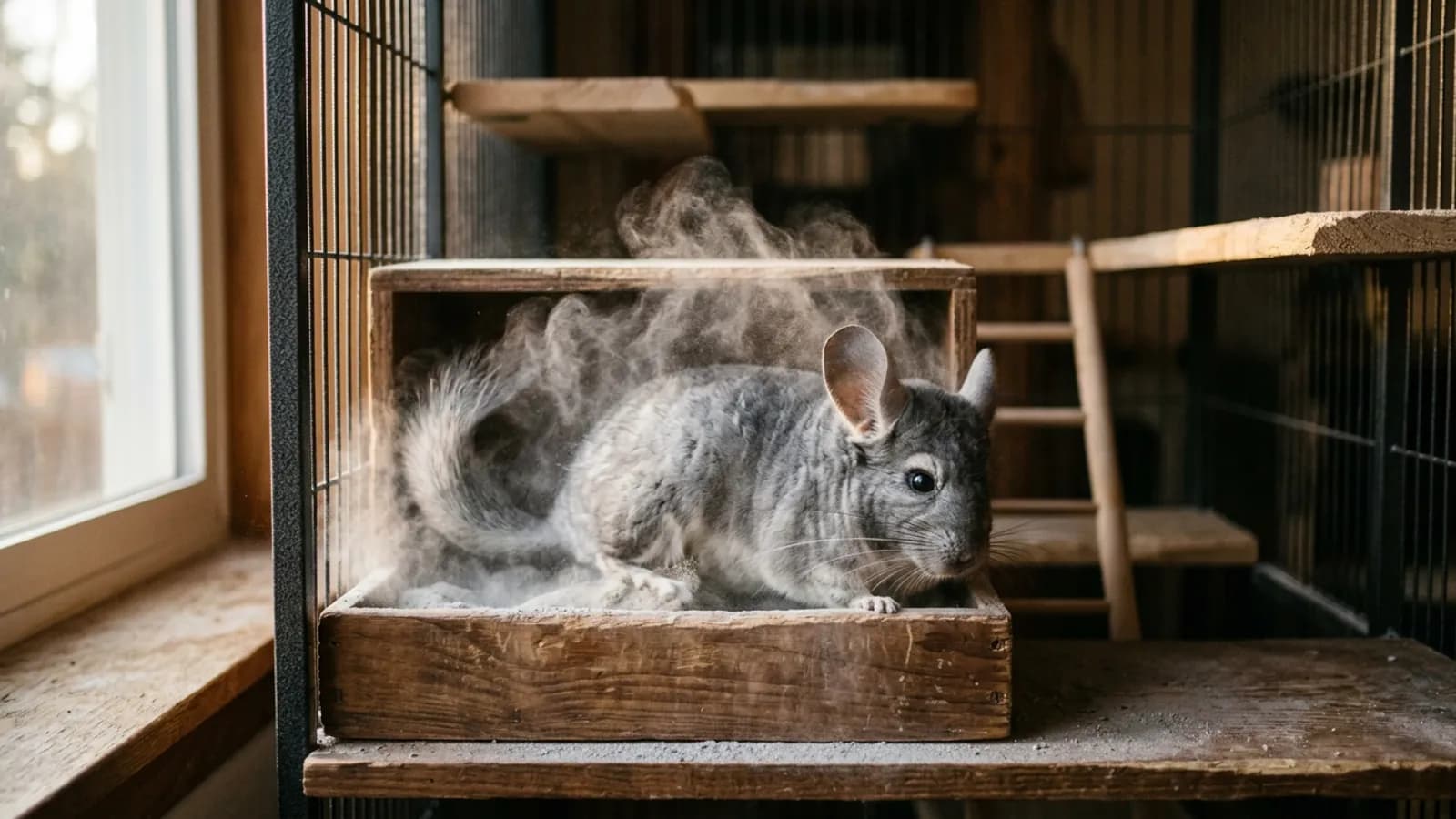
Chinchilla dusting is the one grooming job you never get to skip, and it is also the one people get wrong most often. A chinchilla does not, and must not, bathe in water. It cleans itself by rolling in a fine mineral dust that sifts all the way down to the skin and pulls out oil and moisture the way nothing else can. Pebble does this several times a week, and watching her flip end over end inside a little cloud of silver dust still makes me grin after ten years of keeping these animals. But the routine only helps if you understand what the dust is doing, how often to offer it, and where the line sits between a clean coat and skin you have dried out by overdoing it. Here is how I run it, and where I have seen people go wrong.
What chinchilla dusting actually does
To understand dusting you have to understand the coat. A chinchilla grows something like 50 to 80 hairs out of a single follicle, where you or I grow one. Estimates of the density run to around 20,000 hairs per square centimeter, and while I would not swear to the exact figure, the point stands: this is one of the densest coats on any land mammal. That density is a survival trait from the high Andes, where the wild chinchilla lives in a cold, dry, rocky place. The fur keeps them warm, and they keep the fur clean by rolling in fine volcanic grit.
Water is the problem that dust solves. If a coat that thick gets soaked, the moisture works its way to the skin and simply cannot dry. The animal stays damp for a long time, and damp dense fur is a perfect place for fungal infection to take hold, on top of the chilling risk. A wet chinchilla is not a clean chinchilla, it is a problem. Dust does the opposite. Their skin produces oils just like ours, and in a coat this dense those oils have nowhere to go, so they build up fast unless something lifts them away. The fine particles absorb skin oils and any trace of moisture, then fall away and carry the grime with them, leaving the coat dry and separated right down to the skin.
So dusting is not a luxury or a bit of enrichment you can drop when life gets busy. It is the only bathing method these animals have, and skipping it leaves the coat greasy, clumped, and eventually matted.
What the dust actually is
The stuff you want is finely ground volcanic pumice, sold as chinchilla dust or chinchilla dusting powder. It is not builder's sand, not sandbox sand, and not the coarse grit you would give a reptile. Good chinchilla dust feels like flour between your fingers, almost weightless, and it is that fineness that lets it reach the base of the coat. The best known products are the classic ground pumice ones, and I have written separately about Blue Cloud dust and about what bathing dust really is if you want the detail on brands and grades.
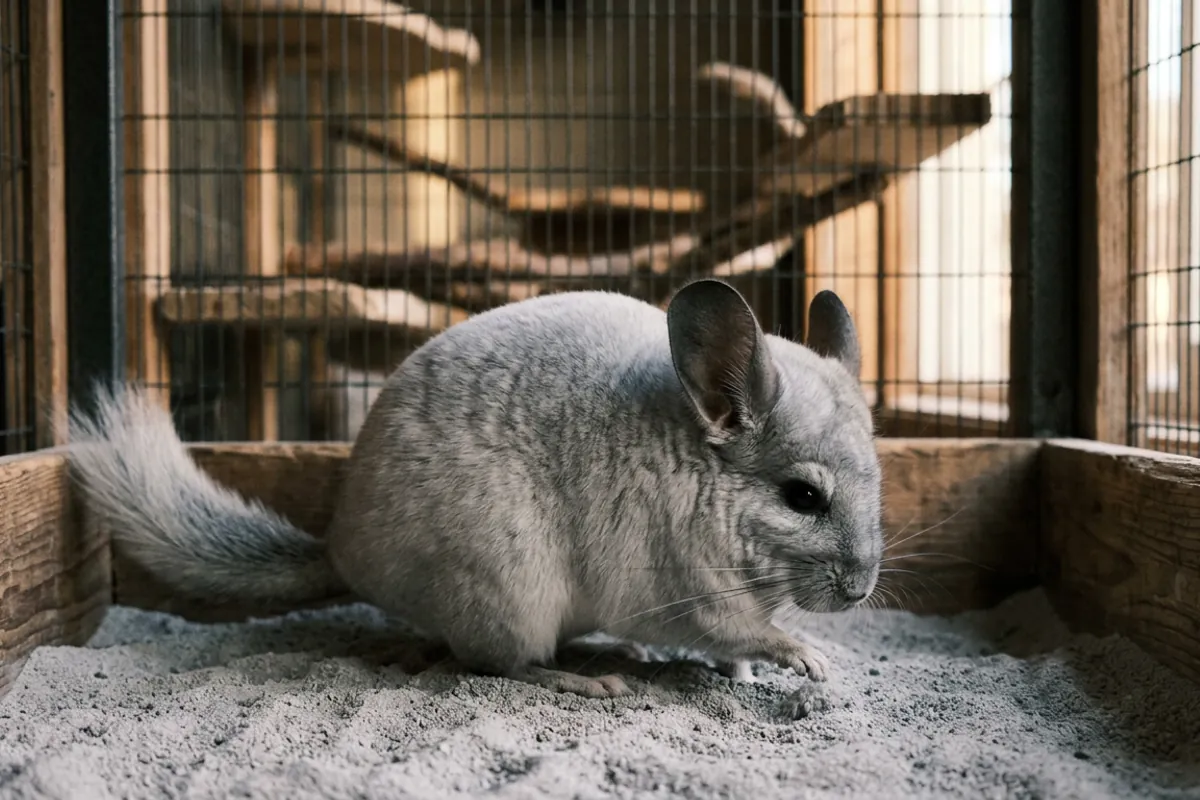
A good dust bath kit is worth buying properly rather than improvising. Lixit Blue Beauty chinchilla dust, 3 lb As an Amazon Associate I earn from qualifying purchases.
A bag lasts a long time because a single bath uses only a scoop or two, and you can sift the used dust and reuse it a few times before it looks spent and needs replacing. Watch the labels while you shop. What gets marketed as chinchilla sand is sometimes the same fine pumice dust under a different name, and sometimes a coarser sand that is wrong for a chinchilla. Coarse sand does not sink into the coat, so it does a poor job of cleaning and can be abrasive against the skin. Avoid anything scented, anything with added color, and anything sold as a cheap all-purpose small animal sand without saying plainly what it is made of. Additives and perfumes are there for the human nose, and they are exactly what you do not want a chinchilla inhaling or grinding into its skin.
How often to offer a dust bath
For most chinchillas in a normal home, two to four dust baths a week is the sensible baseline. Pebble gets three in a typical week. There is no single magic number, because the right frequency depends on your climate and your particular animal, so treat that range as a starting point and then read the coat.
The mistake in both directions is real. Too few baths and the coat turns greasy, the fur starts to clump, and you may notice a faintly oily feel when you stroke down the back. Too many baths, or leaving the dust available all day, and you strip the skin of the oil it actually needs, which shows up as flaking, dry patches, and sometimes scratching. A young, active chinchilla in a dry room may want more than an older one that moves less, and there is no shame in adjusting per animal. In dry weather I might add a bath. In a muggy spell I offer them more often, because humidity is what makes a coat feel damp and heavy, but I still watch the skin. I have written up the full schedule on the dust bath page if you want the longer version.
The container and the routine
The routine matters as much as the frequency. I use an enclosed bath house rather than an open bowl, because an enclosed house keeps most of the dust off the cage and out of the air, and a chinchilla will happily dive into it. An open dish works too, it just throws more dust around the room. Either way, put in enough dust to roll in, roughly an inch or two deep, no more. You are giving them a place to flip, not a swimming pool.
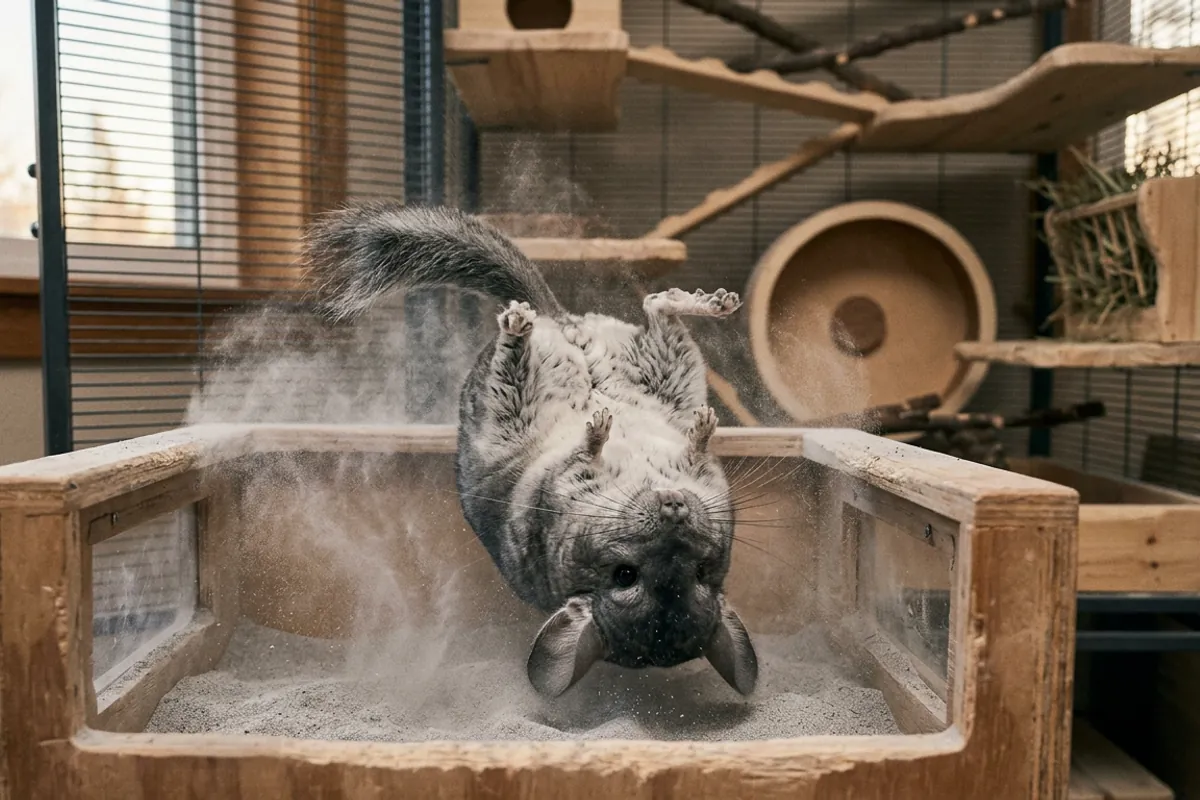
Here is the part people miss: the bath goes in, and then it comes out. Give the animal ten to fifteen minutes, let them roll to their heart's content, and then take the house or bowl back out of the cage. If you leave dust in around the clock, two things go wrong. The chinchilla will often use it as a toilet, so the dust turns filthy, and the constant access dries the skin out. A dust bath is an event, not a fixture. I offer it, they use it, it comes out, and the dust gets sifted or replaced when it looks spent.
One timing note tied to something I never bend on. Do the bath during the cool part of the day, not the hot part. Rolling is vigorous exercise, and a chinchilla that is already near its temperature limit does not need to be working up heat in a dust cloud. The comfortable range for these animals is 60 to 70°F (15 to 21°C), anything above 75°F (24°C) starts to get risky, and 80°F (27°C) and up is an emergency that comes on faster in humid air. If your room is warm, cool it before bath time, not after. That rule comes straight from Pebble's first summer and the night at the emergency vet that taught it to me.
Reading the coat, and reading the room
Frequency by the calendar is a starting point. Frequency by observation is how you actually get it right. Run your hand down the back and along the sides. A well-dusted coat feels dry, dense, and slippery, and the fur springs back. A coat that is overdue feels heavier and slightly tacky, and it may look a little pointed or separated into greasy tips. That is your cue to offer a bath sooner.
Go the other way, and dry flaking skin, dandruff in the fur, or a chinchilla scratching more than usual tells you the skin is stripped and you are dusting too much or leaving the dust in too long. Back off, and give the skin time to recover its oils.
Humidity drives a lot of this, which is why I keep a hygrometer near the cage and actually look at it. digital thermometer and humidity gauge with remote probes As an Amazon Associate I earn from qualifying purchases. When the air is damp, the coat holds moisture and wants dusting more often. When it is bone dry, the reverse. One more thing worth knowing while your hands are in the fur: chinchillas release a patch of fur when grabbed too hard or frightened, a defense called fur slip. It is normal biology, not a dusting problem, but it is another reason to handle gently at bath time and not snatch at a chinchilla that is mid-roll.
Chinchilla dusting powder for hamsters, and why I would not
This question comes up a lot, so here is the honest answer. People see how cheap and effective chinchilla dust is and ask whether they can use chinchilla dusting powder for hamsters. My answer is no, or at least not the fine pumice dust that a chinchilla needs.
Hamsters do take sand baths, and a sand bath is genuinely good for them. But hamsters want bathing sand, which is coarser and heavier, not the flour-fine dust a chinchilla requires. The very fineness that makes chinchilla dust work on a chinchilla is the problem for a hamster: it hangs in the air as they dig, and a hamster with its face down in that cloud can inhale enough to irritate the airways. The difference between the two animals is worth understanding on its own, and I have written about where chinchillas and hamsters split. For the bath specifically: give a chinchilla fine dust, give a hamster coarser bathing sand, and do not swap one for the other on the assumption that sand is sand. If you keep both animals, buy two separate products and label them, rather than trusting one bag to serve both.
The mistakes I see, and what I do instead
The worst one is a water bath. Someone means well, thinks a dirty coat needs washing, and puts a chinchilla in water. Please do not. For every reason in the first section, water is dangerous for this coat, and a soaked chinchilla can chill or develop a skin infection before it ever dries. If a chinchilla gets genuinely filthy with something you cannot dust out, that is a spot-clean with a barely damp cloth on the one dirty patch, dried immediately, and a call to an exotics vet if it is anything more than surface dirt.
The second is leaving the dust in the cage full time. I covered why above: it becomes a litter box and it dries the skin. Offer it, then remove it.
The third is cheap or wrong product. Scented dust, dyed dust, coarse sand pretending to be dust, or a giant no-name bag that does not say what is inside. Your chinchilla grinds this into the densest coat on the planet and breathes the cloud, so the ingredient list matters. Stick to plain ground pumice.
The fourth is dust in a small closed room with no thought for the air. Even good dust aerosolizes. I bathe in a room I can ventilate afterward, I do not lean over the cloud breathing it in, and I would be especially careful if anyone in the home has asthma. An enclosed bath house helps a lot here.
Get the dust right, offer it a few times a week, take it out again, and read the coat instead of the calendar, and chinchilla dusting becomes the easiest and most satisfying part of the whole routine. It is the moment a chinchilla looks most like itself, and after ten years it is still my favorite thing to watch.