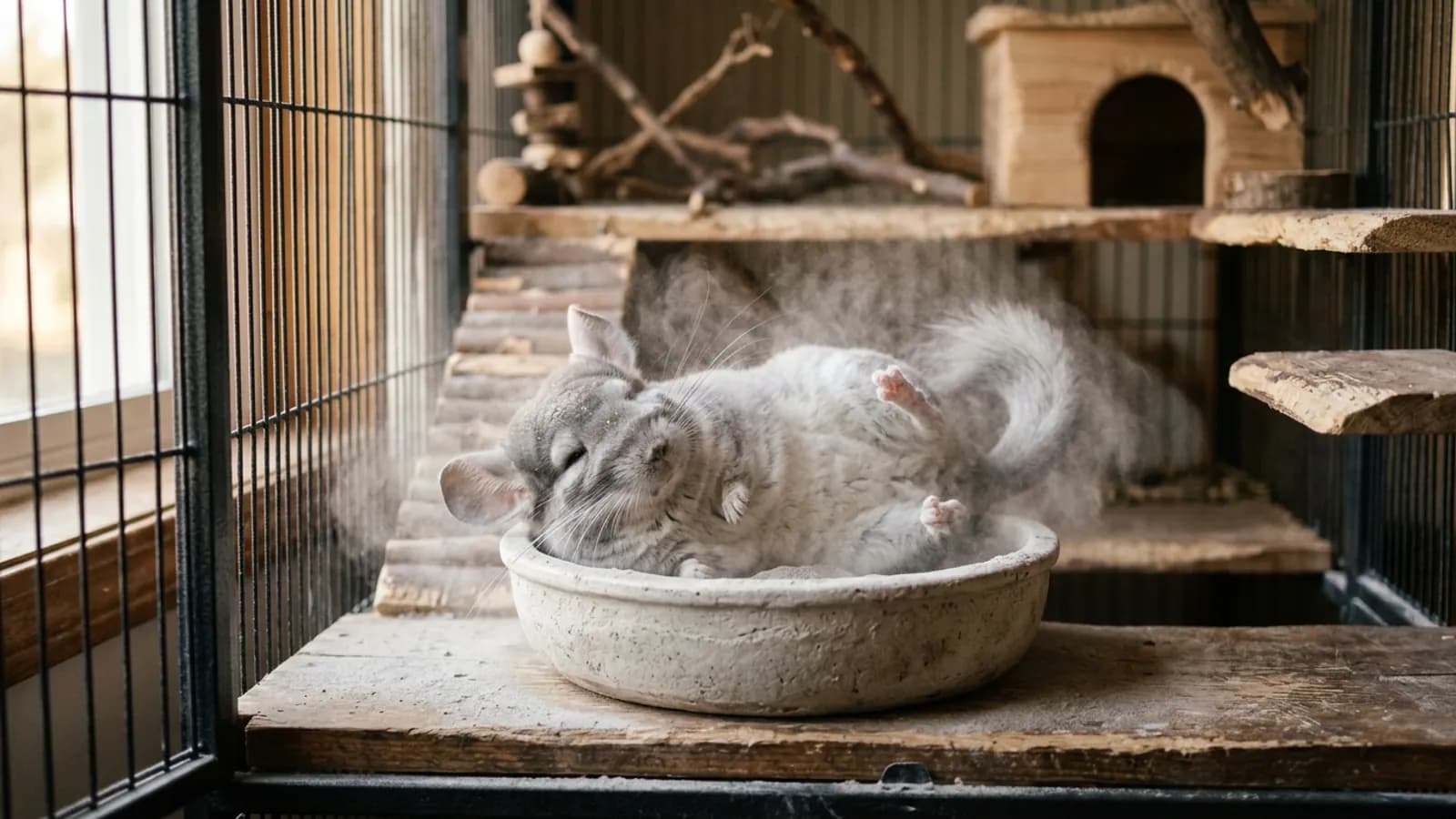
Chinchilla dust is the finest powder you will ever pour into a bowl, and it is the single most important grooming tool your chinchilla owns. It is not sand, it is not dirt, and it is nothing like the grit sold for reptiles or birds. Real chinchilla dust is milled volcanic pumice, ground so fine it feels like flour between your fingers, and a chinchilla rolls in it to reach a coat so dense that nothing else could ever get to the skin. I have kept chinchillas for about ten years, through Pebble and through Juniper, and I can tell you the dust bath is not optional enrichment you add when you feel generous. It is basic care, on the same level as unlimited hay and a metal cage. Get the dust wrong and the coat suffers within days.
What chinchilla dust actually is
To understand the dust, you have to understand the coat. Dozens of individual hairs grow from a single follicle on a chinchilla, where your own scalp grows one. That density is what makes the fur feel like a cloud, and it is also what makes it a trap. Skin oil, loose dead hair, and everyday grime have nowhere to go, and no brush ever made could comb through fur that thick without tearing it. In the high mountains of South America, wild chinchillas solve this by rolling in fine volcanic grit, and that behaviour is written so deep into the animal that a hand-raised kit starts bathing the first time it meets a bowl of dust, with nobody teaching it a thing.
Good chinchilla dust copies that mountain grit as closely as a product can. It is milled volcanic pumice or a similar soft volcanic stone, ground to a powder far finer than any sand. When the chinchilla flips and shimmies and rolls through it, those tiny particles slide all the way down to the skin, then carry the oil and any trapped moisture back out of the coat as the animal shakes off. That is the entire mechanism, and it is beautifully simple. The dust is bone dry, so it pulls dampness away from the skin rather than adding it. That is the exact opposite of what water does, which is the whole reason the next section exists.
Why water never touches a chinchilla
New owners fight me on this, so I will be blunt: a chinchilla must never be bathed in water. The same density that needs the dust is the reason water is dangerous. Soak that coat and the water wicks straight down to the skin and stays there, because the fur is simply too thick to dry from the outside in. Towel the top and the undercoat underneath is still wet hours later. A damp undercoat held against warm skin is a perfect place for fungus to grow, and a chinchilla that stays wet can chill to the point of real danger surprisingly fast for an animal that small.
If your chinchilla ever does get wet, whether from a knocked water bottle or a drooling chin, that is a towel-and-warm-room situation, not a bath, and a stubbornly damp or drooling animal is a vet call rather than something you wait out. Dust does the cleaning job that water would do for most other pets, without any of the risk. There is no shampoo, no rinse, no conditioner, and no such thing as a wet chinchilla you planned on purpose. If a groomer or a caresheet ever tells you otherwise, close the tab. The chinchilla bath is always dust, full stop.
What to buy, and what to skip
Not everything sold in a bag with a chinchilla on the front is the same product, and the label is exactly where people go wrong. What you want is genuine volcanic pumice dust, the kind sold as blue cloud or blue sparkle style powder. It should feel like talc, almost impossibly soft, and leave a faint grey film on your fingers when you rub it. That fineness is the entire point, because only a powder milled that fine can travel through the coat to the skin. Anything coarser just sits on top and does nothing. I keep one bag of plain volcanic dust and nothing else, and a bag lasts a long time because a bath only needs a shallow layer.
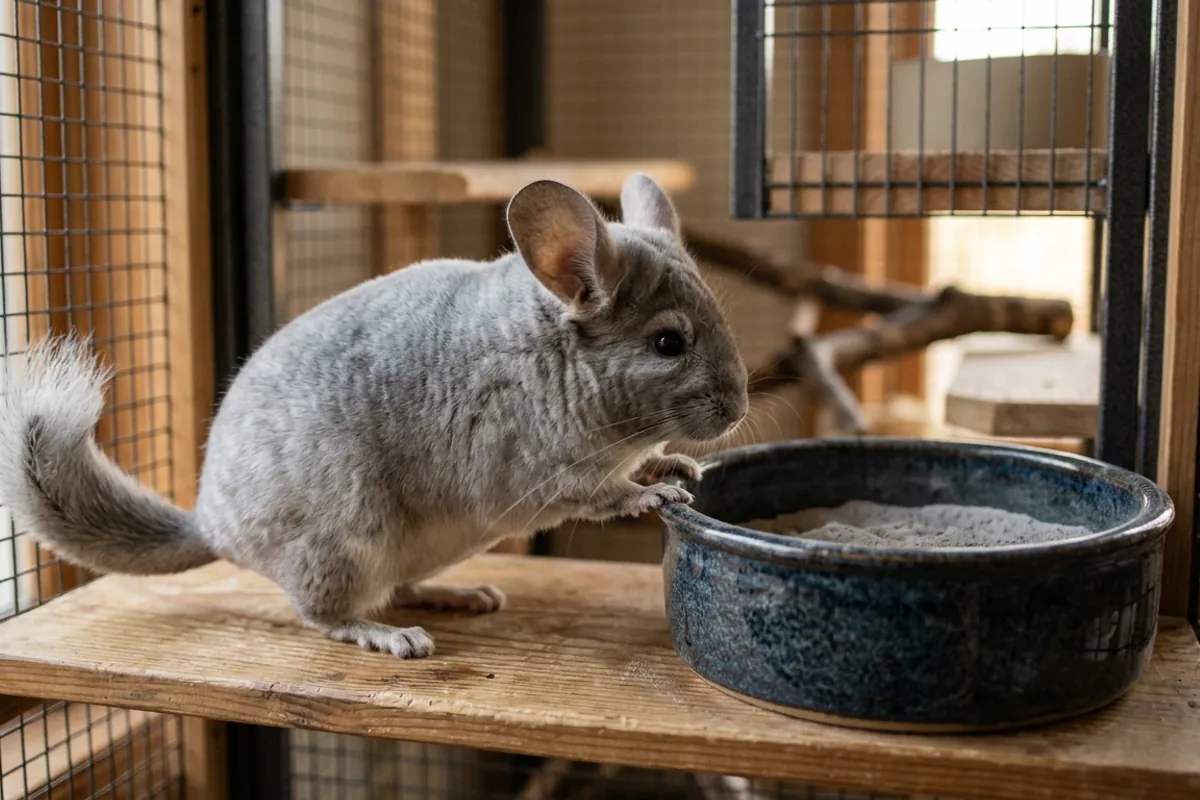
The most common mistake is reaching for sand, and a chinchilla sand bath is not the same product at all. Play sand and reptile sand are coarse and sharp when you look at them up close, they can scratch the eyes and abrade the skin, and they roll off the coat without lifting any oil. Anything sold as a chinchilla dirt bath is a naming muddle too, because dirt is precisely what you are trying to keep out of that fur. Skip any dust with added scent, colour, or so-called antibacterial extras. Your chinchilla is going to breathe in a little of whatever you buy, so the ingredient list should be one line long: volcanic dust. If you want the longer version of how to pick and use it, I wrote it up in bathing dust for chinchillas.
Setting up the bath itself
The dust needs a container the chinchilla can climb fully inside and flip over in without launching the whole thing across the cage. I like a heavy, enclosed dust house or a solid bowl that will not tip, in metal, glass, or glazed ceramic. Never plastic. A bored chinchilla will chew plastic, and plastic holds static that makes the dust cling to the walls instead of the coat. An enclosed dust bath house keeps most of the powder contained and gives a shy chinchilla a bit of privacy while it rolls, which some of them plainly prefer.
Lixit Blue Beauty chinchilla dust, 3 lb As an Amazon Associate I earn from qualifying purchases.
Fill it with about an inch or two of dust, roughly two to five centimetres, enough that the chinchilla can work the powder up into its coat as it rolls and no more than that. A deeper pile does not clean better. It just gets kicked out over the edge and wasted across your cage floor. Set the bath on a level surface, away from the food and the water bottle so the dust does not drift into either, offer it, and then get out of the way. You will not need to teach anything at all. Within a few seconds you will see the flips, the fast little shimmy, and a small grey cloud rising off one very happy animal. It is one of the best things about keeping chinchillas, and it never gets old.
How often, and how long
Here is where good intentions cause the most trouble. More dust is not better. For most chinchillas in a normal home, a bath two to four times a week, left in for ten to fifteen minutes at a time, keeps the coat exactly right. Then take the bath back out. There are two reasons for that. A bath left sitting in the cage becomes a litter box within the hour, and a chinchilla with constant access will overbathe until its skin dries out and starts to flake.
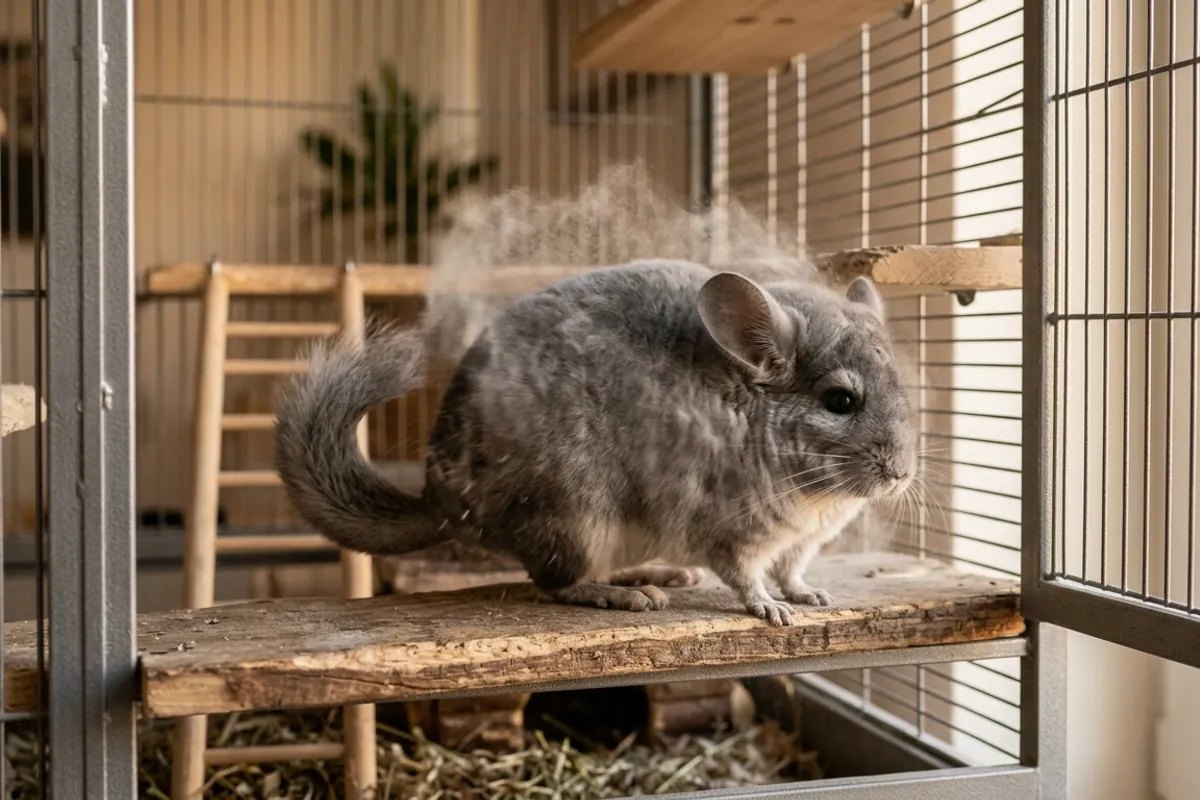
The exact number is not a hard law, and it is honestly debated among keepers, because so much of it depends on your home. In a dry house a chinchilla may stay perfectly clean on two baths a week. In a more humid one it may need the upper end of that range to keep the coat from looking greasy. So let the coat tell you rather than the calendar. If the fur looks oily, clumped, or parted into damp-looking sections, offer the dust more often. If you see flaky skin, or the fur starts to look dull and dry and lifeless, cut back and give the skin a rest. I watch Pebble's coat far more closely than I watch any schedule, and after ten years my eyes are a better guide than any fixed rule I could give you.
Humidity, heat, and the timing of a bath
Because the dust works by pulling moisture out of the coat, the drier your air is, the better it cleans. Chinchillas do best in low humidity anyway, and damp air is a double problem. It makes the dust clump and work poorly, and it feeds the same fungal risk that makes water so dangerous. A cheap combined thermometer and hygrometer clipped to the cage tells you both numbers at a glance, and it is worth the few dollars just so you are not guessing.
digital thermometer and humidity gauge with remote probes As an Amazon Associate I earn from qualifying purchases.
Temperature matters at least as much, and this is where I stop being gentle, because Pebble's first summer taught me the hard way, with a heatwave and a night at the emergency vet. Never offer a dust bath to a chinchilla that is already hot. The rolling is real exercise, it warms the animal further, and dust plus a panting, overheated chinchilla is not a combination you ever want to create. Keep the room in the comfortable range of 60 to 70°F, which is about 15 to 21°C. Treat anything above 75°F, roughly 24°C, as the moment to cool the room down and skip the bath rather than add heat to an animal that is already struggling, and treat 80°F, about 27°C, as an emergency, faster still in humid air. When it is that warm, the temperature is the only priority, and the heat calculator will tell you plainly how much danger the room is in.
Keeping the dust clean and safe
You can reuse dust a few times, which keeps the cost down. After each bath I sift out the droppings and any obvious clumps with a small strainer, and I replace the whole batch once it looks dark and grey, feels gritty instead of soft, or stops leaving that clean film on my fingers. Store it dry and sealed between baths so it does not pull moisture out of the air and go stale on you. Dust that has soaked up humidity clumps and cleans badly, and it is not worth saving.
The one real health note is the fine powder itself. Chinchilla dust is meant to be breathed in a little, and a healthy animal handles that without any trouble. But it is still airborne dust, so bathe in an open, well-ventilated spot rather than a small sealed box, and never offer a bath to a chinchilla that is sneezing, wheezing, or fighting a respiratory infection. The dust will only irritate an airway that is already sore. Watch the eyes too. A little squinting during the roll is normal and nothing to worry about, but red, weepy, or swollen eyes that do not settle, persistent sneezing, or any laboured breathing mean you stop the baths and get to an exotics vet. I am an experienced keeper, not a vet, and that is a line I never guess my way across.
What the roll tells you
Once the routine is running, the dust bath becomes more than grooming. It turns into a daily health check you get for free. A chinchilla that dives in and rolls hard is an animal that feels well. A chinchilla that suddenly loses interest in the bath, or moves stiffly getting in and out, is telling you something before anything else does, and it is worth paying attention to that change the same day you notice it.
Pay attention to what comes off in the dust, too. A coat that stays greasy no matter how often you offer the bath, patchy fur, bald spots, or clumps of hair released in a panic, which keepers call fur slip, all point at stress, handling that is too rough, or a skin problem worth a closer look. None of this replaces a vet when the line into medical territory gets crossed. But a keeper who watches the roll every couple of days, and knows what their own chinchilla's normal looks like, catches trouble early far more often than one who just tops up the bowl and walks away. The dust keeps the coat right. Watching how your chinchilla uses it keeps the rest of the animal right, and after ten years that quiet daily habit is the part I would least want to give up.