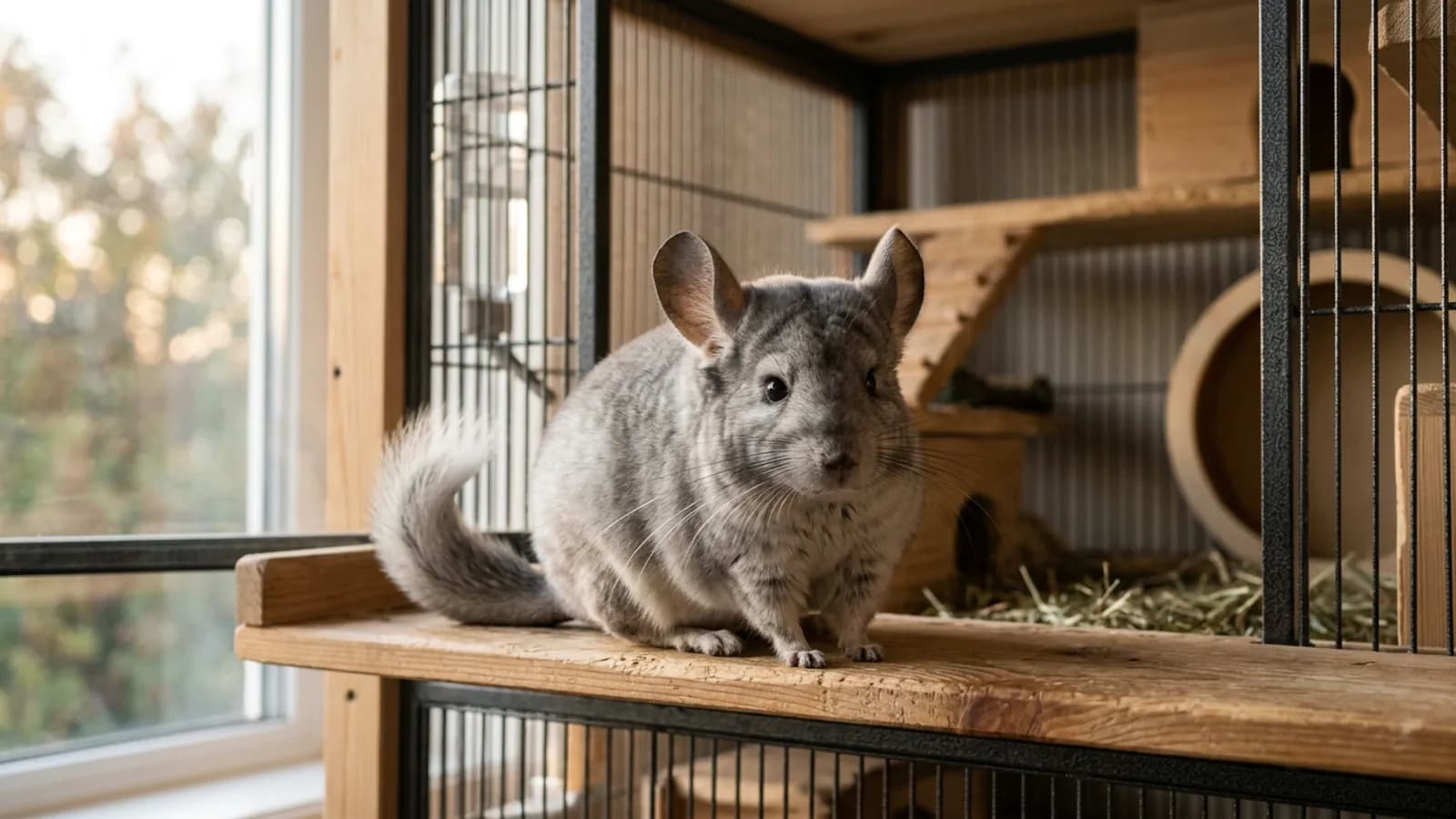
People search "old chinchilla" for two very different reasons. Some have just met a rehome and want to know how many years sit behind those eyes. Others are watching their own animal slow down and wondering what old even means for a species that can share a home for two decades. I have kept chinchillas for about ten years, and Pebble came to me as a rehome with no paperwork and no birthday, so I have sat with both questions at my own cage. Here is what age actually does to a chinchilla, from a 2 month old kit to a genuinely old chinchilla, and which parts of your care change with the years and which parts never budge.
What "old" even means for a chinchilla
Chinchillas are long-lived rodents, and that single fact reshapes the whole conversation. Most reach their mid-teens with good care, and some pass twenty. That range is the honest one, not a brochure promise, and I have written more on the span and what pushes it up or down. Compare that to the animals people usually keep. A dog is old at ten. A chinchilla at ten is barely into late middle age.
So when someone tells me their chinchilla is old, the first thing I ask is the number, because "old" at seven means something completely different from "old" at seventeen. Most keepers, myself included, start using the word senior somewhere around ten to twelve years, and even that is a soft line rather than a switch that flips. A well-kept chinchilla can be bright, springy, and demanding well into its teens. Age in this species is a slow slope, not a cliff, which is exactly why it catches people off guard: the changes are so gradual that you miss them until you compare this year to a photo from four years ago.
The first months: a 2 month old chinchilla
A 2 month old chinchilla is roughly eight weeks old, which lands right at or just past weaning. Kits nurse for about six to eight weeks, and a responsible breeder does not send one home until it is fully weaned and eating hay and pellets on its own. In practice that means eight to twelve weeks at the earliest, and I would lean toward the later end every time. If a seller offers you a chinchilla younger than that, walk away; a kit pulled too early is a kit set up to struggle. I cover the earliest stage in more detail on the newborn page.
At this age they are tiny, quick, and genuinely fragile. Their whole diet is built on unlimited grass hay, exactly as it will be for the rest of their life, so start it right from the first day home with a clean, constant supply of timothy.
Oxbow Western Timothy Hay, 40 oz bag As an Amazon Associate I earn from qualifying purchases.
Pellets come as a small measured supplement on top of the hay, never the other way around. Handle a young kit low over a soft surface, because they are wired to bolt and they do not yet understand the drop off the edge of your lap. Keep the cage calm, quiet, and cool, and let the animal come to you rather than grabbing at it.
Three, four, and six months: the growing months
A 3 month old chinchilla is out of the most fragile newborn window but is still very much a baby. This is the age where personality starts to show and where good handling habits either take root or do not. Keep sessions short and gentle, keep hay in front of them at all times, and resist the urge to overfeed treats to win them over; a young gut does best on plain hay and a little pellet.
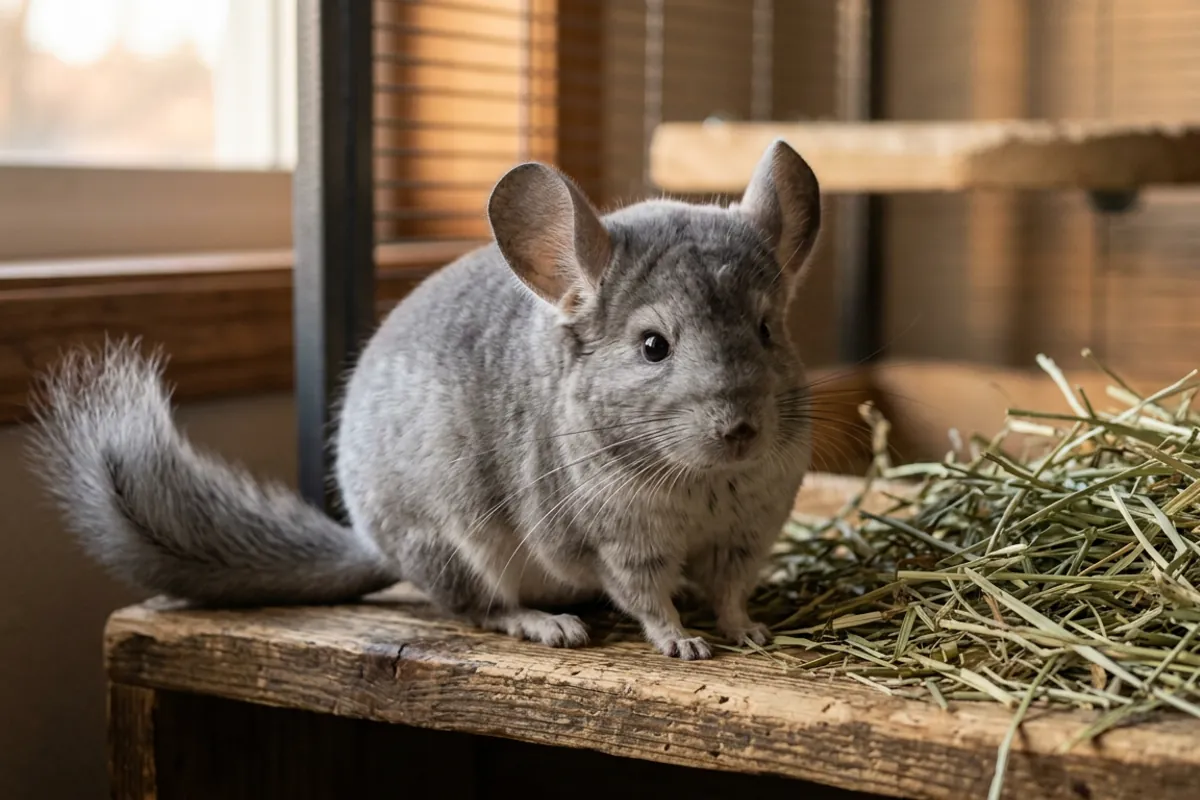
A 4 month old chinchilla is bigger, bolder, and usually a lot more athletic. This is when a proper solid-surface wheel starts earning its place, because they have the energy and coordination to use one and the exercise matters. Never a wire-rung wheel, at any age, because those catch toes and tails.
15 inch Chin Spin solid surface chinchilla wheel As an Amazon Associate I earn from qualifying purchases.
By the time you have a 6 month old chinchilla you are looking at an animal close to adult size but not quite finished growing. Here is the part people miss, and it matters: chinchillas can reach breeding maturity earlier than their adult body suggests, and the exact timing is genuinely variable. The commonly cited figure is around eight months, but it can come earlier, and I would not stake an unwanted litter on precision here. If you have a mixed-sex pair, separate them well before you think you need to. This is also the age where I get serious about chew variety, because teeth grow for the animal's entire life and the habit of gnawing hard, safe wood needs to be built young. Juniper, my rescue with dental disease, is the reason I never treat chews as optional decoration.
emours apple wood chew sticks, 40 count As an Amazon Associate I earn from qualifying purchases.
When a young chinchilla becomes an adult
There is no birthday card, but most chinchillas reach full adult size somewhere between eight months and a year, with some slow growers filling out a little past that. A typical adult settles into a weight range of roughly 400 to 600 grams, with a fair amount of individual variation; males often sit a touch smaller than females. What matters far more than the exact gram count is that the number stays stable once they are grown. I weigh mine on a small kitchen scale on a routine, because weight is the earliest honest signal a chinchilla gives you, long before behavior changes.
Adulthood is the long, steady middle of a chinchilla's life, and it is the least dramatic chapter to write about precisely because a healthy adult chinchilla is boringly consistent. Same appetite, same energy, same routine, year after year. That consistency is the baseline you want burned into memory, because reading an old chinchilla, or a sick one, is really just noticing where it has drifted from the adult it used to be.
Reading a chinchilla's age when nobody told you
A lot of chinchillas change hands with no reliable age at all. Pebble arrived that way, and so do most rehomes and rescues. The blunt truth is that you cannot read a chinchilla's age precisely from the outside the way you can rough-age a horse by its teeth. You can gather clues, but they are clues, not a birth certificate.
An older chinchilla often carries a slightly coarser, less uniform coat, may move a little more deliberately, and may have visible tooth wear or the beginnings of dental trouble that an exotics vet can spot on an oral exam. A younger adult tends to look sleek and move with that spring-loaded quality that healthy young chinchillas have. But plenty of well-kept seniors look fantastic, and plenty of neglected young ones look rough, so appearance alone lies in both directions. If you genuinely need a best estimate, an exotics vet with a proper look at the teeth and body condition will give you a far better read than any guide on the internet, mine included. And whatever number you land on, care for the animal in front of you rather than the number.
What age changes in an old chinchilla's body
The clearest place age shows up is the mouth. Chinchilla teeth grow continuously for life, and in an old chinchilla the odds of dental disease, uneven wear, or root problems climb. This is not a maybe-worth-watching item, it is the single most common serious health problem I see keepers face, and it can turn from subtle to dangerous fast. Signs to take seriously include dropping food, eating more slowly, weight loss, drooling or a wet chin, and pawing at the mouth. If you see those, that is a vet visit, not a wait-and-see, and I go deeper on the warning signs on the teeth problems page.
Beyond the teeth, an old chinchilla may sleep more, play a little less, and lose muscle across the hindquarters so that jumps that used to be effortless become a considered decision. Some develop cloudy eyes with age, and weight can quietly slide down over months. None of this is cause for panic on its own; it is the normal texture of a long-lived animal aging. What matters is that you notice it early and adjust, rather than assuming your seventeen-year-old will keep launching itself between high ledges like a six-month-old.
Caring for an old chinchilla well
The good news is that caring for an old chinchilla is mostly your normal care, made a little gentler and a little more watchful. Keep grass hay unlimited, because a senior with worn or sore teeth needs the constant chewing more than ever, and buying it in bulk keeps a fresh supply on hand without the shopping becoming a chore.
Oxbow Western Timothy Hay, 9 lb box As an Amazon Associate I earn from qualifying purchases.
Look at the cage through older legs. Lower the gaps between ledges so a missed jump is a short hop and not a fall, and make sure food, water, and the dust bath are all reachable without a big climb. If you are setting up or rethinking the enclosure, a tall metal and wood cage with wooden ledges you can reposition makes this easy, and there is more on getting it right in my cage guide.
Critter Nation double unit small animal cage As an Amazon Associate I earn from qualifying purchases.
Weigh a senior more often than an adult, because in an old chinchilla a slow weight loss is often the first sign of a tooth or gut problem you would otherwise miss for weeks. Keep the dust bath on its usual schedule unless the coat is thinning or the skin looks irritated, in which case you can ease off the frequency; the routine itself does not change with age, only the dial. If you are unsure what a proper bath even looks like, I walk through it on the dust bath page.
Lixit Blue Beauty chinchilla dust, 3 lb As an Amazon Associate I earn from qualifying purchases.
And schedule a vet who actually sees exotics, not just as a reaction to a crisis but as an occasional baseline check once your chinchilla is into its teens. An exotics vet who has examined your animal while it is well is worth a great deal when something is subtly off.
The one thing age never changes: heat
Here is where I stop being warm and get blunt, because this is the rule that keeps a chinchilla alive at every single age. Chinchillas do not handle heat, full stop. The comfortable range is 60 to 70°F, which is 15 to 21°C. Above about 75°F, which is 24°C, you are into risky territory, and 80°F, which is 27°C, and up is an emergency, faster still in humid air where they cannot shed heat. That is the whole reason Chincove exists: Pebble's first summer brought a heatwave near-miss and a night at the emergency vet, and I never want another keeper to live that night.
None of those numbers change because a chinchilla is young or old, but the animals at both ends of the age range have less margin. A 2 month old kit and a fifteen-year-old senior both cope with heat worse than a robust adult, so if anything you watch them harder, not less. Put a thermometer in the room where the cage actually sits, not out in the hall, so you know the real number.
digital thermometer and humidity gauge with remote probes As an Amazon Associate I earn from qualifying purchases.
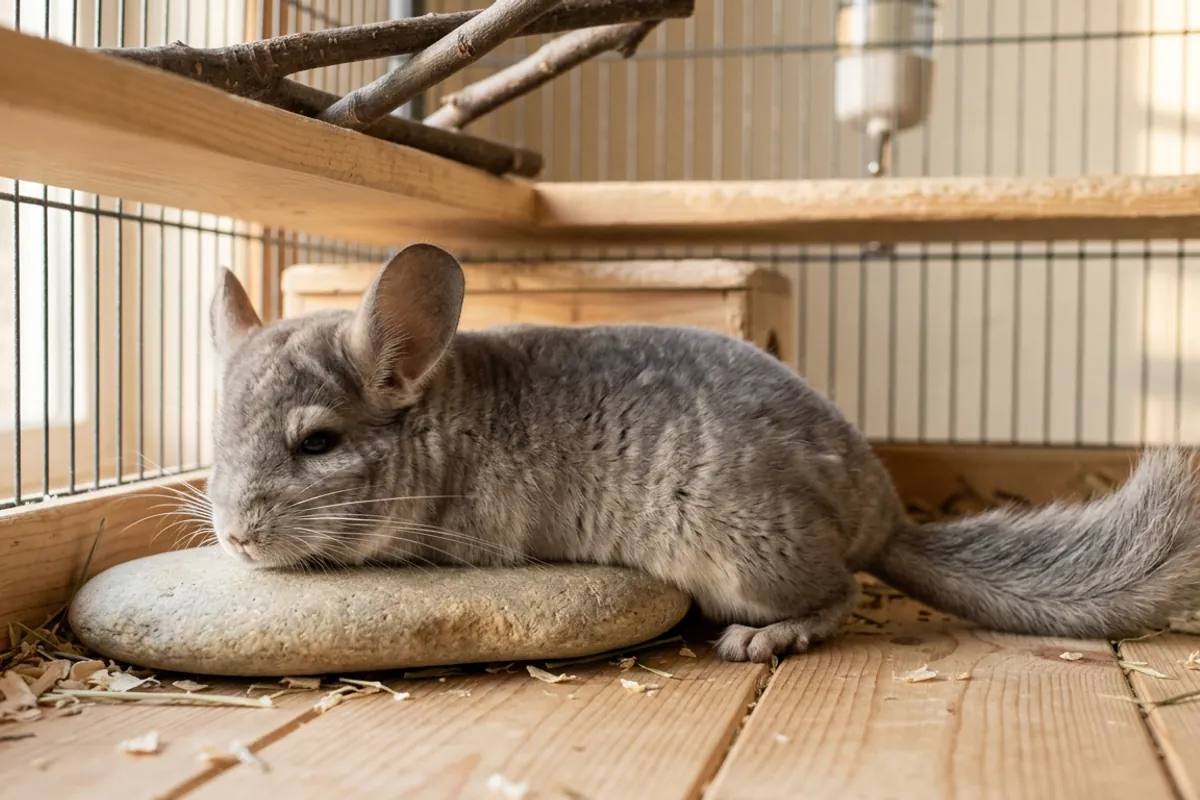
Give them a way to shed heat on a warm day with a cooling stone they can lie against, which they will use on their own terms.
Kaytee Chinchilla Chiller granite stone As an Amazon Associate I earn from qualifying purchases.
If you want to know exactly where your room sits on the risk scale, I built a heat danger calculator that takes temperature and humidity together. Whether your chinchilla is eight weeks old or eighteen years old, the heat line is the one you never soften, and it is the difference between a long life and a short one.