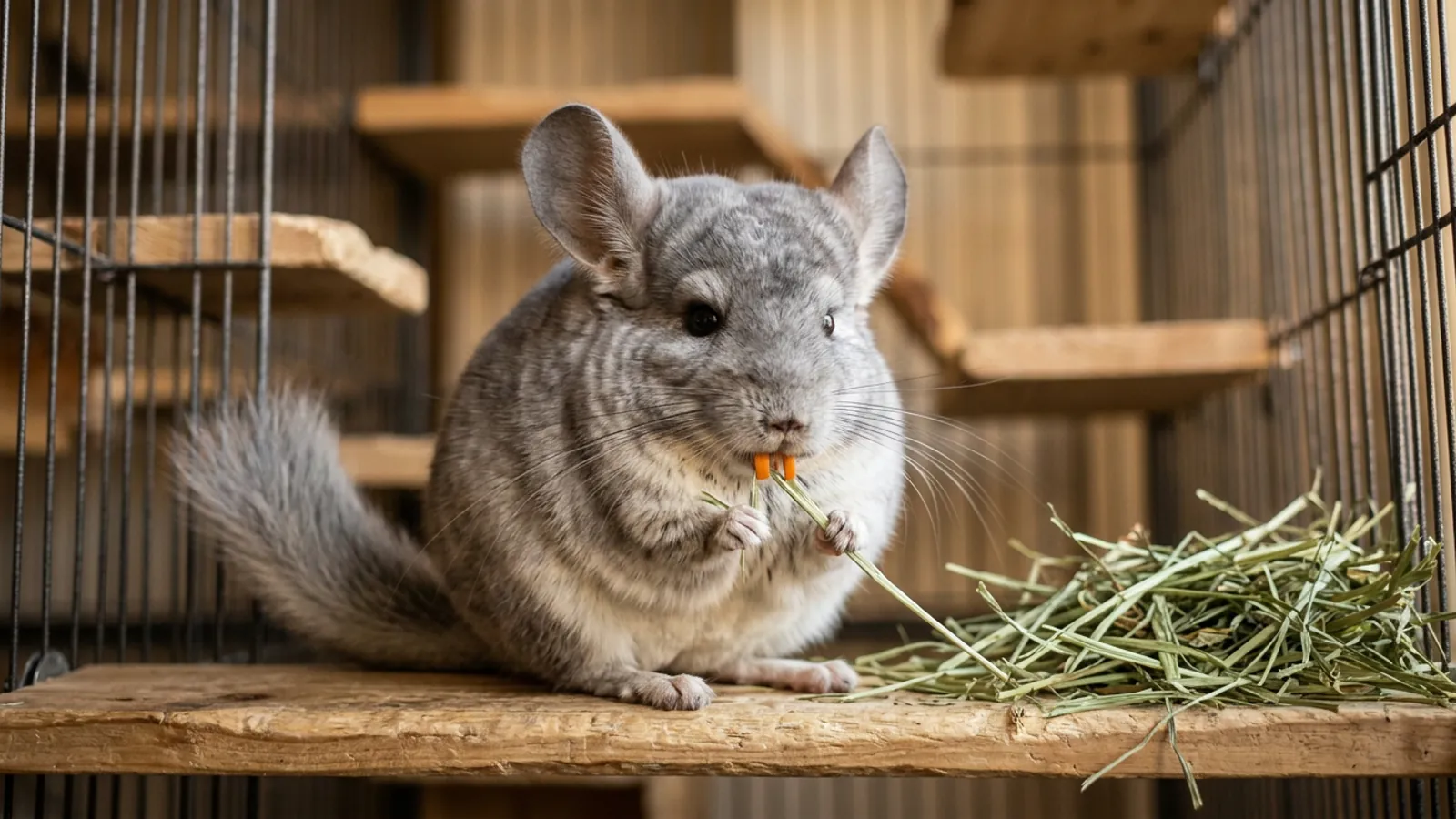
Dental disease is the leading long-term health problem in pet chinchillas, and it is quiet. I know that quiet firsthand: Juniper came to me as a neglected rescue with dental disease I now manage every day, and none of it announced itself. A chinchilla with failing teeth does not cry or limp; it just eats a little less, drops a little weight, and drools a little, for months. By the time the problem is obvious, it is usually advanced. Knowing the early signs is most of the battle. Everything else I know about chinchilla teeth lives in the teeth and health guides.
Teeth that never stop growing
Chinchilla teeth are open-rooted: they grow continuously for the animal's whole life. In a healthy mouth that growth is ground away just as fast, by hours of daily chewing on coarse, abrasive food. The system only works if the wear keeps up with the growth.
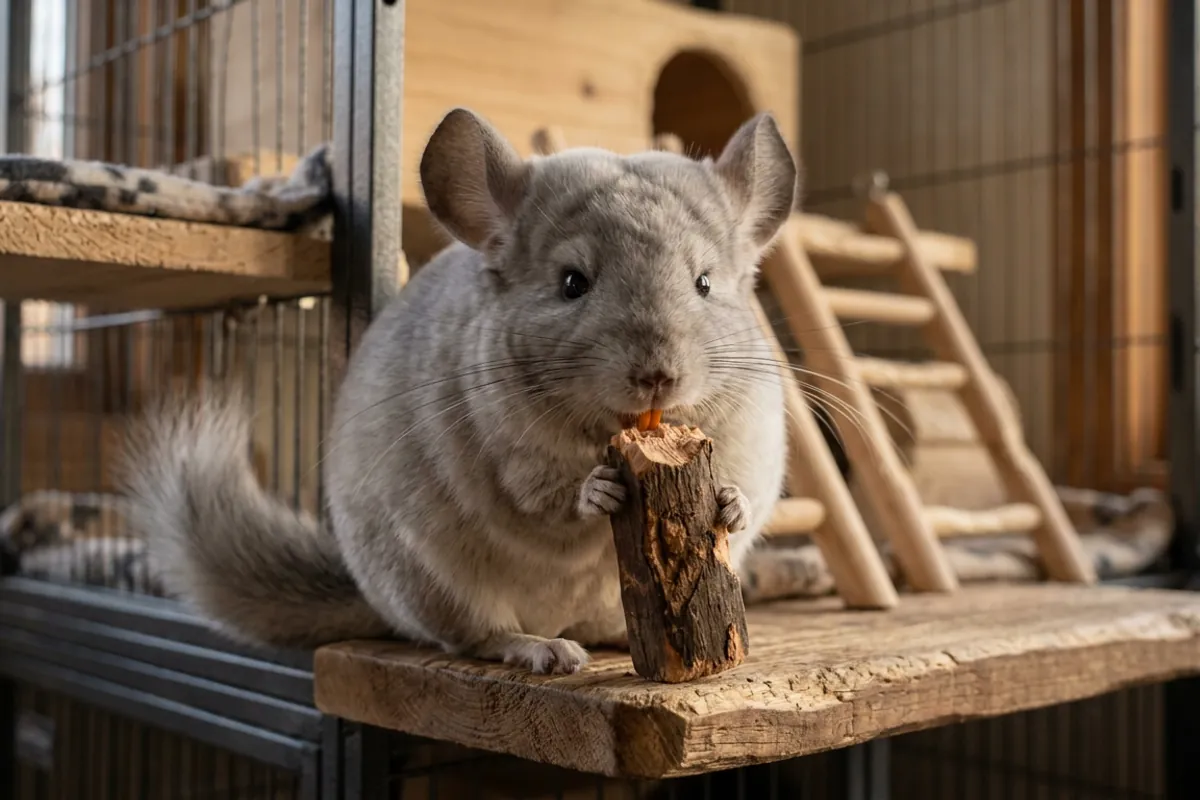
One thing that surprises new owners: healthy adult chinchilla incisors are deep yellow-orange, colored by iron in the enamel. Pale or white incisors in an adult are not clean teeth; they are a warning sign worth mentioning to your vet.
What goes wrong
When wear falls behind growth, or the jaws are misaligned, the result is malocclusion. Crowns overgrow, molars develop sharp spurs that cut the tongue and cheeks, and the roots can elongate the wrong way, pressing into the jaw and up toward the eye sockets. That last part is why dental disease can show up in the eyes before the mouth.
The usual causes:
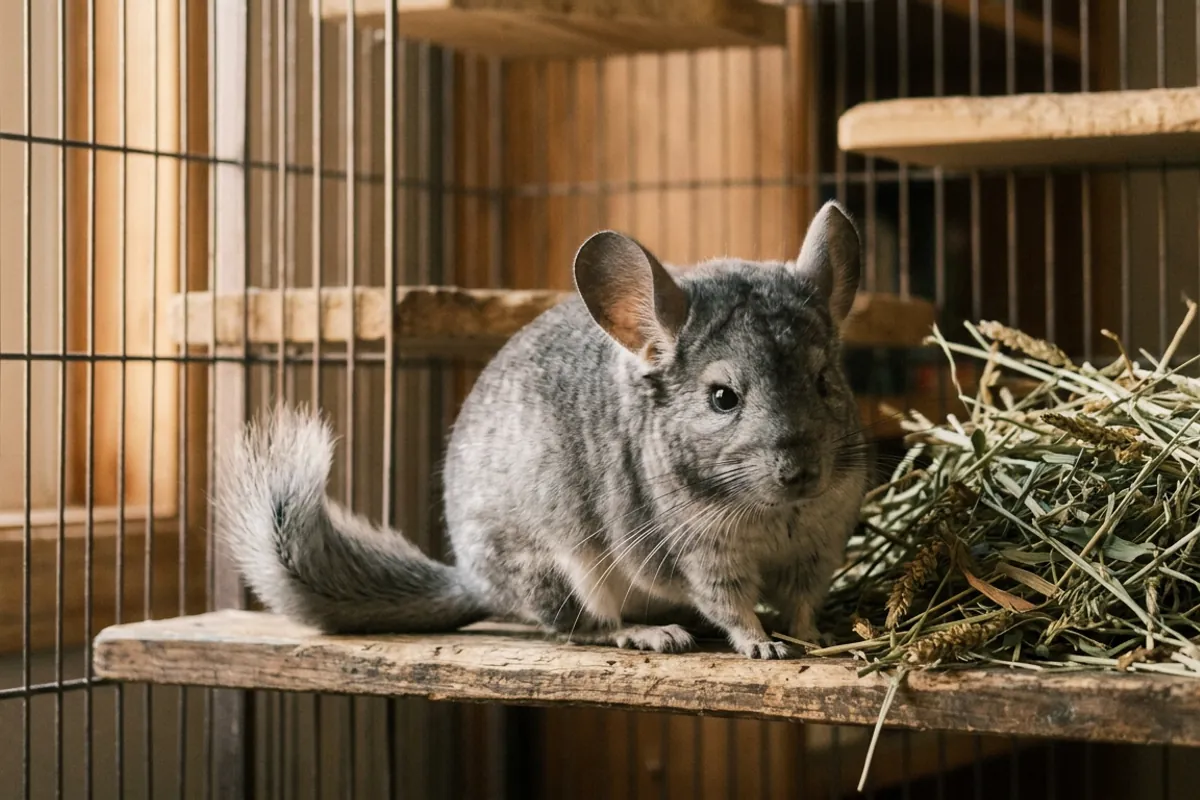
- Not enough roughage. A diet built on pellets and treats instead of unlimited hay simply does not provide enough grinding time.
- Genetics. Malocclusion can be hereditary, which is one reason to buy from breeders who track it.
- Injury or age. A fall or a knock can misalign the jaw; older chins wear their teeth less evenly.
The early signs
- Drooling, a wet chin, or wet front paws (owners call it "the slobbers")
- Dropping food, chewing slowly, or favoring soft foods over hay
- Smaller or fewer droppings, the first objective sign that less food is going in
- Weight loss, often before anything else is visible
- Pawing at the mouth or loud, frequent teeth grinding
- Watery or bulging eyes, from roots pressing on the tear ducts
A chinchilla that stops eating altogether is an emergency. Their digestion depends on constant throughput, and gut stasis can develop within a day or two.
Prevention you control
Everything I am strict about with Juniper lives in this list, and hay is first for a reason.
- Unlimited grass hay, always. Timothy or a similar grass hay is the main course, not a side dish. Pellets are the supplement.
- Safe chews in variety: apple wood, willow, pumice stone. Rotate them; chewing is the whole mechanism keeping the teeth in check.
- Weigh your chinchilla weekly on a kitchen scale. I weigh Juniper the same day every week, and that number warns me before anything else does. Weight loss is the earliest measurable sign of dental trouble, long before drooling starts.
- Get a proper dental exam at routine vet visits. The molars sit deep in the mouth; only a vet with the right tools (and often an X-ray for the roots) can see what is really happening.
What the vet can do
Caught early, malocclusion is manageable: an exotics vet can file or trim overgrown crowns and spurs under anesthesia and manage pain while the mouth recovers. What it usually is not is curable. Juniper's teeth had already failed by the time she reached me, and that is the reality I live with. Once the teeth have failed, the job becomes lifelong management, which is exactly why the weekly weigh-in and the hay rack matter so much. The cheapest dental plan for a chinchilla is a full rack of hay and something to chew, every day of its life.