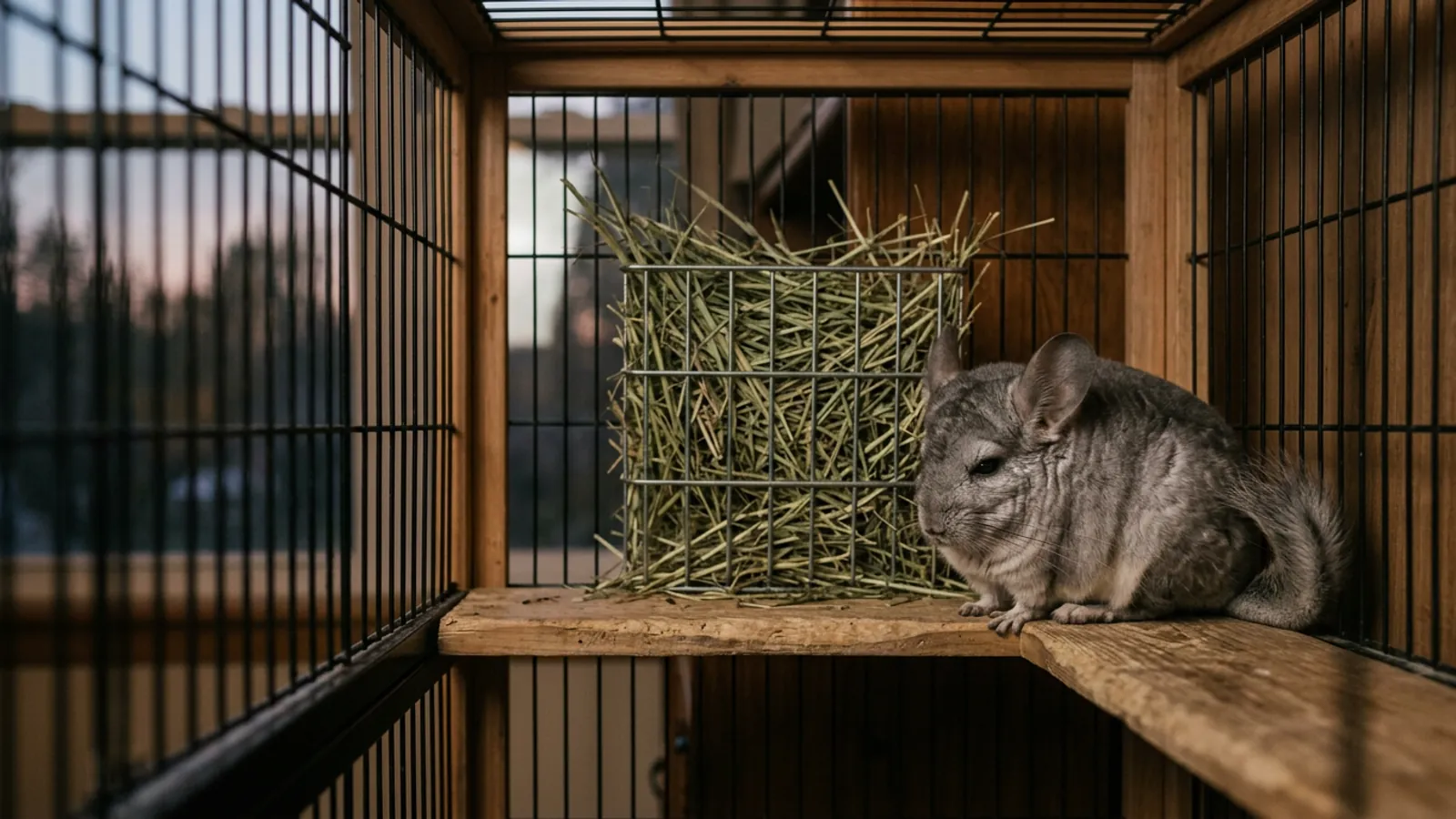
Nobody searches chinchilla lethargic out of curiosity. You are here because something changed: the animal that met you at the cage bars every evening is hunched in a corner, or the one who bounced off three shelves at dusk has not moved all night. I have kept chinchillas for about ten years, and I am not a vet, so I will be straight about where my useful knowledge stops. What I can give you is what stillness usually means in this species, which causes move fastest, and what to check in the next twenty minutes, so that when you phone an exotics vet you can say something more useful than the words my chinchilla is lethargic.
What lethargy looks like in an animal that sleeps all day
Chinchillas are built to be quiet in daylight. Mine sleep hard through the middle of the day, sometimes flat on one side with a back leg stuck out, and a new owner seeing that for the first time often thinks the animal is dying. It is not. Sleep is loose. A sleeping chinchilla has slack muscles, an even breathing rhythm, and it responds when you open the cage door, even if the response is only one ear swivelling toward the sound. What chinchilla sleep really looks like walks through the normal daily pattern.
Lethargy looks different, and once you have seen it you do not mistake it again. The posture is tight instead of loose: back rounded, feet tucked, eyes half closed, coat fluffed slightly so the animal looks rounder than usual. It comes with a loss of interest in the things that never fail. My test is dusk. If the light drops and the house goes quiet and your chinchilla does not come to the bars, ignores a fresh dust bath, will not take a strand of hay from your fingers, and stays put when you open the door, that is not sleeping. That is an animal spending nothing on anything except staying alive.
The second half of the test is your own animal's baseline, because chinchillas differ. Juniper has always been a slower, more watchful chinchilla than Pebble, and if I judged her by Pebble's standards I would be at the vet every fortnight. What matters is the change from that individual's normal. And remember what you are dealing with: a prey animal that hides weakness for as long as it physically can. By the time the hiding fails, the problem has usually been building for days. A chinchilla that is lethargic and will not move at all, or that does not object to being picked up when it normally would, sits at the far end of that scale and needs a vet today, not on Monday.
Check the temperature before you check anything else
Pebble came to me from a rehome out of an overheated attic, and her first summer here brought a heatwave and a night at the emergency vet. That is why heat is the first thing I rule out, every single time, before I think about anything more exotic. Overheating is the most common reason a healthy chinchilla goes flat, and it is the one you can fix in the next five minutes.
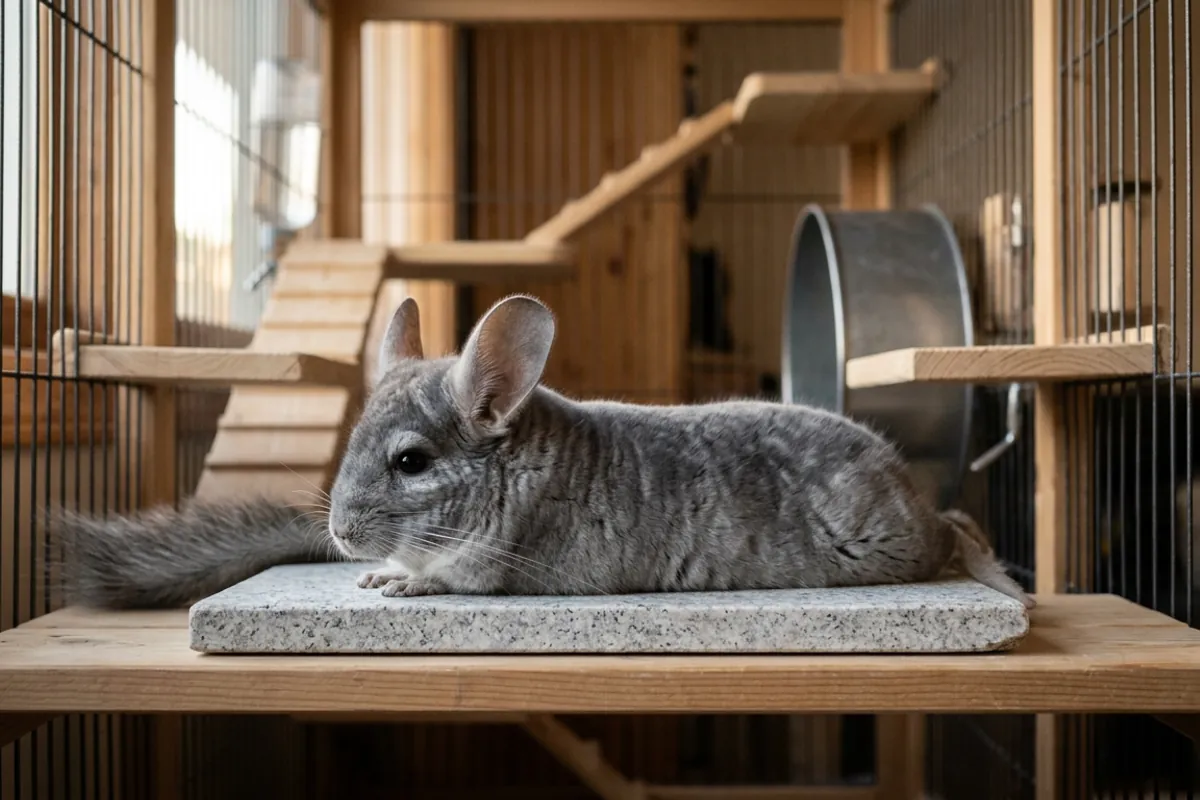
The comfortable range is 60 to 70°F (15 to 21°C). Above 75°F (24°C) is risky. At 80°F (27°C) and up you are in an emergency, and humid air brings that line closer, because a chinchilla dumps heat through its ears and through that dense coat, and damp air makes both work worse. Measure at cage height, in the room the cage is in, not in the hallway and not on your phone's weather app. A cheap thermometer and hygrometer clipped to the cage tells you the number that matters.
digital thermometer and humidity gauge with remote probes As an Amazon Associate I earn from qualifying purchases.
The heat picture is specific: ears bright pink or red and hot to the touch, the animal lying stretched flat rather than curled, panting or breathing with an open mouth, drooling, unwilling to move. If that is what you have, move it to the coolest room in the house, get air moving across the cage without blasting the animal directly, and give it a chilled solid surface to lie against.
Then call the vet, because heat damage keeps unfolding after the animal looks better. Never put a chinchilla in water to cool it. That coat holds water for hours, will not dry, and you trade a heat problem for chilling and skin infection. Chinchilla temperature has the full set of rules, the heat danger calculator does the humidity maths for you, and the warning signs of heat stroke are worth reading before you need them.
What the droppings, the hay rack, and the scale are telling you
If the room is cool, the next evidence is on the cage floor. Chinchilla droppings are a running readout of the gut, and they change before behavior does. Healthy ones are firm, plump, dark, and produced in quantity all day. What worries me is droppings that have gone small and dry, or misshapen, or noticeably fewer, and what frightens me is none at all. A chinchilla that has stopped eating and stopped passing droppings is an emergency, not a wait and see, and I want to be plain that no source gives you a safe number of hours to sit on. If you find yourself counting hours, you have already answered the question: it gets seen the same day. The gut can slow to a stop, and a stopped gut does not restart on its own. What chinchilla poop tells you covers the variations in more detail.
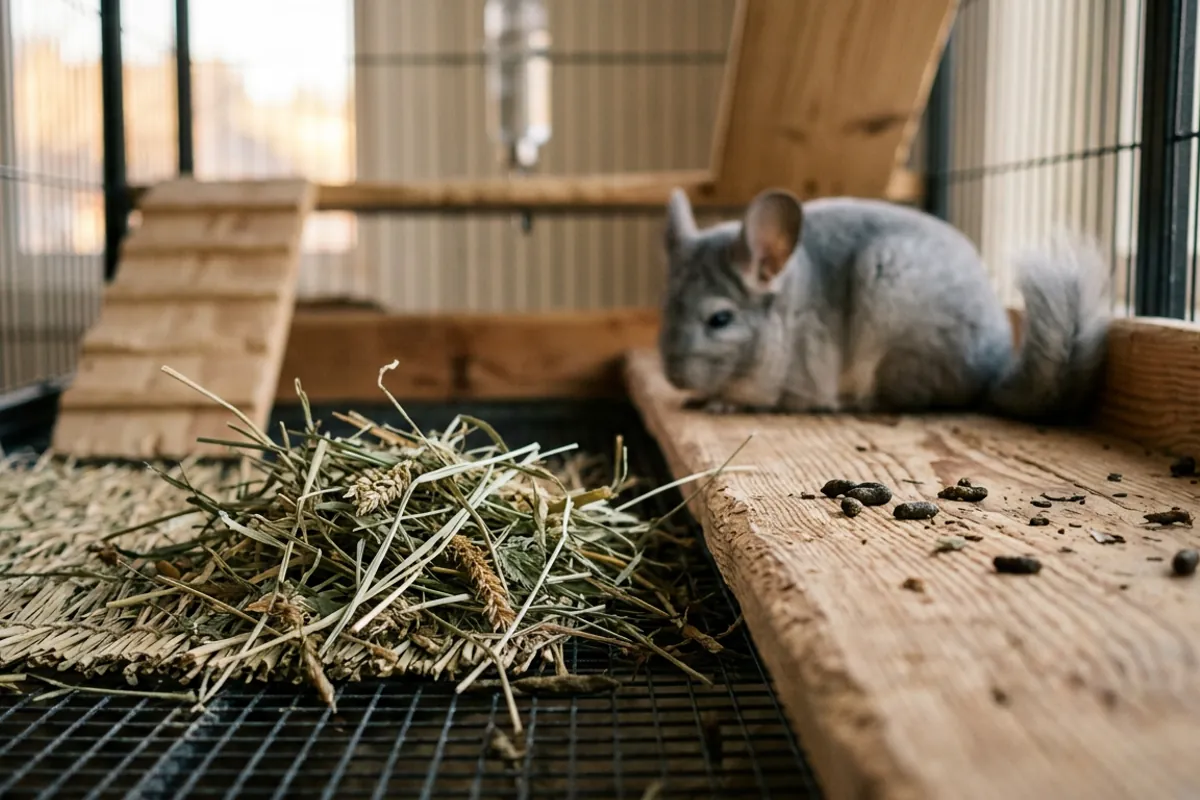
Look at the hay too, not just the bowl. Pellets are easy to eat and hay is work, so an animal in pain or with dental trouble will often clear its pellets and leave the hay untouched, which looks like eating from across the room. Pull the rack out and see whether the hay has gone down or just been rearranged. Check the water bottle by pressing the ball with your finger. A stuck bearing is boringly common and dehydrates an animal in a day.
Then weigh. A kitchen scale that reads in grams is the single best home diagnostic I own. Adults land roughly somewhere between 400 and 600 grams depending on the animal, with females usually heavier, but the range matters far less than your own chinchilla's number. Weigh weekly, same day, write it down. My rule of thumb is that a loss of about ten percent from that baseline, or a steady slide over two or three weeks, is a vet call even if the animal still seems fine. Chinchilla weight loss almost always arrives before lethargy, which means the scale gives you a head start that behavior never will.
Teeth: the slow cause hiding under a lot of lethargy
Juniper came to me as a neglected rescue with dental disease, and I have managed her teeth day to day ever since. She is the reason I treat unlimited hay and real chew variety as non negotiable, because I have watched what happens when teeth do not get worn down. Chinchilla teeth grow continuously for life, and the grinding action of chewing coarse grass hay is what keeps them the right length and shape.
When that wear falls short, the crowns develop sharp points and spurs that cut the cheek and tongue, and the roots elongate into the jaw and up toward the eye sockets. The animal is in constant pain, it eats less, it loses weight, and eventually it stops moving much at all. The clues to look for are a wet chin or a damp patch on the chest from drooling, food picked up and dropped again, a preference for soft food over hay, watery or bulging eyes, pawing at the mouth, and weight sliding down week after week. A drooling chin has its own diagnostic meaning, and chinchilla teeth problems goes through malocclusion properly.
Here is the part you cannot do yourself: the back teeth are the ones that go wrong, and you cannot see them by peeling back a lip. It takes a vet with the right scope, and often skull radiographs, to know whether the roots are involved. If lethargy comes with any mouth sign at all, book an exotics vet rather than guessing. What you can control is the prevention. Unlimited grass hay is the whole meal, not a side dish.
Oxbow Western Timothy Hay, 9 lb box As an Amazon Associate I earn from qualifying purchases.
Alongside it, keep a real rotation of safe hardwood chews in the cage so the teeth get work from more than one angle.
emours apple wood chew sticks, 40 count As an Amazon Associate I earn from qualifying purchases.
Bloat is the cause that moves fastest
If your chinchilla went from normal to flat in a matter of hours, bloat belongs at the top of your list. A chinchilla suddenly lethargic with a hard, distended belly is in real trouble, and this one is measured in hours, not days.
A bloated chinchilla looks swollen through the abdomen, and the belly feels tight, like a drum, rather than soft. The animal sits hunched, or stretches out oddly as if trying to find a position that hurts less. You may hear teeth grinding, which in this context is pain and not contentment. Breathing gets shallow and fast because the gas is pressing on the diaphragm. Droppings shrink or stop. Chinchillas cannot vomit, so nothing about this resolves by coming back up.
It usually follows a sudden diet change, too many pellets or treats, gut bacteria thrown off, or a gut that has already slowed for another reason such as dental pain or dehydration. That is the plain connection between these sections: bloat is often the last stage of a problem that started somewhere else.
Treat it as a same day emergency and phone an exotics vet immediately. Some vets will talk you through gentle abdominal massage, slow walking, or an infant simethicone dose while you travel, and if yours does, follow their instructions. I will not print a home protocol here, because gas can be secondary to an obstruction, and massaging an obstructed gut can make things worse. That call needs someone who can feel the abdomen and image it. Your job is to get the animal there fast and keep it warm and quiet on the way.
Seizures, collapse, and the signs that mean go now
A chinchilla seizure is unmistakable and horrible to watch: rigid or paddling limbs, loss of balance, the animal falling on its side, sometimes twitching or unresponsive staring. Afterwards it may be dazed, wobbly, and very still for a long stretch, which is often the lethargy the owner then goes looking up. Seizures are uncommon in chinchillas, which is worth knowing at two in the morning. The causes that are documented in this species are severe overheating, low blood sugar in an animal that has not eaten, usually because dental pain stopped it eating, calcium and phosphorus imbalance, head trauma from a fall, and infection. Sorting between those is bloodwork territory, not guesswork.
During a seizure, do not restrain the animal and do not put anything near its mouth. Darken and quiet the room, clear anything hard it could strike, note how long it lasts, and film it if you can, because that video is genuinely useful to the vet. Afterwards, take the high shelves out of the cage so a second episode is not also a fall. Then go in. A first seizure is an emergency visit.
People also search chinchilla dying symptoms, so I will answer it plainly rather than dance around it. The signs that a chinchilla is critically ill are cold ears and cold feet, pale or grayish gums, breathing with visible effort or an open mouth, lying on its side without righting itself, no response to touch or noise, and a body that feels cool through the fur. Normal body temperature sits at roughly 96 to 99°F (35.5 to 37°C), lower than most pets you have owned, and an animal that has gone cold has usually crashed. Any of these means you stop reading and start driving. Wrap the animal in a towel, keep the carrier warm if it is cold and cool if it is overheated, and call ahead so the clinic is expecting you.
What I do in the first hour, and what I never do
Work through this quickly and write the answers down, because you will forget them at the clinic. Read the temperature and humidity at cage height. Press the water bottle and confirm it flows. Count the droppings since you last cleaned the tray and look at their size. Weigh the animal and compare with the log. Check the chin and chest for damp. Watch the breathing for effort. Run a hand down each leg and watch for a flinch or a limp, since falls happen and a fractured limb makes an animal go very still. Film thirty seconds of the behavior. Then phone an exotics vet, not a general practice that mostly sees dogs and cats. Find that clinic today if you do not already have one, because the time to find a chinchilla vet is before the emergency.
While you wait, offer hay and plain water, keep the room in range, dim the lights, and leave the animal alone rather than handling it repeatedly. If your vet has already taught you to syringe feed a herbivore recovery formula, this is when it earns its place. If they have not, ask before you start, especially with a hard belly.
What I never do: dose human medicines, offer sugary food or fruit to perk an animal up, give a water bath, force feed a suspected bloat case, or decide to see how it looks in the morning. Chinchillas do not have a spare day. The animals I have lost were lost to waiting, and the ones I kept were the ones I moved on quickly.
Making the next one easier to catch
Most of this comes down to noticing early, which is a habit rather than a skill. Weigh weekly and keep the numbers where you can see the trend. Watch for ten minutes at dusk, when a healthy chinchilla is at its most obviously healthy. Glance at the droppings during every clean.
The rest is husbandry that removes causes before they start. Unlimited grass hay with measured plain pellets keeps both the gut and the teeth working, and the chinchilla diet page sets out the proportions. Keep the room in the 60 to 70°F (15 to 21°C) band year round, not just when you remember. Give the animal height and safe things to chew. If you run a wheel, run one with a solid running surface, because wire wheels catch feet and tails and turn exercise into an injury.
15 inch Chin Spin solid surface chinchilla wheel As an Amazon Associate I earn from qualifying purchases.
Bolt shelves properly so a bad landing is not a broken leg. Keep a carrier packed and know the address of the nearest exotics vet that takes evening calls, and put money aside for it, because deciding between a bill and an animal at midnight is not a decision anyone makes well. What keeping a chinchilla is really like covers more of this, and ten years has taught me that almost every emergency I have handled well was one I had already rehearsed.
When the worry turns to the stomach, whether a chinchilla can vomit answers the question owners ask first.