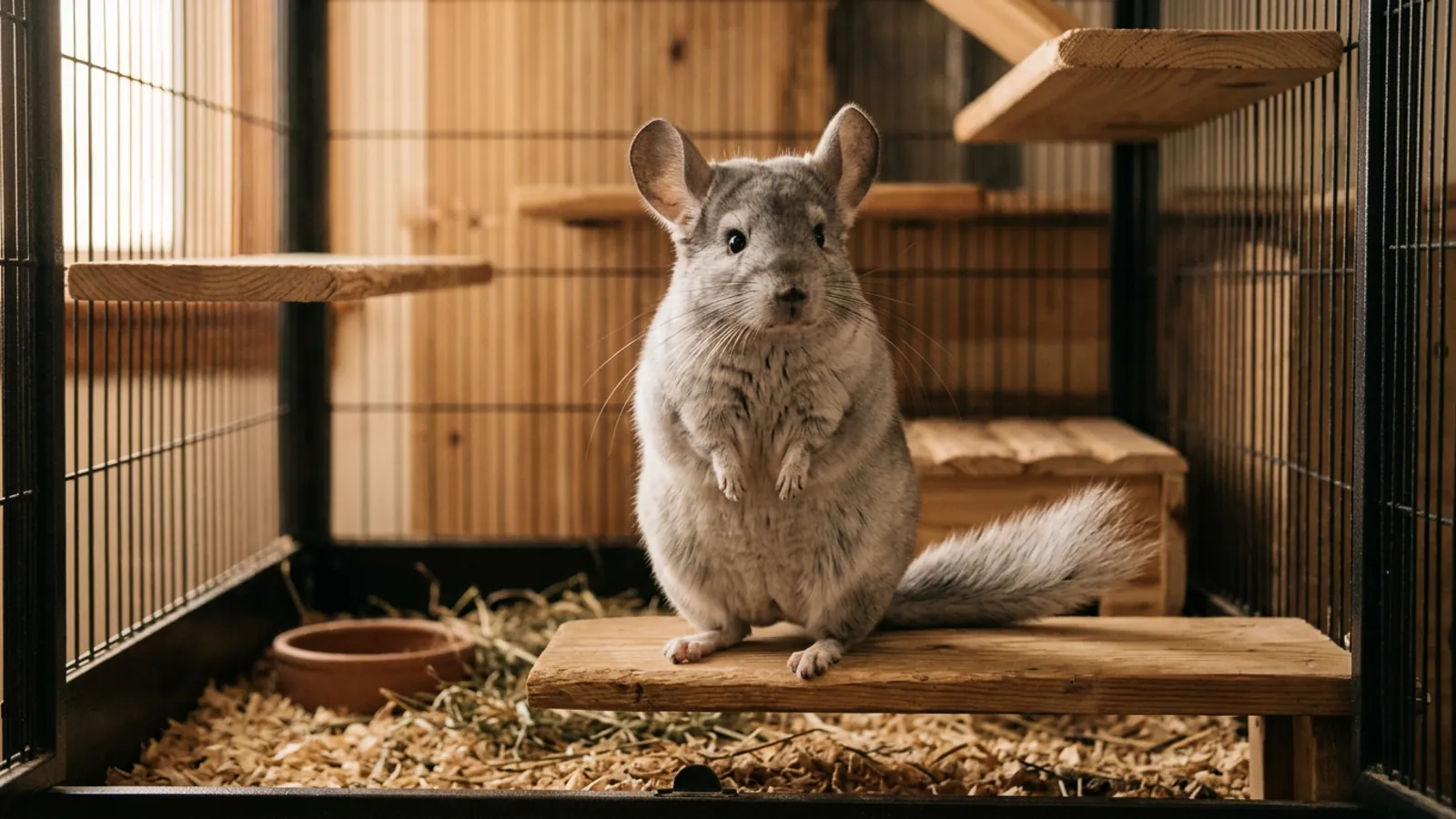
Chinchilla bumblefoot is one of the things I check for every time I have one of mine on my lap, because by the time it looks dramatic it has usually been building for months. The clinical name is pododermatitis, and it means the pads on the underside of the feet have been irritated, worn thin, cracked, or infected. I want to be straight about how thin the evidence is here. Pododermatitis is described in rabbits and guinea pigs in real clinical detail, and for chinchillas the veterinary manuals give it a short entry and the research literature gives it essentially nothing. The one survey of pet chinchillas I know of, several hundred animals, recorded no cases of it at all while dental disease turned up in over forty percent. So this is not a common problem in this species as far as anyone has measured, and a lot of what circulates about it online is rabbit advice wearing a chinchilla label. It is still worth checking for, because nobody is looking at the feet. In about ten years of keeping chinchillas I have never had a case get past the red, thin-skinned stage, and that is not luck. It is flooring, dry bedding, and a habit of turning a chinchilla over once a week.
What bumblefoot is, and why chinchilla feet are built for dry rock
A wild chinchilla lives on dry, rocky Andean slopes, jumping between stone ledges in thin, cold air. The feet match that life. Turn one of mine over and the difference is obvious: the top of the foot is furred, and the underside is tough, dry and leathery, the part that grips rock. I have not found that described properly in a veterinary source, so take it as what I see on my own animals rather than as anatomy I can cite. Nothing about that design assumes the animal will stand on damp bedding, on a plastic pan slick with urine, or on wire mesh that concentrates its whole body weight onto a few thin lines of metal.
Pododermatitis is inflammation of the skin of the foot, and it runs on a predictable path. Pressure and abrasion thin the pad. Thin skin dries and cracks. A crack lets infection past the only barrier that was keeping it out. I am not going to name you an organism, because the sources that name one are talking about guinea pigs rather than chinchillas, and I have not found a chinchilla case series that does. What the veterinary manuals do say for this species is that the common picture is thickened, reddened skin, and that deep infection or an open sore on the sole is the less common end of it.
That last stage is why I am blunt about this. Skin heals; an open sore on a foot an animal has to keep standing on is a slow, miserable job with repeated vet visits and no guarantee at the end. The deeper progressions you will read about, tendon and bone, are described for rabbits and for birds rather than for chinchillas, and I am not going to import them. Every bit of effort in this article is aimed at the first stage, where the fix is a screwdriver and a bag of clean bedding rather than a treatment plan.
Chinchilla bumblefoot signs, in roughly the order they show up
Healthy chinchilla pads look like dry, uniform leather. Slightly pale, slightly rough, cool, no cracks, no shine, no bald ring of missing fur at the edges. Learn what yours look like now, while they are fine, because the early chinchilla bumblefoot signs are subtle and you will only spot them against a baseline.
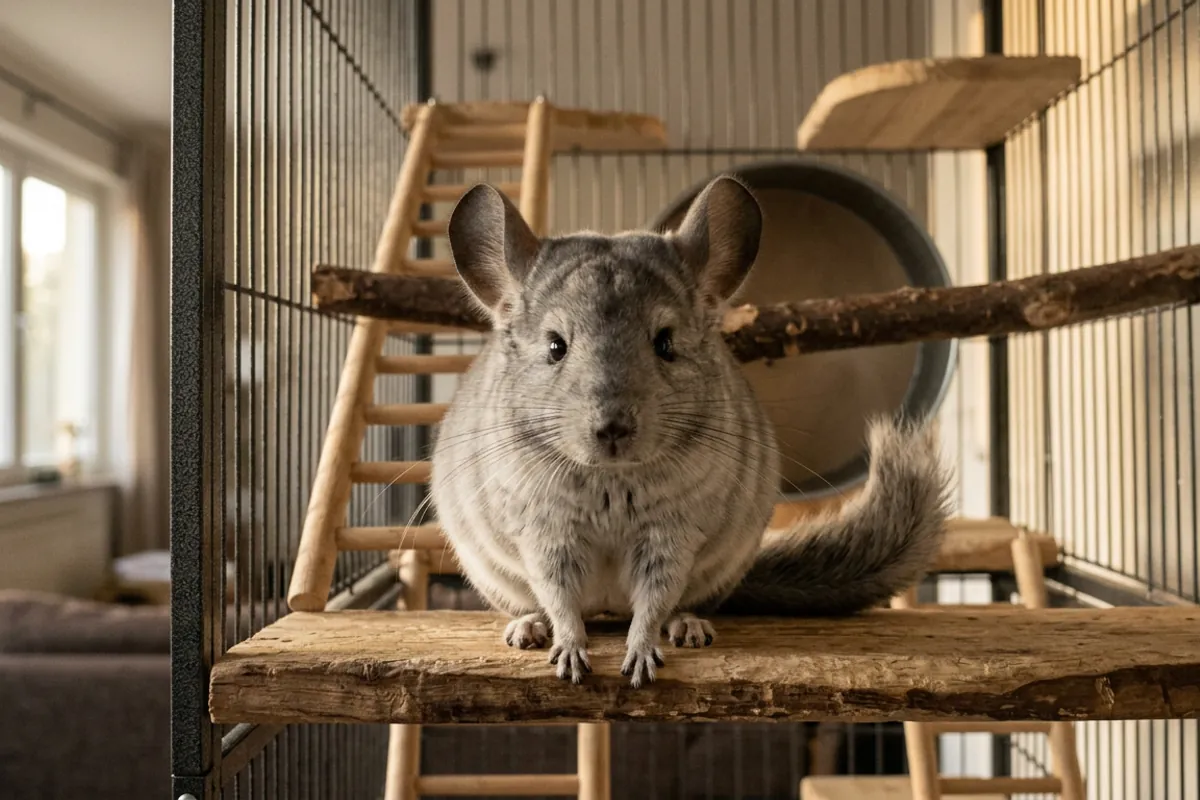
There is no published grading scale for chinchilla feet, so this is not a clinical staging system. The manuals give two ends of it, thickened and reddened skin at the mild end and an open sore at the severe end, and the order below is how those two ends join up. I should say plainly that I have only ever seen the early part of this on my own animals; the later steps come from reading rather than from my hands.
- The pad goes from its normal dry color to pink, then red. The skin looks tight and slightly shiny instead of matte.
- Fur thins or disappears around the edge of the pad.
- The pad dries out further and develops fine cracks, or a hard raised callus in the middle where the weight lands.
- A scab forms. Now the skin is broken, and this is the line: broken skin means a vet call, not a wait-and-see.
- The scab becomes an open ulcer, sometimes weeping, sometimes with a foul smell.
- The whole foot or the joint above it swells and feels warm compared to the other side.
- The chinchilla starts shifting weight, sitting oddly, sleeping more on one side, or refusing the wheel and the top ledges.
Behavior usually changes before you can see much. A chinchilla that suddenly stops using its favorite high shelf, or lands and then repositions its back feet every time, is telling you something. So is blood or a smear of discharge on a ledge or in the bedding, which is often what an owner notices first. Pain in a prey animal shows up as stillness, a hunched posture, less interest in food, and less noise, not as complaining. If a chinchilla is quiet and hunched and hiding, treat that as urgent regardless of what the feet look like; the same is true of any lethargic chinchilla.
What causes it in a chinchilla cage
Almost every case traces back to the surfaces the animal stands on. In rough order of how often I see them blamed:
Wire mesh flooring. A grid floor turns the whole weight of the animal into pressure lines across the pads, and it traps urine and droppings right under the feet. If your cage came with a wire floor grid over the pan, take it out. There is no version of it that is good for chinchilla feet.
Wire wheels. A wheel with rungs or mesh is worse than a wire floor, because the animal is hitting it at speed, hundreds of times a night. Rungs also break legs and strip toes. The only wheel that belongs in a chinchilla cage has a solid, continuous running surface, at least 14 inches (35 cm) across, and 15 to 16 inches is better. 15 inch Chin Spin solid surface chinchilla wheel As an Amazon Associate I earn from qualifying purchases.
Damp bedding. This is the quiet one. Bedding that gets spot cleaned once a week instead of every day means the animal is standing on ammonia-soaked material for days. Wet, macerated skin cracks. It is the bedding being damp that does this, which is worth separating from room humidity: damp bedding is what the husbandry sources point at, and I have not found one that makes ambient humidity a cause of foot disease.
Plastic. Plastic pans, plastic shelves and plastic houses go slick when soiled, crack into sharp edges when chewed, and hold moisture against the foot. Chinchillas also eat the pieces. See the case for a metal cage if you need convincing.
Inactivity and one resting spot. An animal that never moves is loading the same patch of foot for hours at a time. Cage size feeds directly into this; a small cage with nowhere to go produces a sedentary chinchilla. You will also read that a heavy chinchilla is at greater risk through sheer load, and I have left that out on purpose: that argument comes from rabbits, which are several times the weight, and nobody has shown it transfers to an animal this size.
Age. Older chinchillas sit still more, groom less, and carry stiff joints, so they are the ones who quietly develop sore feet in a setup that was fine for years. If yours is getting on in years, check the feet more often, not less.
Abrasive surfaces used badly. Lava ledges are useful for nail wear and chewing, but they are rough, and a cage floored entirely in lava is sandpaper under a resting foot. One or two, positioned where the animal passes rather than where it sleeps, is the right dose.
How I check feet without making it a fight
Once a week I look, and once a month I look properly. The quick check happens whenever a chinchilla is up on its hind legs against the bars begging: from below you can see both front feet and a good part of the hind ones. That takes five seconds and catches most redness.
The proper check needs the animal on its back for a moment. I sit on the floor with a towel over my lap, scoop the chinchilla with one hand under the chest and the other supporting the rump, and tip it back against my forearm for maybe ten seconds. Long enough to look at both hind pads, spread the toes, and check between them. Then it goes right back down and gets a small piece of its usual food. Ten seconds and a reward beats a two-minute wrestle, every time, and a chinchilla that has been handled since day one will tolerate it. If yours will not, do not force it into a fight that ends in fur slip; check from below during begging and get your vet to do the full exam.
What I am looking for: color compared to last month, cracks, scabs, missing fur at the pad edge, swelling, anything wrapped around a toe, and nails that have grown long or curved into the pad. I photograph each hind foot monthly, in the same light, on my phone. Comparison beats memory, and a photo series is genuinely useful to a vet.
While the animal is up, I weigh it. A cheap kitchen scale and a bowl is enough. Most adults land between about 400 and 600 grams, with some large females running higher, and what matters is not the absolute number but the trend for your animal. Sudden weight loss is a reason to call the vet about something else entirely.
Chinchilla limping is not always bumblefoot
If a chinchilla is limping, feet are the first thing to check, but they are not the only cause and some of the others are emergencies. If it is scratching rather than limping, chinchilla mites covers what that usually turns out to be.
A chinchilla broken leg is the one you cannot afford to misread. Chinchilla legs are thin and the bones are light. The classic causes are a fall from height onto a hard floor, a leg going through a wire wheel or through cage bars that are too widely spaced, and being caught by a hand, a door, or another pet. Signs are sudden and obvious: holding the limb completely off the ground, a foot that dangles or points the wrong way, swelling, and vocalizing. That is a same-day exotics vet visit. Do not splint it yourself, do not give any human painkiller, and do not let the animal keep climbing. Move it into a carrier or a single-level pen at floor level with hay and water within reach until you are seen. On bar and mesh spacing, the veterinary manuals say to keep it narrow without publishing a number; the one veterinary figure I have seen quoted is a 15mm mesh. The numbers traded on forums are not from anywhere I can point you to, so use the narrowest mesh you can buy and treat any gap a hind leg fits through as a fracture waiting to happen.
A thread or a strand of fur wrapped around a toe. This comes from fabric hammocks, fleece liners, and frayed toys. It cuts off circulation, and the toe swells and darkens. It is easy to miss and it costs the toe if you do.
An overgrown or torn nail. Most chinchillas wear their nails down on wood and rough surfaces, but old or inactive ones sometimes do not, and a nail that curls into the pad hurts exactly like bumblefoot does.
A sprain from a bad landing. This is the one people hope they are dealing with, and it may well be, but I would not spend a day finding out. Difficulty walking is on the manuals' own list of signs that mean call a vet, so a limping chinchilla gets seen the same day rather than watched overnight.
What you can fix at home, and where the vet line is
I am an experienced keeper, not a vet, and foot infections are one of the places where that distinction matters most.
Yours to fix, today: pull out every piece of wire the feet touch, replace a wire wheel with a solid one, swap plastic shelves for kiln-dried pine, clean the cage completely, and move to daily spot cleaning of the wet corner. Get the bedding deep and dry. Cut treats back to nearly nothing and keep hay unlimited, which is the right diet for the whole animal rather than a foot intervention.
Not yours to fix, ever: anything involving broken skin. Do not put human antibiotic ointment on a chinchilla foot, because it grooms and swallows whatever you apply. Do not use hydrogen peroxide, which damages the tissue that is trying to heal. Do not use tea tree oil or other essential oils, which are toxic to small mammals. Do not bandage a foot yourself; a wrap that is slightly too tight on a limb this small does real damage. And do not soak the foot in water or bathe the animal in water at all, for any reason. Chinchilla fur is dense enough that it holds water against the skin for hours and invites fungal infection. Chinchillas bathe in dust, never water, and a sore foot does not change that.
Call an exotics vet if you see any of the following: broken skin or a scab on a pad, swelling, warmth, a smell, any limp at all, including one that seems to have resolved, blood in the cage, or lameness in an older animal. Expect an exam, possibly a swab for culture, possibly imaging to see how deep it goes, and a prescription for antibiotics and pain relief. Find that vet before you need one; a regular small-animal clinic often does not see chinchillas, and the day you are holding a limping animal is the wrong day to start searching. Here is how I found an exotics vet.
The setup that prevents chinchilla foot problems
Prevention here is unglamorous and it works.
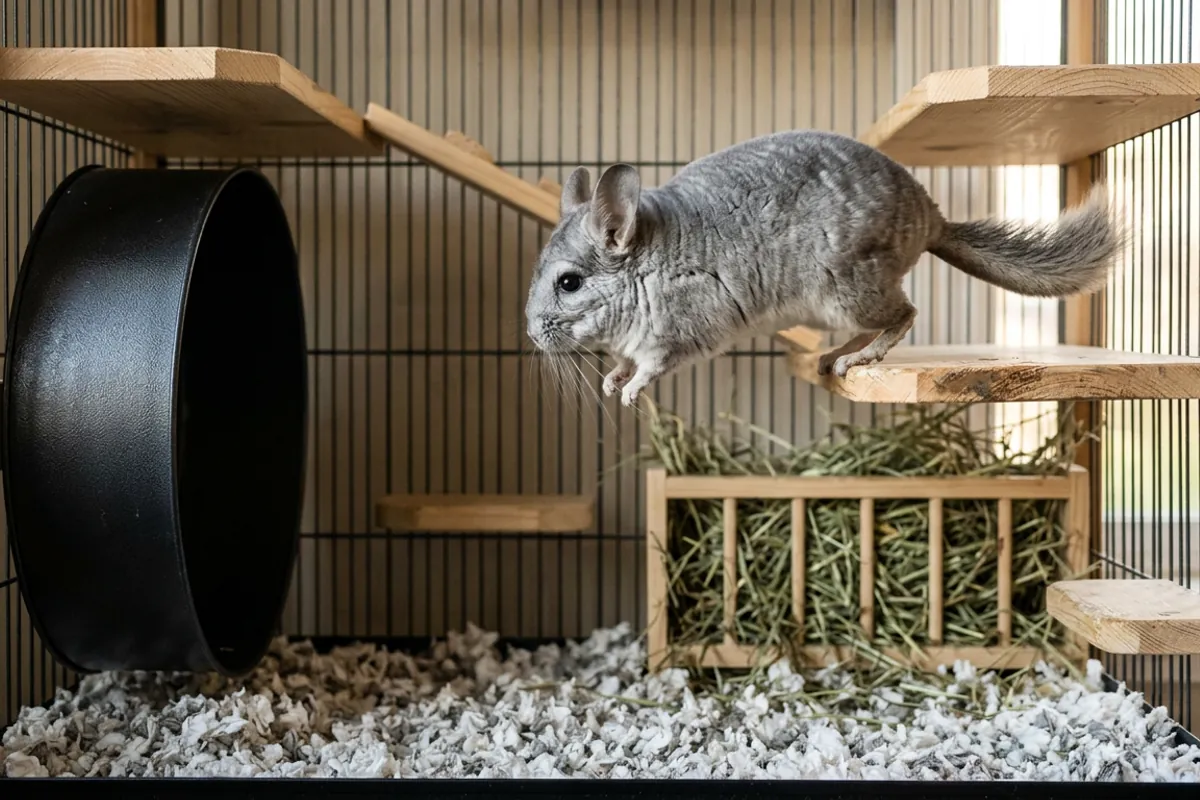
The cage is metal with wooden ledges, tall rather than wide, with solid shelves at staggered heights so the animal jumps between them instead of sitting in one spot. No plastic anywhere it can stand or chew. Critter Nation double unit small animal cage As an Amazon Associate I earn from qualifying purchases.
Ledges are kiln-dried pine or another safe wood, and they get replaced when they are urine-stained rather than scrubbed forever. Bedding is kiln-dried pine shavings or plain paper bedding, deep enough to absorb, changed weekly and spot cleaned daily. Never cedar. On fleece liners I will be straight that keepers disagree: fleece is soft under the feet, but chinchillas chew it, loose threads wrap toes, and it needs changing daily or it becomes the damp surface you were trying to avoid. I use loose bedding.
The comfortable range is 60 to 70°F (15 to 21°C). Above 75°F (24°C) is risky, and 80°F (27°C) or higher is an emergency, faster in humid air. Pebble came to me out of an overheated attic and spent a night at the emergency vet during her first summer, so I do not soften that; the heat calculator will tell you where your room sits. digital thermometer and humidity gauge with remote probes As an Amazon Associate I earn from qualifying purchases.
Diet earns its place here for the whole animal rather than for the feet specifically; the weight-and-pressure argument you will read about comes from rabbits, which are a different size and shape of problem. Unlimited grass hay, all day, with plain pellets as a measured supplement and treats kept to almost nothing. Oxbow Western Timothy Hay, 9 lb box As an Amazon Associate I earn from qualifying purchases.
Chews keep an animal moving and off one resting spot, and they do the dental work at the same time. Juniper came to me as a neglected rescue with dental disease I still manage day to day, which is why I keep a real variety of woods in rotation rather than one sad block. emours apple wood chew sticks, 40 count As an Amazon Associate I earn from qualifying purchases.
And dust baths keep pads and coat dry rather than greasy. Two or three times a week, 10 to 15 minutes, then the bath comes out of the cage so nobody sleeps in it. Lixit Blue Beauty chinchilla dust, 3 lb As an Amazon Associate I earn from qualifying purchases.
What recovery looks like
Slower than you want. A mild case, caught at the red-and-thinning stage, often improves within a few weeks once the surfaces change, and the cage is the treatment; medication without new flooring just buys time. A case with an open ulcer is a course of antibiotics, repeated vet checks, and often bandage changes you will be taught to do. A deep one is a longer job, and how long is a question for the vet who has seen it rather than a number I can give you honestly.
During healing, take the highest ledges out so there are no hard landings on a sore foot, but leave enough structure that the animal still moves. Change bedding more often than feels reasonable, daily is right. Finish the full course of any antibiotic even after the foot looks better, keep weighing weekly, and keep photographing the pads so you and your vet are comparing evidence rather than impressions.
Relapse is the normal outcome when the cage goes back to how it was. That is the lesson: chinchilla foot problems are almost always an environment telling on itself. Turn your chinchilla over this week and look. It takes ten seconds, and it is the single cheapest thing you will ever do for those feet.