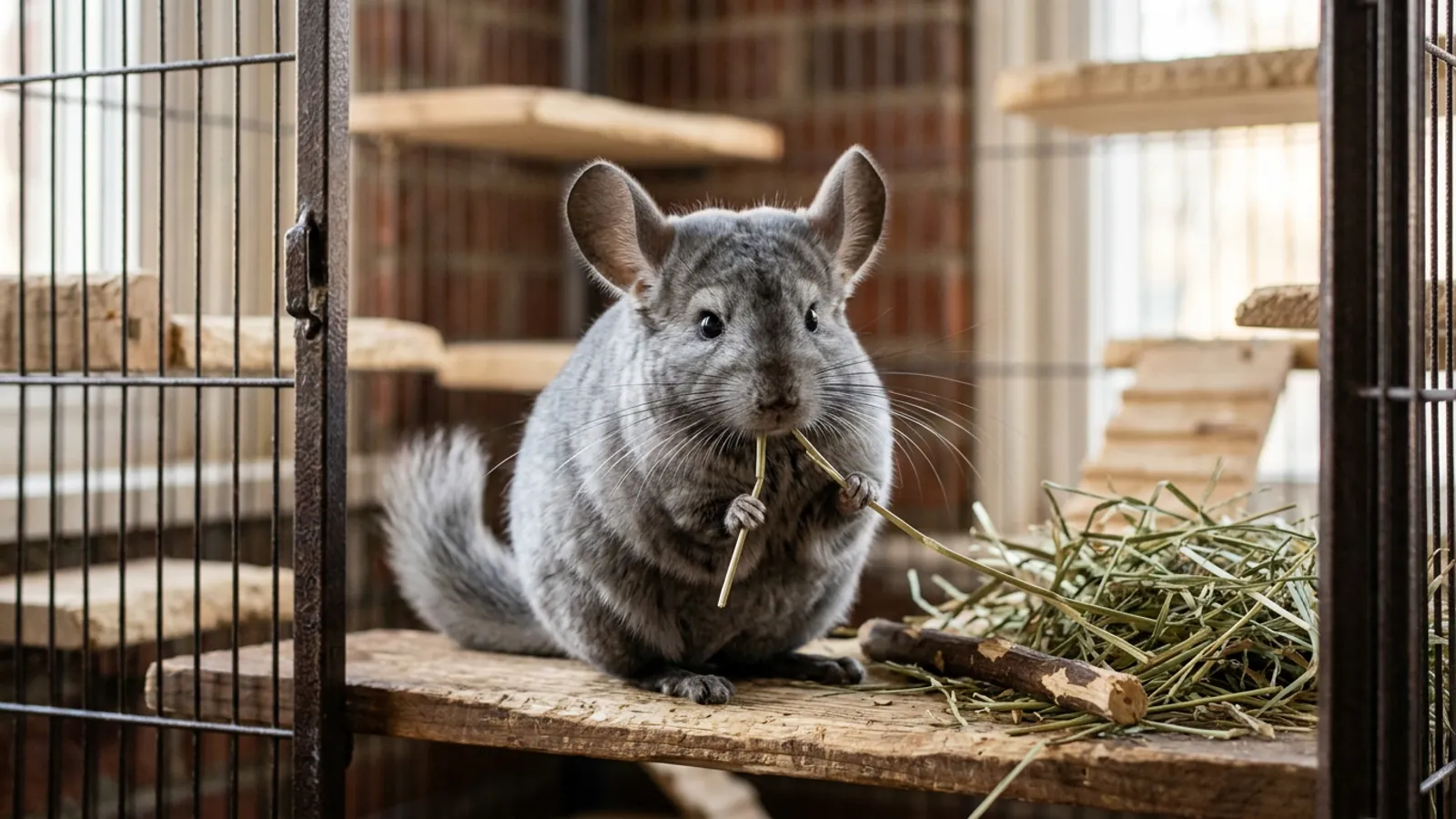
The first time a vet said the words chinchilla anesthesia to me, I heard that one word and stopped taking in the rest of the sentence. It was about Juniper, a rescue with dental disease I was still learning to read, and my head filled with everything that could go wrong on a table with an animal that weighs about as much as a small bag of flour. Ten years in, I still do not love it. What I have instead is a clear picture of what anesthesia is for, what the risk really is, and how much of the outcome sits with me at home rather than with the vet in the clinic. I am an experienced keeper, not a vet, so what follows is the owner's half of the job.
Why a chinchilla has to be asleep at all
When anesthesia comes up for a pet chinchilla, the reason is usually the mouth.
A chinchilla's oral cavity is built wrong for looking into. It is long and narrow, the gape barely opens, the tongue is thick and fills most of the space, and folds of cheek tissue meet over the top of the tongue and curtain off the back teeth. Your chinchilla is not being difficult when she will not let you see. There is genuinely almost nothing to see from the outside.
A conscious exam with an otoscope cone is still worth doing, and a good exotics vet will do one at a wellness visit. It screens. It does not clear an animal. The points that cut a tongue grow on the inside edge of the lower cheek teeth, exactly where the tongue hides them, and an ulcer under there can be well established before anything shows up as drooling or dropped food. To see all twenty teeth, the gum line, the tongue surface and the cheeks, the animal has to be still, on her back or side, with a mouth gag and cheek dilators holding the whole thing open under a light. No awake chinchilla tolerates that, and none should be asked to.
Then there is the treatment itself. Reducing an overgrown crown means running a dental burr inside that narrow space, millimetres from the tongue. A chinchilla who moves at the wrong second can be badly hurt. Stillness is not a convenience here, it is the safety margin.
Teeth are not the only reason. Skull radiographs need a still patient to be readable at all. So do surgery for bladder stones, abscess treatment, wound repair, and neutering. But if you keep chinchillas long enough, the dental table is the one you meet.
What the risk is, and what it is not
I will give you the numbers I have and be clear about their limits, because that is the only useful version.
The best-known figures come from a large UK study of anesthetic and sedation deaths in small animal practice, published in 2008. It put the risk of death within 48 hours at roughly 0.17 percent in dogs, 0.24 percent in cats, about 1.4 percent in rabbits, and just under 4 percent in guinea pigs. So the fair statement is this: chinchilla anesthesia carries meaningfully more risk than a dog or cat spay, and it sits in the small herbivore band with rabbits and guinea pigs.
Two things about that risk matter more than the headline figure.
The first is when it happens. In that study, most of the deaths in rabbits did not happen on the table under the anesthetic gas. They happened afterwards, in recovery, in the hours after the procedure ended. That should reorganise how you think about the day. The scary part is not only the bit you are not allowed to watch. It is also the hours after the procedure ends.
The second is that the risk is not spread evenly. A five year old chinchilla at a normal weight, eating well, in for a routine crown reduction, is a very different patient from a thin, dehydrated chinchilla who has not eaten in three days because her mouth hurts. The state she goes in with is one of the largest variables, and it is one you influence by not waiting.
Which brings up the comparison people skip. The alternative to anesthesia is not a healthy untreated chinchilla. It is a chinchilla with a tooth point cutting her tongue, who eats less, then stops, and a chinchilla who stops eating is heading into gut stasis. That is not a safer path. It is a slower one with a worse ending.
Getting ready
Ask your vet what they want you to do about food and water before the appointment, and follow that.
What I do in the days before: keep a weight log so the vet has a trend and not a single data point (weighing weekly takes thirty seconds), and write down my questions, because I do not think clearly in a consult room.
The questions worth asking:
- Who is doing the anesthesia, and how many chinchillas have they anesthetized?
- What monitoring is on her, and is somebody actively warming her? A body that small loses heat fast under anesthesia, and hypothermia is a real contributor to bad recoveries.
- Who is watching her during recovery, and for how long?
- Do you reduce incisors with a burr? The answer must be yes. Clippers on a chinchilla incisor are an old practice that splits the tooth lengthwise and opens the pulp to infection.
- Will you take skull radiographs, and can I see them?
- What is the pain plan going home, and what feeding formula do you want me syringing?
Transport is your job and it is not trivial. A hard-sided carrier, a towel, a fistful of hay so she has something to do, and a car that is cool. Comfortable is 60 to 70°F (15 to 21°C), above 75°F (24°C) is risky, and 80°F (27°C) and up is an emergency, faster in humid air. A stressed animal in a carrier in a warm car in July is how a dental appointment turns into a heat emergency before it starts. In summer I book the first appointment of the day, run the air conditioning before the carrier goes in, and put a chilled granite slab in with her.
Kaytee Chinchilla Chiller granite stone As an Amazon Associate I earn from qualifying purchases.
Pebble's first summer taught me that lesson at the emergency vet overnight, and I have never taken a warm car ride with a chinchilla since.
What chinchilla teeth filing involves
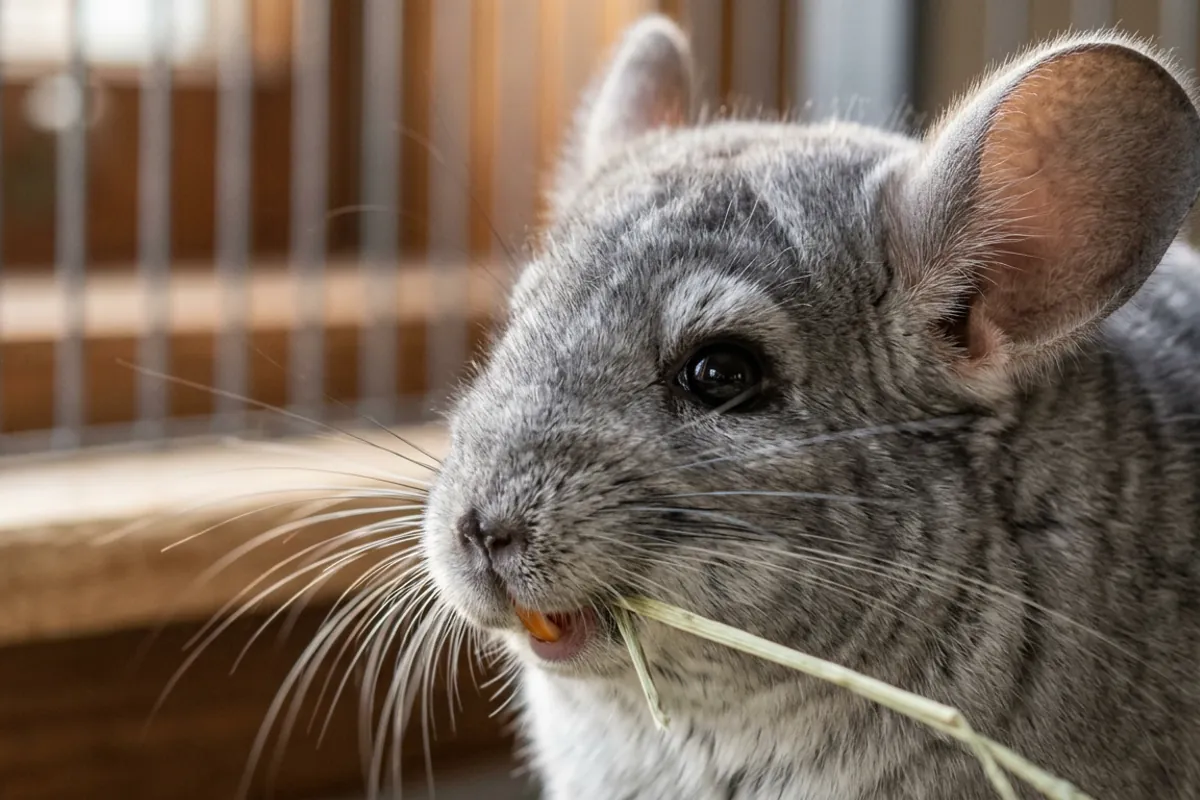
Once she is under, she goes on her side or back, a mouth gag holds the jaw open, and cheek dilators hold the cheeks clear of the teeth. Now everything is visible for the first time.
Chinchilla teeth filing is properly called crown reduction, and it is done with a dental burr on a handpiece, with a guard between the burr and the soft tissue. The vet takes the overgrown crown back to a normal height and shape: the sharp points off the cheek teeth, the incisors back to a correct length and angle if they have overgrown. Extractions, abscesses or badly displaced teeth take much longer than a routine reduction.
All twenty of a chinchilla's teeth grow continuously for her whole life. Growth rates get quoted with confident-looking numbers attached, and I am not going to pass one on. What matters is not the rate but the direction: they never stop, the cheek teeth grow too, which is the half most owners forget, and the cheek teeth are where the trouble usually starts.
Here is the part I wish someone had told me plainly about Juniper. Filing treats the crown, the part above the gum. In many chinchillas with dental disease the underlying problem includes the reserve crown, the length of tooth sitting up inside the jaw and skull, growing in the wrong direction. Radiographs show it. A burr cannot reach it. That is why teeth filing is management and not a cure, and why the answer to "will this fix her" is usually "this will make her comfortable again for a while."
How long a while varies enormously, and it depends on the individual animal. Anyone who gives you a fixed schedule before they have seen how your chinchilla responds to the first one is making it up. Your vet will set the interval from her radiographs and her regrowth.
The first day home is the part that is yours
Recovery is where most of the risk lives, and part of recovery happens on your floor.
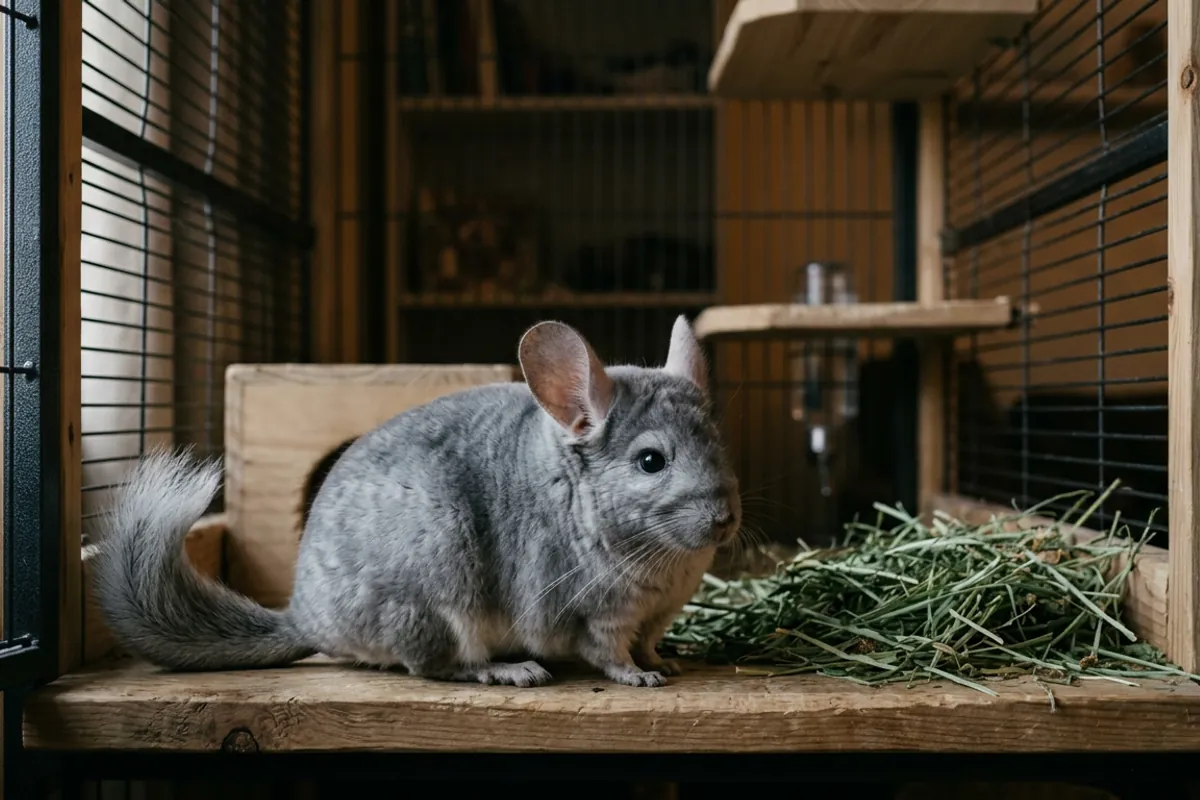
Set the room up before you leave for the appointment. Quiet, dim, no other pets, no children, and 60 to 70°F (15 to 21°C) with a thermometer you read rather than a guess.
digital thermometer and humidity gauge with remote probes As an Amazon Associate I earn from qualifying purchases.
A chinchilla coming out of anesthesia is wobbly and has poor coordination at first. Take the high ledges out or move her to the bottom level of the cage for the first day, because a six foot fall onto a hard pan is a real way to lose an animal who survived the anesthetic fine. Keep a soft warm spot available but do not overheat the room to compensate for a cold animal; that trade goes wrong quickly with this species.
Then watch two things: eating and droppings.
Offer the softest, greenest hay you have, right at nose height, plus whatever she normally cannot resist. If your vet sent you home with a herbivore critical care formula and a syringe, use it exactly as instructed and do not wait to see if she "comes round on her own." Droppings are the plain metric. Count them and look at them. Fewer, smaller, drier droppings means the gut is slowing, and that is dangerous after dental work.
Pain relief is not optional and not a kindness extra. A chinchilla with a sore mouth does not eat, and a chinchilla who does not eat goes into stasis. If you were sent home without any, call and ask why. Never dose leftovers from another animal or another illness.
Call the vet back if she is not eating at all, if droppings stop or collapse in size, if she sits hunched and still with her feet tucked, if she grinds her teeth in a slow deliberate way, if drooling continues, or if her ears and feet feel cold. None of those are wait-and-see signs.
Hold the dust bath if she has any surgical incision, and ask your vet how long. After a routine dental with no incision, she can go back to normal bathing once she is eating and moving normally again. Weigh her daily for a week. The scale tells you the truth before behavior does.
When the answer is not yet, or not this
Sometimes the right call is to delay. A chinchilla who arrives collapsed, dehydrated and cold is a worse anesthetic candidate than the same chinchilla after being stabilized with fluids, warmth and assisted feeding. If your vet wants to stabilize first, that is not stalling.
Some things are worth refusing outright. Awake incisor clipping with nail clippers, offered at a general practice that does not see chinchillas, is one. Ask directly how many chinchillas the clinic handles and whether they have dental burrs and cheek dilators for a patient this size. A vet who is honest about not being the right person for it is doing you a favor, and a referral is a good outcome from a consult, not a wasted one. Finding that vet before you need one is the single highest value hour of admin in chinchilla keeping.
Cost is real and I am not going to pretend otherwise. Dental work under anesthesia is one of the largest recurring expenses in this hobby, it varies hugely by region, and it repeats. Ask for a written estimate including the imaging, and build the vet fund before you need it rather than deciding treatment on the day with an empty account.
And there is a harder conversation at the far end. When the interval between procedures keeps shortening and the animal spends more of her life sore than comfortable, quality of life belongs on the table alongside the next appointment. That conversation is for you and your exotics vet, not for a website.
What keeps the next appointment further away
Nothing here prevents every case, and I want to be straight about that. Some dental disease is congenital, some traces back to an injury or a bad diet years before the animal reached you. Juniper's dental disease came with her; I did not cause it and I cannot fix it. What good husbandry does is buy time and stretch intervals, and that is worth a great deal.
Hay is the whole of it. Grass hay, unlimited, in front of her every hour of the day, because chewing long fiber sideways for hours is the mechanism that wears cheek teeth evenly. Timothy hay is my default, and I buy it in quantities that let me be picky and throw out anything dusty, yellow or stemmy.
Oxbow Western Timothy Hay, 9 lb box As an Amazon Associate I earn from qualifying purchases.
Pellets are a measured supplement on top of the hay, roughly a tablespoon or two a day of a plain chinchilla pellet, not the meal. Treats stay tiny and rare. Sugary treats and soft foods displace chewing time, and displaced chewing time is exactly what you are trying to protect.
Chews do the incisor half of the job. Keep several safe woods available at once so she has a reason to keep working at them, and replace them when they are gnawed down instead of leaving a stub she ignores. Apple wood is the one mine both go for.
emours apple wood chew sticks, 40 count As an Amazon Associate I earn from qualifying purchases.
Then watch, weekly, at the same time. Weight on a kitchen scale. Droppings, for size and count. A wet or crusted chin. Hay pulled out and abandoned in a pile instead of eaten. Pellets picked up and dropped. A chinchilla who suddenly prefers pellets to hay is often telling you her back teeth hurt, and catching that early is the difference between one straightforward crown reduction and an emergency with a starving animal.
Chinchilla anesthesia is a real risk you should take seriously and not a reason to avoid treatment, the day itself belongs to your vet, and the recovery belongs to you. Get the mouth looked at properly before it becomes an emergency, and spend the years in between putting hay in front of her.