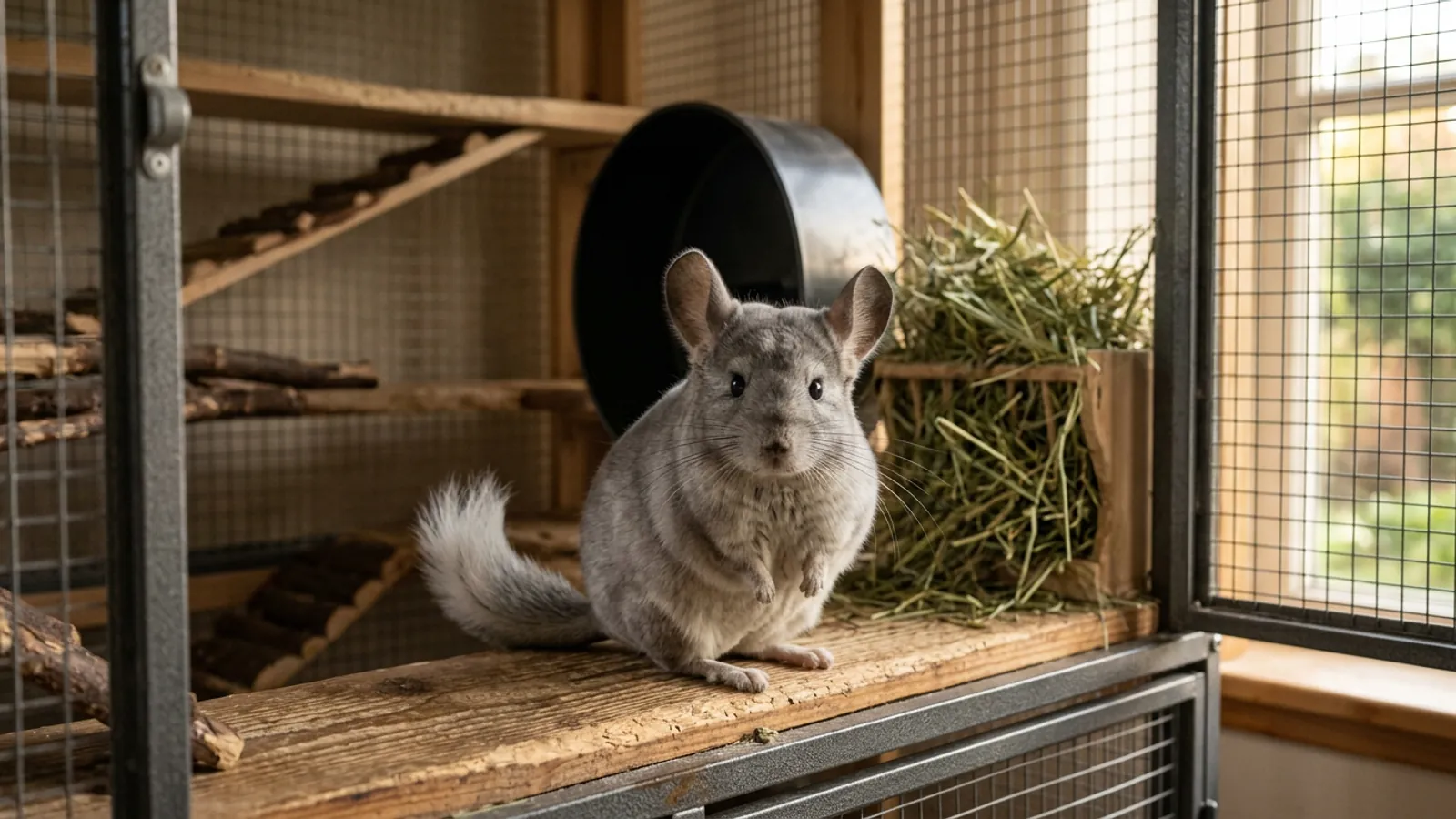
The first number most people ask me about is the chinchilla cost on the tag at the breeder or the pet store, and it is almost always the smallest number they will ever spend on the animal. A chinchilla is cheap to buy and genuinely expensive to keep well. I have kept chinchillas for about ten years, and the gap between what people expect to pay and what the animal needs is the single most common reason I see chinchillas rehomed, kept badly, or sitting in a cage that is quietly hurting them. So let me lay out the whole picture: the purchase price, the setup that has to come with it, the monthly running cost, and the vet fund you should never pretend you do not need.
How much a chinchilla costs to buy
The animal itself is the part that varies most, and it varies for reasons that have nothing to do with how good a pet you are getting. A standard gray chinchilla from a pet store or a hobby breeder commonly runs somewhere in the range of 75 to 200 in the places I have bought and helped others buy, with fancier color mutations (white, black velvet, violet, and so on) climbing higher, sometimes several hundred. Show-quality or rare-color animals from a serious breeder go higher still. Rescues and rehomes are often the cheapest way in, sometimes just an adoption fee, and Pebble came to me that way, out of an overheated attic where someone had given up on her.
I will say plainly that the purchase price tells you almost nothing about the animal's health, and a low number is not a bargain if it comes from a place that keeps its animals badly. Where you buy matters far more than what you pay, and I have written the whole ugly business of sourcing up separately in how to buy a chinchilla for sale without getting hurt or ripped off. Read that before you hand anyone money. The average cost of a chinchilla is a distraction if the cheap one arrives already sick.
One more thing on the buy price: chinchillas are social, and many keepers and rescues will tell you a same-sex pair is kinder than a single animal. That is a real debate with real disagreement, and I am not going to pretend it is settled. But if you go that route, the purchase price and much of the running cost roughly doubles, so factor it in now rather than being surprised later.
The cage is the real upfront number
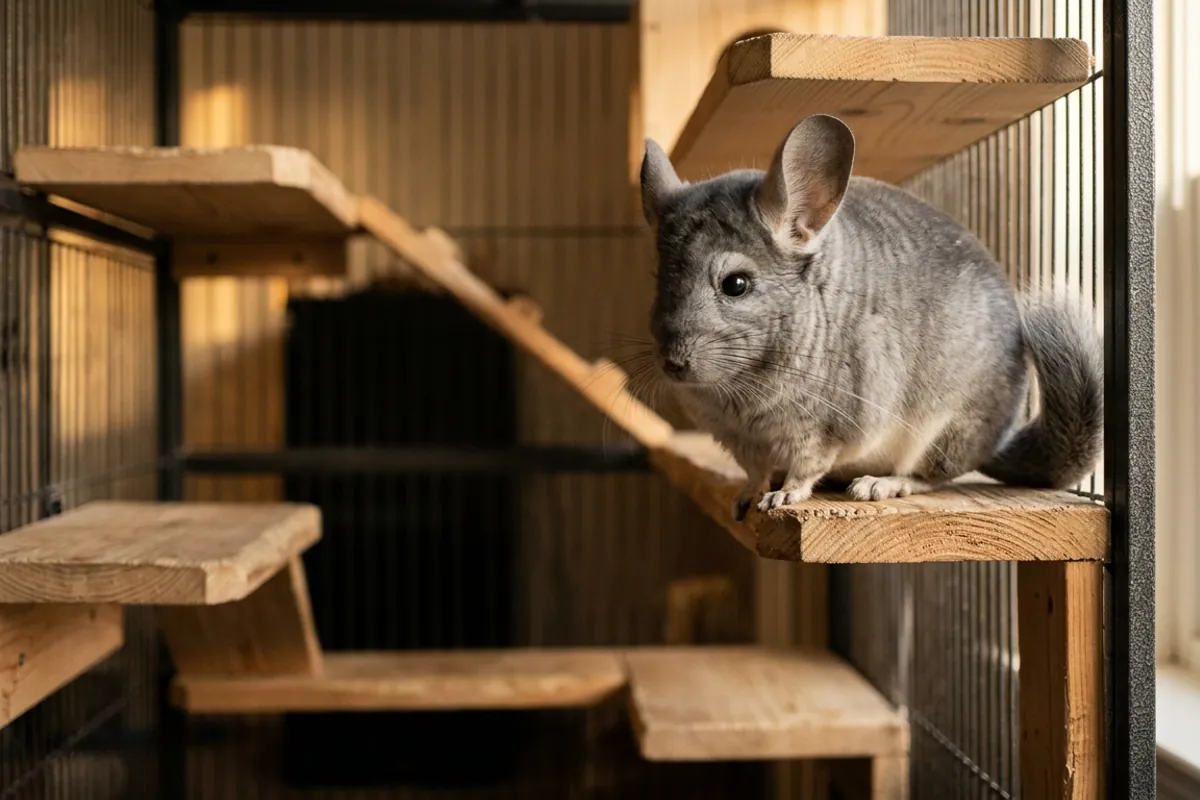
Here is where people flinch, because the cage costs more than the chinchilla and it should. Chinchillas are jumpers and climbers built for open, vertical space, and they need a tall metal-and-wood enclosure with solid wooden ledges at varying heights, not a hamster box scaled up. A cage that is big enough, well built, and safe usually lands in the range of 150 to 400 or more, and the good ones last for the animal's whole life, so it is a one-time cost you buy once and buy right.
Critter Nation double unit small animal cage As an Amazon Associate I earn from qualifying purchases.
Do not buy plastic. Chinchillas chew everything, plastic included, and a swallowed plastic shard is a vet visit or worse. Skip the cute little starter cages marketed for "small pets"; they are too short and too cramped, and you will end up replacing them, which means paying twice. I go through exactly how to size a cage and what to avoid in how to choose a chinchilla cage without buying the wrong one twice, and the title is not a joke. Buying the wrong cage first is the most common way people double their setup cost.
The rest of the starter setup
The cage is the big one, but it is not the last one. A proper first setup includes a handful of things that are not optional, and here is roughly where the money goes.
An exercise wheel, and this one matters for safety, not just cost. It must have a solid running surface. Wire wheels and mesh wheels catch feet and tails and cause real injuries, so never buy one, whatever it costs. A good solid-surface metal wheel large enough for a chinchilla runs in the range of 40 to 100.
15 inch Chin Spin solid surface chinchilla wheel As an Amazon Associate I earn from qualifying purchases.
A dust bath and the dust to go in it. Chinchillas never bathe in water; they clean that famously dense fur by rolling in fine dust, and water can leave the coat unable to dry properly down to the skin. You want a sturdy container and proper fine chinchilla dust, which is a pumice-type volcanic dust, not sand. The enclosed bath houses sold for this are almost all plastic, which chinchillas chew and swallow, so most keepers I trust use a heavy ceramic bowl or a large glass or metal container instead. The bath itself is cheap; the dust is an ongoing consumable I will come back to.
Then the smaller pieces: a glass water bottle, a heavy food dish, a hideout or two, wooden ledges if the cage did not come with enough, and a starting supply of safe chews. Chews are not decoration. Juniper, my rescue, has dental disease I manage every single day, and watching what happens when teeth do not get worn down is why I will not let anyone treat chews as an afterthought. Apple wood, pumice, and other safe untreated chews belong in the budget from day one.
emours apple wood chew sticks, 40 count As an Amazon Associate I earn from qualifying purchases.
Add it up and a sensible starter setup beyond the cage tends to land somewhere in the range of 100 to 250, depending on how much your cage already included. I walk through arranging all of it safely in chinchilla cage setup.
What a chinchilla costs to feed and run every month
This is the number people forget entirely, and it is the answer to how much do pet chinchillas cost once they are living with you. It is not large per month, but it never stops.
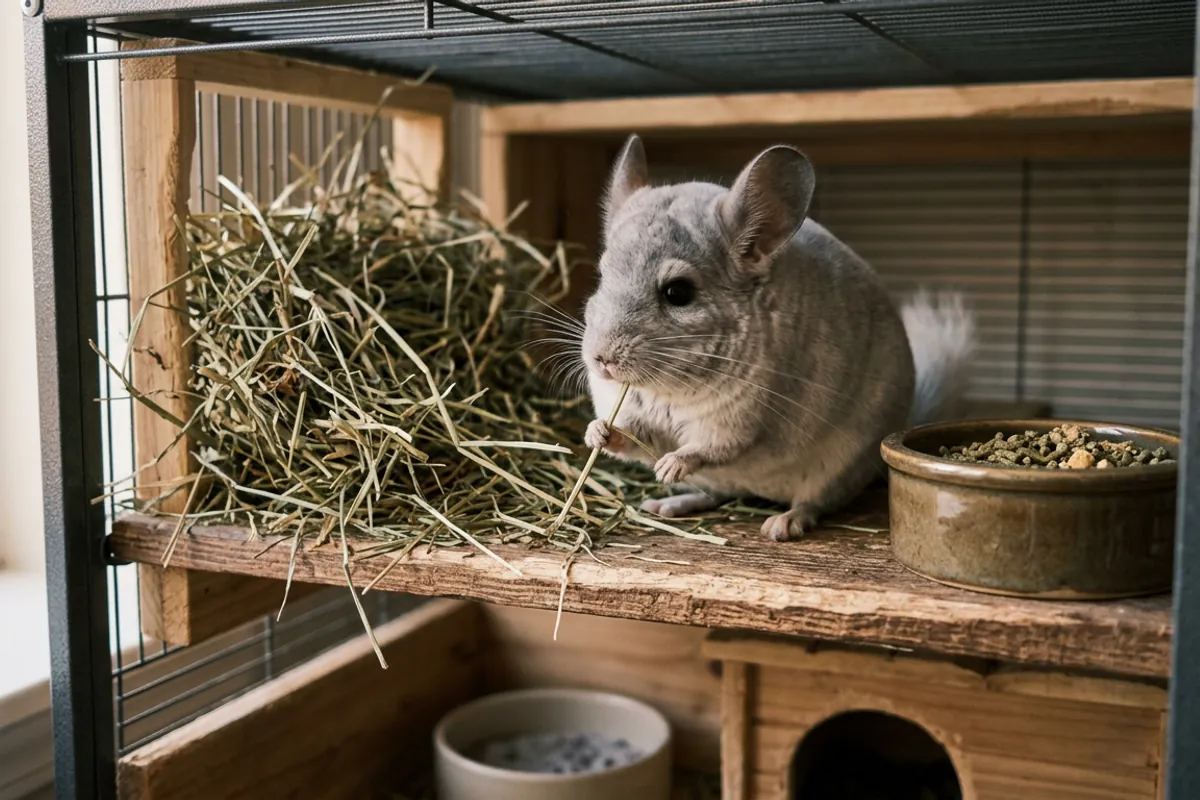
Grass hay is the foundation and the bulk of it. Chinchillas eat unlimited grass hay, all day, every day, and it is the single most important thing in their diet, both for the gut and for grinding down teeth that never stop growing. Timothy and other grass hays are what you want. On top of that they get a measured amount of plain chinchilla pellets, not a muesli mix full of colorful bits, and not fruit or sugary treats. I lay out the whole diet, including what to avoid, in chinchilla diet, food, and hay.
Oxbow Western Timothy Hay, 9 lb box As an Amazon Associate I earn from qualifying purchases.
Realistically, month to month you are buying hay, pellets, and dust, replacing chews as they get destroyed, and topping up bedding. For a single chinchilla that tends to land in the range of 20 to 50 a month for most keepers, more if you buy small expensive bags instead of buying hay in bulk, more again for a pair. The dust gets replaced as it gets soiled, the chews get eaten, the hay is constant. None of it is dramatic, but over years it is the quiet majority of what a chinchilla costs.
The cheapest lever here is buying hay in bulk rather than in tiny pet-store bags, and it also happens to be the freshest way to buy it, so this is one place where saving money and doing right by the animal point the same direction.
Vet care and the emergency fund nobody budgets for
I am an experienced keeper, not a vet, and I will send you to one every time the line is crossed, because chinchillas are exotics and a dog-and-cat clinic often cannot treat them properly. That means the first real cost here is finding an exotics vet before you need one, and knowing what their visit fee is, because it is usually higher than a standard pet visit.
Two problems drive most chinchilla vet bills, and both are why this site exists. The first is teeth. Chinchilla teeth grow for life, and when they wear unevenly the animal gets malocclusion, which needs veterinary dental work and can become a lifelong management cost. That is Juniper's whole story, and I cover the warning signs in chinchilla teeth problems: spotting malocclusion before it turns serious and more broadly in chinchilla teeth and health. Catching it early is cheaper and kinder than catching it late.
The second is heat. Chinchillas come from a cold, dry climate and they cannot shed heat well, so they are comfortable at 60 to 70°F (15 to 21°C). Above about 75°F (24°C) they are at risk, and at 80°F (27°C) and up you are in emergency territory, faster still when the air is humid. Pebble's first summer brought a heatwave that put us in the emergency vet overnight, and that scare is the reason I am relentless about this. Heat stroke is a genuine medical emergency with a genuine emergency bill, and it is almost entirely preventable with cooling and a thermometer. I keep a full guide in chinchilla heat stroke: warning signs every owner should know, the prevention side in chinchilla heat safety, and there is a chinchilla heat danger calculator to check your own room.
A cheap thermometer with a humidity reading is one of the best small purchases you will make, and a chewable granite or ceramic cooling tile gives the animal somewhere to shed heat.
digital thermometer and humidity gauge with remote probes As an Amazon Associate I earn from qualifying purchases.
Here is the blunt part. You should keep an emergency vet fund, and it should be real money, not a vague intention. A single emergency visit for a chinchilla can run into the hundreds, and dental work or a heat-stroke crisis can run higher. I tell people to set aside a few hundred at minimum before the animal comes home and to keep topping it up. If you cannot absorb an unexpected several-hundred bill without it being a disaster, you are not ready for the animal yet, and I would rather say that plainly than watch someone face an impossible choice at the emergency vet at 2 a.m.
What a chinchilla really costs over its life
Now put it together, because a chinchilla is not a short commitment. These animals commonly live 15 to 20 years, sometimes longer, which is where the real answer to what is the cost of a chinchilla lives.
Roughly, the upfront cost, the animal plus a proper cage plus the rest of the setup, tends to land somewhere in the range of 350 to 800 done right, most of it the cage and gear you buy once. Then the running cost, food and dust and chews and bedding, is the 20 to 50 a month that never stops, which over a fifteen-plus year life is by far the larger total. Add vet care, which is unpredictable by nature but real, and you are looking at an animal that costs thousands across its lifetime even if nothing goes badly wrong.
I am not telling you this to scare you off. I am telling you because the people who get hurt, and whose animals get hurt, are the ones who budgeted for the tag price and nothing else. The average cost of chinchilla ownership is a long slow number, not a one-time one. If you know that going in, you make good decisions. If you do not, you cut corners on the cage or the hay or the vet fund, and the animal pays for it.
Where the money is worth spending
If you are deciding where to be careful and where to spend, here is how I would rank it after ten years of doing exactly that.
Spend on the cage. It is the biggest single cost and the one you most regret getting wrong, and a good one lasts the animal's whole life. Spend on a solid-surface wheel and never a wire one, because that is a safety line, not a comfort one. Spend on good hay bought in bulk, because it is the foundation of both the gut and the teeth and it is a false economy to skimp. Keep the vet fund funded, because the cheapest emergency is the one you can pay for.
Where you can save: buy hay and dust in bulk rather than boutique bags, take a healthy rescue or rehome rather than paying breeder prices for a fancy color, and skip the marketed gadgets and sugary treats that do nothing good. The things that keep a chinchilla alive and well are not the expensive-looking ones. They are unlimited hay, a big safe cage, dust instead of water, a cool room, and a vet you can reach. Get those right and the rest of the chinchilla cost sorts itself out. If you want the whole care picture in one place before you commit, start with what a chinchilla really is, and why its biology sets every care rule and chinchilla care, and then decide with your eyes open.