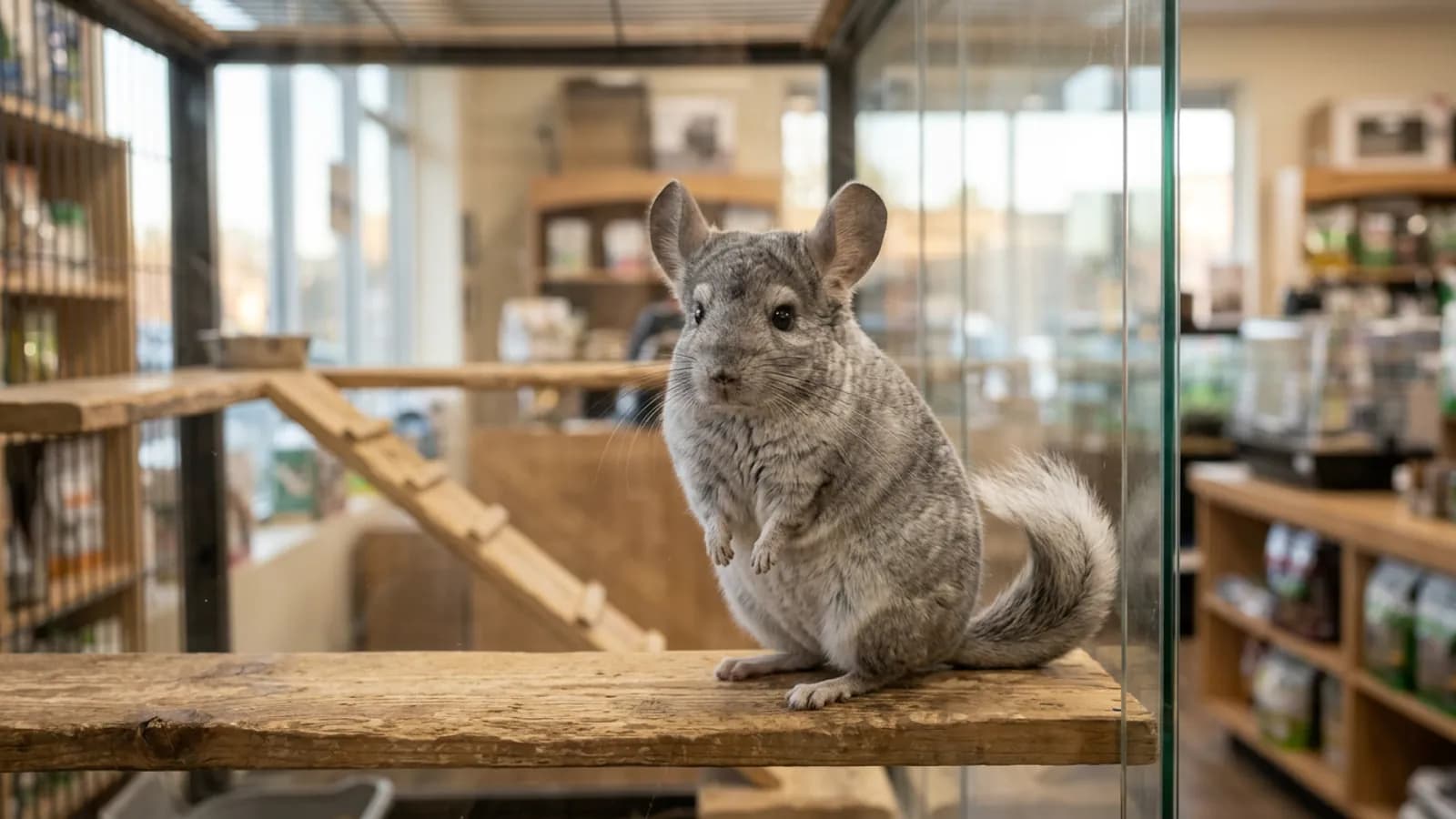
Walk into a chinchilla pet shop and the animal behind the glass looks like an easy yes. It is small, it is quiet, it sits in the corner looking impossibly soft, and the sticker price feels gentle next to a dog or a cat. I have kept chinchillas for about ten years, and I want to be straight with you before you reach the till: the pet shop is where most of the trouble I see starts. Not because every shop is run by bad people, but because the format itself hides the things that decide whether this animal lives eight years or eighteen months. This is a plain walkthrough of what a chinchilla pet shop is really selling, what to check with your own eyes and hands, and when the right move is to walk back out empty-handed.
What a chinchilla pet shop actually is
A pet shop is a retail floor, and a chinchilla is stock on it. That single fact explains most of what you need to be wary of. The big chains buy from breeders and brokers you will never see, so the staff usually cannot tell you the animal's exact age, its parents, or whether it has ever seen an exotics vet. Independent shops vary more: some are run by people who genuinely know the species, and a few will hand-raise their own. But the default assumption should be that nobody at the counter knows this specific animal's history, and you should make them prove otherwise.
Then there is the room itself. Shop floors are kept at human-comfortable temperatures, and human comfort runs warmer than chinchilla comfort. A chinchilla is happy between 60 and 70°F (15 to 21°C). Above 75°F (24°C) is genuinely risky, and 80°F (27°C) and up is an emergency that arrives faster in humid air. Plenty of shops sit their chinchillas under warm display lighting near the front windows, sometimes stacked above reptile tanks that are heated on purpose. If the animal you are looking at is panting, lying flat and splayed out, or has bright red ears, that is not relaxation. That is a chinchilla shedding heat, and I would not buy from that display. If you want the full picture of what those temperatures do, I wrote it out in chinchilla temperature is the number that keeps yours alive and the warning signs of heat stroke.
The price on the tag is the smallest number you will pay
The sticker is designed to be the number you remember, and it is the least important one. A chinchilla from a shop commonly runs somewhere in the low hundreds, more for an unusual color, and people fixate on that figure because it is printed in front of them. The setup behind it costs several times more, and it is not optional. I broke the real total down in what a chinchilla actually costs and what a price tag hides, but here is the short version so you can do the math while you are still standing in the aisle.
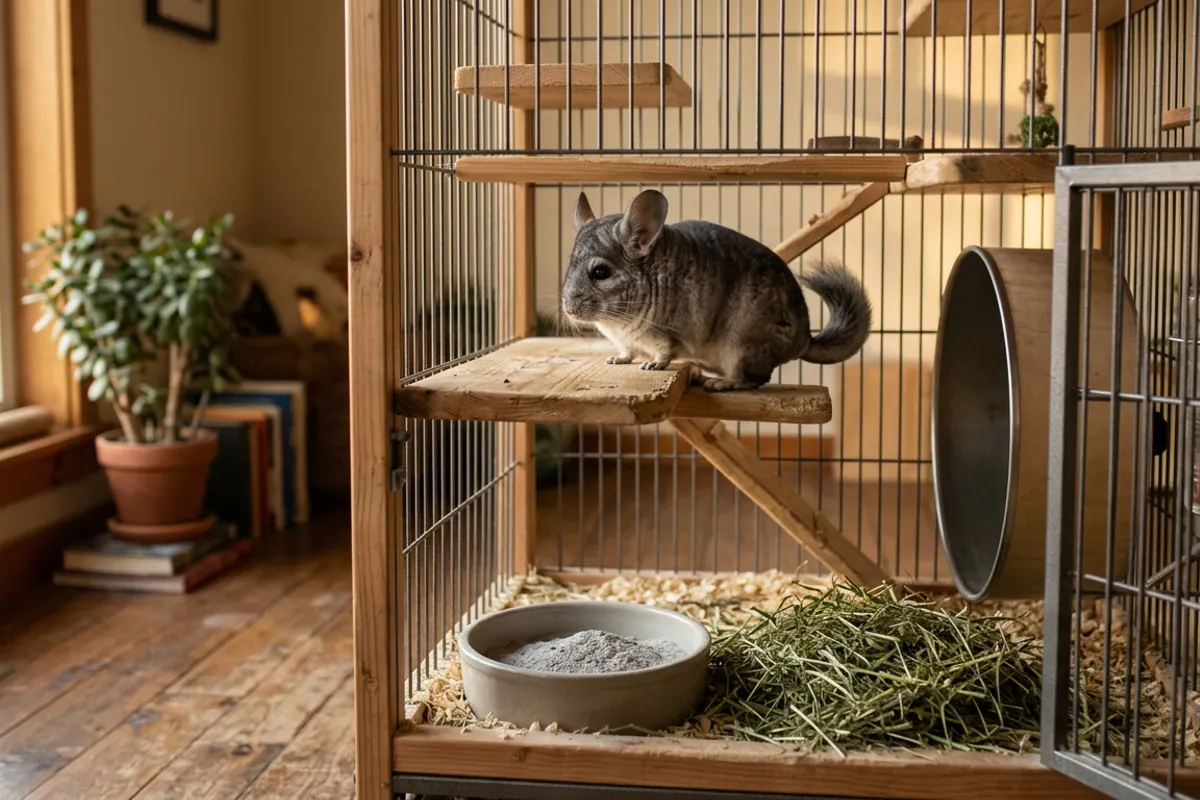
The cage is the biggest single line, and it has to be tall, metal, and fitted out with wood, never plastic. A properly sized metal-and-wood cage with wooden ledges is the foundation everything else sits on. Critter Nation double unit small animal cage As an Amazon Associate I earn from qualifying purchases. On top of that you need a solid-surface exercise wheel, because a wire or rung wheel catches toes and tails and breaks legs. 15 inch Chin Spin solid surface chinchilla wheel As an Amazon Associate I earn from qualifying purchases. You need dust for bathing, since chinchillas clean themselves in fine volcanic pumice and never in water. Lixit Blue Beauty chinchilla dust, 3 lb As an Amazon Associate I earn from qualifying purchases. You need a constant supply of grass hay, which is the bulk of the diet and the thing that keeps their teeth worn down. Oxbow Western Timothy Hay, 9 lb box As an Amazon Associate I earn from qualifying purchases. And you need a vet fund, because exotics visits are not cheap and a chinchilla hides illness until it is serious. Add those up honestly before you commit, not after.
How to health-check a chinchilla through the glass and in your hands
Ask to hold the animal, or at least to have it out where you can see it move. A shop that refuses is telling you something. Chinchillas are prey animals and they mask illness well, so you are looking for small tells rather than obvious distress.
Start with the eyes and nose: both should be clean and dry. Any crusting, wetness, or discharge around the eyes can point to dental trouble, because the roots of a chinchilla's constantly growing teeth press up toward the eye sockets when they overgrow. A wet chin or drool-matted chest fur is the same warning from a different angle. Watch the breathing next. It should be quiet and even. Clicking, wheezing, or fast shallow breaths are reasons to put the animal down and leave.
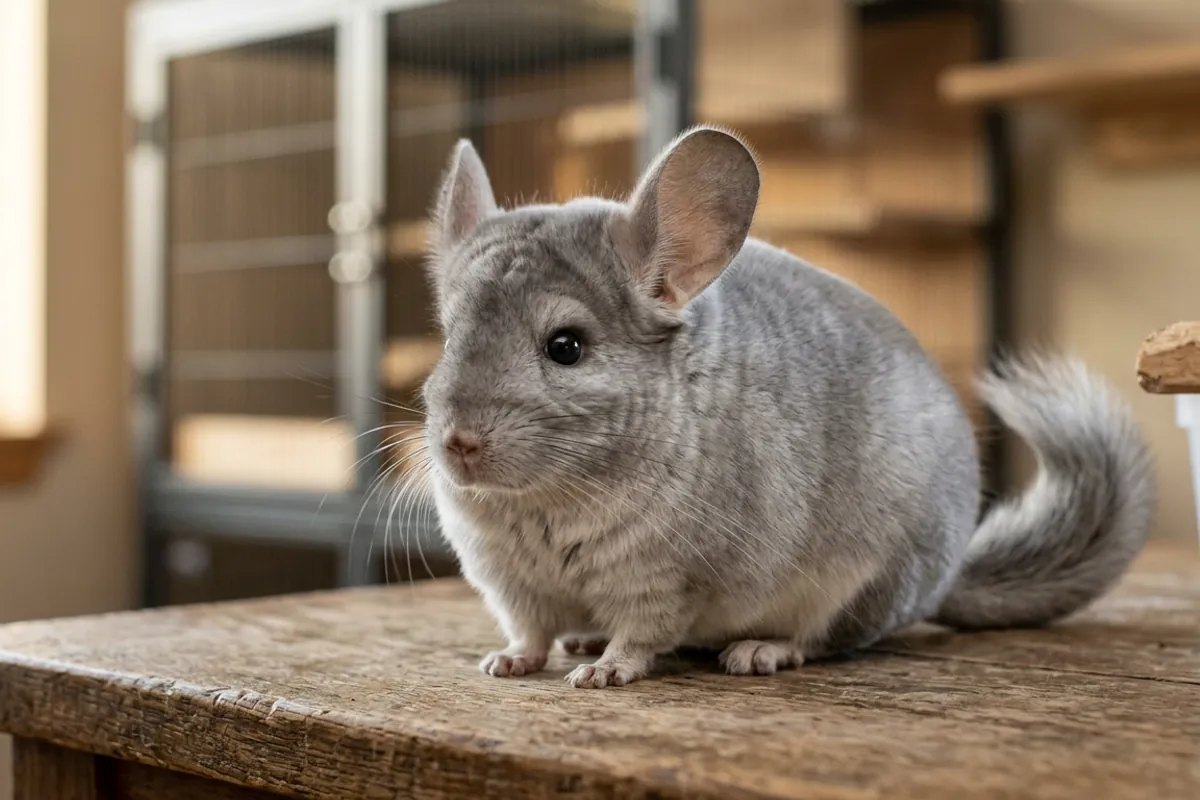
Run your eyes over the coat. It should be dense, even, and springy, with no bald patches, no scabs, and no bare rings around the neck. Feel the body if you can, through the fur, for the spine and hips: a healthy chinchilla is solidly built, not a sharp ridge of bone. Then just watch it for a minute. A well chinchilla is alert and curious, it moves in quick confident hops, and it reacts to the room. One that sits hunched in a corner, indifferent to what is going on, is either very stressed or unwell, and in a shop you often cannot tell which. Because teeth are the thing that quietly ends chinchilla lives, it is worth knowing the early signs cold before you shop, and I laid those out in spotting malocclusion before it turns serious.
What the shop will sell you alongside, and what to put back
This is where a pet shop earns its margin, and where a new owner gets steered wrong with a smile. The upsell basket is full of things that are cheaper for the shop to stock than they are safe for the animal.
The small "starter" cage is the first trap. Shops love them because they are affordable and they fit the shelf, but a small cage is a lifelong problem you will pay to fix later. Buy the tall metal one once. I made the whole argument in the honest truth about a small chinchilla cage and how to pick the best cage without buying the wrong one twice, and the reason it has to be metal is spelled out in why a chinchilla cage has to be metal.
The wire wheel is the second trap, and it is the one I am bluntest about, because it maims. If the wheel has rungs or mesh, it does not belong near a chinchilla. Only a solid running surface is safe. 15 inch Chin Spin solid surface chinchilla wheel As an Amazon Associate I earn from qualifying purchases. Plastic hides, plastic ledges, and plastic "igloos" are the third: chinchillas gnaw everything, and swallowed plastic can block a gut that is not built to pass it. Wood and metal only.
Then come the food mistakes. The colorful mixes, the yogurt drops, the seed-and-fruit treats stacked by the register are the opposite of a chinchilla diet. What this animal actually needs is unlimited grass hay, day and night, with a measured amount of plain pellets as a supplement and nothing sugary or fatty. Oxbow Western Timothy Hay, 40 oz bag As an Amazon Associate I earn from qualifying purchases. Keep the pellets simple and plain, as I covered in chinchilla pellets, the honest version. For the chewing their teeth demand, skip the dyed shapes and give plain untreated wood. emours apple wood chew sticks, 40 count As an Amazon Associate I earn from qualifying purchases. Two more things belong in your basket that the shop may not push: a solid stone the chinchilla can lie against to shed heat on a warm day, Kaytee Chinchilla Chiller granite stone As an Amazon Associate I earn from qualifying purchases. and a thermometer with a humidity reading so you actually know what the room is doing instead of guessing. digital thermometer and humidity gauge with remote probes As an Amazon Associate I earn from qualifying purchases. And the dust: it must be real chinchilla dust, the fine pumice kind, offered in a dish a few times a week, never sand and never water. I explained the difference in what bathing dust really is.
The questions to ask the staff before you decide
Good questions do two jobs at once: they get you information, and they show you how much the shop actually knows. Ask them plainly and watch how the answers land.
Ask how old the animal is and how long it has been in the shop. A chinchilla should be fully weaned, past about twelve weeks, before it leaves its mother, and a very young kit sold too early is a health gamble. Ask the sex, and ask them to be sure, because sexing young chinchillas is easy to get wrong and a mistaken pair becomes an accidental litter. Ask where the animal came from and whether they can tell you anything about its parents. "A breeder" with no further detail means no traceable history.
Ask what it has been eating, so you can keep the diet steady for the first couple of weeks and avoid a gut upset from a sudden switch. Ask whether it has a cage mate and whether it was raised alone or in a group. And ask what happens if the animal turns out to be sick in the first week, because a shop that stands behind its animals will have an answer and one that does not will get vague. If the staff cannot answer the basics, or worse, if they cheerfully tell you a chinchilla can bathe in water or live happily in that little starter cage, treat the whole visit as a warning about everything else they told you.
Pet shop, breeder, or rescue
A pet shop is not your only option, and often not your best one. A reputable breeder knows each animal's age, lineage, and temperament, raises them handled and socialized, and will usually take an animal back if things go wrong. A rescue gives a home to a chinchilla that has already been let down once, frequently comes with the cage and gear included, and the people running it will be honest about the animal's quirks because their whole goal is a placement that sticks. Both routes tend to come with more knowledge attached than a retail counter can offer.
None of that makes every pet shop wrong. A good independent shop with a knowledgeable owner and healthy, properly housed animals is a fine place to buy. The point is to judge the source by what you can verify, not by whether it has a shopfront. I walked through how to weigh all of this in how to buy a chinchilla without regretting it later, how to search locally without importing trouble in finding a chinchilla near me, and how to read a listing in buying a chinchilla for sale without getting hurt or ripped off. If you are looking specifically at a big chain, what a Petco chinchilla really costs covers what to check there.
Before you say yes at the counter
Here is the honest summary. A chinchilla pet shop can be a reasonable place to meet your animal, but only if you refuse to be rushed and only if you have already done the arithmetic on everything that comes after the sticker. The animal you bring home will be with you for a decade or more if you get it right, and the decisions that decide that are made in the ten minutes at the counter and the days before.
Do not walk out with a warm-room cage, a wire wheel, a bag of colorful treats, and an animal that was panting under a display light, just because it was all in one place and the price felt small. Walk out with a tall metal cage, a solid wheel, plain hay and pellets, real dust, and a chinchilla you watched move, breathe, and act curious in your hands. Set the room up before the animal arrives so it never sees a temperature over 70°F, and line up an exotics vet you can call, because with this species you want that number saved before you need it, not after. Get those pieces in order and the pet shop becomes just the doorway. Get them wrong and no price on any tag was ever the real cost.