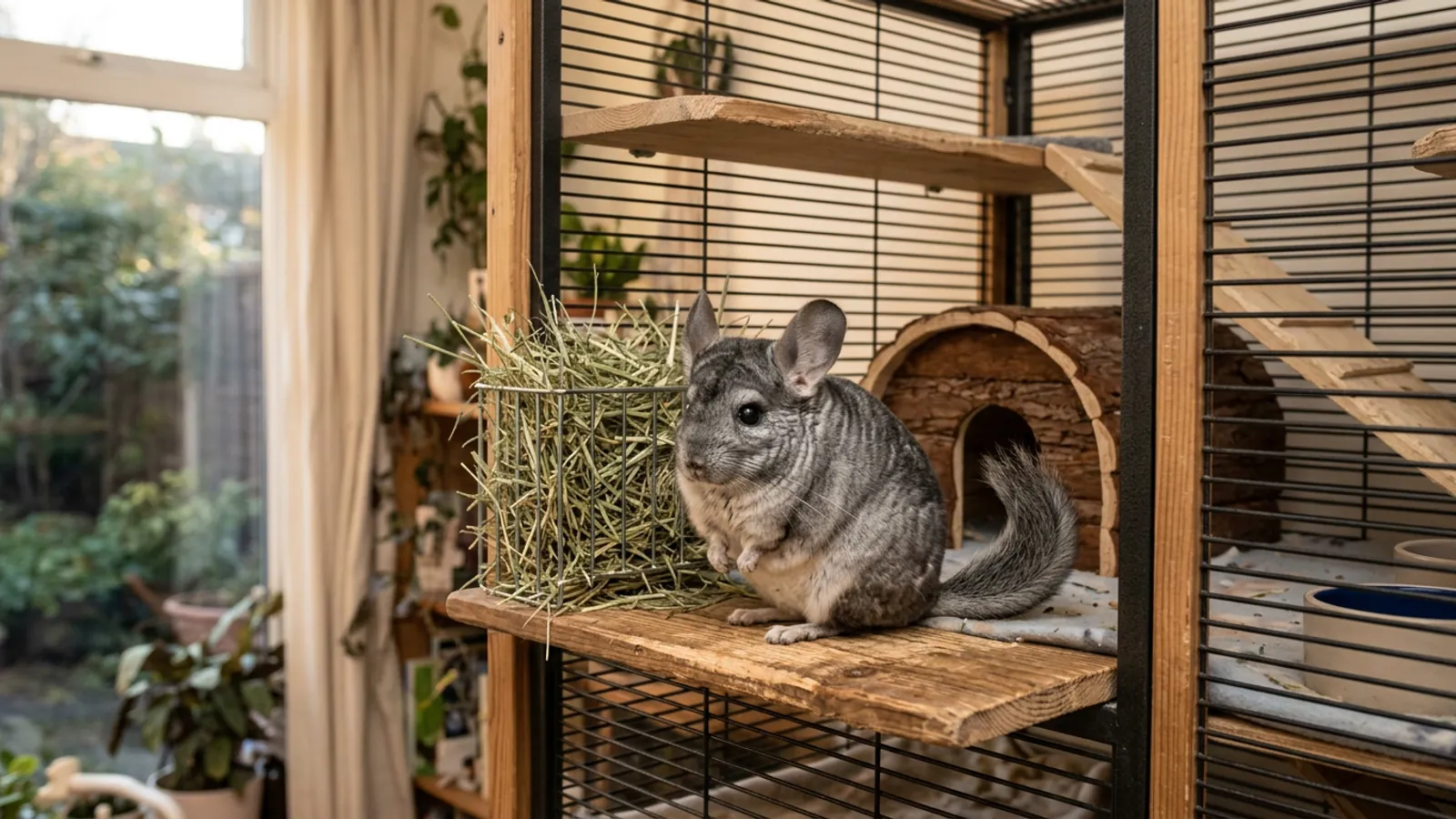
Both of my chinchillas came to me the same way. Someone else could not keep them, and I said yes. Chinchilla adoption is how Pebble and Juniper both ended up in my living room, and after about ten years of keeping these animals I have stopped treating it as the sad, second-best route people assume it is. Pebble came out of a rehome after a summer spent in an overheated attic, and her first summer with me still brought a heatwave near-miss and a night at the emergency vet. Juniper was a neglected rescue whose dental disease I manage every single day. Neither was a bargain and neither was simple at the start, but both are the reason I trust the adoption route more than a lit glass case at the back of a pet store. This is what adopting a chinchilla asks of you, what it really costs, and how to do it without carrying home a problem you cannot fix.
Why I keep pointing people toward adoption first
Chinchillas live a long time. A well-kept one commonly reaches 10 to 20 years, and that single fact is behind most of the animals that need new homes. People buy a chinchilla on impulse, often for a child, without registering that they have signed up for something closer to a two-decade commitment than a two-year one. Then life changes. They move, a partner turns out to be allergic, the child loses interest, the electricity bill for keeping a room under 70°F all summer stops feeling worth it. The chinchilla, still healthy and still with a decade or more ahead of it, ends up looking for somewhere to go.
That is the pool you are drawing from when you adopt. It is not, for the most part, a pool of broken animals. It is a pool of animals whose first owners underestimated the work. A chinchilla rescue exists precisely to catch them, and the good ones are honest with you about what each animal needs. When you adopt, you are usually taking on a chinchilla that someone has already fed, watered, and often bonded with, which means its temperament and its quirks are known quantities in a way a young pet-store animal simply is not.
I am not going to pretend adoption is charity that costs you nothing. It is not. But if you were going to spend the money and the years anyway, spending them on an animal that already exists and needs you is the version I keep recommending.
Where chinchillas come up for adoption
The first place to look is a dedicated small-animal or exotics rescue. Some are chinchilla-specific, most are general and take in whatever exotic pets people surrender. They vet adopters, they quarantine incoming animals, and they will tell you what they know about the history. That transparency is the whole point, and it is what separates a real rescue from a stranger offloading a problem.
After that, general shelters occasionally have chinchillas, though less often, because most shelters are set up for cats and dogs and may not know much about the animal in front of them. Exotic vet clinics sometimes keep a rehoming board. And there is a large, informal world of owner-to-owner rehoming: local listings, chinchilla-keeper forums, and social media groups where someone posts an animal with its cage because they genuinely cannot keep it any longer.
That informal route is where you need your eyes open. Some of those listings overlap with the world of casual selling, and it is worth reading how to tell a careful rehome from a careless flip. I have written about finding one locally in how to find a chinchilla near me without bringing home trouble, and about spotting the warning signs in a sale in how to buy a chinchilla for sale without getting hurt or ripped off. The habits that protect you when buying protect you just as well when adopting.
One thing I will say plainly: adopting from a rescue and buying from a breeder or a pet store are not the same transaction dressed differently. A rescue is trying to place an animal well. A pet store is trying to move stock. If you want the full comparison of what each route hands you, how to buy a chinchilla without regretting it later lays it out.
What a chinchilla adoption really costs
Here is where people get surprised, in both directions. An adoption fee is usually lower than a breeder's price for a young, hand-tame animal, and often lower than a pet store tag once you account for what comes with it. Many rescues send the chinchilla home with its cage, its water bottle, and whatever supplies the previous owner handed over. That bundle can be worth more than the fee itself.
But the fee is not the cost of the chinchilla. It never was. The cost of a chinchilla is the decade of hay, dust, vet visits, and summer cooling that follows, and that number is identical whether you adopted for a modest fee or paid a breeder a premium. I go through the whole picture in what a chinchilla really costs, from the price tag to the vet fund, and the core point is that the purchase price, however you came by the animal, is the smallest line on the list. If you are weighing the sticker figures specifically, what a chinchilla price tells you, and what it hides is the companion piece.
The one place adoption can cost you more up front is health. A rescue chinchilla may come with a condition that needs attention, and I will get to that, because it is the single most important thing to check before you commit.
What to check before you say yes
Adopting does not mean adopting blind. A responsible rescue will want you to meet the animal, and you should use that meeting the way a vet would, gently and thoroughly.
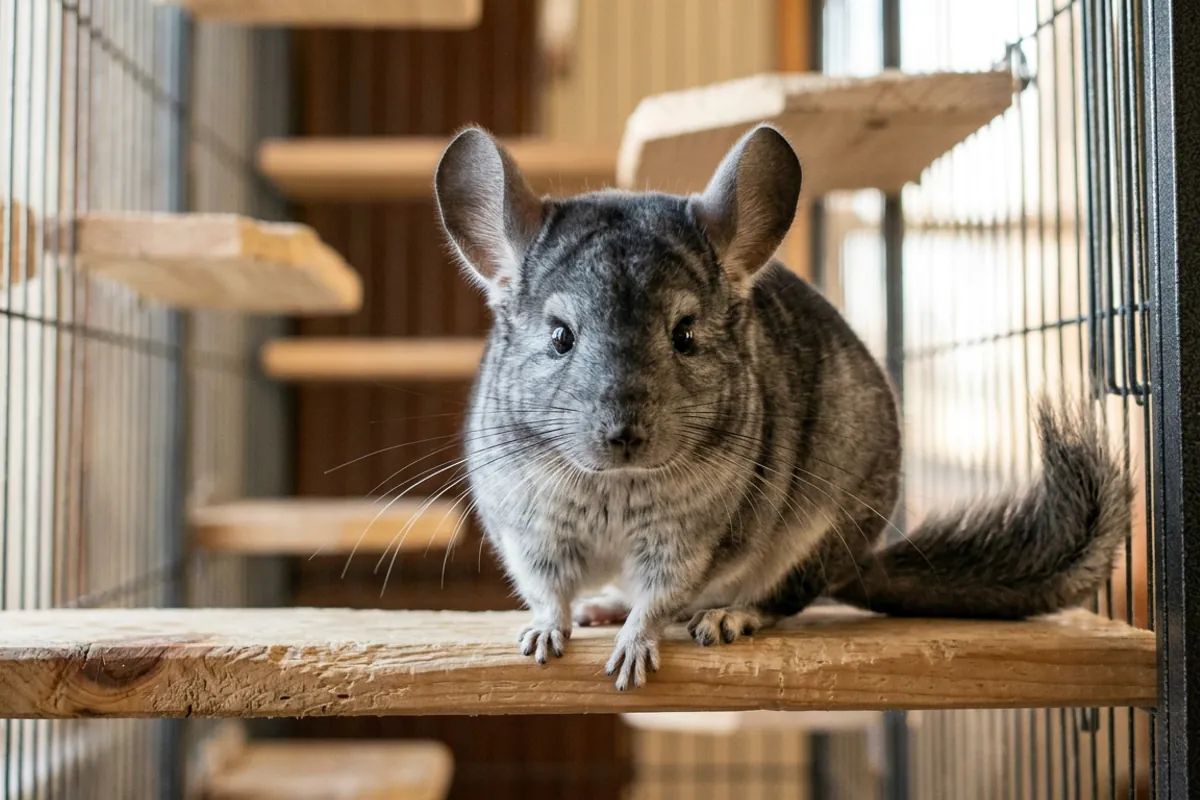
Start with the teeth, because chinchilla teeth grow continuously for the animal's whole life and dental disease is the quiet killer of the species. You cannot see the back teeth without a vet and an otoscope, but you can look for the outward signs: drooling, a wet chin, weight loss, dropping food, pawing at the mouth, or a preference for softer food over hay. Juniper came to me with exactly this, and managing her malocclusion is a permanent part of my week. I took her on with my eyes open, but I want you to know what you are looking at. If any of these signs show up, read chinchilla teeth problems and spotting malocclusion before it turns serious before you decide, and factor an exotics vet visit into your first month.
Then check the coat and the body. The fur should be dense, even, and clean, with no bald patches, no matting, and no damp or yellow staining around the rear. Fur that is patchy or chewed can point to stress, boredom, or ringworm. Feel, gently, for a body that is neither skeletal nor bloated. Look at the eyes and nose: both should be clear and dry, with no discharge. Watch the feet on the cage floor for sores. And watch how the animal moves and breathes at rest, because fast or labored breathing at room temperature is never normal.
Finally, ask questions. How old is the animal, as far as anyone knows? Why is it being rehomed? Has it seen a vet, and for what? Does it live alone or with a cage mate, and if there is a pair, are they bonded and being placed together? A rescue that answers these openly is one you can trust. A seller who gets vague or defensive is telling you something too.
Bringing a rescue home, the first weeks
The day you bring an adopted chinchilla home is not the day it settles in. It is the day the clock starts on settling in. A move is stressful for an animal that reads sudden change as danger, and a rescue chinchilla may be carrying stress from wherever it was before. Your job for the first week or two is to be boring.
Get it home in a proper hard-sided carrier rather than a cardboard box a chinchilla can chew through, and keep the trip short and cool. Set the cage up before the animal arrives so there is no scrambling. Then put the chinchilla in, and mostly leave it be. Fresh hay, fresh water, a hide to disappear into, and quiet. Resist the urge to handle it constantly in those first days, however much you want to. Let it come to the front of the cage on its own terms and learn that your hand means food, not capture.
If you already keep a chinchilla, do not put the newcomer straight in with it. Quarantine the new animal in a separate cage in a separate room for a couple of weeks at minimum, so that anything contagious, ringworm especially, does not spread before it shows. Introductions between chinchillas are a slow, careful process that deserves its own patience, and none of it should begin until you know the newcomer is healthy.
The setup a rescue needs from day one
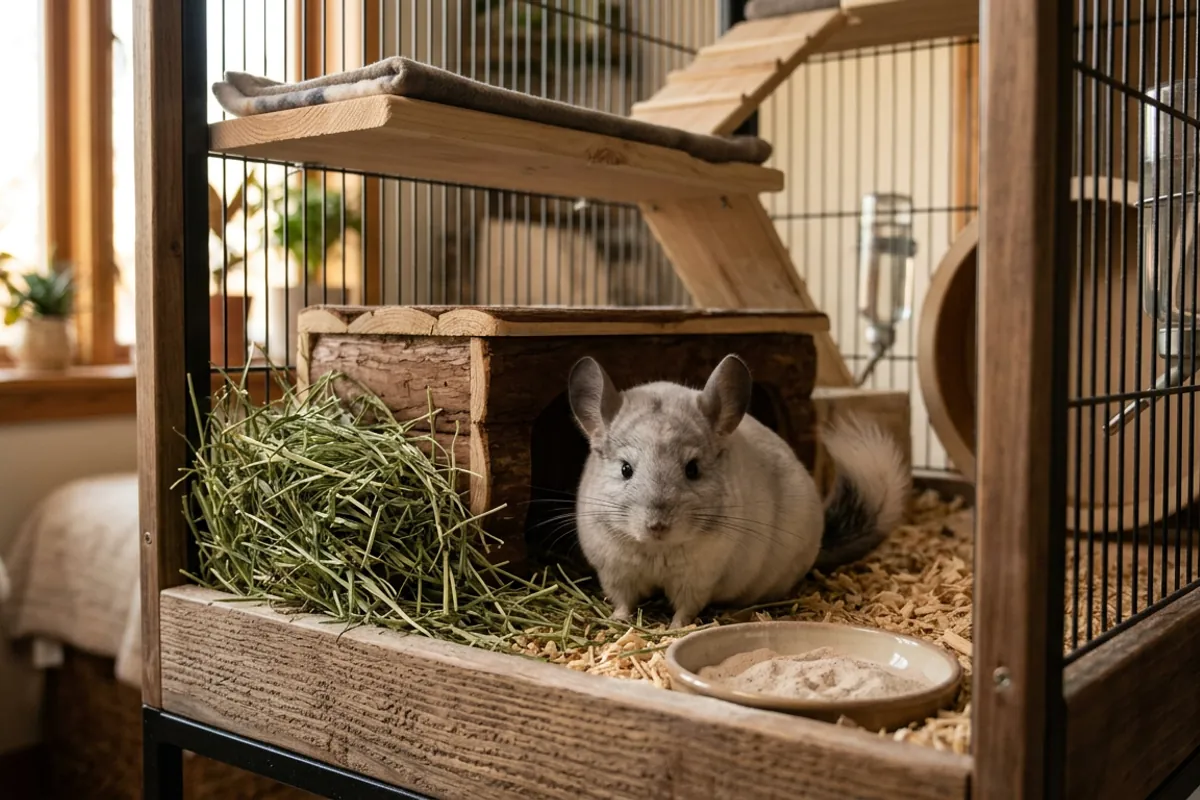
Whatever came bundled with your adopted chinchilla, hold it to the same standard you would a new purchase, because plenty of rehomed animals arrive with the very gear that made their first home a bad one. The cage is where this matters most. A chinchilla needs a tall metal-and-wood enclosure with solid wooden ledges to climb, not a small plastic-heavy setup and never a wire-floored one that wrecks their feet.
Critter Nation double unit small animal cage As an Amazon Associate I earn from qualifying purchases.
If the cage that came with the animal is too small or full of plastic, replace it rather than making do; I walk through choosing one in how to pick the best chinchilla cage without buying the wrong one twice.
Food is simple and non-negotiable. The foundation of the diet is unlimited grass hay, available all day every day, because it both wears the teeth down and keeps the gut moving. Timothy hay is the standard choice, and a rescue animal that has been living on pellets and treats needs to be moved back onto hay first.
Oxbow Western Timothy Hay, 40 oz bag As an Amazon Associate I earn from qualifying purchases.
Plain pellets are a measured supplement on top of the hay, not the main meal, and treats stay rare.
Dust, not water, is how a chinchilla keeps its coat clean. They never bathe in water; their fur is too dense to dry properly and a soaked chinchilla is a genuine emergency. Instead they roll in fine volcanic dust a few times a week, and you will need to supply it.
Lixit Blue Beauty chinchilla dust, 3 lb As an Amazon Associate I earn from qualifying purchases.
There is a right way to do this that I cover in the chinchilla dust bath, done right from dust to schedule.
They also need to chew and to move. A variety of safe wood chews keeps those ever-growing teeth in check, which matters double for a rescue with any dental history.
emours apple wood chew sticks, 40 count As an Amazon Associate I earn from qualifying purchases.
And if you add a wheel, it must have a solid running surface, never wire rungs that catch a foot or a tail.
15 inch Chin Spin solid surface chinchilla wheel As an Amazon Associate I earn from qualifying purchases.
The costs that come after the adoption fee
The adoption fee is the entrance ticket. The real budget is everything that follows, and it runs for the animal's whole long life. Hay is a recurring cost you will never stop paying, and a chinchilla goes through a surprising amount of it; buying in bulk is often cheaper over a year.
Oxbow Western Timothy Hay, 9 lb box As an Amazon Associate I earn from qualifying purchases.
Dust gets used up. Chews get gnawed to nothing and replaced. None of these are large sums individually, but they never end.
Then there is the vet fund, which is the part people skip and should not. Exotics vets cost more than cat-and-dog clinics, chinchillas hide illness until it is advanced, and a dental or a gut problem can turn into a bill in the hundreds fast. With a rescue animal that may already have a condition, this is not a hypothetical. Set money aside before you need it. An adopted chinchilla with a known issue, like Juniper, can mean regular vet visits for the rest of its life, and that is a cost you take on with open eyes.
The last recurring cost is the one Pebble taught me, and it is not optional. Chinchillas come from a cool, dry climate and they do not shed heat well. The comfortable range is 60 to 70°F (15 to 21°C). Above 75°F (24°C) you are in risky territory, and 80°F (27°C) and up is an emergency, faster still in humid air. Keeping a room in that band through summer can mean air conditioning, and it always means watching the temperature rather than guessing at it.
digital thermometer and humidity gauge with remote probes As an Amazon Associate I earn from qualifying purchases.
A cooling stone gives the animal somewhere to shed heat against, though it is a supplement to a cool room, never a substitute for one.
Kaytee Chinchilla Chiller granite stone As an Amazon Associate I earn from qualifying purchases.
Pebble's first summer with me was a heatwave near-miss and a night at the emergency vet, and everything I do around heat now traces back to that scare. If you want the warning signs committed to memory, chinchilla heat stroke warning signs every owner should know is the one article I would make every new adopter read.
Adopting a chinchilla is not the cheap option or the easy option. It is the option where an animal that already needs a home gets a good one, and where you go in knowing more about what you are taking on than any pet-store buyer ever does. Pebble and Juniper were both harder at the start than a tame youngster would have been. I would make the same choice again without a second's hesitation.