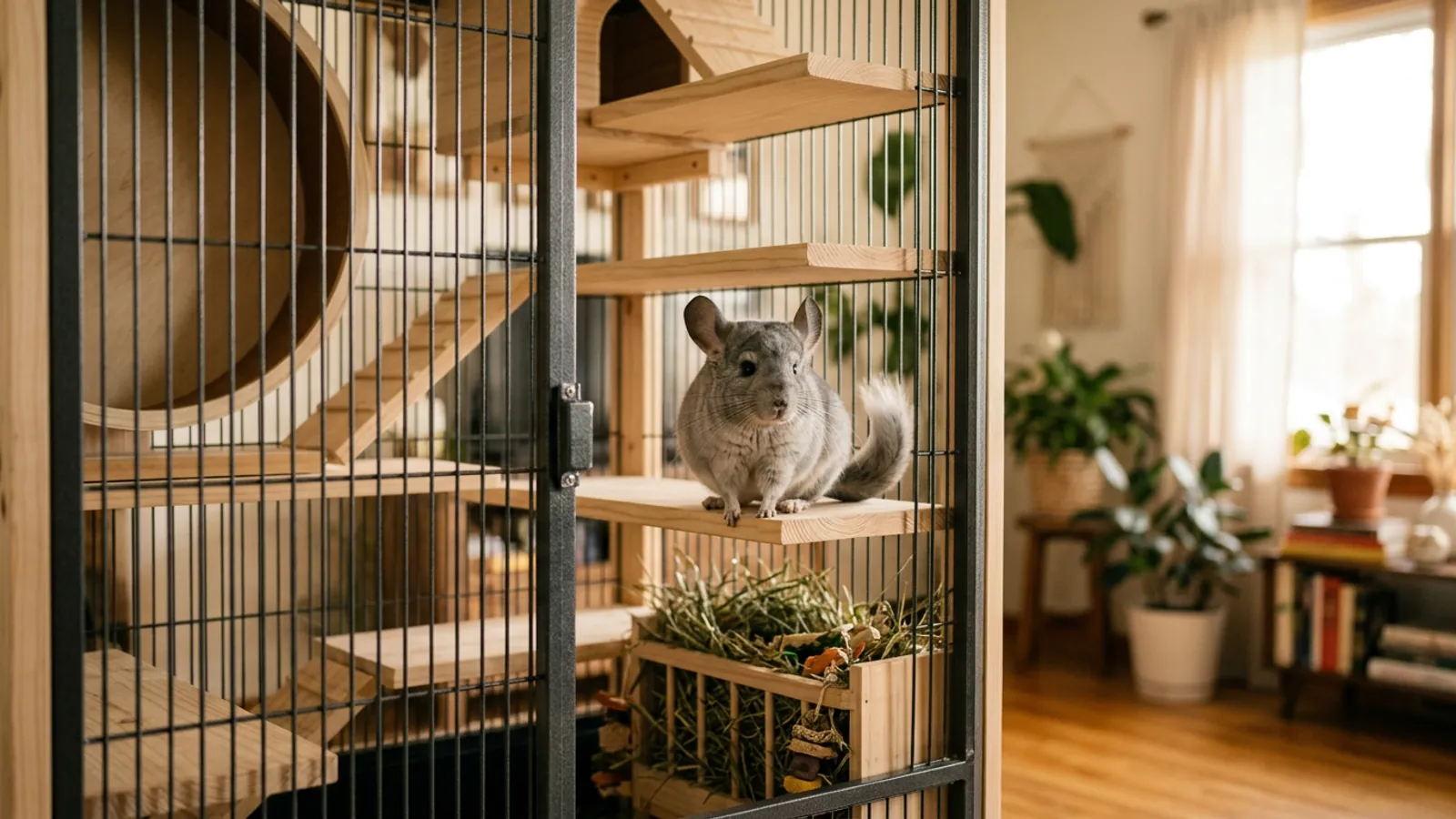
Chinchilla and cage for sale is the phrase people type when they want the whole setup in one go, and I understand the pull. It looks efficient. One click, one seller, an animal and the box it lives in, done. But a decade of keeping these animals has taught me that the cage is where most of the money and most of the mistakes live, and that a bundled deal is exactly where a seller hides a cage that was never right in the first place. So this is the article I wish I could hand to anyone shopping that phrase: what a cage genuinely has to be, how to read a used listing without inheriting someone else's problem, and where the cheap route quietly turns into a vet bill. I keep two chinchillas, Pebble and Juniper, and both taught me the hard way that the enclosure is not an accessory. It is the single biggest thing standing between your chinchilla and an early death.
Why the bundled listing deserves a second look
When you search "chinchilla and cage for sale" you will find a lot of rehomes, and a rehome is often a kind thing. Pebble came to me that way, out of an overheated attic, and I would do it again. But a person selling the animal and the cage together is usually selling the cage they already own, not the cage the animal needs, and those are frequently not the same object. The cage that is easiest to list with the chinchilla is the cage that came from a big-box pet store shelf, and that cage is almost always too small, too short, and full of plastic.
So treat the two halves of the listing as two separate decisions. Judge the chinchilla on its own terms, and I have a whole piece on that in how to buy a chinchilla for sale without getting hurt or ripped off. Judge the cage on its own terms too, against the standards below. If the animal is right and the cage is wrong, buy the animal and walk away from the cage. You will replace it anyway. A bundle price is only a bargain if both things in it are worth owning.
What a cage has to be
Height is the thing people underestimate. Chinchillas are vertical animals. They jump, they climb, they want ledges at different levels to bounce between, and a wide short cage wastes the animal's whole natural range of movement. For a single chinchilla I would not go below roughly 3 feet of usable height, and more is better. Floor space matters, but height is where a chinchilla lives, so a tall cage beats a long flat one every time.
The material rule is simpler : metal and wood, never plastic. Chinchillas chew everything, constantly, because their teeth grow for their entire lives and chewing is how the animal keeps them worn down. A plastic base, a plastic ledge, a plastic hide, all of it gets gnawed, and swallowed plastic can block a gut that is not built to pass it. Juniper is a dental-disease rescue, and watching what unmanaged teeth do to an animal up close is why I am this rigid about it. Wire sides on a metal frame with solid wooden ledges is the shape you want. A powder-coated metal cage with wooden shelves, something like a tall metal-and-wood chinchilla cage, is the baseline, not the luxury version.
Critter Nation double unit small animal cage As an Amazon Associate I earn from qualifying purchases.
One more thing on the wire itself: the floor should never be bare wire your chinchilla stands on all day. Wire flooring causes sore hocks, an ugly painful foot condition. If a cage has a wire floor, you cover it with solid ledges and fleece and give the feet somewhere flat to rest. I go deeper on all of this in how to choose a chinchilla cage without buying the wrong one twice, and it is worth reading before you spend anything.
Buying a used or second hand cage without inheriting problems
Used chinchilla cages for sale are often the smart buy. A good metal cage outlives several chinchillas, the resale market is full of setups from people who tried the hobby and stopped, and you can get a cage worth several hundred new for a fraction of that. I have bought second hand and been glad of it. The trick is knowing what you are inspecting, because a used cage carries history you did not choose.
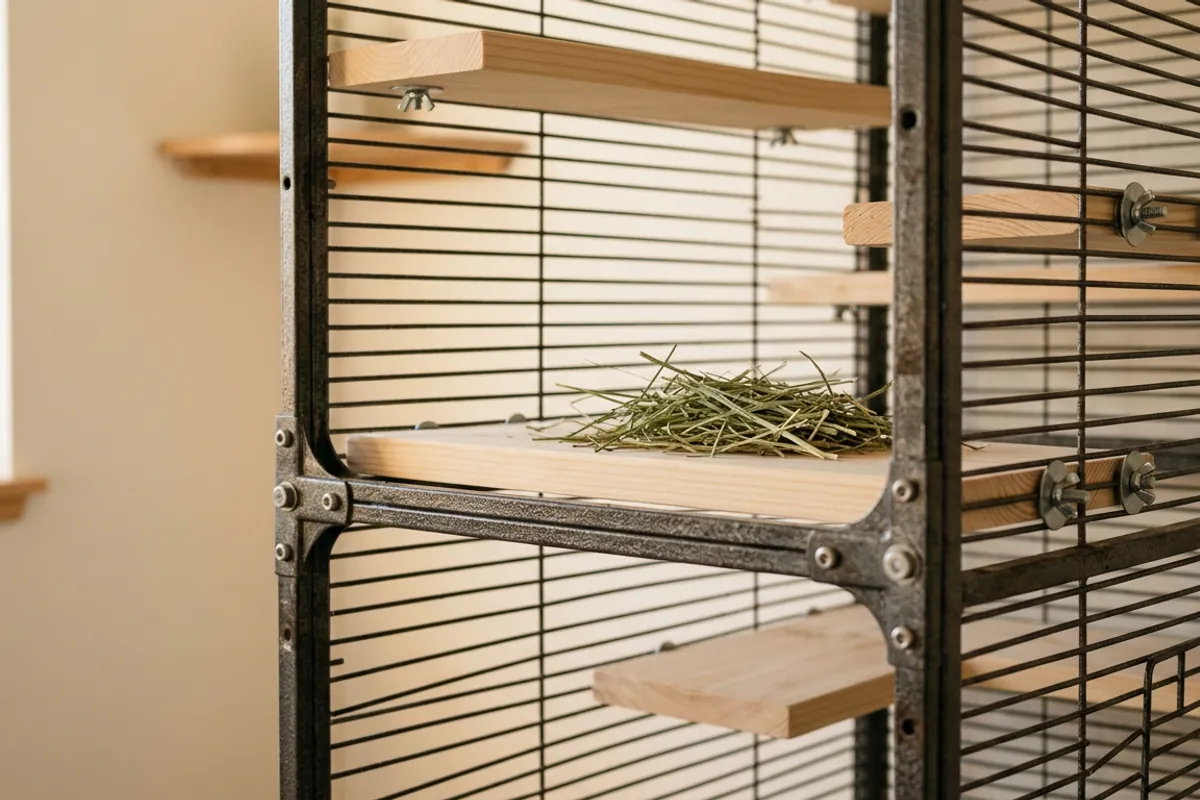
Check the bars first. You want them intact, unbent, and close enough together that a chinchilla cannot get its head through, roughly half an inch of spacing. Look hard at rust. Surface discoloration on the frame is one thing, but flaking rust on anything the animal chews or stands on is a reason to pass or to plan on replacing those parts. Check every wooden ledge for deep soaking stains and for the sharp smell of old urine that never got cleaned, because wood that has absorbed urine cannot really be sanitized and should just be swapped for fresh untreated kiln-dried pine.
Then disinfect the whole thing before an animal ever touches it. A used cage can carry fungal spores and parasites from its last resident. I take everything apart, scrub the metal, replace the wooden shelves outright rather than trust them, and let it all dry completely in the sun if I can. Second hand chinchilla cages for sale are a genuine bargain when you buy the frame for its bones and treat every soft or porous part as disposable. If a seller will not let you inspect it in person or send close photos of the corners and floor, that tells you something on its own.
Where cheap and homemade cages earn their price, and where they cost you
Cheap chinchilla cages for sale is a search that worries me, because the cheapest cages on the market are cheap for reasons that hurt the animal. They are small, they are short, and they lean on plastic to hit a price point. A twenty-dollar saving on the cage is nothing next to one emergency exotics vet visit, and I say that as someone who has paid for the emergency visit. The floor of what is acceptable does not move just because a budget is tight. If money is the constraint, a used quality cage almost always beats a new cheap one, and it is usually cheaper too.
Homemade chinchilla cage for sale listings are a mixed bag, and I want to be fair to them because a well-built DIY cage can be excellent. People convert wire shelving units into big, tall, airy enclosures that put commercial cages to shame. The question is always the same one: what is it made of, and what holds it together. A homemade cage is only as safe as its worst material. I want to see coated wire or untreated wood, no pressure-treated lumber, no zinc-heavy galvanized mesh the animal will lick and chew, and no glue or plastic zip ties within reach of teeth. If someone built it thoughtfully from safe materials, a homemade or second hand cage can be the best value on the whole market. If they cut a corner you cannot see, you find out when your chinchilla gets sick. Ask what every part is made of, and if the answer is vague, treat that as a no.
Breeding cages, and why most people should skip that listing
Chinchilla breeding cages for sale turn up constantly in the same searches, and I want to head off a common mistake. A breeding cage is a specialized setup, often a bank of connected enclosures with runs between them and dividers for managing which animals meet. Unless you are breeding, and I would gently steer almost everyone away from that, a breeding cage is not what you want. It is built for a breeder's workflow, not for one pet chinchilla to live a full rich life in.
If you are being offered a breeding cage simply because it is a big metal cage going cheap, then fine, judge it as a cage on the merits above and ignore the label. But do not walk into breeding because a cage made it look easy. Breeding chinchillas carries real risk to the female, and I lay that out honestly in what breeding a chinchilla asks of the animal. The cage is the least of what breeding demands. Buy the frame if it is a good frame. Leave the intention on the shelf.
Ledges, wheels, and the fittings that make a cage livable
A cage is an empty box until you fit it out, and the fittings are where a lot of listings quietly fail the animal. Chinchilla ledges for sale should be solid untreated kiln-dried pine or a similar safe wood, mounted at staggered heights so the animal can climb and jump the way it is built to. Skip anything plastic, skip anything varnished or painted. Ledges are also chew items, so expect to replace them as they get gnawed, which is the whole point of having them.
The wheel is the fitting I am most stubborn about. A chinchilla wheel must have a solid running surface, never wire rungs and never a mesh mesh that a foot or a tail can catch in. Wire wheels break legs and strip tails. Get a large solid-surface wheel and nothing else.
15 inch Chin Spin solid surface chinchilla wheel As an Amazon Associate I earn from qualifying purchases.
Fill the rest of the cage with things a chinchilla can use its teeth on. A variety of safe wood chews matters more than people think, because dental disease is the slow killer in this species and chewing is the only prevention that works. An apple wood chew variety pack gives the teeth different shapes and textures to work against.
emours apple wood chew sticks, 40 count As an Amazon Associate I earn from qualifying purchases.
And a chinchilla needs a dust bath, not a water bath, ever. Their dense fur traps water against the skin and grows mold and fungus if it gets wet, which is why they clean themselves by rolling in fine volcanic pumice dust. A heavy dust-bath house that clips or sits in the cage a few times a week does the job.
Lixit Blue Beauty chinchilla dust, 3 lb As an Amazon Associate I earn from qualifying purchases.
I walk through the whole routine in the chinchilla dust bath, done right from dust to schedule, because it is easy to overdo and dry the skin out.
The two fittings that are not optional: hay and a thermometer
Everything above is about the box. These last two are about keeping the animal in it alive, and no cage listing will mention them.
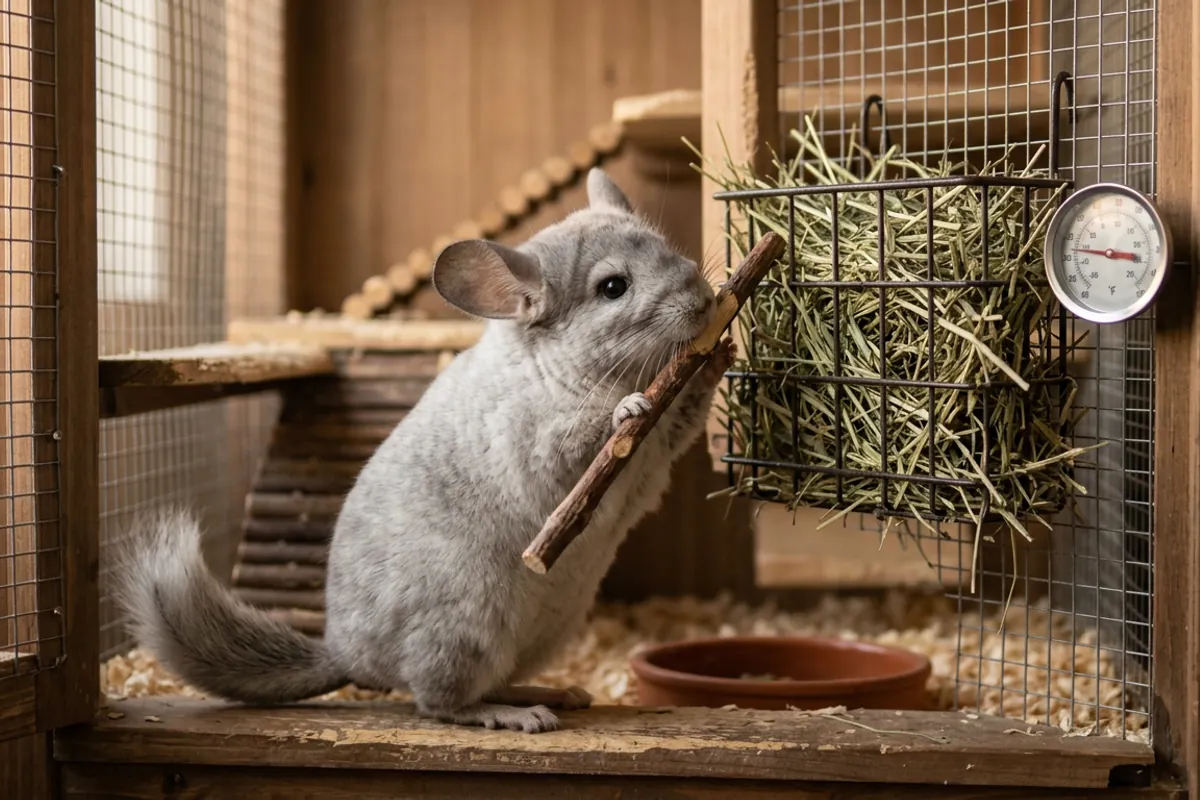
Hay is the whole diet, and the cage has to hold a lot of it. Chinchillas eat unlimited grass hay first, all day, every day, with plain pellets as a small measured supplement and treats kept to almost nothing. The fiber keeps the gut moving and keeps the ever-growing teeth worn down, so a hay rack or hay box that never runs empty is a core part of the setup, not an extra.
Oxbow Western Timothy Hay, 40 oz bag As an Amazon Associate I earn from qualifying purchases.
Buy the hay in bulk once you know your chinchilla eats it, because you will go through more than you expect.
Oxbow Western Timothy Hay, 9 lb box As an Amazon Associate I earn from qualifying purchases.
More on what belongs in the bowl, and what never does, in what can a chinchilla eat.
The thermometer is the fitting I will not shut up about, because heat is what nearly killed Pebble in her first summer and put us in an emergency vet at night. A chinchilla's coat evolved for cold mountain air, and it gives the animal almost no way to dump heat. The comfortable range is 60 to 70°F, which is 15 to 21°C. Above 75°F, or 24°C, you are into risky territory, and 80°F, 27°C, is a genuine emergency, faster when the air is humid. You cannot judge that by feel, so a thermometer with a humidity reading lives on or near the cage, and you act on what it says.
digital thermometer and humidity gauge with remote probes As an Amazon Associate I earn from qualifying purchases.
In hot weather a chilled solid stone gives the animal a cool surface to lie against, which helps but does not replace keeping the room itself cool.
Kaytee Chinchilla Chiller granite stone As an Amazon Associate I earn from qualifying purchases.
I put everything I know about this into chinchilla heat safety and a heat danger calculator, and if you read one linked page from here, make it that one. A perfect cage in an 82°F room is a death trap. That is the reason I am blunt about it.
Where "near me" is really pointing you
Chinchilla cages for sale near me is the practical search, and local is often the right call for a cage specifically, because shipping a large metal enclosure is expensive and a chance to inspect it in person is worth a lot. Local classifieds, exotic-pet groups, and rehoming networks are where the good used cages surface. Meeting the seller lets you check the bars, smell the wood, and see the actual condition instead of a flattering photo. For finding the animal locally without walking into trouble, I wrote how to find a chinchilla near me, and the same caution applies to the cage: a seller who is cagey about details is telling you something.
If you take nothing else from this, take this. Judge the animal and the cage separately even when they come as one listing. Insist on a tall metal-and-wood cage with solid ledges and a solid wheel, and treat plastic and wire flooring as disqualifying. Buy used to save money, but replace every porous part and disinfect the frame. And spend on the thermometer and the hay before you spend on anything that looks nice in a photo, because those two are what keep a chinchilla alive in the cage you worked so hard to get right. The setup is the commitment. Get it right once and your chinchilla gets the long, cool, well-fed life these animals can have when we stop cutting corners.