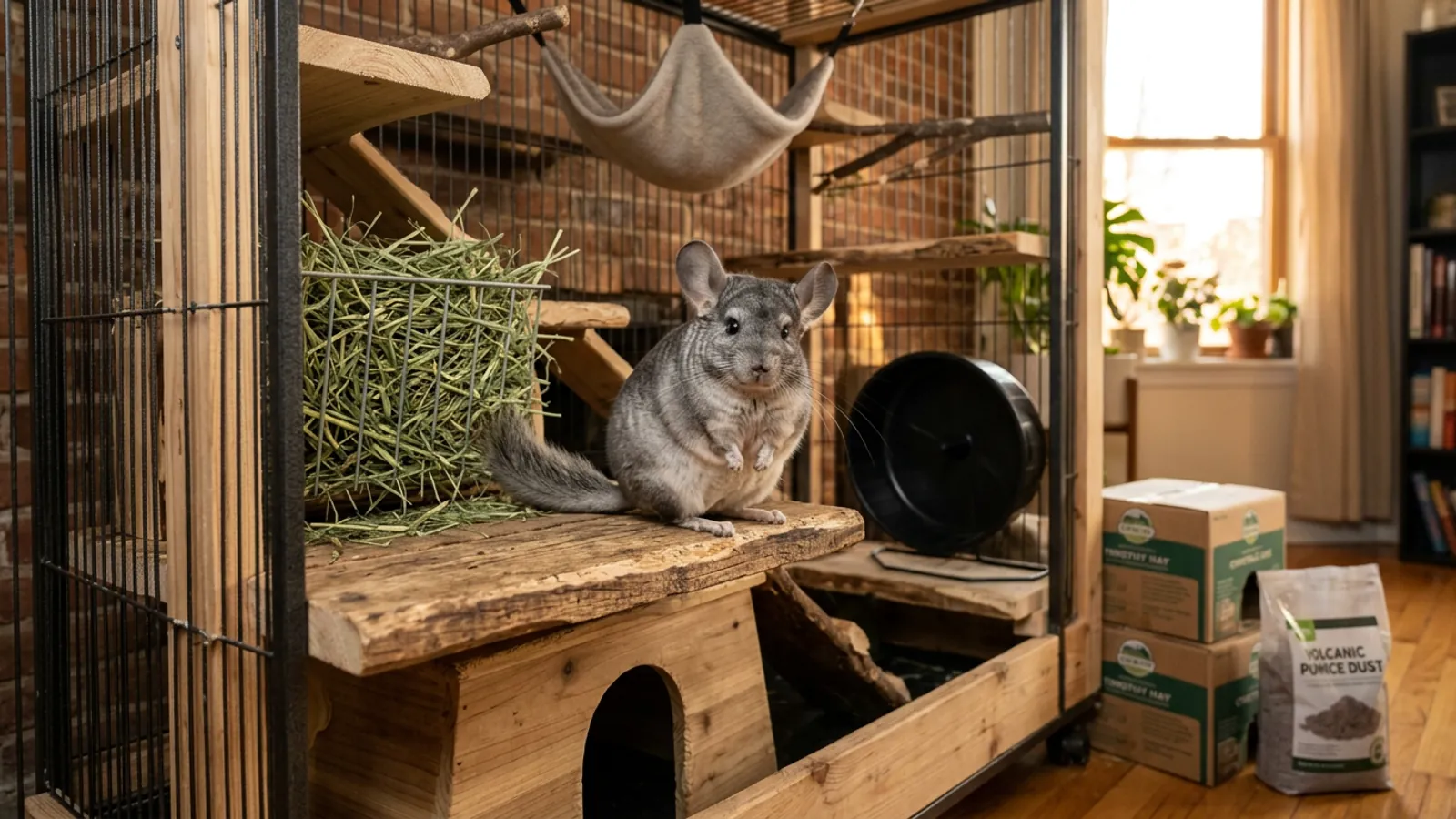
Every few months someone sends me a message that starts the same way: they were in a chain store buying cat litter, they walked past the small animal wall, and now they cannot stop thinking about a Petco chinchilla they saw sitting on a shelf under the lights. It is a fair place to start. Chinchillas are not on every corner, and for a lot of people a big chain is the only place they have ever seen one in person. What I want to do here is give you the plain arithmetic and the plain trade-offs, because the number on the tag is the least interesting number in this whole decision, and the animal you carry out of that store is going to live with you for well over a decade if you do the job properly.
I have kept chinchillas for about ten years. I am not a vet, and I have no relationship with any retailer. What follows is what I would tell a friend standing in that aisle with their phone out.
What a chinchilla at Petco costs
I am not going to publish one fixed figure and pretend it is gospel, because store pricing moves, it varies by region, and it varies by the animal. What I can tell you is the shape of it. In recent years the cost of a chinchilla at Petco has generally sat in the low hundreds of dollars in the United States, commonly somewhere around $150 to $200 for a standard gray. Mutation colors, when a store has them at all, tend to be marked higher. If someone asks me how much do chinchillas cost at Petco and wants a single answer to plan around, I tell them to budget $200 and to call the specific store, because that is the only source that is current.
That last part matters more than it sounds. Chinchillas are not stocked in every location. Whether a given store has one this week depends on the store, and staff can tell you in thirty seconds what they have, what age it is listed as, and what the chinchilla Petco price is today. A phone call beats any article, including this one.
There is a second route through the same doors. Petco stores host adoption partners and shelter events, and small animals including chinchillas do turn up through those. An adoption fee is usually well under a retail price tag, and you often get something a store cannot give you, which is a history: how the animal was surrendered, how it behaved in a foster home, whether it has seen a vet. If you are weighing chinchilla cost at Petco against other routes, ask the staff whether their adoption partner ever has chinchillas, and ask to be told when one comes in. Waiting a month is not a hardship. This animal may be with you at twenty.
For the wider picture of what different sources charge and why, I have written that up separately in what a chinchilla price tells you.
The number nobody rings up at the register
Here is where the chinchilla cost Petco question stops being about the chinchilla. The animal is the cheapest thing you will buy that month. The setup is the expensive part, and it is not optional, and it cannot be done in stages while the chinchilla waits.
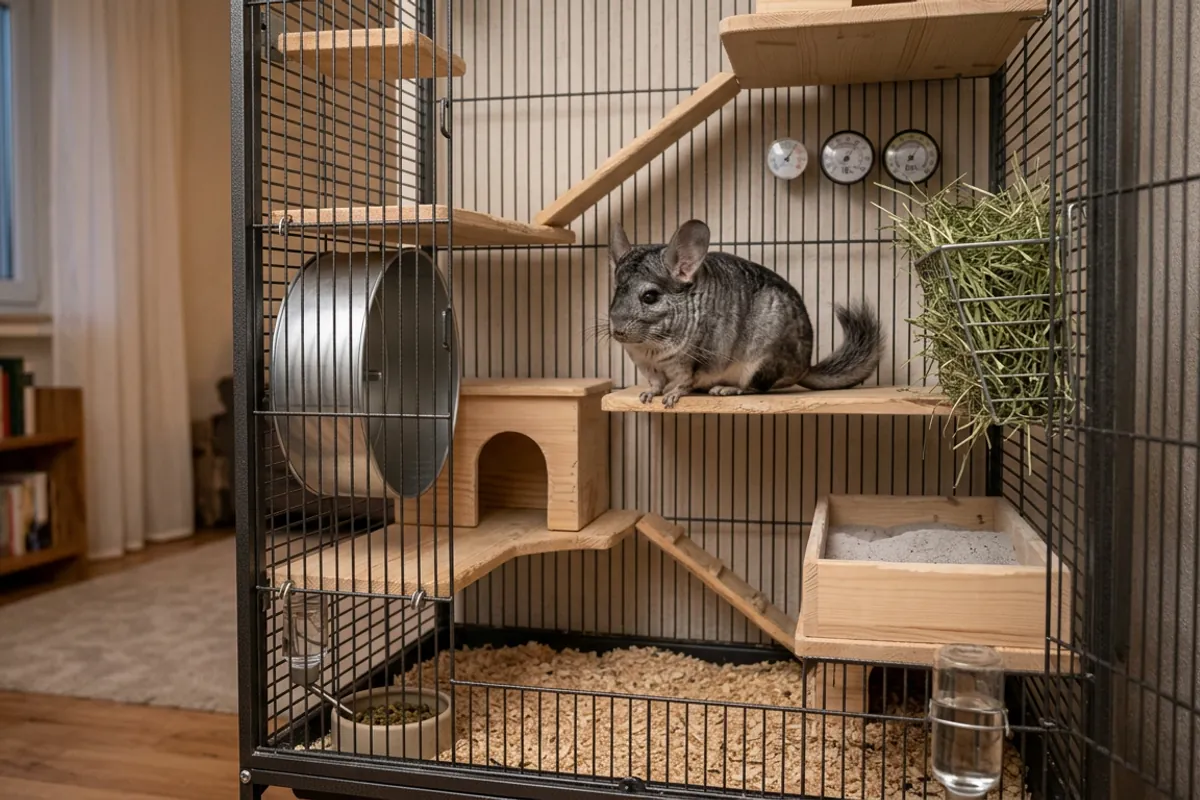
A proper cage is the biggest line item. You want tall, metal, with solid wooden ledges at staggered heights so there is real climbing and no long open drop. Bar spacing needs to be tight enough that a head cannot fit through, and every surface the animal stands on should be wood or metal, never plastic and never wire mesh floors that catch toes and cause sores. Expect to spend more on this than on the chinchilla itself, often two to three times more. Critter Nation double unit small animal cage As an Amazon Associate I earn from qualifying purchases. If you want the full reasoning on dimensions and layout before you spend, how to choose a chinchilla cage without buying the wrong one twice covers it properly.
Then the rest of the first shop:
- A wheel with a solid running surface, large enough that the back is not arched while running. Fourteen inches is the usual floor, and bigger is better. 15 inch Chin Spin solid surface chinchilla wheel As an Amazon Associate I earn from qualifying purchases.
- Dust and a bath house. Chinchillas never bathe in water, only in fine dust, and this is not a luxury item, it is how the coat stays dry and healthy. Lixit Blue Beauty chinchilla dust, 3 lb As an Amazon Associate I earn from qualifying purchases.
- Hay, and a lot of it. Unlimited grass hay is the whole foundation of the diet, so buy more than you think. Oxbow Western Timothy Hay, 40 oz bag As an Amazon Associate I earn from qualifying purchases.
- A thermometer and hygrometer for the room the cage sits in. digital thermometer and humidity gauge with remote probes As an Amazon Associate I earn from qualifying purchases.
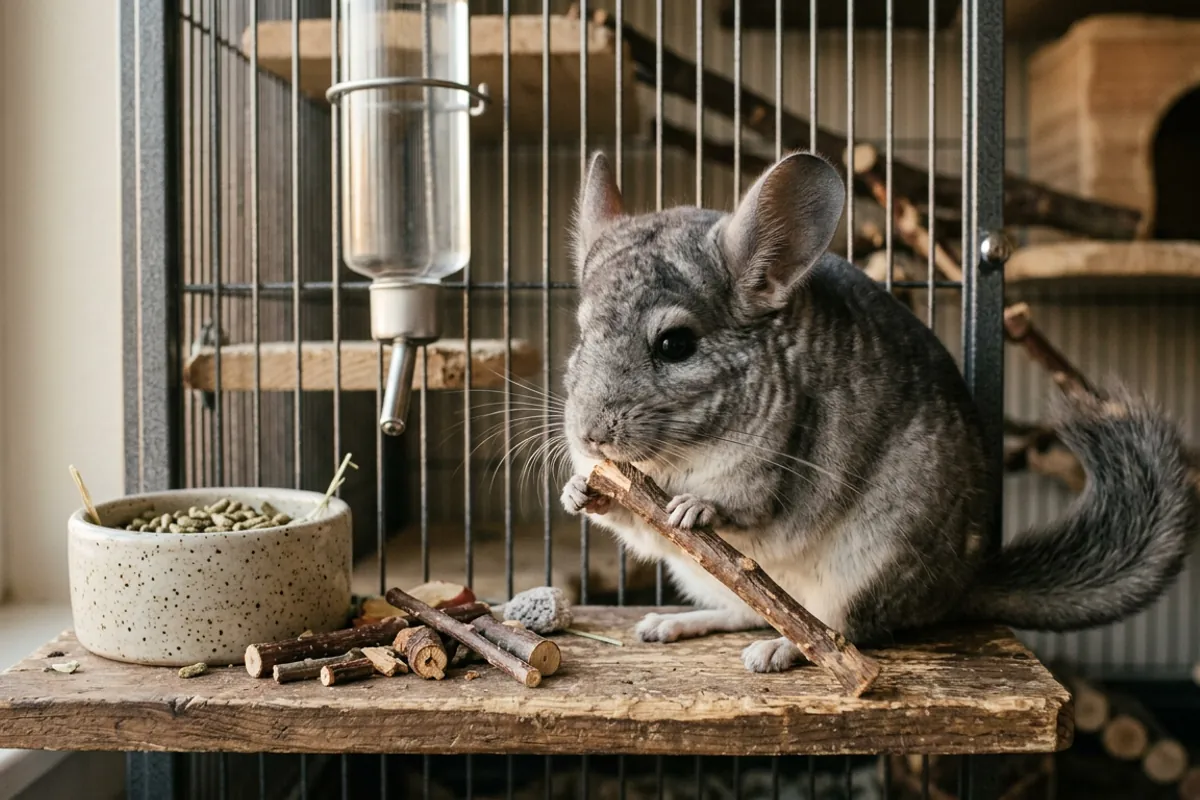
- Safe wood chews, replaced as they get destroyed, because they are supposed to get destroyed. emours apple wood chew sticks, 40 count As an Amazon Associate I earn from qualifying purchases.
Add a water bottle, a ceramic or metal food dish, a wooden hide, and plain pellets, and a realistic first shop in the US lands somewhere in the $400 to $700 range depending on how good the cage is. On top of that, open a vet fund before you need one. An exotics vet visit runs meaningfully more than a dog and cat appointment, and a dental or heat emergency runs into the hundreds. I keep a standing cushion for this and I have used it. The full breakdown lives in what a chinchilla really costs, from the price tag to the vet fund.
What a chain store can and cannot tell you about the animal
This is the part I care about most, and it is not a slight against store staff, many of whom are genuinely fond of the animals in their care.
A store generally cannot tell you who bred the chinchilla, what its parents were like, whether malocclusion runs in the line, or what it was fed before it arrived. Age is often approximate. Temperament has been shaped by weeks under bright light with foot traffic all day, which tells you very little about how the animal will settle in a quiet room. Genetic dental disease is the one that keeps me up at night, because it does not show at eight weeks and it shows brutally at three years. My Juniper came to me as a neglected rescue and I manage her teeth day to day. I would not wish that surprise on anyone who was not braced for it, and no purchase route can rule it out entirely, but a breeder who knows their lines can at least tell you what they have seen.
Sexing is the other one. Chinchillas are easy to sex wrongly if you are quick about it, and mixed pairs sold as same sex is a story I have heard more than once from chain store buyers and from private sellers alike. If you are getting two, ask staff to show you the sexing, and get an exotics vet to confirm at the first appointment. An accidental litter is not a happy accident. Pregnancy carries real risk for the female, and I have written plainly about that in what breeding a chinchilla asks of the animal.
Compare this honestly against the alternatives before you decide. A rescue gives you history and usually an adult animal whose teeth have already been through the risky years. A serious breeder gives you lineage and support. Both take longer to find. How to buy a chinchilla for sale without getting hurt or ripped off and how to find a chinchilla near me walk through vetting either one.
How to look at the animal before you say yes
Whatever the source, do not skip this. Ask to have the enclosure opened and take a few minutes.
Look at the eyes first. They should be clear, wide, and dry. Wetness or crust around one eye, in particular, can point at a tooth root pressing where it should not, and that is a serious finding, not a cosmetic one. Look at the front teeth: they should be orange to deep yellow, even, and meeting straight. Pale white incisors in a chinchilla are not a good sign. Chalky white or misaligned teeth, or a wet chin and matted chest fur from drooling, mean walk away and tell the staff, kindly, why.
Then the body. Fur should be dense and even, with no bald patches, no rough staring coat, and no fur chewed short over the flanks. Breathing should be quiet, with no clicking or open mouth effort. The rear end should be clean and dry. Feel, if you are allowed, for a spine and hips that are covered rather than sharp. Watch how the animal moves when it thinks nobody is looking: a healthy chinchilla is springy and alert, and one that sits hunched in a corner with its ears flat during the store's quieter hours deserves your concern rather than your rescue instinct, unless you are going in with eyes open and a vet appointment already booked.
Ask what it has been eating, and ask when it last had a dust bath. If the answers are vague, that is information too. Chinchilla teeth problems and spotting malocclusion covers what to watch for in far more detail, and it is worth reading before you go, not after.
What to leave on the shelf
Chain stores stock what sells, and a lot of what sells for chinchillas is wrong. Read every label yourself and do not assume that shelf placement equals suitability.
Leave any wire or mesh running wheel. Feet and toes get caught in them, and the injuries are exactly as bad as that sounds. Leave plastic wheels, plastic ledges, plastic hides, and plastic run balls: chinchillas chew everything, plastic goes through the gut and does not come out well, and exercise balls have poor ventilation, which is a heat problem in an animal that cannot shed heat.
Leave sand. Small animal sand is sold near the chinchilla section in a lot of stores and it is not the same product as chinchilla dust. Dust is a fine volcanic pumice powder that lifts oil out of a very dense coat. Sand is abrasive and can irritate eyes and skin. If the bag says sand, it is not for your chinchilla. I go through this properly in what bathing dust for chinchillas really is.
Leave the treat aisle almost entirely: yogurt drops, seed and honey sticks, dried fruit mixes, and anything with nuts. Chinchillas run on grass hay with a measured amount of plain pellets, and sugar and fat cause digestive trouble in an animal built for dry, coarse forage. A plain rose hip or a small piece of dried herb is a treat. A yogurt drop is not. See what can a chinchilla eat, and what to never feed it.
Leave the cages marketed for hamsters, rats, or "small pets" generally. Most of them are too short and too plastic. Also leave salt and mineral wheels, which are unnecessary alongside a good pellet, and any bedding that is cedar or scented pine.
What is worth buying in a general pet store: a heavy ceramic dish, a glass water bottle with a metal spout, safe untreated apple or willow wood, and hay if the bales are green, fragrant, and not dusty. Bulk hay is usually cheaper and fresher per pound than the small bagged kind. Oxbow Western Timothy Hay, 9 lb box As an Amazon Associate I earn from qualifying purchases.
Getting a Petco chinchilla home safely
Temperature is the first thing to settle, and I am not going to soften this. Chinchillas are comfortable at 60 to 70°F (15 to 21°C). Above 75°F (24°C) is risky. At 80°F (27°C) and up you are in emergency territory, and humid air makes it happen faster, because a chinchilla loses heat poorly through that coat and cannot pant its way out of trouble.
My Pebble came from a rehome out of an overheated attic, and her first summer brought a heatwave near miss and a night at the emergency vet. Everything I believe about heat, I believe because of that night. So: sort the room before the animal arrives, not after. Have the thermometer reading before you buy. If the car ride home is on a hot day, run the air conditioning, and never leave the carrier in a parked car for even a couple of minutes. A chilled stone in the cage is a useful supplement in warm weather, not a substitute for a cool room. Kaytee Chinchilla Chiller granite stone As an Amazon Associate I earn from qualifying purchases.
Signs of heat stress are drooling, red ears, lying flat and stretched out, labored breathing, and unresponsiveness, and that is a same day emergency call, not a wait and see. The warning signs are here, and if you want to check whether your room today is safe, the heat danger calculator will tell you.
For the first week, keep it boring: hay, water, pellets in the same brand the store used, dim quiet room, minimal handling. Skip the dust bath for the first two or three days while the gut settles, then offer it as normal. Book a well check with an exotics vet in the first couple of weeks, and quarantine for at least two weeks away from any chinchilla you already own.
Whether a Petco chinchilla is the right call for you
I am not going to tell you a chain store chinchilla cannot become a wonderful animal. Plenty have. The animal in that enclosure did not choose where it ended up and it is exactly as deserving as any other. If you are ready, if the setup is already standing in a cool room, and if the health check passes, buying one is a defensible decision.
What I will say is that the sticker price should be the last thing driving it. A chinchilla commonly lives 10 to 15 years, and 20 is not unheard of, so you are signing up for a decade and a half of hay, dust, chew replacement, summer vigilance, and an exotics vet on speed dial. Against that, the difference between an adoption fee and a store price is noise. If the store price is what makes the decision affordable, the ongoing costs are going to hurt later, and the animal pays for that.
So: call the store, ask what they have and what it costs today, ask about their adoption partner, and go look at the animal with the checklist above in your hand. Then go home without it and buy the cage first. If you want the unvarnished version of what living with these animals is like before you commit, chinchilla as pets, after ten years of keeping them is the one to read next, and chinchilla care has the day to day.