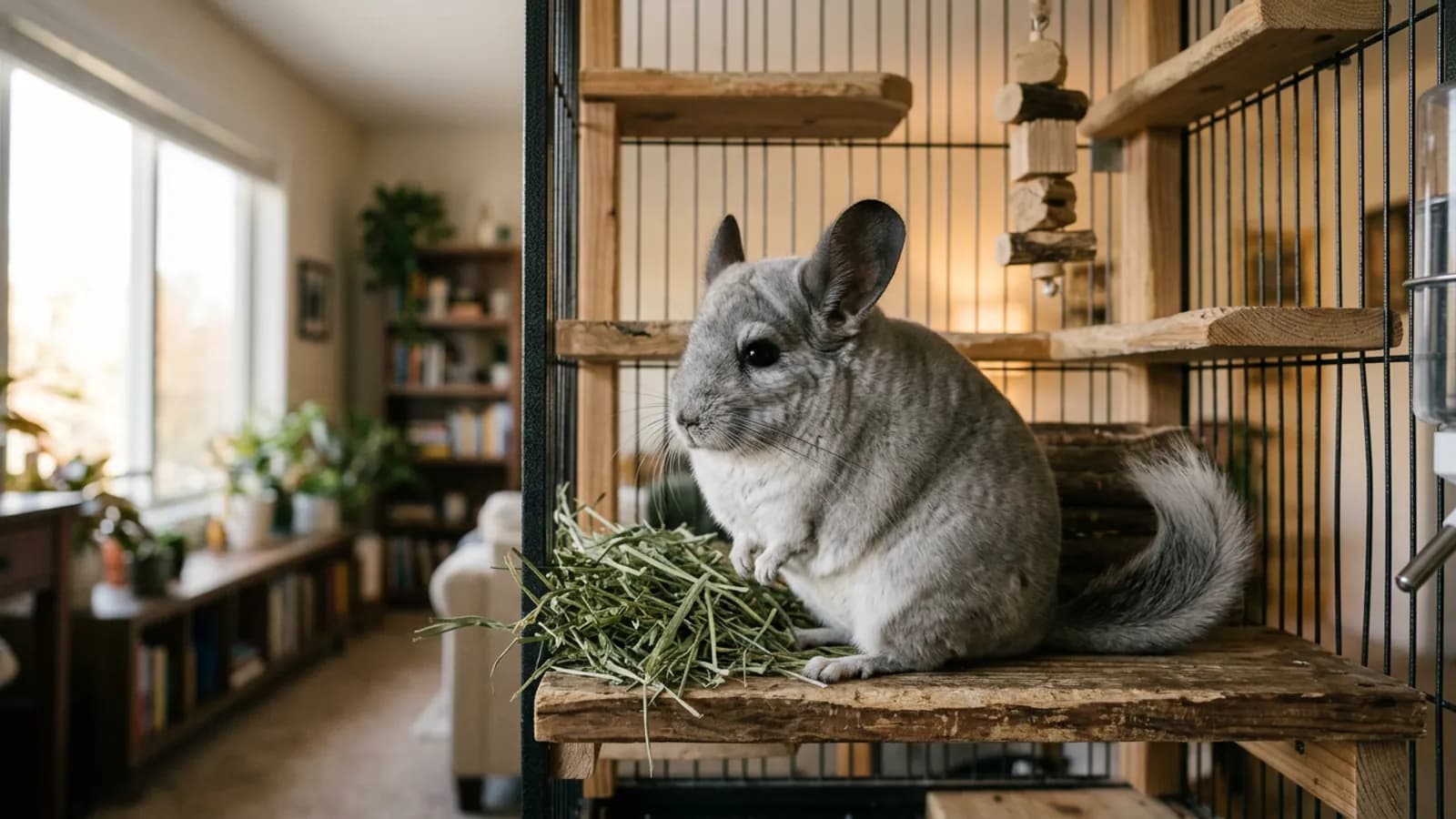
So you want to buy a pet chinchilla, and before you do, I want to hand you the thing I did not have when Pebble came home: an honest picture of what the purchase actually starts. A chinchilla is not a starter pet, not a pocket pet, and not a hamster with better fur. It is a delicate, long-lived, temperature-sensitive animal that can share your home for fifteen to twenty years if you get the care right, and that can die in an afternoon if you get the heat wrong. The price on the animal is the smallest decision in the whole affair. Everything after it costs more, matters more, and lasts longer. So let me walk you through what buying one really asks of you, from finding a healthy animal to what has to be waiting at home before you ever hand over money.
What you are actually signing up for
The single fact that reframes everything is the lifespan. A well-kept chinchilla commonly lives fifteen to twenty years, and some go longer. That is not a rabbit's few years or a hamster's two. When you buy a pet chinchilla you are agreeing to keep a cool, quiet, hay-fed room going for close to two decades, through your own moves, jobs, and changes of address. I say this first because it is the thing most people skip past on the way to "but they are so soft," and it is the thing that most often ends with an animal being rehomed at three years old.
If you want the full, unsentimental version of what daily life with one is like, I wrote it in chinchilla as pets, the honest version after ten years, and the arithmetic of the years is in how long chinchillas really live, and what changes the number. Read both before you fall in love with a face at a pet store. A chinchilla is a crepuscular animal, most active at dawn and dusk, so it is loudest and busiest when you are winding down for the night. It does not want to be cuddled on demand. It wants a tall cage, a cool room, unlimited hay, and time out to jump. If that trade sounds good to you, keep reading. If you wanted a lap pet, this is the kindest moment to find out it is not one.
Where to buy one, and where to walk away
There are four common places to get a chinchilla, and they are not equal. A good small breeder is usually the best of them: they know the animal's exact age, its parents, its temperament, and its health history, and a good one will ask you as many questions as you ask them. A rescue is the other place I point people toward, because grown chinchillas land in rescues constantly when someone underestimated exactly the commitment I just described. Both Pebble and Juniper came to me as rehomes, and I would do it that way again.
The two places I am wary of are large chain pet stores and anonymous online listings. Chain stores often cannot tell you the animal's real age or sex, sometimes mis-sex them outright, and frequently house them in conditions that are already too warm and too small. I broke down what one of those actually costs and what to inspect in what a Petco chinchilla really costs, and what to check before you buy. Online listings can be fine or can be a scam or a sick animal shipped in a shoebox, and I walk through spotting the difference in how to buy a chinchilla for sale without getting hurt or ripped off and in the broader guide, how to buy a chinchilla without regretting it later. If you are searching by location, how to find a chinchilla near me without bringing home trouble covers the vetting.
Two hard rules wherever you buy. First, never buy an animal that is being sold to breed unless you truly understand what that entails, and I mean truly, because breeding a chinchilla is hard on the female and not a beginner project. Second, do not let a "chinchilla and cage" bundle talk you into a bad cage just because it is included; I explain why in what a chinchilla and cage for sale listing is really selling you. The cage that comes free is almost always the one you will replace.
What the price actually is, and what it hides
The number on the tag is the part everyone fixates on and the part that matters least. Depending on where you are and the colour, a pet-quality chinchilla often runs somewhere in the low hundreds, and the fancier mutations climb from there. I dug into what that figure signals in what a chinchilla price actually tells you, and what it hides, and here is the short version: a higher price buys you a rarer coat, not a healthier animal or an easier one. A standard grey chinchilla is exactly as wonderful to keep as a black velvet or a sapphire, and it needs the identical care.
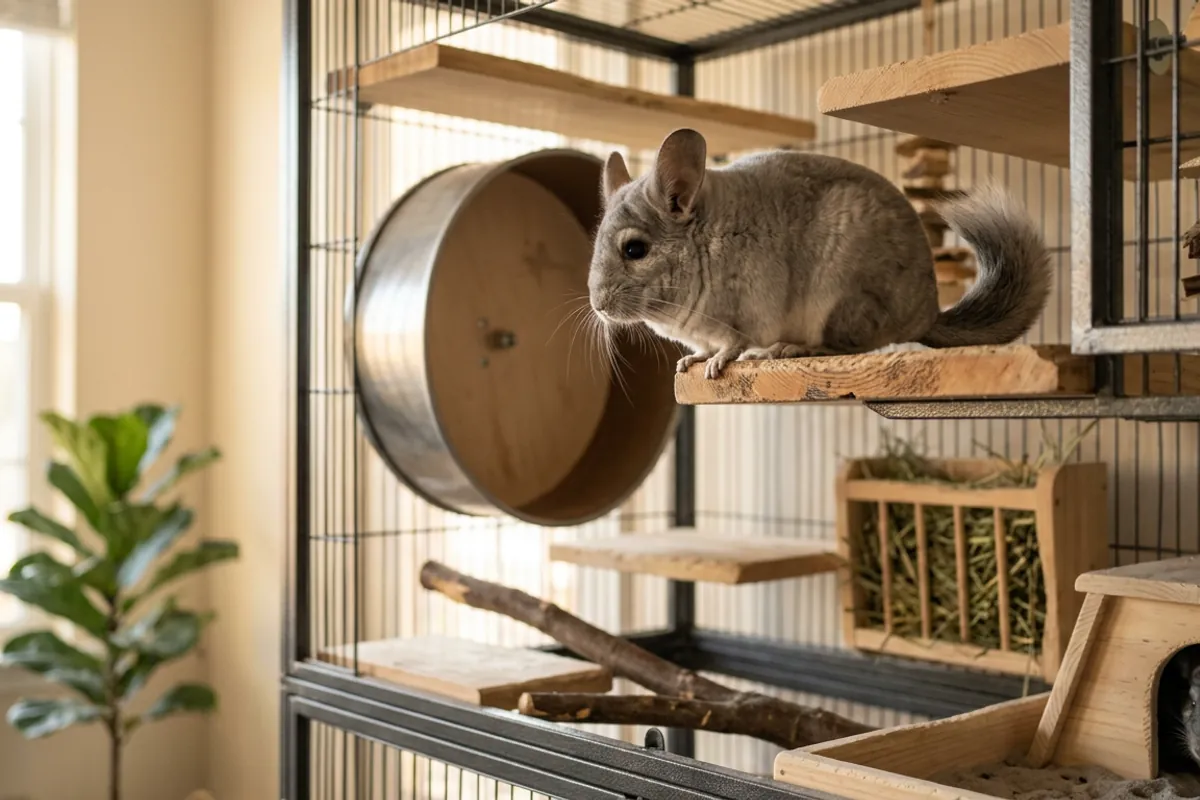
What the tag hides is the real cost, and that lives in two places. The first is setup, which you pay once and which dwarfs the animal: a proper cage, a wheel, dust and a dust house, hay, a water bottle, and chews. The second, and the one people forget entirely, is the vet fund. Chinchillas are exotics, so they need an exotics vet, those visits cost more than a cat's, and dental problems in particular can become a recurring bill for the animal's whole life. I keep a running tally of all of it in what a chinchilla really costs, from the price tag to the vet fund. Do not buy a pet chinchilla until you can comfortably cover an unexpected exotics vet visit, because "I will deal with it if it happens" is how animals go untreated.
Set the home up before the animal, not after
The cage should be built, placed, and stocked before the chinchilla arrives, not the same afternoon in a panic. Chinchillas need vertical space to jump, and the cage has to be metal and wood, never plastic, because a bored chinchilla chews everything and swallowed plastic is a genuine danger. I lay out the reasoning in why a chinchilla cage has to be metal, and how to fit it out, and the full buying guide is how to pick the best chinchilla cage without buying the wrong one twice. A tall metal-and-wood cage with solid wooden ledges is the foundation everything else sits on. Critter Nation double unit small animal cage As an Amazon Associate I earn from qualifying purchases.
Inside it, a few things earn their place and a lot of tat does not. A solid-surface exercise wheel is worth buying properly, because a wire wheel can catch a foot or a tail and break it. 15 inch Chin Spin solid surface chinchilla wheel As an Amazon Associate I earn from qualifying purchases. You will want a dust bath and dust, since this is how a chinchilla keeps its coat clean, and I will come back to why water is never part of that. A dust house keeps the mess contained. Lixit Blue Beauty chinchilla dust, 3 lb As an Amazon Associate I earn from qualifying purchases. For the rest, cage accessories for chinchillas, and which ones actually earn their place sorts the useful from the landfill, and how to build a chinchilla cage setup that keeps the animal healthy shows how it all goes together. Get the home right once and you save yourself the money and stress of buying the wrong thing twice.
Heat is the danger you cannot negotiate with
This is the section I will not soften, because it is the one that nearly cost me Pebble. She came to me out of an overheated attic, and her first summer brought a heatwave that put us in the emergency vet overnight. Chinchillas evolved in a cold, high mountain climate. They carry the densest fur of almost any land mammal, and they cannot shed heat the way we do. Warmth that feels merely pleasant to you is dangerous to them.
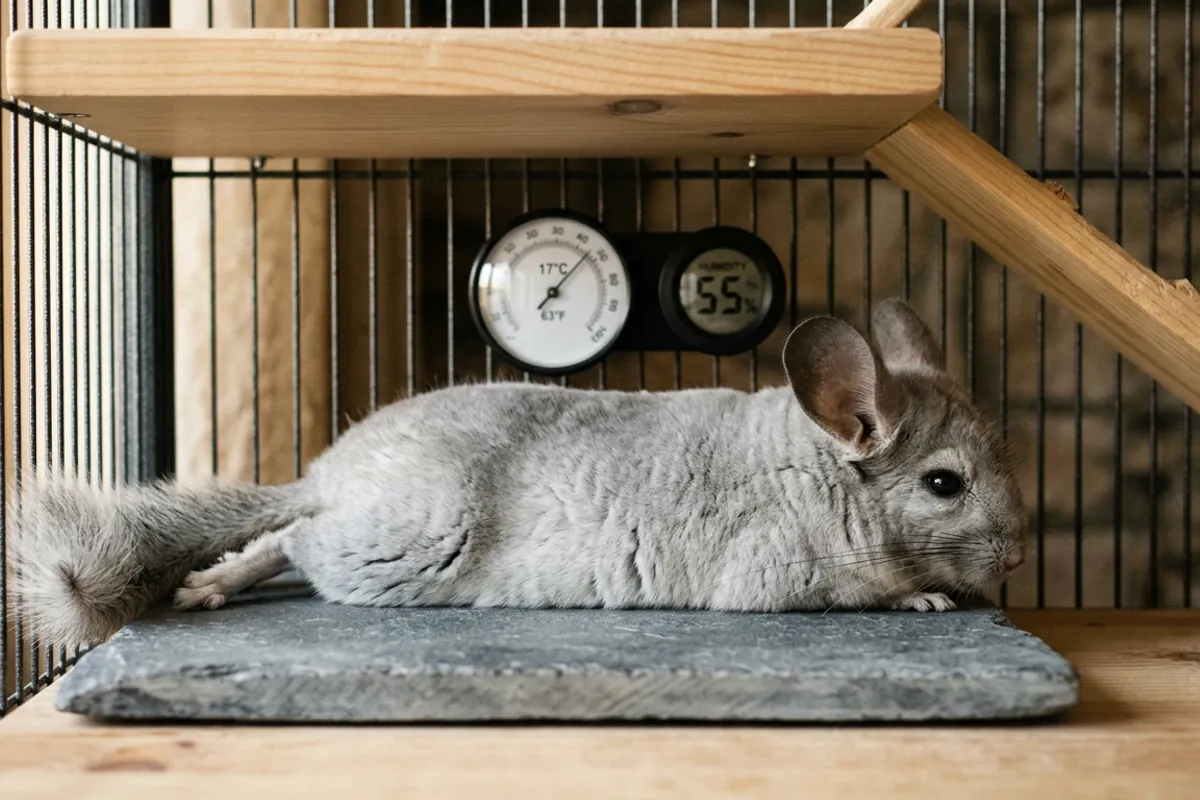
Keep the numbers exact, because guessing here kills animals. The comfortable range is 60 to 70°F, which is 15 to 21°C. Above 75°F, or 24°C, you are into risky territory, and 80°F, or 27°C, and up is an emergency, and it arrives faster in humid air because humidity strips away what little cooling they can manage. Before you buy a pet chinchilla, be honest about whether you can hold a room in that range through the worst week of your summer. If you cannot, you need air conditioning, and that is a real cost to plan for, not an optional extra.
Put a thermometer that also reads humidity on or near the cage and actually look at it, because a room can be warmer than the rest of the house without you noticing. digital thermometer and humidity gauge with remote probes As an Amazon Associate I earn from qualifying purchases. A chilled stone gives the animal somewhere to lie against on a warm day, and it is a genuine help, though it is not a substitute for keeping the room cool. Kaytee Chinchilla Chiller granite stone As an Amazon Associate I earn from qualifying purchases. Learn the early warning signs before you need them, because a chinchilla in heat trouble goes downhill fast: I list them in chinchilla heat stroke, warning signs every owner should know, and the whole topic lives at chinchilla heat safety with the exact figures in chinchilla temperature is the number that keeps yours alive. There is also a heat danger calculator that combines temperature and humidity for you. If your chinchilla is ever hot, floppy, or breathing with its mouth open, that is not a wait-and-see moment, that is an exotics vet, now.
Diet: hay first, and it is not optional
Juniper is why I am uncompromising about this. She came to me a neglected rescue with dental disease, and I manage it every single day, so I have watched up close what happens when teeth do not get worn down. A chinchilla's teeth grow for its whole life, and the only thing that keeps them ground to the right length is chewing coarse grass hay. So hay is not a side dish. Unlimited grass hay, timothy or a similar grass hay, is the entire base of the diet and should be in front of the animal at all times. Oxbow Western Timothy Hay, 40 oz bag As an Amazon Associate I earn from qualifying purchases. If you go through it fast, and you will, buying in bulk saves money. Oxbow Western Timothy Hay, 9 lb box As an Amazon Associate I earn from qualifying purchases.
Pellets are a measured supplement on top of the hay, not the main meal, and plain chinchilla pellets are what you want, not the colourful mixes with seeds and dried fruit that let the animal pick out junk and leave the good part. Fresh water in a bottle, always. Treats are tiny and rare, and a lot of what gets sold as chinchilla treats is genuinely unsafe, so read chinchilla treats, the honest version of what is safe and what can a chinchilla eat, and what should you never feed it before you hand over anything sweet. Chews are dental care, not decoration, so keep a variety of safe wood in the cage. emours apple wood chew sticks, 40 count As an Amazon Associate I earn from qualifying purchases. The full picture is in chinchilla diet, food, and hay, and why teeth drive all of it is in chinchilla teeth and health. One more thing that surprises new owners: a chinchilla never bathes in water. It cleans its dense coat by rolling in fine volcanic pumice dust, and a wet coat can actually make it sick, which I explain in the chinchilla bath is dust, not water.
What to check the day you meet one
When you go to see the animal, slow down and look before you commit. A healthy chinchilla is alert and curious, moves easily, and has a clean, dry face and rear. Its coat should be dense and even, its eyes bright and clear with no wetness or crust, and its nose dry. A wet chin or a soaked patch of fur is a warning sign, not a quirk, and I cover what each kind means in chinchilla wet, a soaked coat, a drooling chin, and what each one means. Wetness around the mouth in particular can point to the dental trouble I fight with Juniper, so take it seriously.
Watch how it breathes, which should be quiet and even, and listen to the sounds it makes, because chinchillas are vocal and the noises mean things, laid out in chinchilla sounds, and what your chinchilla is actually telling you. Ask the seller the animal's age and sex, whether it has been housed alone or in a group, and what it has been eating, and be wary of anyone who cannot answer. Ask to see where it has been living. A cramped, warm, or filthy setup tells you about the animal's start in life even when the animal itself looks fine on the day. If something feels off, it is completely acceptable to walk away. A living thing you will keep for close to twenty years is worth a second trip.
One chinchilla or two, and the decisions before you pay
Chinchillas are social, and many do best with a companion of the same sex, but two is not simply twice one. It means two of every resource, careful and slow introductions, and the absolute rule that a male and female together will breed, which brings you back to the burden on the female I flagged earlier. If you are not fully committed to preventing that, do not put opposite sexes together, full stop. Starting with a bonded pair from a breeder or rescue sidesteps the introduction problem entirely, and it is what I would suggest for a first-time keeper who wants two.
The colour, by the way, changes nothing about the care. A white, a black and white, a brown, or a plain standard grey all eat the same hay, need the same cool room, and live the same long life. Do not let a rare-mutation price tag convince you that the fancier animal is somehow the better pet, because the standard grey in the next cage is exactly as rewarding to keep. Buy the healthy, well-started animal from the seller who cared, get the cool room and the hay and the metal cage ready first, and set aside the vet money before you fall for a face. Do that, and the day you finally buy a pet chinchilla becomes the easy part of a very long, very good stretch of years.