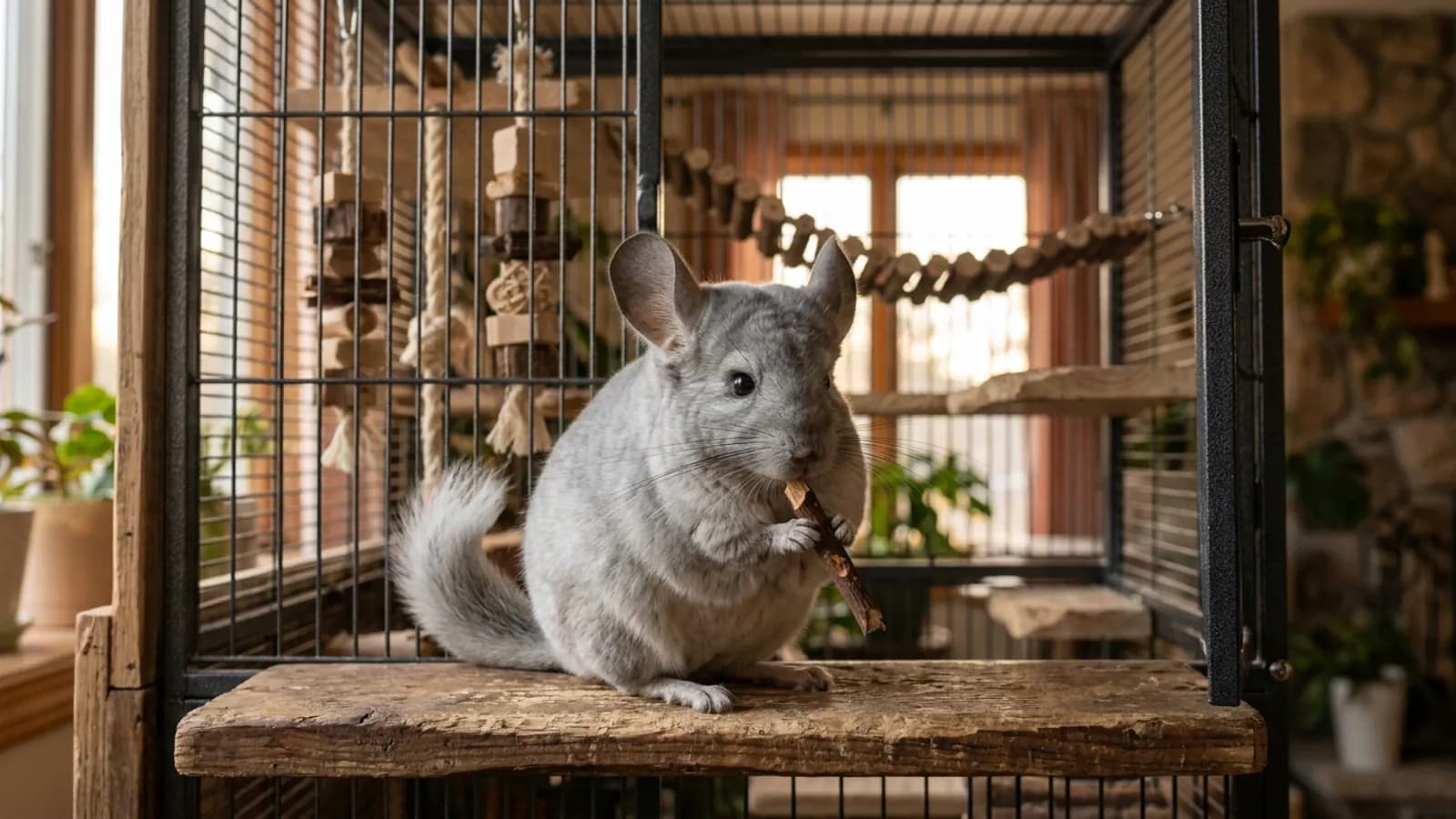
Most people shopping for chinchilla toys are really shopping for decoration. They want something bright to hang in the cage so it looks less bare, and they judge the toy by how it looks to them across the room. I understand the pull, but it has the priorities upside down. For a chinchilla, the right toys are dental equipment and a cure for boredom first, and a nice-looking cage a very distant third. Juniper, one of my two girls, came to me as a neglected rescue with dental disease I still manage every day, and she is the reason I will not soften this: a chinchilla with nothing safe to gnaw is a chinchilla whose teeth and mind both suffer. After about ten years of keeping these animals, I have thrown out more useless and outright dangerous toys than I care to count, so this is the honest version of what actually works and what to leave on the shelf.
What a chinchilla toy is actually for
A chinchilla's teeth never stop growing. The front teeth alone push out something like 2 to 3 inches a year, and the cheek teeth grow right along with them, which is why constant chewing is not a hobby for these animals, it is maintenance. In the wild they wear their teeth down on coarse plants and bark all day long. In a cage, that job falls to you, and the two things that do it are unlimited grass hay and a steady supply of things they are allowed to destroy. Toys are the second half of that pairing. Good chinchilla chew toys are not enrichment in the fluffy sense, they are how you keep the teeth from overgrowing into the kind of malocclusion that Juniper lives with, and that condition is painful, expensive, and often permanent.
The other half of the job is the mind. Chinchillas are athletic, curious, and bored easily, and a bored chinchilla invents its own entertainment: chewing the cage bars until the enamel of its teeth shows wear, pulling out its own fur in patches, pacing the same corner for hours. Toys give all that energy somewhere honest to go. So when I judge whether a toy is any good, I am really asking two plain questions. Does it give the teeth real work, and does it give the animal something to do. Everything else is packaging, and a lot of what gets sold is only packaging.
Wood is the backbone of good chinchilla toys
If you buy only one category, buy wood. Chinchilla wood toys are the workhorses of the cage: loose sticks, gnawing blocks, hanging knots, and skewered kabobs that they can chew down to shavings over days or weeks. The catch is that not all wood is safe, and the pretty dyed stuff filling a lot of pet-store bins is the worst offender in the shop.
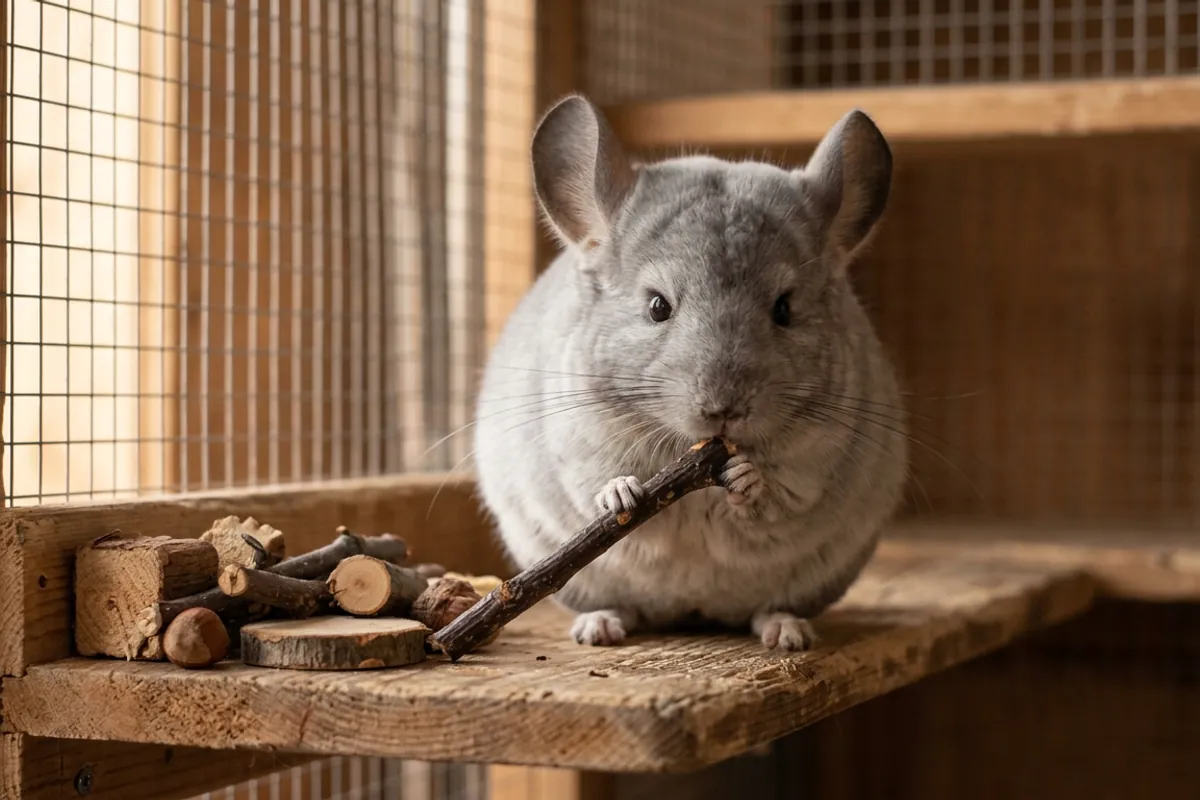
Safe woods that I use without hesitation are apple, pear, willow, hazelnut, and aspen, along with kiln-dried untreated pine. Variety matters more than people expect, because a chinchilla that has four different textures and hardnesses to work through stays interested far longer than one staring at a single block. An apple wood chew variety pack is about the easiest way to keep that rotation stocked without hunting down single sticks one at a time. emours apple wood chew sticks, 40 count As an Amazon Associate I earn from qualifying purchases. The woods to keep out of the cage are the aromatic and the toxic ones. Cedar and fresh green pine give off oils that are hard on a chinchilla's airways, and stone-fruit woods like cherry, plum, peach, and apricot carry compounds that release cyanide, so those are a firm no. Anything painted, varnished, glued, or pressure-treated is out as well, and that includes the dye on colorful toys. If a wood toy is a rainbow, assume the color is the problem until a seller can tell you exactly what the dye is, and most of them cannot.
One honest note on buying. The best chinchilla toys are rarely the flashiest listings, and the good chinchilla toys are almost never the most colorful ones. Whether you are browsing chinchilla toys on Amazon or a specialty rodent shop, read the material description and skip the photo. "Natural wood" with no species named is a guess, and "colorful, fun assortment" is a warning label in disguise.
Climbing, hanging, and the vertical cage
Chinchillas are built to go up. In their native rocky home they leap and scramble across ledges and boulders, and a good cage lets them do the same thing indoors. That is exactly why chinchilla climbing toys and chinchilla hanging toys matter as much as anything sitting on the cage floor: they turn a plain box into a vertical playground. Wooden ledges set at staggered heights, wooden bridges spanning gaps, and hanging wood toys clipped to the bars give a chinchilla reasons to move all evening instead of sitting still.
This only works inside the right cage. A chinchilla cage has to be tall, built from metal bars and wooden ledges, with no reachable plastic anywhere, because plastic gets chewed off and swallowed and can block a gut with no warning. Critter Nation double unit small animal cage As an Amazon Associate I earn from qualifying purchases. Inside it, I like a deliberate mix of fixed ledges and things that swing, because a moving toy holds attention that a static one loses. Arrange the ledges so the drops between them are short, since an old or heavy chinchilla can misjudge a big jump. Lava ledges are a useful middle option here, part perch and part gnaw surface, though they wear teeth more gently than hard wood does, so treat them as a supplement rather than the main chew. If you want the full rundown on fitting out the space around the toys, I go deep on it in the cage accessories guide.
The wheel is movement, not decoration
A wheel is the one toy I will call close to non-negotiable for any chinchilla that does not get long daily runs outside the cage. But the type matters enormously, and getting it wrong causes real, bloody injuries, not minor ones. It has to have a solid, continuous running surface with no gaps. 15 inch Chin Spin solid surface chinchilla wheel As an Amazon Associate I earn from qualifying purchases. Wire-rung and mesh wheels catch feet and tails and cause broken legs and degloved tails, and the little plastic saucer wheels are both too small and chewable at the same time. A chinchilla wheel also has to be big, at least around 15 inches across, so the spine is not forced into a permanent curve every time the animal runs. That posture damage is subtle and cumulative, which is why undersized wheels do harm even when nothing dramatic happens on any single night.
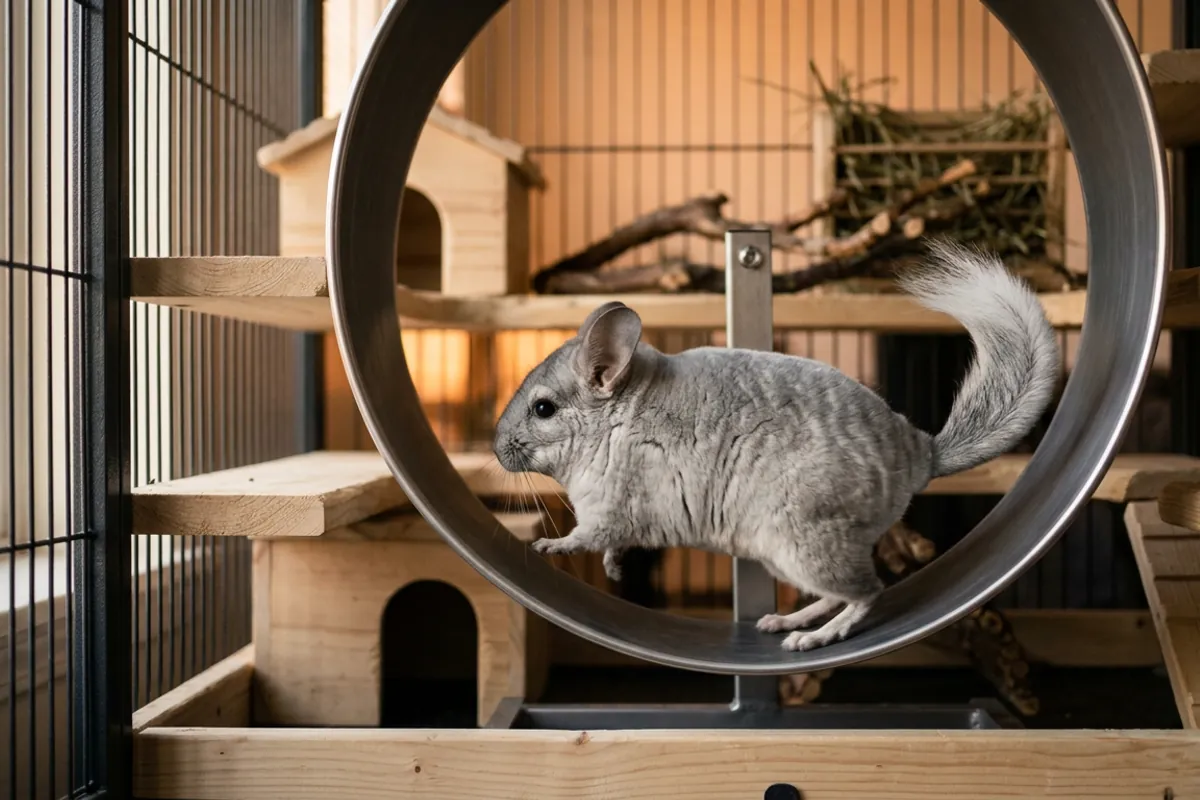
Size and surface are the entire decision. A quiet metal wheel on a stable stand, with a solid track and enough diameter, earns its space every single night an animal uses it. Anything smaller or made of wire is not a bargain no matter how cheap it looks, it is a vet bill sitting in the cage waiting for a bad step. I say more about safe running, spacing, and stands in the piece on a chinchilla on a wheel.
Cheap and homemade chinchilla toys that are actually safe
You do not have to spend much to keep a cage interesting. Some of the best value in there is chinchilla diy toys made from things you already own or can buy cheaply in bulk. Homemade chinchilla toys also hand you full control over exactly what goes into the cage, which matters a great deal when so much store stock is dyed, glued, or vaguely labeled.
Good diy toys for chinchillas start with the same safe woods above: untreated apple or pear sticks strung on stainless wire or unwaxed hemp, plain pine blocks drilled and stacked into a tower, and loofah or seagrass pieces they can shred to bits. Plain cardboard, like a bare toilet-roll tube, works as a cheap shred-and-toss toy as long as there is no tape, ink, or glue on it, and you pull it out once it is chewed apart rather than let it be eaten in quantity. A handful of hay packed into a wooden hay ball or stuffed inside a plain paper bag turns a meal into foraging, and unlimited grass hay is the one thing a chinchilla can genuinely never have too much of, so a well-stocked hay supply doubles as toy filling. Oxbow Western Timothy Hay, 40 oz bag As an Amazon Associate I earn from qualifying purchases.
Where these chinchilla toys diy projects go wrong is soft materials. Skip cotton rope, fabric, felt, and yarn entirely, because chinchillas chew them, swallow the loose fibers, and those fibers can twist and block the gut. Skip anything scented, oiled, or treated. If you are not certain a material is safe, leave it out, because cheap chinchilla toys are only a saving when they do not land you in the exotics vet's waiting room with an emergency.
The toys I would never put in a cage
Some things get sold for chinchillas that I will name plainly, because a friendly review that hides the danger does more harm than no review at all. Plastic toys and plastic hideouts sit at the top of the list: they get gnawed apart, and swallowed plastic can cause a blockage that turns fatal fast. Wire wheels and wire-floor accessories come next, for the leg and tail injuries I described above, and they show up constantly in cheap starter kits.
A chinchilla cuddly toy is the one that genuinely surprises people. A plush toy in the cage feels kind, and the marketing plays on that, but chinchillas do not snuggle soft toys, they chew them, and a mouthful of fabric and polyester stuffing is a real ingestion risk with no upside. On top of that, a dense plush holds heat against an animal that is already working hard to shed it. If you love the look of a plush chinchilla, keep it on a shelf as your own soft toy chinchilla, not in the cage where it can hurt the real one. The same verdict applies to painted wood, dyed loofah, anything cedar, and the scented "small pet" toys really aimed at hamsters. Cute is not a safety rating, and neither is a chinchilla printed on the box.
Rotating, inspecting, and knowing when to toss a toy
Even good toys go stale. Chinchillas lose interest in a toy they see in the same spot every day, so I keep a small bin of spares and swap two or three items every week or two. The ones I pull out come back a fortnight later feeling brand new, and the animal works them over like they are a fresh purchase. Rotation is the cheapest enrichment there is, and it costs nothing but the habit of doing it.
Inspection is the other half of keeping toys safe. Once a week, while I am cleaning the cage, I check every toy for sharp splinters, exposed metal clips or skewers, and pieces small enough to be swallowed whole. A chew that has been gnawed down to a hard little nub with a bare metal spike poking out of it is finished, and it goes straight in the bin, not back on the bars. I also keep toys clear of the warmest part of the room and never let a bulky one block airflow, because chinchillas already fight constantly to stay cool. They are comfortable at 60 to 70°F (15 to 21°C), above 75°F (24°C) gets risky, and 80°F (27°C) is an emergency that arrives faster in humid air, so heat management wins over any toy every time, as I cover in the chinchilla heat safety guide. Toys that are chosen well, checked often, and rotated regularly are one of the quiet things that keep a chinchilla healthy across the fifteen or more years they can live. Get them right and you are doing two jobs at once, keeping the teeth worn down and the mind busy, which is the whole point.