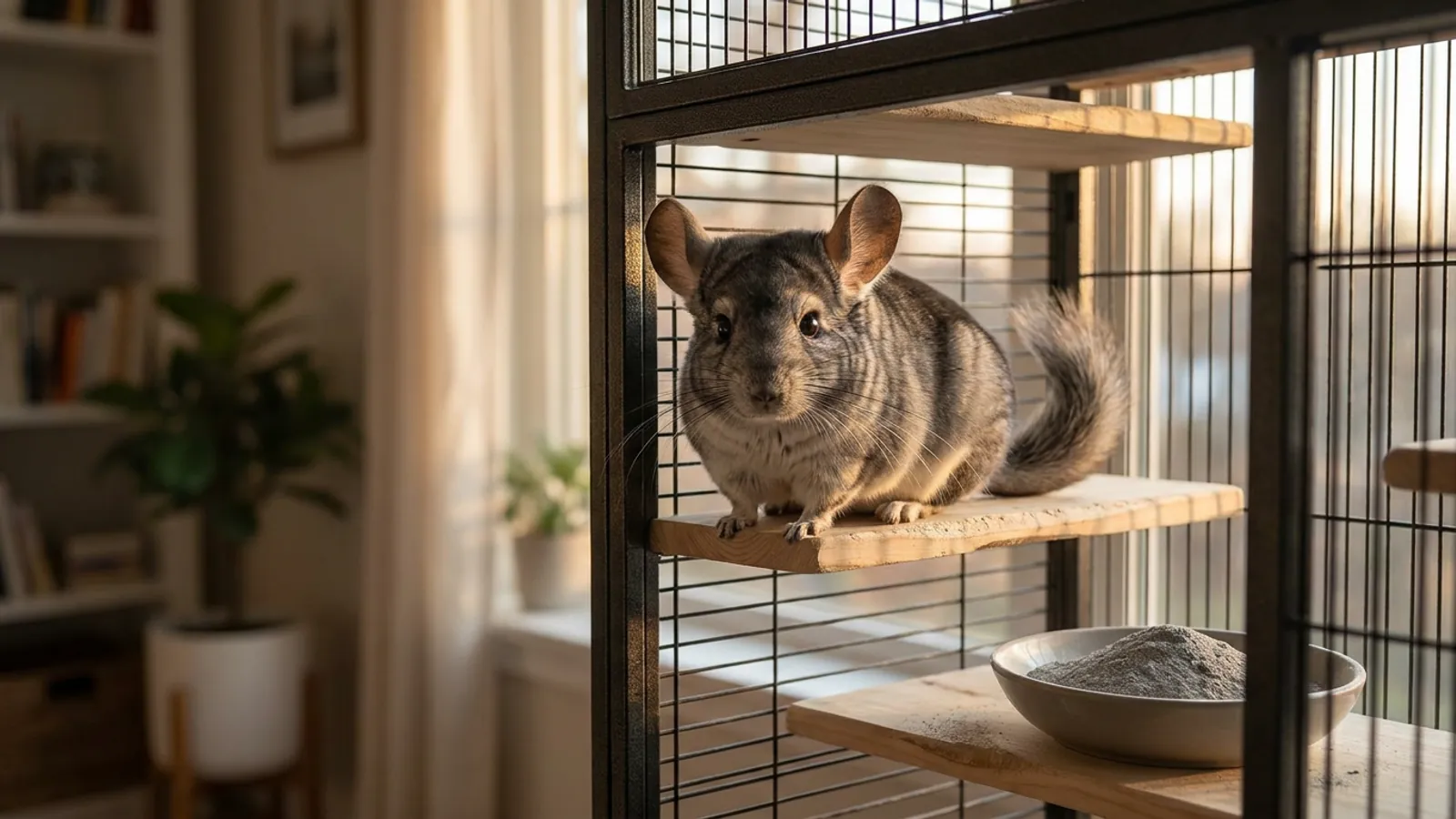
When you type "chinchilla for sale" into a search bar, you get a flood: breeder listings, rescue rehomes, a pet store two towns over, and a pile of results that are not even chinchillas. I have kept these animals for about ten years, and the single most useful thing I can tell you is that the search is the easy part. Where the animal comes from, what shape it is in when you get it, and whether your home is ready for it matter far more than the price on the listing. This is a ten to twenty year commitment to a prey animal that overheats and dies faster than almost any pet you have owned. So let me walk you through what I look at when a chinchilla is on offer, and what I walk away from.
Where a chinchilla for sale really comes from
There are three common sources, and they are not equal.
A responsible breeder is usually the best of them. A good one keeps few animals, knows every one by name, can tell you the parents' temperament and health, and will happily let you visit and ask questions. They will ask you questions too, which is a good sign, not a nuisance. They will not sell you a kit that is too young, and they will take the animal back if things fall apart. When you see a chinchilla for sale from someone like this, the price reflects real care, not a markup.
Rescues and rehomes are where I found both of mine. Pebble came out of an overheated attic through a rehome, and Juniper was a neglected rescue whose teeth I still manage every day. These animals often come cheap or with an adoption fee, sometimes with a cage included, and the people rehoming them usually tell you the truth about why. The tradeoff is that you may inherit a problem, so you go in with your eyes open. I would rather know the history than not.
Then there are the big pet stores. People search "chinchilla for sale petsmart" constantly, and yes, chains sometimes carry them. I am blunt about this: a chain store rarely knows the individual animal, the staff turn over, and the chinchilla may have sat under bright warm lights near other species for weeks. That does not make every store animal doomed, and that is not true. But you get almost no history, and you often get sold the wrong equipment at the register on the way out. If a store chinchilla is the one that needs a home, take it, but do your own homework on everything else.
Searching "chinchilla for sale nearby" is sensible for one concrete reason: transport is stressful, and heat in a car is dangerous. Closer is genuinely better. Just do not let "closer" override "healthier." A three hour drive to a breeder who knows the animal beats a ten minute drive to a listing with no answers.
The giant chinchilla rabbit is not a chinchilla
I have to clear this up because the search results tangle it constantly. If you look for a chinchilla and see "giant chinchilla rabbit for sale," that is a rabbit. It is a large breed of domestic rabbit named for its coat color, which happens to resemble a chinchilla's silver-gray fur. It is not a chinchilla, not a rodent in the same family, and its care is completely different.
This matters beyond trivia. A rabbit and a chinchilla do not eat the same way past the shared idea of unlimited hay, they do not tolerate the same temperatures, and they should never share a cage or a dust bath. If you want a chinchilla, make sure the listing is for the small, dense-furred, big-eared rodent that lives ten to twenty years and bathes in dust. When the word "rabbit" appears anywhere in the ad, you are in the wrong aisle. It is a mix-up, but buying the wrong animal because two coats look alike is a bad way to start.
Male or female, and does it matter
People search hard for "female chinchilla for sale" and just as hard for "chinchilla for sale male," usually because they have read that one sex is calmer or friendlier. Individual personality swamps sex. I have known bold females and shy males and the reverse. A specific chinchilla's temperament, shaped by handling and history, tells you far more than whether it is male or female.
There is one real, physical thing to know about males. Male chinchillas can develop a condition where fur wraps around the penis under the sheath, called a fur ring, and it can cause serious problems if it is not found and cleared. It is manageable and part of routine male care once you know to check, but you do need to know. Beyond that, a chinchilla female for sale and a male for sale are cared for the same way day to day: same hay, same dust, same temperatures.
Sex only becomes urgent if you are getting more than one, because an unplanned pair breeds fast. If you want two, either get a same-sex pair from someone who has correctly sexed them (sexing young kits is easy to get wrong) or accept that you will need to keep them apart. Do not take a seller's word on sex for a pairing decision without a second confirmation. A "female chinchilla for sale" that turns out to be male next to your female is how people end up with kits they did not plan for.
Colors, and what the price tag is really for
Coat color drives a lot of searches. A "white chinchilla for sale" or a "black chinchilla for sale" usually costs more than the standard silver-gray, because those colors are less common and breeders price accordingly. The black ones are typically what breeders call black velvet, and the white ones come in a few patterns. There are also beiges, violets, and mixes.
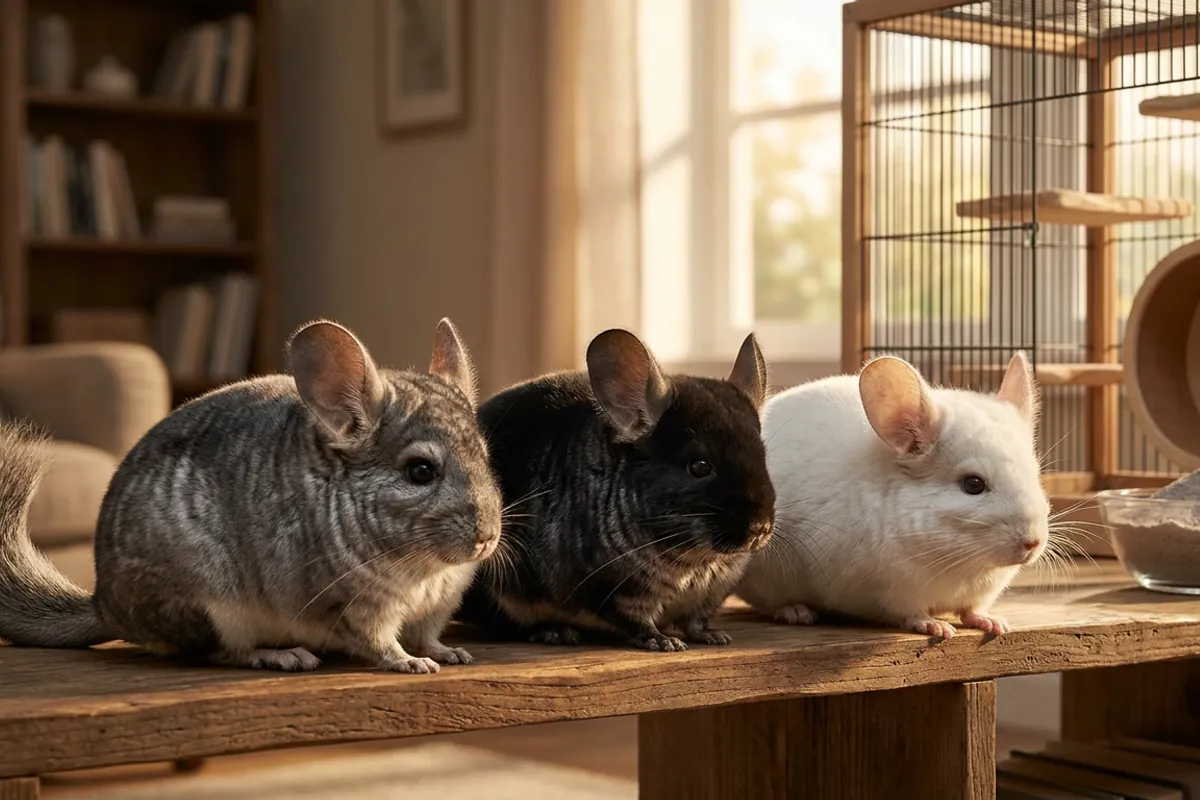
Here is my flat opinion: color is the least important thing about the animal you are buying. A rarer coat does not make a chinchilla healthier, calmer, or longer-lived. It makes it more expensive. If a beautiful white chinchilla and a plain gray one are both in front of you, choose the one that is healthier and better socialized, every time. Pay for health and temperament, not for a coat. The standard gray is not a lesser animal, it is the same animal in the original color, and it is what most chinchillas look like for a reason.
If you do want a particular color, get it from a breeder who works with that line and can speak to the health behind it, not from whoever happens to have posted the prettiest photo.
What "cheap chinchilla for sale" costs
I understand the pull of "cheap chinchilla for sale," and I want to be careful here rather than preachy. A low price by itself is not a red flag. Rescues and rehomes are often cheap or free precisely because good people are trying to place an animal, and that is a fine way to get a chinchilla.
The trap is thinking the purchase price is the cost. It is a rounding error. The animal is the cheapest part of the next fifteen years. The real spending is the setup and the upkeep:
- A tall metal-and-wood cage with wooden ledges, big enough to jump and climb. Never plastic, which they chew and swallow.
- A solid-surface exercise wheel, never a wire or barred one, which catches and breaks toes and legs.
- Unlimited grass hay, forever, restocked constantly. This is the bulk of the diet and the bulk of the ongoing cost.
- Plain pellets as a measured supplement, a good dust for bathing, and a steady supply of safe wooden chews.
- Cooling for summer, which for most homes means air conditioning, because a chinchilla cannot survive a hot room.
- An exotics vet fund, because these animals hide illness and the ones that need care need it fast.
So a cheap chinchilla is fine. A cheap everything else is how animals get hurt. If money is tight, the plain move is to spend less on the animal and the coat and more on the cage, the cooling, and the vet fund. I would rather you adopt a free gray rescue into a proper setup than pay a premium for a rare color and cut corners on the wheel.
Checking a chinchilla before you commit
Whatever the source, look the animal over before you say yes. You are not diagnosing anything, you are deciding whether this is a chinchilla starting from health or starting from a problem.
- Fur and body. The coat should be dense, even, and clean, with no bald patches, no bare spots from barbering, and no crusty or matted areas. The animal should feel solid, not bony through the fur, though that is hard to judge on such a fluffy body, so watch how it moves.
- Eyes and nose. Bright, clear, dry. Wet or crusty eyes and any nasal discharge or wheezing are reasons to pause. Drooling or a constantly wet chin is a warning sign for teeth.
- Teeth and eating. You often cannot see the back teeth, which are the ones that cause trouble, but you can ask whether the animal eats plenty of hay and chews hard, and you can watch it eat if possible. Dental disease is common, painful, and lifelong. I manage Juniper's every single day, so I do not say this lightly: ask about eating and weight, and read up on the signs of dental trouble before you go. A drooling, thin, or picky eater is a serious question mark, not a bargain.
- Behavior. Alert and curious is good. A chinchilla that will not move, sits hunched, or breathes hard may be sick or overheated, and heat is the emergency you cannot see coming. Learn the warning signs of heat stroke so you recognize a chinchilla in trouble in a warm room.
Ask the seller their questions too: how old, what it eats, has it seen a vet, why is it being sold. Good sellers answer plainly. Vague or defensive answers tell you something. And a note that pains me to write: sometimes the kindest thing is not to buy the sick animal at all, because buying it just funds the next batch. That is a hard line and I do not draw it lightly, but a rescue is a different situation from a careless breeder moving stock.
Get the home ready before the animal arrives
The biggest mistake I see is buying first and setting up later. Do it the other way around. The cage should be built, the hay stocked, the dust ready, and above all the temperature under control before a chinchilla ever comes through your door.
Temperature is the one that kills, so I will be exact. Chinchillas are comfortable at 60 to 70°F, which is 15 to 21°C. Above 75°F, or 24°C, is getting risky. At 80°F, which is 27°C, and up you are in emergency territory, and it comes on faster in humid air because they cannot shed heat well. Pebble's first summer brought a heatwave that nearly killed her and put us at the emergency vet overnight, and every bit of heat guidance I give traces back to that night. Before you bring an animal home, know how you will keep its room in that range through the worst week of your summer. If you cannot answer that, you are not ready, however good the listing is. Our heat danger calculator and the full heat safety guide will tell you where your home stands.
Get the food right from day one. Unlimited grass hay is the foundation of the whole diet, always available, and it is what keeps those constantly-growing teeth worn down. A quality grass hay Oxbow Western Timothy Hay, 40 oz bag As an Amazon Associate I earn from qualifying purchases. is not the place to economize. Plain pellets are a measured supplement on top, not the main meal, and treats stay rare. Bathing is dust, never water: a fine volcanic pumice dust in a heavy bath they can roll in a few times a week keeps that thick coat healthy. Water would soak into that dense fur, never dry, and cause fungus and chilling, so it is dust only, always. If you want the whole picture before the animal arrives, our care overview, the diet guide, and the cage setup guide lay it out.
A chinchilla for sale is a fifteen-year animal wearing a price tag. Buy the health, not the coat, get it from someone who tells you the truth, and have the cold, hay-stocked, dust-ready home waiting before it arrives. Do that, and the search that started with a keyword ends with an animal that thrives.