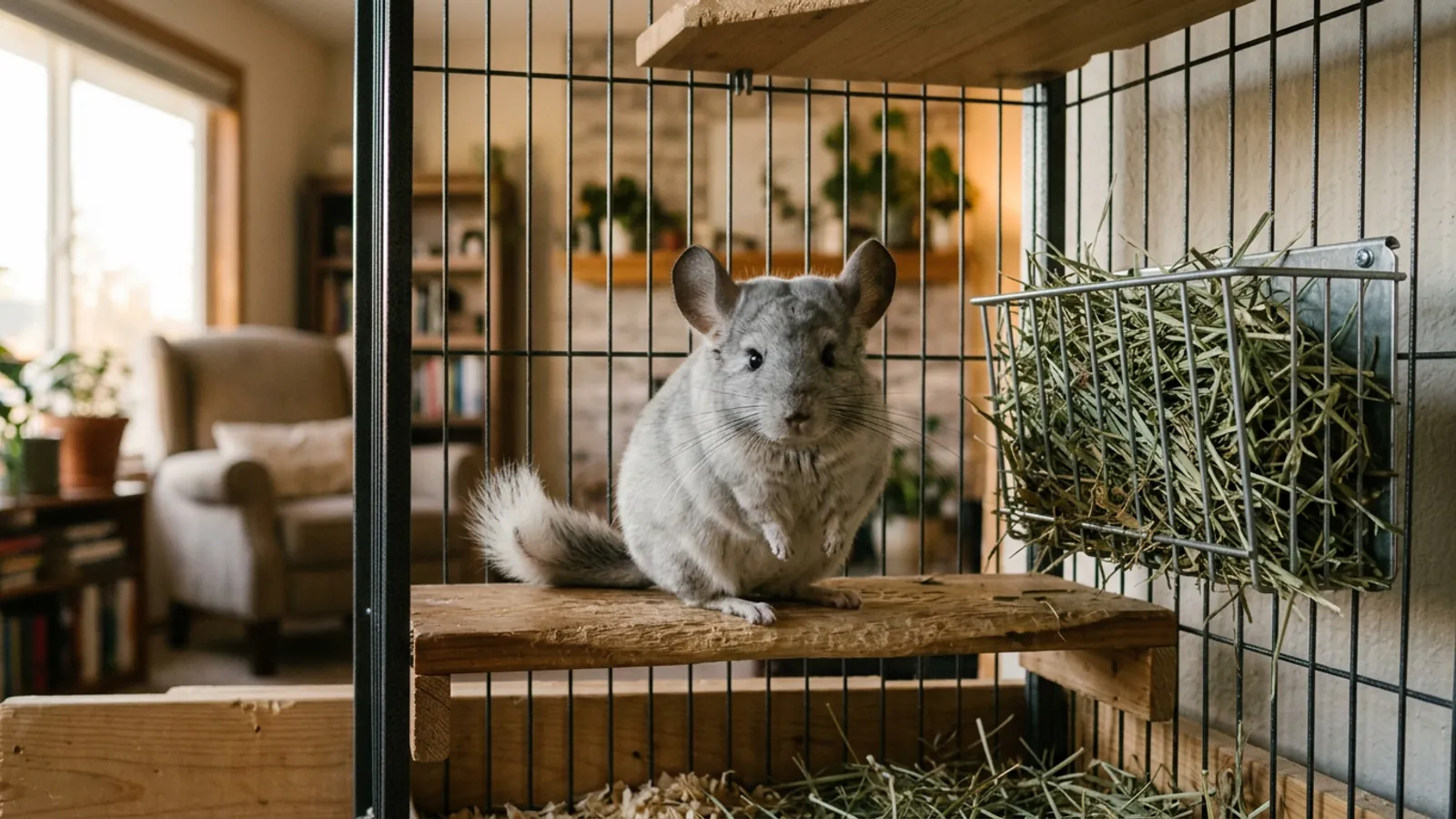
The first time I looked up chinchilla pet insurance I was standing outside an emergency clinic near midnight during Pebble's first summer with me. That is the worst possible moment to find out what a policy would have covered, and it is exactly when most owners go looking. Here is the plain summary before I explain any of it: cover for a chinchilla does exist, because I read the wordings of specialist exotics insurers that name the species outright, but I cannot tell you what is sold where you live and I am not going to pretend otherwise. What I can tell you is which clause decides the whole question, and it is the dental one. For a lot of keepers the better answer turns out to be a separate savings account with a standing transfer into it. What follows is what I have worked out over about ten years, two chinchillas, and one of them with dental disease that never goes away.
What chinchilla pet insurance covers
What you are hunting for is an exotic pet or small mammal policy. The exotics wordings I looked at were reimbursement products, meaning you pay the clinic and claim it back afterwards, rather than the insurer settling with the vet directly. I would check that rather than assume it, because it changes what you need available on the day. You take the animal in, you pay the clinic yourself, you send the invoice and the clinical notes to the insurer, and some weeks later a portion of it comes back to you.
That portion is where all the detail lives, and these are the terms to go looking for rather than a structure I can promise you will find. An excess is the first slice of each claim or each condition that you cover yourself. A reimbursement percentage is the share of the approved bill that comes back, and that share is a number you have to read off the specific policy rather than assume, because the tiers differ by insurer and by market and the figures quoted around the internet are usually lifted from one company's old brochure. Then look for how the payout is capped. The wording I read caps it per policy period, which is an annual reset rather than a lifetime pot, and that is the kind of detail that matters far more than the headline number on a marketing page. Whether a policy also caps per condition, and whether routine exams and check ups are covered at all or sold as a separate add on, are things I can only tell you to go and look for. I have not read enough wordings to tell you what is normal, and for a chinchilla I would want to see the arithmetic on any wellness extra before buying it.
One thing no policy does: it does not make a vet appear. Insurance pays a bill. It does not find someone competent to anesthetize a 500 gram rodent at two in the morning, and it does not shorten the drive. That part is on you, and it should be done before you have an emergency, not during one. I wrote a whole piece on how to find a chinchilla vet before you need one for exactly this reason, and I would rather you did that this week than spent the week comparing quotes.
Why so few insurers will write chinchilla insurance at all
Insurers price from claims data. They know, to a fine grain, what a Labrador costs them over twelve years. They have very little idea what a chinchilla costs them, because there are not many chinchillas, there are not many vets treating them, and the treatment varies enormously between a general practice and a referral exotics hospital. Thin data plus high variance means either a high premium, a narrow policy, or no product at all.
So availability is patchy, and I want to be careful about how far I generalize. The providers I could verify by reading their own pages are a small number of specialist exotics insurers in the UK and one exotics plan in the US, all of which name chinchillas among the species they cover. Beyond those I genuinely do not know what is sold where you live, and I am not going to guess on your behalf. What I can tell you is the failure mode to watch for: a comparison site that lists "small pets" and quietly means rabbits.
I am not going to name companies, and I would treat any article that does with suspicion unless it is dated this month. Provider lists go stale within a year, species lists change at renewal, and a name I print here could be wrong by the time you read it. Do this instead. Ask your exotics vet which insurers they see claims from, because clinic reception staff know which companies pay and which ones argue. Search for exotic pet insurance in your own country rather than in general. Then, before anything else, open the actual policy wording and check that the word chinchilla appears in the covered species list by name. "Small mammals" in a headline is not a promise, and I have read species lists where the small mammals turned out to be three of them and none was mine.
What a chinchilla emergency costs
I will not print currency figures, and here is why. Vet pricing varies by country, by city, by whether you land at a general practice or a referral hospital, and by the year. A number I published would be confidently wrong for most readers, and a wrong number is worse than none. What I can give you is the shape.
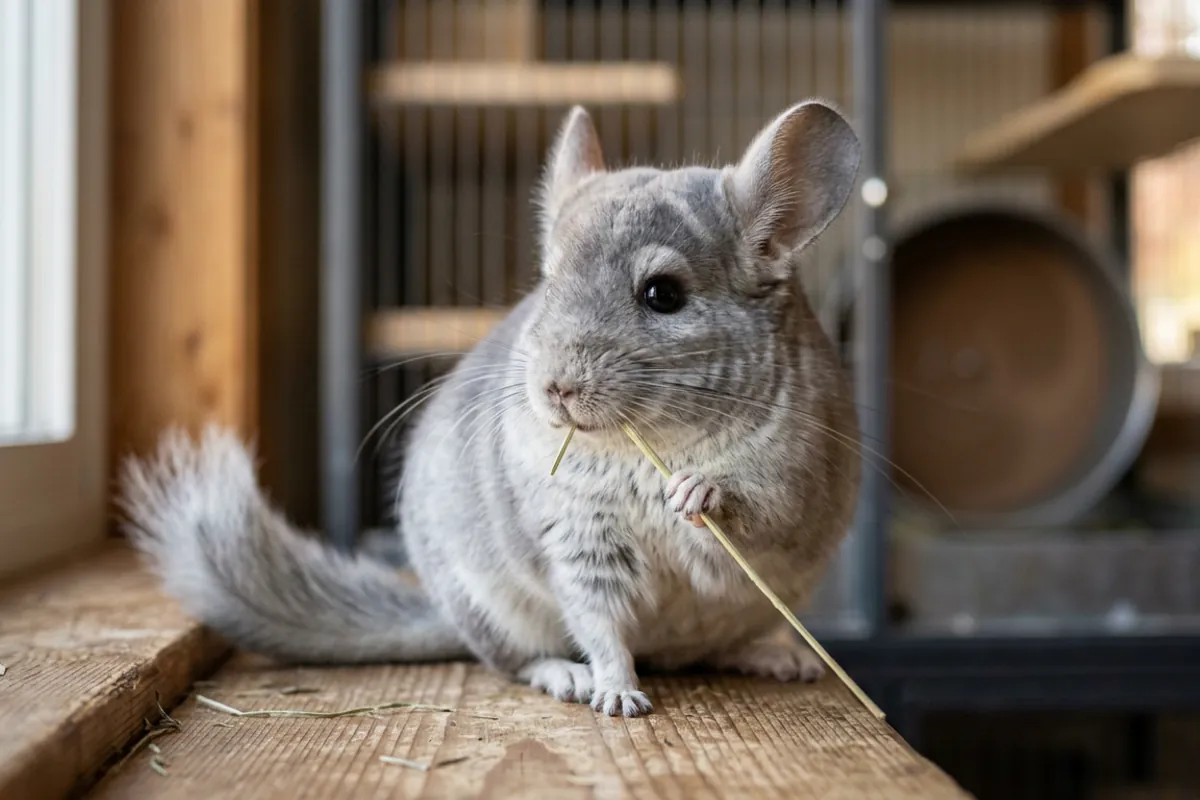
The exam is the cheap part. What costs money is everything that follows it: imaging, anesthetic, an overnight stay, out of hours pricing, and repeat visits for anything chronic. Juniper came to me as a neglected rescue with dental disease, and her teeth need managing for the rest of her life. Chinchilla teeth grow continuously, and when the wear goes wrong the fix is not a one off. It is filing under anesthetic, then again months later, plus x rays to see the roots, plus the appointments in between where I am asking whether she is eating properly. Chronic beats catastrophic on total spend, in my experience, and it is the case insurance handles worst.
The other shape is Pebble's. A heat emergency arrives with no warning and no schedule, always at the wrong hour, and the out of hours multiplier on the bill is brutal.
Set against that, the purchase price is the smallest number in your first year. If the price tag is what is deciding this for you, read what a chinchilla really costs before you buy, because the animal is the cheap part of a chinchilla. To get your real numbers, phone two exotics clinics near you and ask what they charge for a dental procedure under anesthetic and for an out of hours emergency exam. Ten minutes on the phone gives you a better basis for this decision than any article, mine included.
The exclusions that decide whether a policy is worth buying
Read these before the premium. In order of how much they matter for this species:
Dental. Malocclusion and overgrown cheek teeth are the most common chronic problem in pet chinchillas, so the dental clause decides whether a policy is worth anything at all. I want to be precise about what I verified rather than repeat the folklore that dental is simply excluded. In the one policy booklet I read line by line, a UK exotics wording, routine tooth trimming is excluded outright and dental treatment is met at no more than half the cost of each single treatment, with the excess taken off every time. That is one insurer's wording, not a market rule. What generalizes is the question you have to ask, not the answer. Worse, the wording I read defines a pre-existing condition widely enough to reach a latent, genetic or hereditary one, which is a definition congenital malocclusion could fall inside. Ask, in writing, how the insurer classifies chinchilla malocclusion. If the answer is vague, assume the answer that is worse for you. My piece on spotting malocclusion before it turns serious explains why this is the claim you are most likely to make.
Pre existing conditions. Present in the wordings I looked at, and stricter than people expect. Anything noted in the clinical record before the policy started is out, and the wording I read reaches further than that, defining the term widely enough to include a latent or hereditary condition the owner never knew about. A rehome with a history you cannot see is the hard case here, which is an argument for a vet visit in the first week or two so at least you know what you are dealing with.
Waiting periods. In the wording I read most closely, an illness showing signs in the first fortnight is excluded outright, and accident cover starts sooner than illness cover. I cannot tell you that every policy is built that way, so read yours. The month you bring an animal home is a high risk month, and under the wording I read it would have been largely uninsured. Check the dates on yours rather than assuming.
Age limits. The wording I read sets a species-specific window, eight weeks to eight years at inception for a chinchilla, which is wider than it allows for other small mammals and is not stated on the same insurer's sales page at all. Whether yours does anything similar is a question for the wording rather than something I can tell you. Chinchillas can live well past ten years, and it is worth being precise about what an inception limit does and does not mean: it governs whether you can start a policy, not whether an existing one keeps running. What it costs you is the option. Leave it late and an older chinchilla may be uninsurable at exactly the age its bills start arriving, which is an argument for deciding early rather than a claim that cover you already hold disappears on a birthday. Whether renewals carry their own age terms is, again, a question for the wording.
Husbandry related exclusions. The wording I read excludes conditions caused by improper care. I cannot tell you how any given insurer would treat a heat emergency in a home without air conditioning, and I am not going to pretend I can. Ask them directly and keep the answer.
Per condition and renewal terms. Check whether a condition you claimed for this year becomes an exclusion at renewal, and how long a gap has to pass before a recurring condition counts as new again and attracts a fresh excess. The wording I read resets that at ninety days and ends cover for a condition a month after non-renewal. For a chronic dental case those clauses decide whether the policy is worth anything at all.
The vet fund I run
What I do, and have done for years, is boring. A separate savings account, a standing transfer on payday, money that does not get touched for anything else. My target is enough to cover one dental under anesthetic plus one out of hours emergency at my local prices, which is a number I got by asking the clinic rather than guessing.
The fund beats the wording I read on four things. It covers dental. It covers pre existing conditions. It never argues about whether the cause was husbandry. And it exists wherever you live, which matters precisely because I cannot tell you what is sold in your country.
It loses on one thing, and it is a real one: the fund is nearly empty in month one, and month one is when a rehome springs a hidden problem on you. If you are bringing home an adult of unknown history and a decent policy exists where you live, running both for the first year is a defensible answer rather than a hedge.
What is not defensible is the third option people pick, which is neither. No policy, no fund, and a plan to work it out if it happens. That is how an animal ends up on a waiting list for money.
How to read a policy before you pay for it
Ask for the full policy document, not the sales page. Then use the search function on the PDF for these words: chinchilla, dental, pre existing, congenital, hereditary, waiting, and limit. Ten minutes of that tells you more than an hour of comparison tables.
Then answer these, on paper:
- Is chinchilla named in the covered species list?
- What is the annual limit, and is there a lower per condition limit under it?
- What is the excess, and does it apply per claim, per condition, or per year?
- What percentage do they reimburse after the excess?
- Is dental covered, excluded, or capped at a token amount?
- How long are the waiting periods for accident and for illness?
- Is there an upper age limit for starting or continuing cover?
- Will they pay for treatment at an exotics referral clinic, and at an out of hours emergency clinic?
- Does a claimed condition become excluded at renewal?
If the annual premium is close to what one dental procedure costs locally, and dental is excluded, you have your answer without doing any more arithmetic.
What shrinks the bill
Every large vet bill I have paid or nearly paid traced back to one of three things: heat, teeth, or a bad piece of equipment. All three are cheaper to prevent than to treat, and prevention is the only part of this whole subject that is fully in your control. If you are not certain your room is inside the safe band, the chinchilla heat danger calculator will tell you before the bill does.
Heat first, because it kills fastest. Chinchillas are comfortable at 60 to 70°F (15 to 21°C). Above 75°F (24°C) you are into risk, and 80°F (27°C) and up is an emergency, arriving faster in humid air. You cannot judge that by feel, so put a thermometer and hygrometer at cage height and read it daily. digital thermometer and humidity gauge with remote probes As an Amazon Associate I earn from qualifying purchases.
A cooling stone gives an animal somewhere to dump heat and is worth having, but be clear about its limit: it is a comfort item, not a cooling system, and it will not save a chinchilla in an 85°F room. Kaytee Chinchilla Chiller granite stone As an Amazon Associate I earn from qualifying purchases.
The actual answer to a hot room is air conditioning, and Pebble's night at the emergency vet is why I say that without softening it.
Teeth second. Unlimited grass hay, in front of them all day, every day, is the whole dental plan. Pellets are a measured supplement and nothing more. Hay is the cheapest insurance product on the market. Buy it boxed while you are learning how fast it goes. Oxbow Western Timothy Hay, 40 oz bag As an Amazon Associate I earn from qualifying purchases. Once you know, buying in bulk costs less per month again. Oxbow Western Timothy Hay, 9 lb box As an Amazon Associate I earn from qualifying purchases.
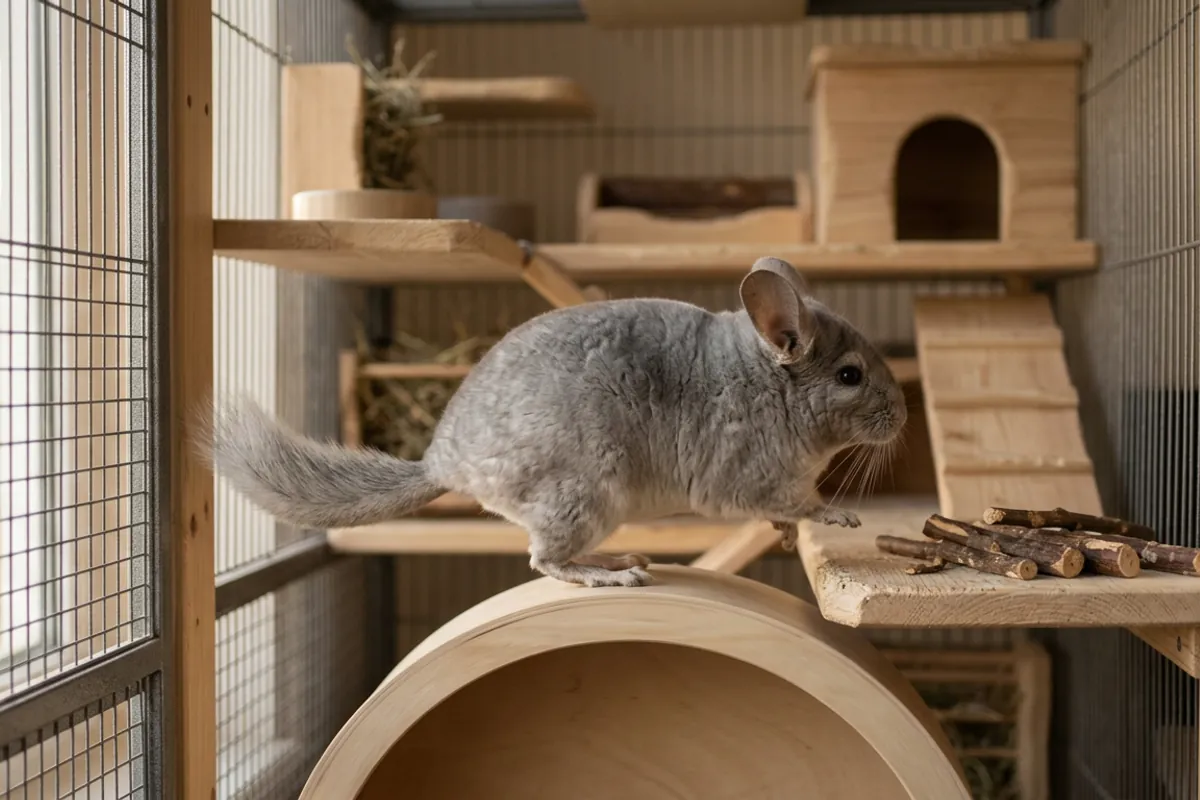
Alongside it, a real variety of safe wood chews, rotated so they stay interesting, because a chew that is ignored wears nothing down. emours apple wood chew sticks, 40 count As an Amazon Associate I earn from qualifying purchases.
Watching Juniper is what made me uncompromising about this.
Equipment third. A wire runged wheel breaks legs, and a broken leg on a small rodent is a surgical bill and a long recovery. Use a solid running surface, always. 15 inch Chin Spin solid surface chinchilla wheel As an Amazon Associate I earn from qualifying purchases.
Plastic gets chewed and swallowed, so the cage is metal and wood or it is not a chinchilla cage. Critter Nation double unit small animal cage As an Amazon Associate I earn from qualifying purchases.
And they never bathe in water, only in fine volcanic dust, a couple of times a week. Lixit Blue Beauty chinchilla dust, 3 lb As an Amazon Associate I earn from qualifying purchases.
A wet chinchilla is a fungal infection waiting to happen, which is another vet bill you can simply decline to buy.
How I would decide
My rule, if a policy exists where you live: if it names chinchillas explicitly, covers dental without a token sub limit, does not cut off cover at an age your animal will reach, and costs less per year than one local dental procedure, look at it seriously. If dental is excluded, treat it as catastrophe only cover, price it accordingly, and keep the fund anyway. If nothing is available in your country, the fund is not a consolation prize. It is the plan, and it is the plan I have run for a decade.
Whichever way you go, the money has to exist somewhere before the animal needs it. Insurance moves the risk, savings absorb it, and prevention shrinks it, but nothing on this page substitutes for a phone number for an exotics vet stuck to the fridge. That is the part I would sort out first, tonight, before you compare a single quote.
And when the line is crossed, when a chinchilla stops eating, goes quiet, drools, or is flat out in a warm room, the decision is not financial. Go to the vet. Work out the money afterwards. I have never once regretted the visit that turned out to be nothing.