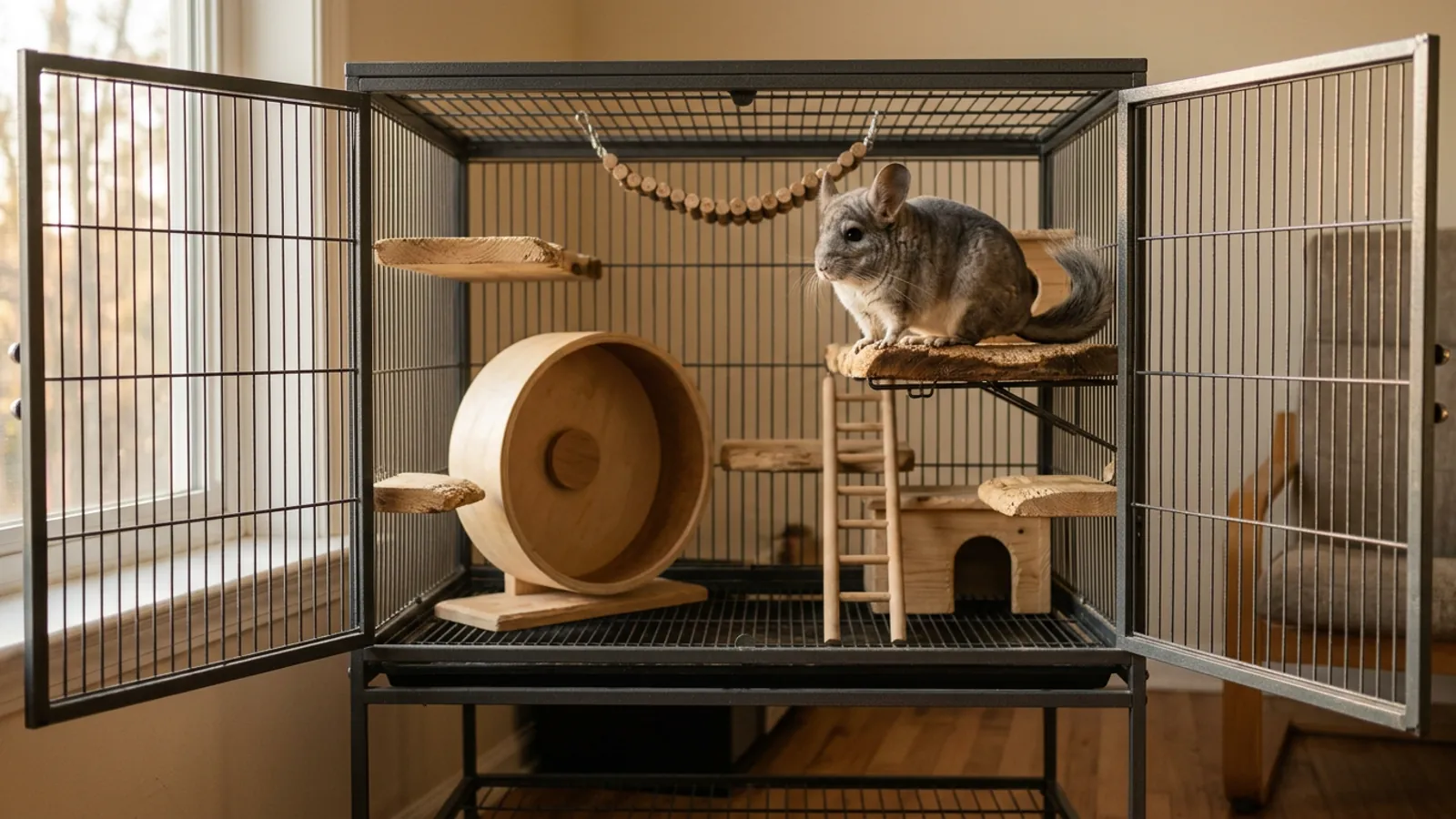
Type chinchilla cage ferret nation into a search bar and you land on the same thing almost everyone else does: a tall metal box on lockable casters, built by MidWest Homes for Pets, with full width double doors and a couple of shelves inside. It is not sold for chinchillas. It is sold for ferrets. And yet it is probably the single most recommended cage in the chinchilla world, mine included, because the frame gets the two things that matter most right, height and metal. I have kept chinchillas for about ten years, and both of mine live in cages from this exact family. What follows covers what the cage does well, what you have to rip out before a chinchilla ever sets foot in it, and where the name misleads people into a genuinely dangerous idea.
Why chinchilla keepers reach for a ferret cage in the first place
A chinchilla will chew anything it can get its teeth on, and that rules out plastic for the frame, the bars, and ideally everything structural. Their teeth never stop growing, so gnawing is not a habit you train out, it is biology. That single fact eliminates most of the colorful cages marketed for small pets and pushes you toward metal. The Ferret Nation is metal where it counts: powder coated steel bars, a steel frame, a steel stand. For the wider argument on why the material is not negotiable, see why a chinchilla cage has to be metal.
The second thing it gets right is height. Chinchillas are built to climb and to launch themselves off a ledge, not to trundle around a floor. A cage that is wide and short wastes the space they use. The double unit stacks two full levels into one tower that stands around 62 inches tall, roughly 36 inches wide and 25 inches deep, and that vertical run is exactly the shape a chinchilla wants. If you are weighing one level against two, read why a multi level chinchilla cage suits how they move; for an adult I would not go below the double unit.
The last piece is access. The full width double doors on each level swing right open, which sounds like a small thing until you are cleaning the top shelf or coaxing a nervous chinchilla out. And the whole tower rolls on casters, so you can move a heavy cage away from an afternoon sun spot in a hurry. It is not a perfect cage. But the bones are right, and bones are the part you cannot fix later.
The Ferret Nation and Critter Nation are the same frame with one real difference
Both cages come from MidWest, and side by side they look near identical: same tower, same doors, same stand, same casters. The difference chinchilla people care about is bar spacing. The Ferret Nation runs about 1 inch between the horizontal bars. The Critter Nation runs about half an inch. That is the reason the two exist as separate products, and for a chinchilla it is the one spec worth reading before you pay.
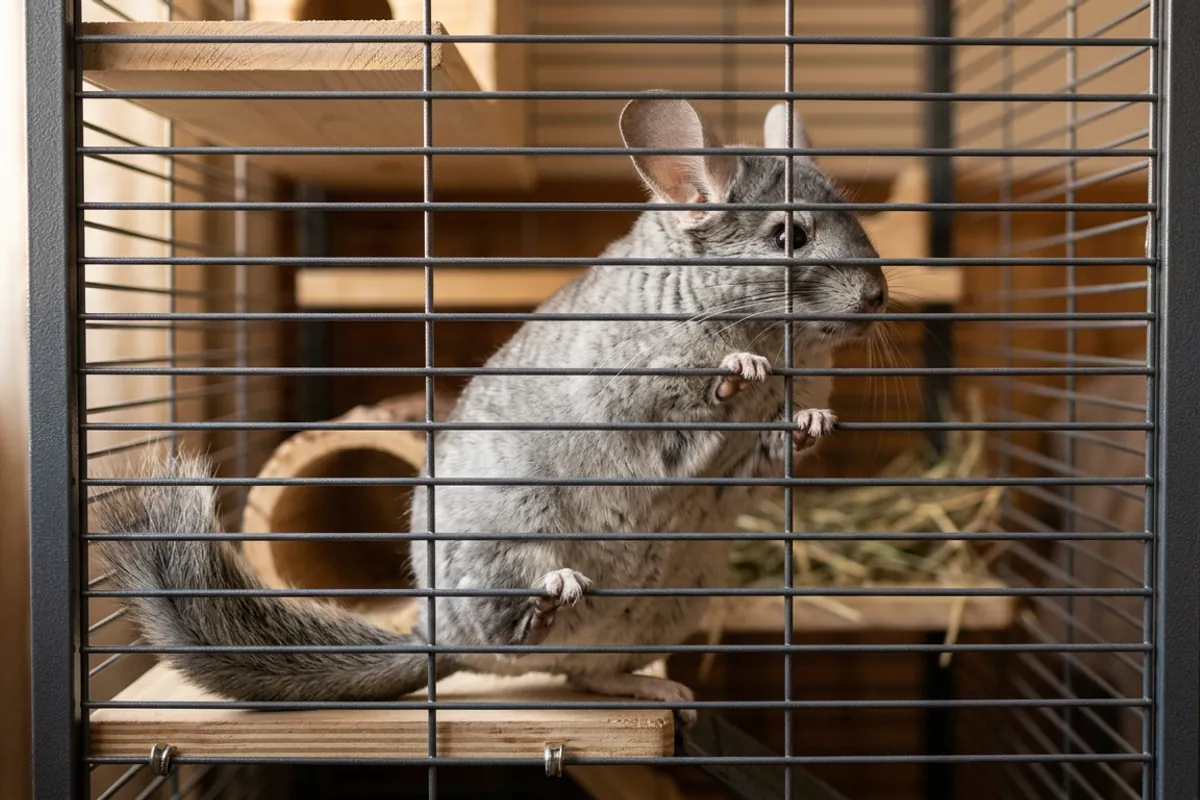
For a full grown adult chinchilla, 1 inch is usually fine. The trouble is with kits, small young chinchillas, and the occasional determined escape artist, any of which can push a head through a 1 inch gap and get stuck, or squeeze out entirely. So if you are buying new and have the choice, I point people at the Critter Nation. Same tower, safer grid, and the narrower bars hold small ledges and hay racks more tidily too. I have laid out that case in full in is the Critter Nation right for a chinchilla.
If you already own a Ferret Nation, do not rush to replace it for an adult. You baby proof the problem spots with hardware cloth zip tied over the lower bars, and you keep an eye on any young chinchilla until it is plainly too big to slip through. The frame is worth keeping. You are just closing the gaps the ferret it was designed for did not need closed.
The chinchilla and the ferret were never meant to share it
The name confuses people, and this is the one place the confusion can kill an animal. A ferret chinchilla cage is a cage shape that suits both species kept apart. It is not a suggestion that a chinchilla and a ferret belong together. They do not. A ferret is an obligate carnivore, a predator that hunts small mammals by instinct. A chinchilla is prey. Put a chinchilla and ferret in the same space and you are not making friends, you are staging a hunt.
Even through bars it does not work. A prey animal reads a predator's scent and its lunging as a constant threat, and chinchillas hide illness until it is severe, so the stress does its damage quietly. A chinchilla kept in sight and smell of a ferret is a chinchilla living under siege. So treat the word ferret in ferret chinchilla the way you would treat it on a shoe box: a description of the container, nothing more. If you keep both animals, they get separate rooms, separate cages, and separate out time. That is not caution for its own sake, it is the difference between two calm pets and one dead one.
What comes in the box that has to come straight out
Two parts of the standard cage are built for ferrets and wrong for chinchillas. First, the ramps and shelves are wire mesh. Wire is hard on chinchilla feet over time and can cause sores, and the open mesh is a leg trap for a young chinchilla that misjudges a jump. Some units ship with a canvas ramp cover, which chinchillas promptly eat. Pull the wire ramps, or cover every walking surface. Fleece over the shelves works; kiln dried pine ledges bolted to the bars work better and give them something to chew.
Second, the deep pans at the base of each level are plastic. A chinchilla will reach the rim and gnaw it, and swallowed plastic is a real gut blockage risk. You have two honest options: line the pans so no plastic edge is reachable, or swap them for metal pans. Some keepers skip the fight entirely and start with a cage built from metal and wood in the first place.
a purpose built metal and wood chinchilla cage Critter Nation double unit small animal cage As an Amazon Associate I earn from qualifying purchases.
Neither the wire nor the plastic is a reason to avoid the Ferret Nation. They are the tax you pay for buying a cage designed around a different animal, and both are fixable in an afternoon.
How to fit out a ferret nation chinchilla cage properly
Once the wire and plastic are handled, the tower is a blank canvas, and a good chinchilla cage setup is what turns it from a box into a home. Stagger wooden ledges up the full height so your chinchilla can climb corner to corner without a single long drop onto a hard pan. If you want a shortlist of what earns its place, I keep one in cage accessories that are worth it.
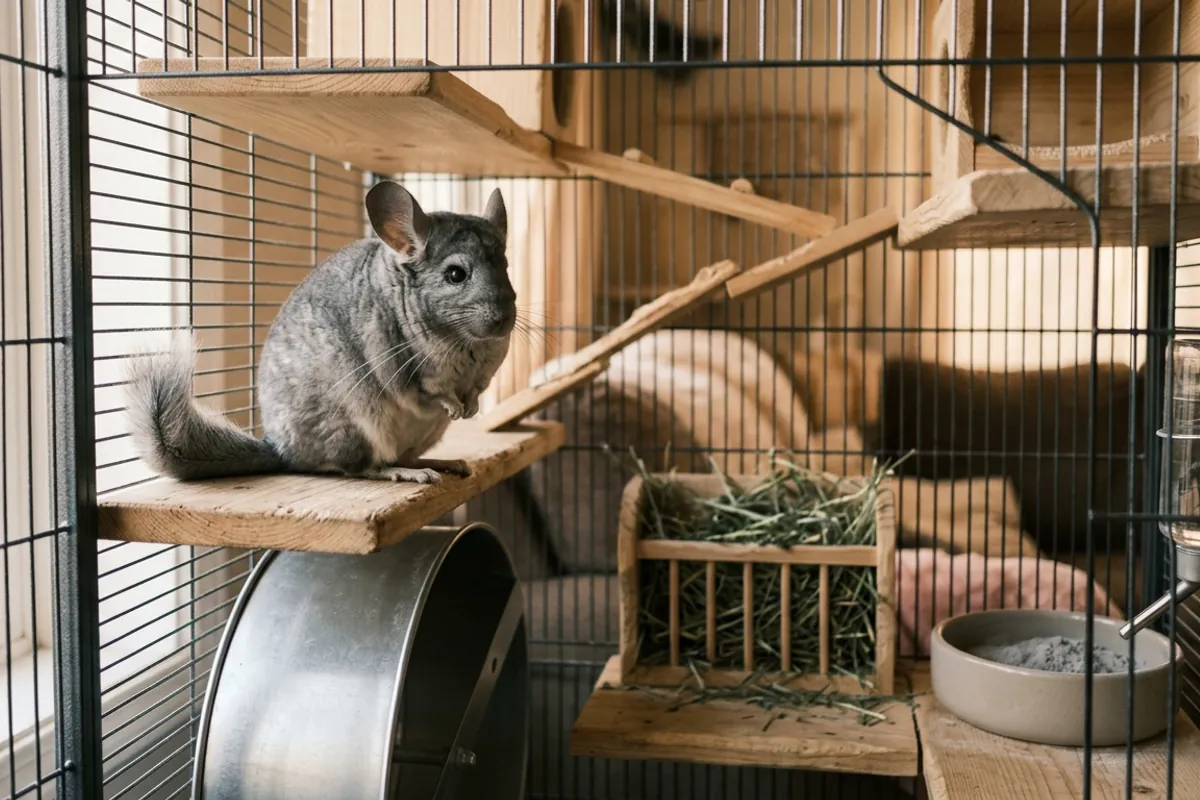
Give it a real wheel. Chinchillas need to run, and the wheel has to have a solid running surface, never wire or rungs, which catch feet and tails and break legs. A solid surface wheel of at least 15 inches lets a full grown chinchilla run without arching its spine. 15 inch Chin Spin solid surface chinchilla wheel As an Amazon Associate I earn from qualifying purchases.
Food is simple, and it is where I get uncompromising, because I watch my rescue Juniper manage dental disease every day of her life. The bulk of the diet is unlimited grass hay, always available, because the chewing is what wears the teeth down. Keep the hay coming with a good box of timothy hay. Oxbow Western Timothy Hay, 40 oz bag As an Amazon Associate I earn from qualifying purchases.
Plain measured pellets sit second to the hay, not the other way round; the full logic is in chinchilla food, hay first and pellets second. Water goes in a bottle with a metal spout, not an open bowl. Then a dust bath, because chinchillas clean their fur in fine volcanic dust and never in water. A couple of times a week, offer a dust bath and take it out again so they do not sit in it. Lixit Blue Beauty chinchilla dust, 3 lb As an Amazon Associate I earn from qualifying purchases.
Last, chews, and plenty of variety, which for Juniper are not a treat but dental care. A rotating set of safe woods keeps them interested and keeps the teeth working. A variety pack of apple wood and other safe chews earns its place. emours apple wood chew sticks, 40 count As an Amazon Associate I earn from qualifying purchases.
Where you stand it decides whether it is safe
This is the part that matters most. The best cage in the world sits in a room, and the room's temperature is what keeps a chinchilla alive. Chinchillas are built for a cold, dry climate and carry the densest fur of almost any land mammal. They cannot shed heat well, and they overheat and die faster than new owners believe.
Pebble came to me from a rehome out of an overheated attic, and her first summer brought a heatwave that put us in the emergency vet overnight. That night is why every heat rule on this site is a rule and not a suggestion. Keep the room 60 to 70°F (15 to 21°C). Above 75°F (24°C) is getting risky. At 80°F (27°C) and up you are in emergency territory, and humid air makes all of it worse and faster. A metal cage does nothing to insulate against a hot window, so stand the tower out of direct sun and well away from radiators. The number itself is covered in chinchilla temperature, the figure that keeps yours alive.
Put a thermometer and hygrometer on the cage so you are reading the real number, not guessing. digital thermometer and humidity gauge with remote probes As an Amazon Associate I earn from qualifying purchases.
And for the warm end of the range, a chewable safe cooling stone gives them somewhere cool to lie against. Kaytee Chinchilla Chiller granite stone As an Amazon Associate I earn from qualifying purchases.
If you are ever unsure whether a given temperature is dangerous, the chinchilla heat danger calculator will tell you, and the warning signs of heat stroke are worth learning before you need them. On anything medical, an exotics vet, not a forum, is the call.
Other metal cages sold for chinchillas and ferrets
The Ferret Nation is not the only tower marketed across ferrets, rats, and chinchillas. Two come up often. The little friends triple metal rat chinchilla ferret cage on stand is a tall three level cage, and its height is useful, but check the bar spacing and the shelf material with the same eye you would use on any ferret cage, and expect to swap plastic parts. The yaheetech 37 metal ferret cage is cheaper and shorter, and 37 inches of height is on the small side for an animal that wants to climb; I would treat it as a bare minimum for a single adult, not a target to aim for.
Whatever you buy, the checklist is the same: metal not plastic where teeth can reach, height over floor area, bar spacing tight enough for the animal's size, and solid surfaces underfoot. Run any cage, including the ones with a chinchilla on the box, past how to pick the best chinchilla cage before you pay. The name on the carton matters far less than whether the frame gets those four things right, and the Ferret Nation, faults and all, gets them righter than most.