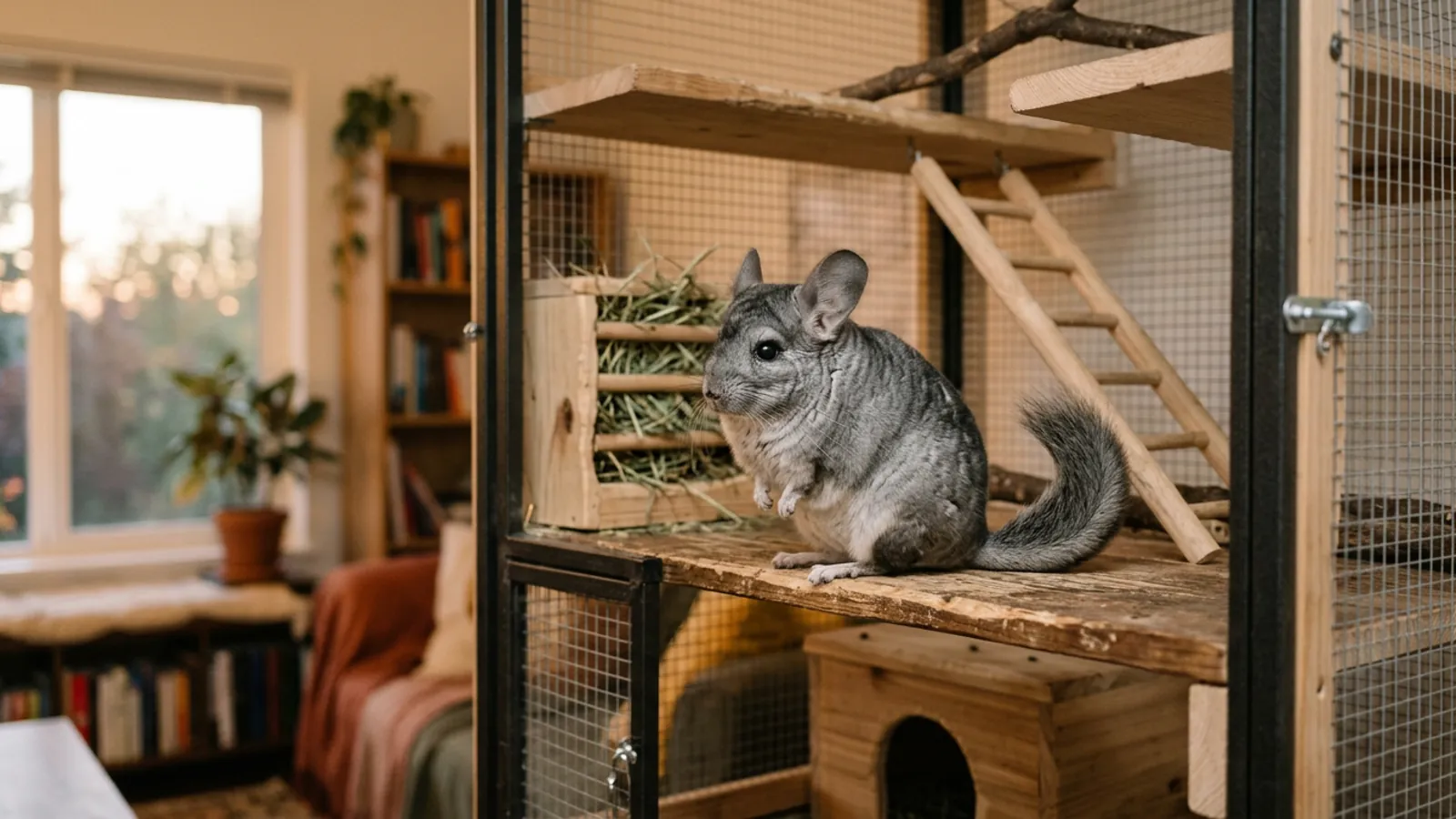
Buying a chinchilla feels like it should be the simple part. You pick one, you pay, you take it home. In practice it is the part I would slow down the most, because the animal you carry out the door will likely be with you for fifteen years or more, and almost everything that goes right or wrong over that stretch is decided before you buy, by where you buy from and by what you have waiting at home. I have kept chinchillas for about ten years, and the two I live with now, Pebble and Juniper, both came out of situations that had already gone wrong before they reached me. None of this is meant to talk you out of it, because I would keep chinchillas again in a heartbeat. It is meant to make sure that if you buy one, you buy the right one, from the right place, into a home that is genuinely ready. This is the plain, owner to owner version.
Where a chinchilla should come from
There are three honest routes: a small breeder who keeps a handful of animals and knows each one by name, a rescue or a rehome, or a pet store. I rank them roughly in that order, but the label on the door matters less than what you are allowed to see and ask.
A good breeder will let you visit, will talk freely about the parents, and will not hand you a kit before it is properly weaned, which usually means at least eight weeks old. They will also ask you questions back, about your setup and your plans, and that is a good sign rather than a nuisance. If someone always has a cage of babies for sale and cannot tell you a single thing about the parents, that is a mill, and I would walk away.
Rescues and rehomes are where both of mine came from. Pebble was a rehome out of an overheated attic, and Juniper was a neglect case whose teeth I still manage by hand every day. Taking on an adult means you can read the animal's real temperament and health in front of you rather than guessing from a two month old kit, and you are giving a second home to one that already lost its first. I have written more about what adoption asks of you if that is the route you are weighing.
Pet stores are the riskiest, and not because every store is bad. It is because the staff often cannot tell you where the animal came from, how old it really is, or whether anyone has handled it. If you go that way, apply every check in this article yourself, and read how a for sale listing is really selling to you before you go.
What the price tag tells you
The purchase price is the smallest number in this whole story, and it is the one people fixate on. A standard gray chinchilla from a breeder or store usually runs somewhere in the low hundreds, and the fancier colors, the mosaics and violets and sapphires, climb from there. Those higher prices are about coat color and pattern and nothing else. A more expensive chinchilla is not a healthier or a friendlier one, and I would never let a rare color talk me past a health problem I could see with my own eyes.
I have watched people talk themselves into an animal they could see was unwell, purely because the color was rare and the price felt like a deal. A cheap sick chinchilla is the most expensive one you can buy, once the vet bills start.
What the price tag hides is everything that comes after it. I go through the full breakdown in what a chinchilla really costs, but the gist is this: the setup costs more than the animal, and the years of hay, dust, and vet care cost more than the setup. If the purchase price is the number that decides whether you can do this, then you cannot yet. Read what a chinchilla price tells you, and budget for the rest before you fall for a face at a store.
The setup you buy before the animal
Here is the rule I wish more first time buyers followed: the cage and everything in it should be set up and running before the chinchilla comes home, not after. Buying the animal first and then scrambling for gear is exactly how people end up with a chewed plastic cage and a wire wheel that catches a leg.
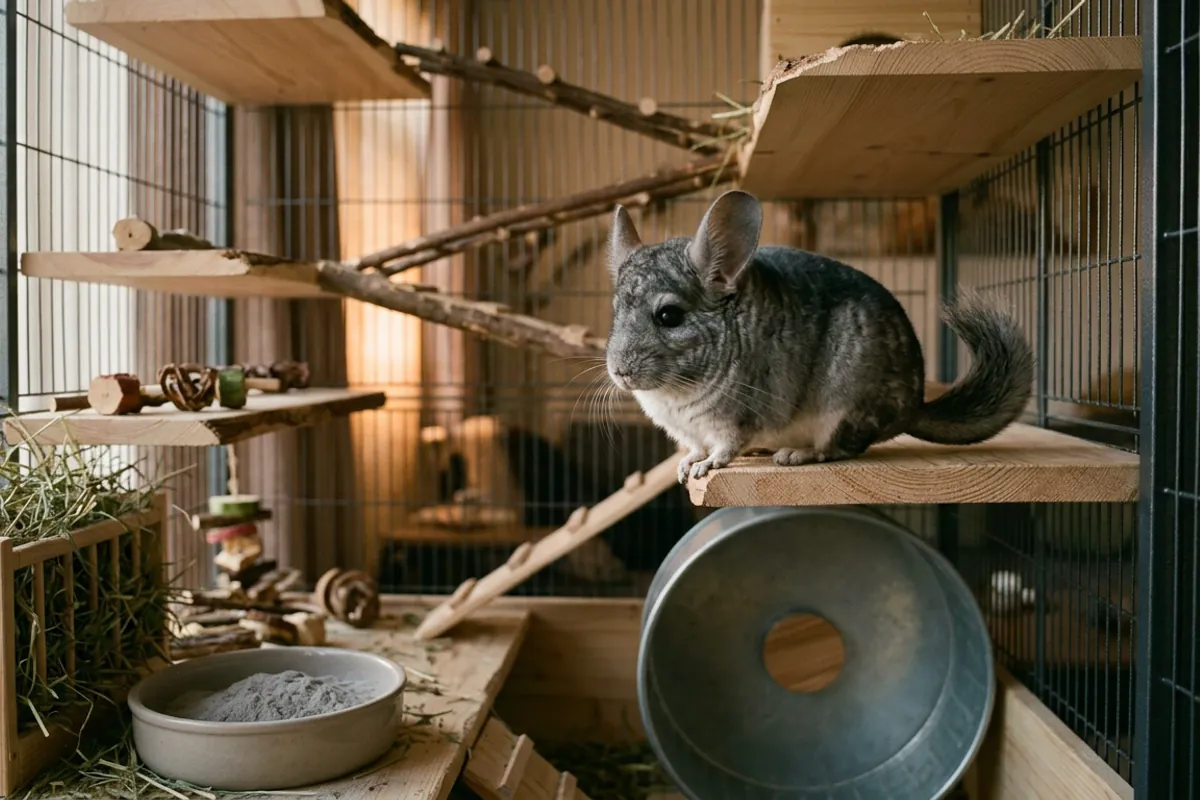
Start with the cage, because it is the biggest single cost and the one people most often get wrong. A chinchilla needs a tall metal cage with wooden ledges to climb, plenty of vertical space, and no plastic anywhere it can reach, because plastic gets chewed off and swallowed. A metal and wood cage built for climbing is the baseline, not a luxury. Critter Nation double unit small animal cage As an Amazon Associate I earn from qualifying purchases. Do not buy a small cage meaning to upgrade it later. You will simply pay for two cages.
Inside it, you want a solid surface exercise wheel, never a wire or rung one, because feet and tails catch in the gaps and break. 15 inch Chin Spin solid surface chinchilla wheel As an Amazon Associate I earn from qualifying purchases. You want a dust bath and the fine volcanic dust that goes in it, because a chinchilla cleans its remarkably dense fur by rolling in dust and never, ever in water. Lixit Blue Beauty chinchilla dust, 3 lb As an Amazon Associate I earn from qualifying purchases. And you want chews from the first day, because those teeth grow continuously for life and have to be worn down. A variety pack of safe apple wood chews earns its keep immediately. emours apple wood chew sticks, 40 count As an Amazon Associate I earn from qualifying purchases. Juniper is the reason I refuse to skimp here, because I watch, up close, what happens when teeth do not get worn. You also want a glass water bottle rather than a plastic one, for the same chew reason, and a hideout made of wood.
How to check a chinchilla before you take it home
Before any money changes hands, spend a few real minutes looking at the animal, even while it squirms. A healthy chinchilla is alert and curious, its eyes are clear and dry with no crust or discharge, its nose is dry, and its coat is dense and clean with no bald patches and no wet, matted fur around the chin or the backside.
Handle it if the seller lets you. A chinchilla that has never been held will be nervous, and that is normal, but it should not be limp, lethargic, or struggling to breathe.
The single most important thing you cannot fully see is the teeth, and dental disease is the quiet killer in this species. You can gently check that the front incisors are even and a healthy yellow orange, not white, not overgrown, and not splayed to one side. But the molars at the back are where malocclusion hides, and you will not see those with your eye. What you can watch for is drooling, a constantly wet chin, weight loss, or food dropping out of the mouth while the animal eats, all of which point at the back teeth being wrong. I keep the fuller detail in chinchilla teeth, and I mean it when I say a first vet check is worth the money. And if a seller will not let you handle the animal, or gets cagey about its age and history, that reluctance is itself your answer.
The costs that come after the price tag
This is the part the purchase price never warns you about, and it is where the real commitment lives.
Hay is the biggest recurring cost and the entire foundation of the diet. Chinchillas eat unlimited grass hay, timothy or a similar grass hay, every single day for life, and plain pellets are only a small measured supplement on top, not the meal itself. Good hay in the quantity a chinchilla goes through is not a trivial line over fifteen years. I buy mine in bulk to keep the cost down and the hay fresh. Oxbow Western Timothy Hay, 9 lb box As an Amazon Associate I earn from qualifying purchases. If you keep just one and go through less, a smaller box works fine. Oxbow Western Timothy Hay, 40 oz bag As an Amazon Associate I earn from qualifying purchases. There is more in chinchilla hay on why it is the whole meal and not a side dish.
Dust is cheap but constant, since they bathe in it a few times a week for life. And then there is the number people flinch at, the vet fund. Chinchillas are exotics, an exotics vet costs more than a cat or dog vet, and dental work is common in this species rather than rare. I keep money set aside specifically for a vet emergency, because the night Pebble nearly overheated in her first summer taught me that the emergency does not wait politely for payday.
One chinchilla or two
Chinchillas are social animals, and in the wild they live in colonies rather than alone. A lot of keepers, myself included, lean toward keeping more than one so the animal has company of its own kind, especially if you are out of the house for long stretches. It is not a simple doubling, though. Two need more space, more hay, and more of everything, and introductions between unfamiliar adults have to be done slowly and can still fail.
Same sex pairs avoid the obvious problem of a cage full of unplanned kits, and unless you intend to breed, which is a serious and risky undertaking I would not take on lightly, you do not want an accidental litter. If you are buying two at once, litter mates who already live together are by far the easiest start. If you plan to add a second later, go in expecting a careful, patient introduction rather than an instant friendship, and be ready for it not to work. Do not buy a second chinchilla purely to fix a first one that seems lonely without first making sure you can house and afford both properly. Two cramped, unhappy chinchillas are worse off than one that is well kept on its own.
Before you say yes: heat, time, and cost
Two facts should decide whether you buy at all, and neither one is about money.
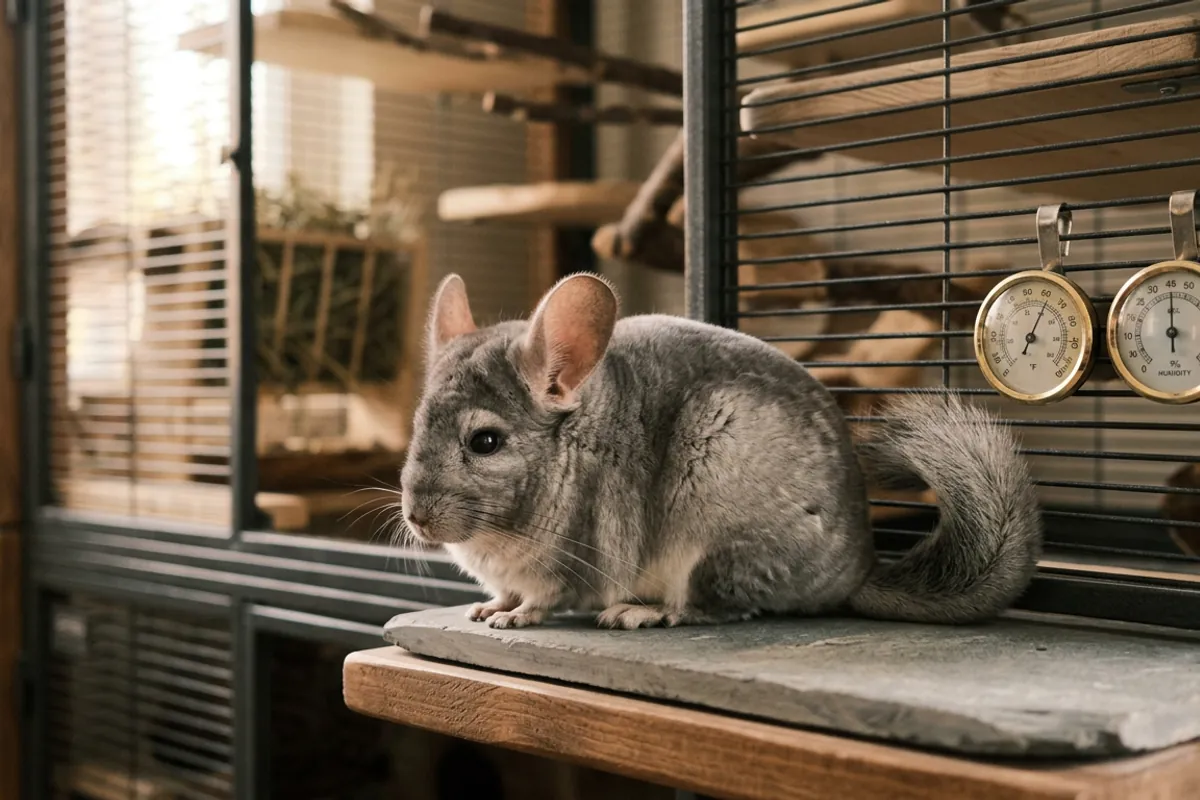
The first is heat. Chinchillas come from a cold, high mountain climate, and they carry the densest fur of almost any land mammal, which means they cannot shed heat the way you and I can. The comfortable range is 60 to 70°F (15 to 21°C). Above 75°F (24°C) is risky, and 80°F (27°C) and up is an emergency, faster still in humid air, because they cannot pant or sweat their way back out of it. Pebble's near miss in her first summer, a heatwave and a night at the emergency vet, is the reason not one word of this is negotiable. If your home cannot reliably hold that range, with air conditioning through the hot months if your summers climb, then this is not your pet yet. I keep a heat safety guide and a heat danger calculator for exactly this decision. A cooling stone helps at the margins but is never a substitute for a cool room. Kaytee Chinchilla Chiller granite stone As an Amazon Associate I earn from qualifying purchases. A thermometer and hygrometer on the cage means you are watching the real number instead of guessing at it. digital thermometer and humidity gauge with remote probes As an Amazon Associate I earn from qualifying purchases.
The second is time. A chinchilla commonly lives ten to twenty years, often fifteen or more, and they are crepuscular, most active in the evening and into the night, which does not always match a human schedule. Buying one is signing up for that entire stretch, through moves and job changes and everything else a decade and a half will throw at you. If you have read all of this and you are still in, then you are exactly the person who should be buying a chinchilla. If any of it made you pause, that pause is worth more than the animal's purchase price. I have written the fuller version in how to buy a chinchilla without regretting it later.
If you are still narrowing down where the animal comes from, choosing a healthy pet chinchilla picks up right where this leaves off.