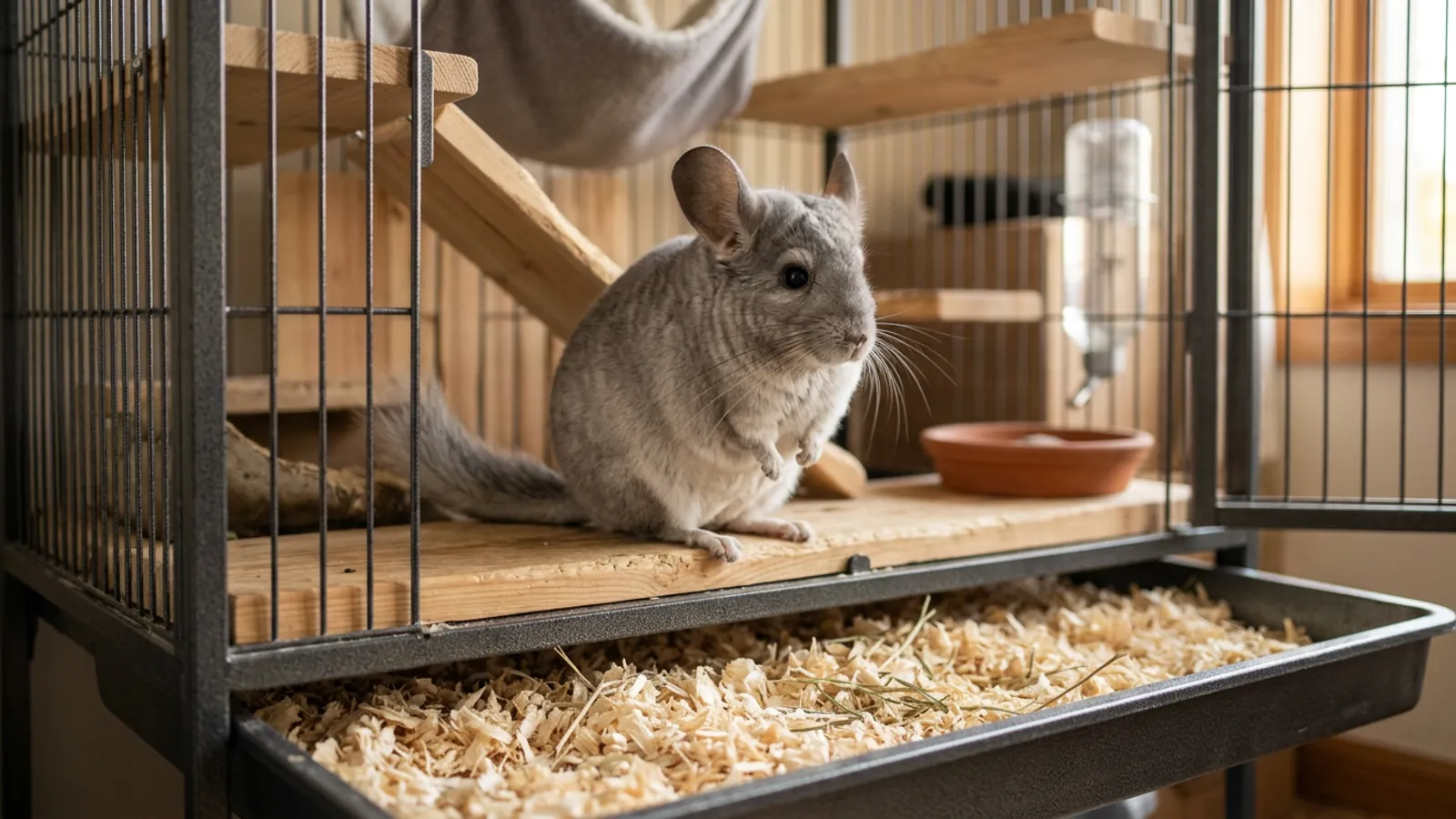
When someone asks me about chinchilla safe bedding, they are usually holding a bag in one hand and their phone in the other, waiting for me to bless it. I understand the instinct, but I have learned to slow that question down. Safe bedding for chinchillas is less about the brand printed on the bag and more about what the material is made of, how much dust it throws into the air, and whether it will hurt the animal if a mouthful gets chewed. A chinchilla is not a hamster. It does not burrow into a fluffy nest, and getting that one fact wrong sits behind most of the bedding mistakes I see people make.
What bedding is for, and what it is not
Chinchillas come from dry, rocky high country. They do not dig burrows or build nests the way a hamster or a gerbil does, so the deep fluffy layer people picture is not something a chinchilla wants or uses. In a proper cage, my two spend almost all of their time up on ledges and shelves, not down on the floor. That changes the whole job of bedding. It is not a bed. It is an absorbent layer in the pull-out tray, and its real work is soaking up urine and keeping the damp and the smell down between cleanings.
Two facts about the animal decide what belongs in that tray. First, chinchillas chew everything within reach, and some of what they chew gets swallowed, so bedding has to be non-toxic and safe in the gut in small amounts. Second, their lungs are sensitive and their fur is the densest of almost any land mammal, which means a dusty bedding is a genuine respiratory problem, not a minor annoyance. Hold those two facts in your head and most of the shelf at the pet store sorts itself into a yes pile and a no pile fast.
The beddings I use and trust
Three materials cover almost everything I have ever put in a cage. Kiln-dried pine shavings are the workhorse. The kiln drying drives off most of the aromatic oils that make raw softwood a problem, and what is left is absorbent, cheap, and low in dust if you buy a decent bag. I will be straight that this one is debated. A minority of keepers avoid all softwood on principle and will only run hardwood or paper. I have used kiln-dried pine for years without trouble, but if you would rather not weigh the argument at all, the next two options sidestep it entirely.
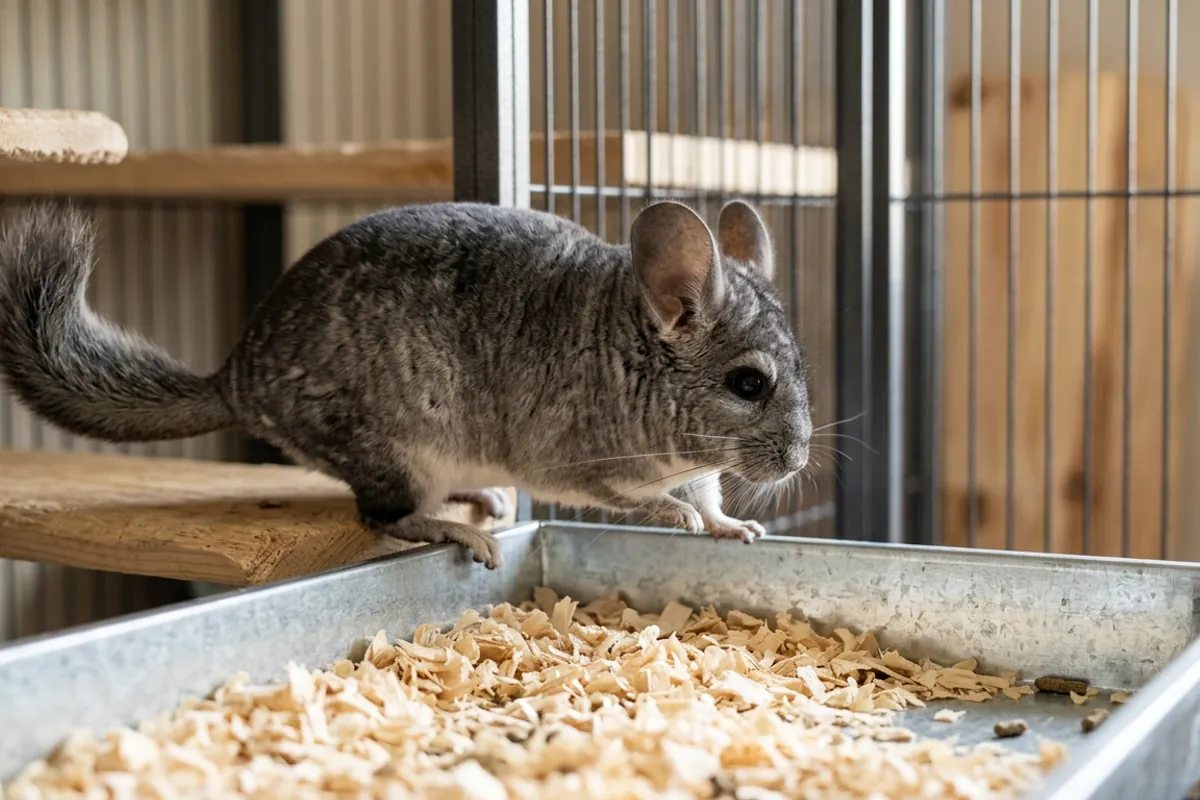
Aspen shavings are the safest wood bedding. Aspen is a hardwood with none of the aromatic oils that make cedar and raw pine risky, so there is nothing to argue about. It is a touch less absorbent than pine and often a little pricier, but it is a clean, boring, reliable choice, and boring is exactly what you want under an animal.
Paper-based pulp bedding is my third pick, and my first pick for a chinchilla recovering from anything or for anyone who wants no wood in the equation at all. It is soft, very absorbent, and the good versions are close to dust-free. Buy the plain, unscented, undyed kind and nothing fancier. Compressed wood pellets made from kiln-dried pine also work well down in the tray, since they are very absorbent and throw almost no dust, though they are firmer than shavings and I would not use them as the only surface an animal stands on. A quick word on quantity, because more is not better here. A couple of inches in the tray is plenty. None of these are exotic, and that is the point: safe chinchilla bedding is plain, dry, and low in dust, not clever.
The ones I will never put in a cage
Cedar is the one to memorize as a flat no. It smells pleasant to us because it is loaded with aromatic oils and phenols, and those same compounds irritate a chinchilla's airways and have been tied to liver stress over long exposure. The same caution covers any raw, un-dried, strongly scented softwood. If a bedding smells like a forest through the bag, that scent is the chemistry you are trying to keep away from the animal.
Clumping cat litter, clay or silica, is next, and it is dangerous on two fronts. It is dusty enough to hurt the lungs, and if a chinchilla eats it, which they will try, the clumping action that makes it convenient in a litter box can bind up inside them. Corn cob bedding I also leave on the shelf, because it holds moisture instead of pulling it away, which means it grows mold, and mold in a warm cage is a fast route to a sick animal.
Then there is the fluffy nesting material sold for small pets, the cotton-wool stuff in a bright bag. It is made for animals that build nests, which chinchillas simply do not, and it is genuinely hazardous to them. Thin fibers wrap around toes and legs and cut off circulation, and swallowed strands can cause an intestinal blockage. Skip scented and dyed beddings of every kind, and skip loose newspaper as a main layer, since the ink transfers and it turns to cold mush the moment it gets wet. One more that trips beginners up: hay is food, not bedding. Offer it in a rack so it stays clean, and do not scatter it across the tray floor as an absorbent layer, because soiled hay is both a waste and a mold risk. A chinchilla does not need a nest. It needs a dry floor and a good hiding spot, which are two different things.
Fleece liners, and the conditions that make them safe
Plenty of keepers, me included on some shelves, run fleece liners instead of loose bedding. Done right, fleece is comfortable, reusable, produces no dust, and keeps shavings from scattering across the room. Done wrong, it is a mold tray with a soft lid. The catch is that fleece does not absorb on its own. It wicks moisture through to whatever sits underneath, so a fleece setup needs an absorbent layer beneath it, an old towel or a purpose-made insert, and that layer has to be changed on a real schedule rather than when you happen to remember.
Two more conditions. Wash fleece without fabric softener, because the coating it leaves both kills the wicking you are relying on and is not something you want against an animal that grooms constantly. And watch the edges for chewing. A chinchilla that starts pulling threads out of a liner can swallow them, and long fibers carry the same blockage risk as nesting fluff does. If yours is a determined chewer, fleece may simply not be your setup, and that is fine. There is no prize for using it.
How your cage decides the bedding question
Where bedding goes depends entirely on how the cage is built, which is why I never answer a bedding question without asking about the cage first. A chinchilla belongs in a tall, mostly metal cage with solid wooden ledges and a deep pull-out tray at the bottom. Critter Nation double unit small animal cage As an Amazon Associate I earn from qualifying purchases. In that kind of cage the loose bedding lives down in the tray, and the animal lives up on the shelves, which is exactly the separation you want. If your cage has a wire mesh floor sitting over the tray, the bedding goes below the mesh, and you still need solid resting spots up top, because a chinchilla left to stand on wire all day develops sore, raw hocks, which is the start of chinchilla bumblefoot.
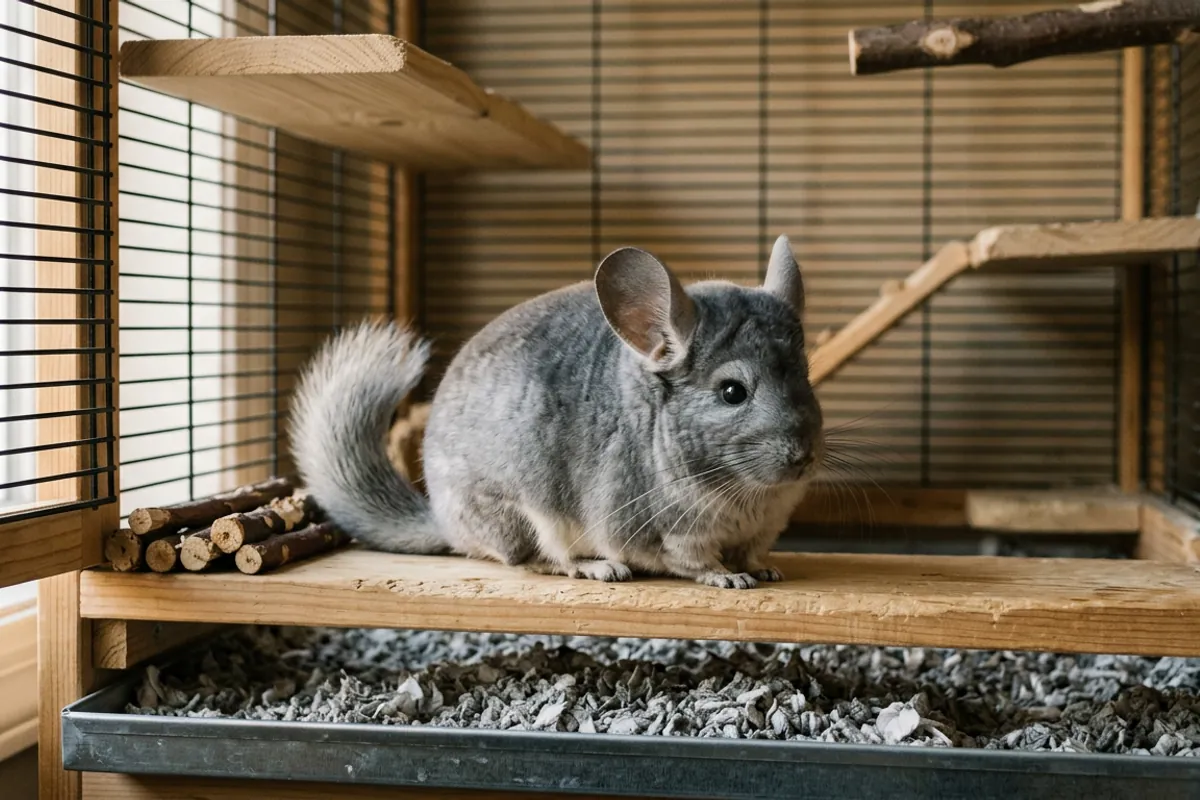
This is also where chewing comes back around. Chinchillas will gnaw wooden ledges and anything else with a grain, and that is normal and necessary, since their teeth grow for their whole life and chewing is how they keep them worn down. The answer is not to deny them wood but to give them the right wood. I keep a rotation of safe chews going at all times, apple wood among them. emours apple wood chew sticks, 40 count As an Amazon Associate I earn from qualifying purchases. That rotation takes the pressure off the ledges and off any bedding they can reach. If you want the fuller picture on why a cage has to be metal and how to fit one out, I go through it in the metal cage guide and the wider cage setup walkthrough. And if teeth are new territory for you, the chinchilla teeth piece explains why the chewing matters this much.
Dust, dye, and mold, the hidden hazards
The three things that turn an otherwise fine bedding into a bad one are dust, added scent or dye, and moisture with nowhere to go. Dust is the one people underrate the most. Pour a bag out near a lamp and watch the air. If a cloud hangs there, that cloud ends up in a set of very efficient little lungs, and respiratory trouble in a chinchilla is hard to treat once it takes hold. Low dust is not a luxury feature on the label, it is the entire point.
Scent and dye are the easy pair to rule out: you do not need either, and both are extra chemistry pressed against an animal that licks and grooms all day long. Buy plain. Moisture is the sneaky one. A bedding that holds water instead of wicking it grows mold, and a warm cage speeds that up, which is one more reason I stay strict about temperature and never let a damp tray sit. Comfortable for a chinchilla is 60 to 70°F (15 to 21°C), and a hot cage with a soggy tray is a mold factory. This is also a good place to say the obvious thing out loud: bedding is not a dust bath. The fine pumice powder your chinchilla rolls in is a separate thing with a separate job, covered in the dust bath guide, and it never doubles as cage bedding.
The cleaning rhythm that keeps safe bedding safe
The safest bedding on the market turns unsafe if you leave it too long, so the routine matters as much as the material does. I spot clean daily, pulling the obvious wet patches and any droppings collecting in the tray, which takes a minute and keeps ammonia from building. Ammonia is that sharp smell that stings your nose when you open the cage, and if you can smell it standing up, the concentration down at animal level is worse. A full bedding change, tray washed and dried completely before fresh bedding goes in, happens about once a week for me, sooner if I have more than one chinchilla or the weather is warm and things dry slowly.
Two habits make the whole thing easier. Dry the tray fully before refilling, because a wet tray under fresh bedding starts the mold clock immediately. And never use bedding as a substitute for cleaning. Piling more shavings on top of a soiled tray hides the smell from you but does nothing for the air the animal is breathing. If you want my longer routine for the whole cage rather than just the tray, it lives in the clean cage guide, and my full rundown of specific beddings, the ones I reach for and the ones I have written off, is in the chinchilla bedding piece. Get the material right and the rhythm steady, and bedding becomes the boring, solved part of chinchilla care that it always should have been.