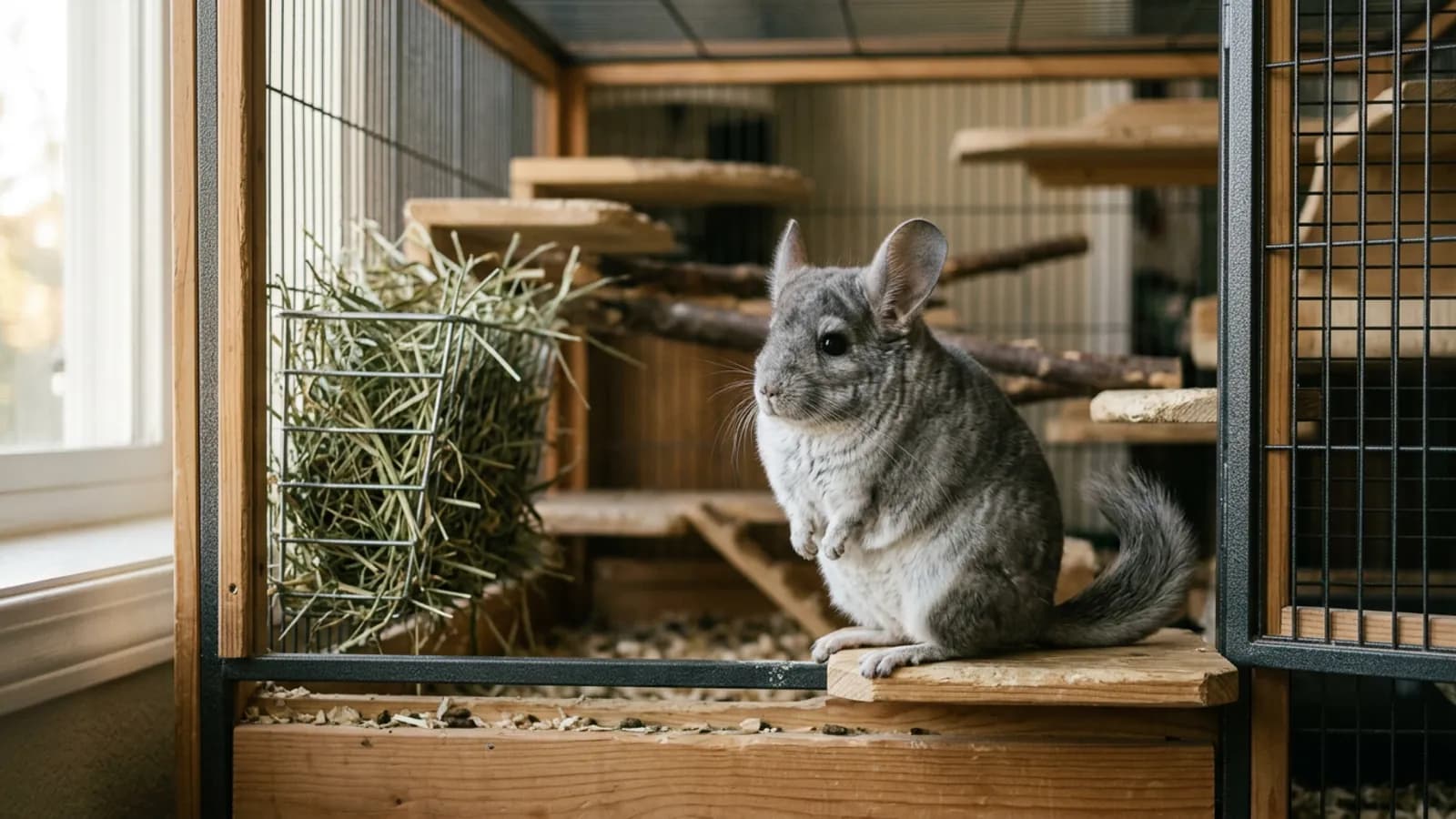
Ten years in, the question I get most from people just starting out is some version of "I want to buy a chinchilla, where do I begin?" It sounds simple. It is not, and the gap between how easy it feels and how much it actually asks is where most of the heartbreak lives. Buying a chinchilla is buying a fifteen-to-twenty-year animal with narrow temperature tolerances, teeth that never stop growing, and a strong preference for being left alone on its own terms. I am not here to talk you out of it. Pebble and Juniper have been the best company I could ask for. I am here to make sure that if you do it, you do it with your eyes open, because the decisions you make before the animal comes home shape everything that comes after.
Before you buy a chinchilla, decide if the life fits
The single most useful thing you can do before you buy a chinchilla is be honest about your home and your next fifteen years. Chinchillas are comfortable between 60 and 70°F (15 to 21°C). Above 75°F (24°C) they are at risk, and 80°F (27°C) and up is a genuine emergency, faster still when the air is humid. That is not a preference. Pebble came to me from an overheated attic, and her first summer with me brought a heatwave near-miss and a night at the emergency vet that I still think about. If your home swings hot in summer and you have no reliable way to hold a room cool, that is the answer, and it is a kind answer. Read the heat safety guidance before anything else, and if you want to see exactly where your room lands, the heat danger calculator will tell you plainly.
Then there is the lifespan. A well-kept chinchilla commonly lives into its mid to late teens, and some go further. I lay out what actually moves that number in the piece on how long chinchillas really live. This is not a pet you rehome when you move cities or change jobs. It is closer to committing to a young dog that will outlive several of your phones, your car, and possibly a relationship or two. If that timeline makes you flinch, listen to the flinch.
Where to buy a chinchilla, and where I would not
There are really only a handful of places to buy chinchillas, and they are not equal. The best source, by a wide margin, is a small breeder who keeps a manageable number of animals, knows each one, and can tell you the parents' ages, temperaments, and health history. A breeder like that will ask you questions back. They will want to know about your setup and your temperature control, and if they do not care where the animal is going, that tells you something about how they have kept it.
The second good source is rescue and rehoming. Both of my girls came to me this way. Juniper was a neglected rescue, and I manage her dental disease every single day because of how she started life. Rescues are honest work and deeply worth it, but go in knowing you may be inheriting a problem that was made before you ever showed up. Ask what is known about the history and get any vet records that exist.
Then there are pet shops, and here I get blunt. A chain store chinchilla can be perfectly healthy, but the odds are worse and the information is thinner. Staff turnover means nobody may know the animal's age or background, and the housing on the shop floor is often too warm, too bright, and too public for a nocturnal, heat-sensitive animal. I wrote a whole honest breakdown of the Petco chinchilla situation and what to check before you hand over money. None of this means never, it means walk in skeptical. For the general how-to of vetting any seller, my guide to buying a chinchilla for sale without getting hurt or ripped off and finding a chinchilla near me cover the ground in detail.
The one thing I will say flatly: avoid the impulse listings that bundle a "chinchilla and cage for sale" as a single cheap package. Nine times out of ten the cage is a plastic-heavy, too-small unit that you will replace within a month, and the low sticker hides that. I unpacked exactly what those listings are really selling in the chinchilla and cage for sale piece.
Buying a chinchilla online is not what it sounds like
People ask me all the time whether they can just buy a chinchilla online, and the honest answer is complicated. You cannot, and should not, have a live animal boxed up and shipped to your door like a paperback. What "buy a chinchilla online" really means, done responsibly, is that you find the seller online, a breeder's waitlist, a rescue's available list, a local classified, and then you go and meet the animal in person before any money changes hands. The internet is the introduction, not the transaction.
Be especially careful with listings that ask for a deposit to "hold" an animal you have never seen, or that want full payment up front for shipping across the country. That is where the scams cluster. A real breeder will happily let you visit or, at minimum, do a live video call showing you the animal, its parents, and its housing. If a seller resists that, close the tab. Meeting the chinchilla in person is also the only way to do the health check I am about to describe, and no photo, however sharp, replaces putting your own eyes on the animal.
What to check on the animal before you commit
When you finally meet a chinchilla you might buy, slow down. The cuteness is doing its job on you, so make yourself run the checklist anyway.
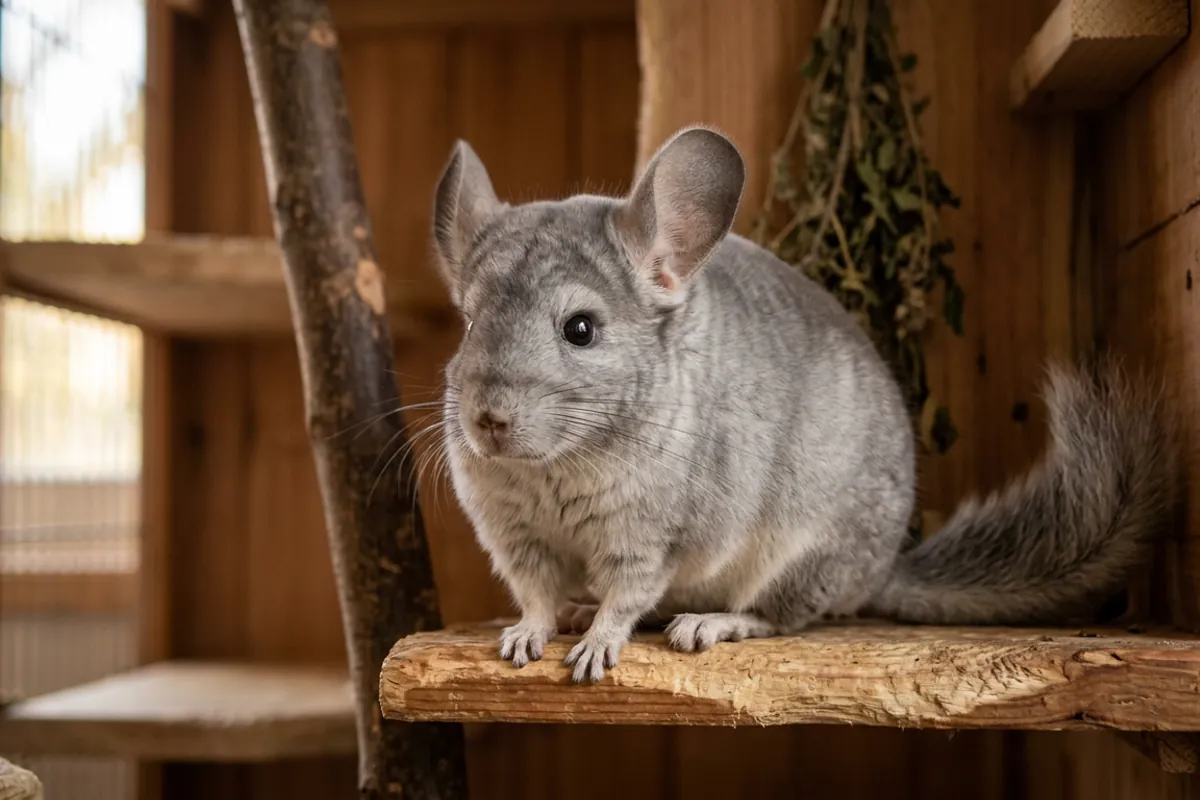
Start with the eyes and nose. Both should be clean and dry. A wet chin, crusty eyes, or any discharge around the nose is a reason to walk away, and I explain why a soaked or drooling face matters so much in the chinchilla wet piece. Wetness under the chin in particular can point to dental trouble, which in this species is expensive, chronic, and sometimes life-limiting.
Look at the coat. It should be dense, even, and clean, with no bald patches or bare-chewed sections. Watch how the animal moves. You want it alert and steady on all four legs, not hunched, not wobbly, not sitting apart from its cagemates as though it hurts. A chinchilla that is bright-eyed and curious, even a nervous one, is showing you good baseline health. One that sits pressed in a corner, flat and unresponsive, is telling you something is wrong.
If you can, ask about the teeth, or better, ask when the animal last saw an exotics vet. You will not be able to see the back molars yourself, and I would not try, but the front incisors should be aligned and not overgrown or broken. Because Juniper's dental disease is the thing I manage most closely, I take teeth seriously with every new animal, and my write-up on spotting malocclusion before it turns serious is the one I wish every buyer read first. Any real doubt about teeth or general health is a conversation for an exotics vet, not something to talk yourself past because you have already fallen for the face.
If you want to buy a white chinchilla, read this first
A lot of first-time buyers come in wanting a specific colour, and "buy white chinchilla" is one of the most common searches I see. I understand the pull. A pale chinchilla is striking. But there are things worth knowing before you pay a premium for colour.
First, colour is exactly that, colour. It does not change a single care requirement. A white chinchilla needs the same temperature control, the same unlimited hay, the same dust baths as a standard grey one. What a white chinchilla actually is, genetically, and what the label does and does not tell you, I cover in the white chinchilla piece. And if you are looking at an animal sold as pure white, it is worth understanding what a true albino is and why that label so rarely fits, and how a black and white coat differs from it.
Second, be wary of paying a lot extra for colour from a source that cannot show you healthy, well-cared-for parents. A responsible breeder prices in the work and the genetics honestly. A flipper prices in the hype. Colour should never be the reason you overlook a health red flag. I would take a robust, bright-eyed standard grey over a fragile white every day of the week, and so should you.
What it actually costs, before and after the sticker
The purchase price is the smallest number in this whole affair, and I want that to land before you budget. Depending on where you are and the source, the animal itself might cost anywhere from a modest rehoming fee to a few hundred for a specific colour from a breeder. I break the pricing down properly in the chinchilla price and what a chinchilla really costs articles, so I will not repeat all of it here.
What I will repeat is the part people forget. The cage is a real expense and the wrong one is a false economy. You want a tall enclosure made of metal and wood with wooden ledges, and no plastic anywhere the animal can reach it. A good metal and wood cage is not cheap. Critter Nation double unit small animal cage As an Amazon Associate I earn from qualifying purchases. Then there is the ongoing cost of hay, which never stops, because unlimited grass hay is the foundation of the whole diet. Oxbow Western Timothy Hay, 9 lb box As an Amazon Associate I earn from qualifying purchases. Add measured plain pellets, dust for bathing, safe wood chews to keep those ever-growing teeth worn down, and, crucially, a vet fund. Exotics vets are not cheap and chinchillas hide illness until it is advanced. If you cannot comfortably absorb a several-hundred surprise vet bill, you are not ready to buy yet, and that is worth knowing before rather than after.
Bring the home together before the animal
The mistake I see most is buying the chinchilla first and scrambling for the setup after. Do it the other way around. The enclosure should be assembled, placed in the coolest, quietest room you have, and stocked before the animal ever arrives.
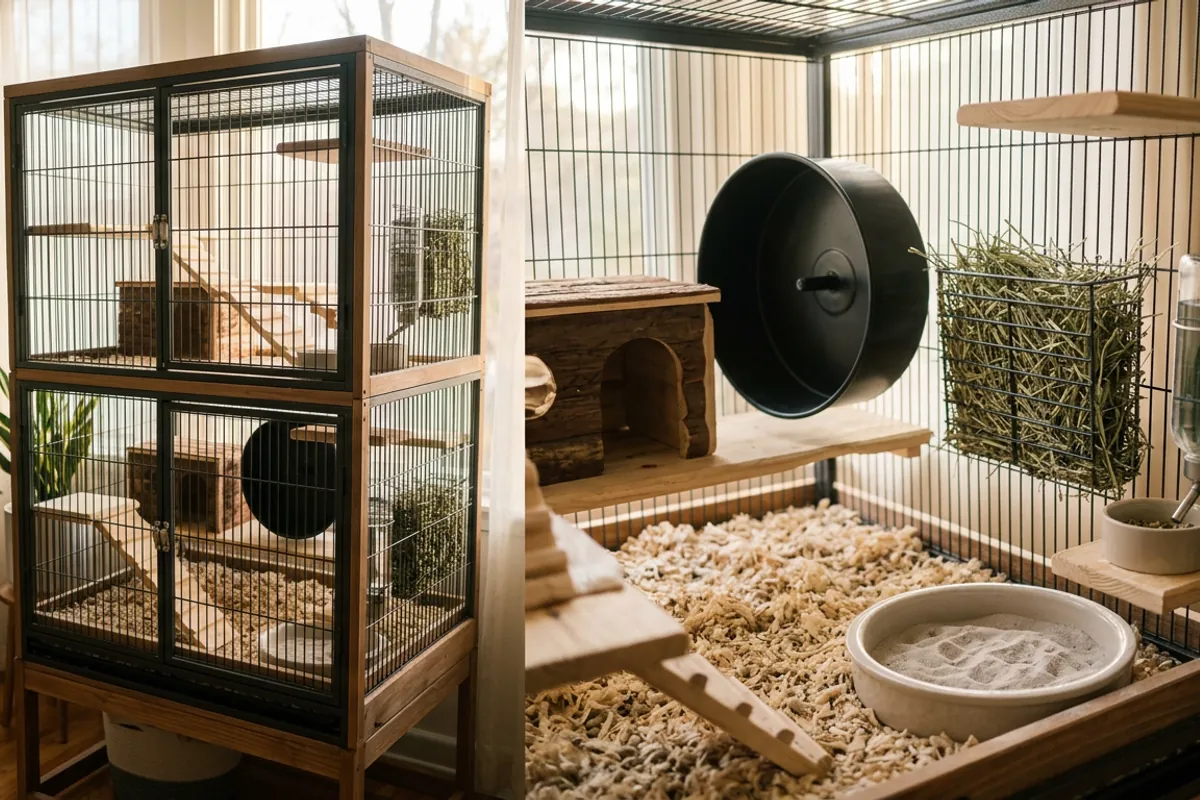
Get the cage right first. My guides on setting up a chinchilla cage the right way, once and the fuller cage setup walk through the layout. Inside it you want wooden ledges at varied heights, a hide, and a solid-surface exercise wheel, never a wire one, which can catch and break feet and tails. 15 inch Chin Spin solid surface chinchilla wheel As an Amazon Associate I earn from qualifying purchases. Give the animal plenty of safe wood to chew from day one, because dental wear is not optional maintenance, it is survival, and a variety keeps them interested. emours apple wood chew sticks, 40 count As an Amazon Associate I earn from qualifying purchases. Set up dust bathing properly with real chinchilla dust, which is fine volcanic pumice, not sand and never water. The dust bath piece explains the how and the how-often. Lixit Blue Beauty chinchilla dust, 3 lb As an Amazon Associate I earn from qualifying purchases.
Put a thermometer and hygrometer in the room and actually watch them, especially through the first summer. digital thermometer and humidity gauge with remote probes As an Amazon Associate I earn from qualifying purchases. Have a cooling stone ready for warm days so the animal has somewhere to shed heat. Kaytee Chinchilla Chiller granite stone As an Amazon Associate I earn from qualifying purchases. And know your exotics vet before you need one, because finding a chinchilla-literate vet in a panic at 9pm is exactly the situation you want to have already solved. If you want the honest, unglamorous picture of daily life with one of these animals before you commit, chinchillas as pets, the ten-year version is the piece I would hand a friend. Get all of this standing before the animal comes home, and you turn the first weeks from a scramble into the calm, boring, well-run start that a chinchilla actually needs.