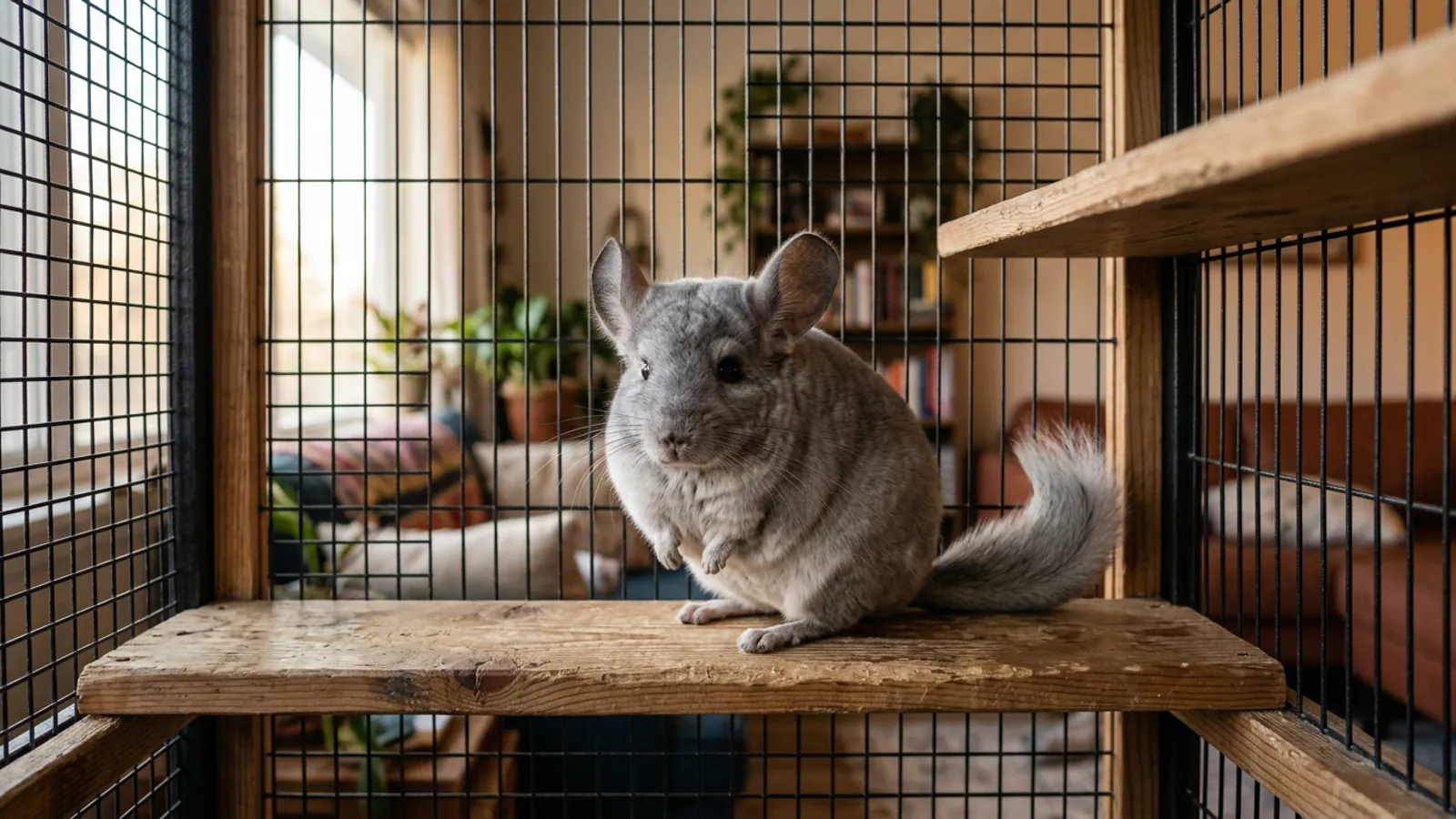
When people ask me about chinchilla lifespan, they usually brace for the answer they would get about a hamster: three years, maybe four. Then I tell them a healthy chinchilla can share your home for fifteen or twenty years, and the room goes quiet. That number is the single most important fact about owning one of these animals, and it is the one pet shops mention least. Pebble has been with me for years now and she is nowhere near old. A chinchilla is not a starter pet or a phase. It is a commitment closer to a dog, sometimes closer to a childhood that lasts into adulthood, and everything else about their care flows from that one long clock.
How long chinchillas live
The widely accepted range for a pet chinchilla is 10 to 20 years, with well-kept animals commonly reaching the mid-teens and beyond. Fifteen is the number I use as a fair expectation for a chinchilla that gets the right temperature, the right diet, and a vet who knows exotics. Some individuals push into their late teens without any drama, and a rare few reach twenty or a little past it. If you see a breeder or a forum post claiming their chinchilla hit an extraordinary age, it is not impossible, but it sits at the far edge of the curve, not the middle of it.
Wild chinchillas do not live anywhere near that long. In the mountains of South America they contend with predators, drought, and cold nights, and most estimates put their wild lifespan closer to 8 to 10 years at best. The long captive lifespan is not luck. It is the direct result of removing the things that kill them in the wild and, crucially, not replacing those with the things that kill them in our homes. Heat, bad diet, and untreated teeth are the modern predators, and unlike a hawk, they are entirely within your control.
I want to be clear about where these numbers come from. There is no giant, decades-long study tracking thousands of pet chinchillas from birth to death. The range is the pooled experience of long-time keepers, rescues, breeders, and exotic vets, and it has been stable for a long time. That is why I give you a range and not a single confident figure. Anyone who tells you a chinchilla lives "exactly" a set number of years is inventing precision that does not exist.
Why the same animal can live 8 years or 20
Here is the part that matters. Two chinchillas from the same litter can live wildly different lengths of time, and the difference is almost never genetic bad luck. It is husbandry. The gap between a chinchilla that dies at eight and one that thrives at eighteen is made of daily decisions: what the room temperature sits at in July, whether hay is in front of them every hour of every day, whether the cage lets them move and chew, and whether a subtle problem gets to a vet before it becomes a crisis.
This is genuinely good news, because it means lifespan is not something that happens to you. It is something you build. Every core care rule on this site exists because it moves that clock in one direction or the other. If you want the full picture of how the animal's biology sets those rules, I laid it out in what a chinchilla really is, and the practical version lives across the chinchilla care guides. Nothing there is fussy for the sake of it. Each rule is buying years.
Chinchilla lifespan versus rabbit lifespan, and a name that confuses people
I get asked about chinchilla rabbit lifespan often, and the phrase hides two different things.
The first is a straight comparison. A pet rabbit typically lives around 8 to 12 years with good care, and a chinchilla generally outlasts it, often by a wide margin. So if you are weighing the two as pets, understand that the chinchilla is usually the longer commitment of the two, not the shorter one that its small size suggests.
The second is a genuine naming collision. There is a breed of rabbit called the Chinchilla rabbit, and it is not a chinchilla at all. It is a rabbit that was bred to have fur resembling a chinchilla's silver-gray coat, which is where it got the name. It comes in a few sizes, from the standard up to the Giant Chinchilla rabbit. Its lifespan is a rabbit's lifespan, that same 8 to 12 year window, and it needs rabbit care, not chinchilla care. If you went looking for chinchilla lifespan information and landed on a page about the Chinchilla rabbit, the numbers and the entire care plan will be wrong for your animal. A real chinchilla is a rodent, dust-bathed and never wet, that lives longer than the rabbit that borrowed its name.
Does a female chinchilla live longer?
On female chinchilla lifespan, I would not promise you anything either way. There is a common belief that females live a little longer, and females do tend to run slightly larger than males, but I have not seen solid, well-controlled evidence that sex meaningfully changes how long a well-kept pet chinchilla lives. Both sexes sit in that same 10 to 20 year range.
What I can say with more confidence is that breeding shortens lives, and that pressure falls on females. Pregnancy and repeated litters are a real physical toll, and a female bred hard by a careless breeder can be worn down years before her time. So if there is a lifespan gap tied to sex, I suspect a lot of it is really a breeding gap wearing a disguise. For a pet female who is never bred and is kept cool and fed right, I would expect the same long life I would expect from a male. Do not choose a sex hoping to buy extra years. Choose the individual, then give it the care that extends the clock.
Heat is the fastest way to cut a life short
If I could make owners remember one thing, it would be this: heat kills chinchillas faster than almost anything, and it kills them quietly. Their dense fur, the same coat that makes them so soft, traps warmth with brutal efficiency. They cannot pant well and they do not sweat. A temperature you would find pleasant can be a slow emergency for them.
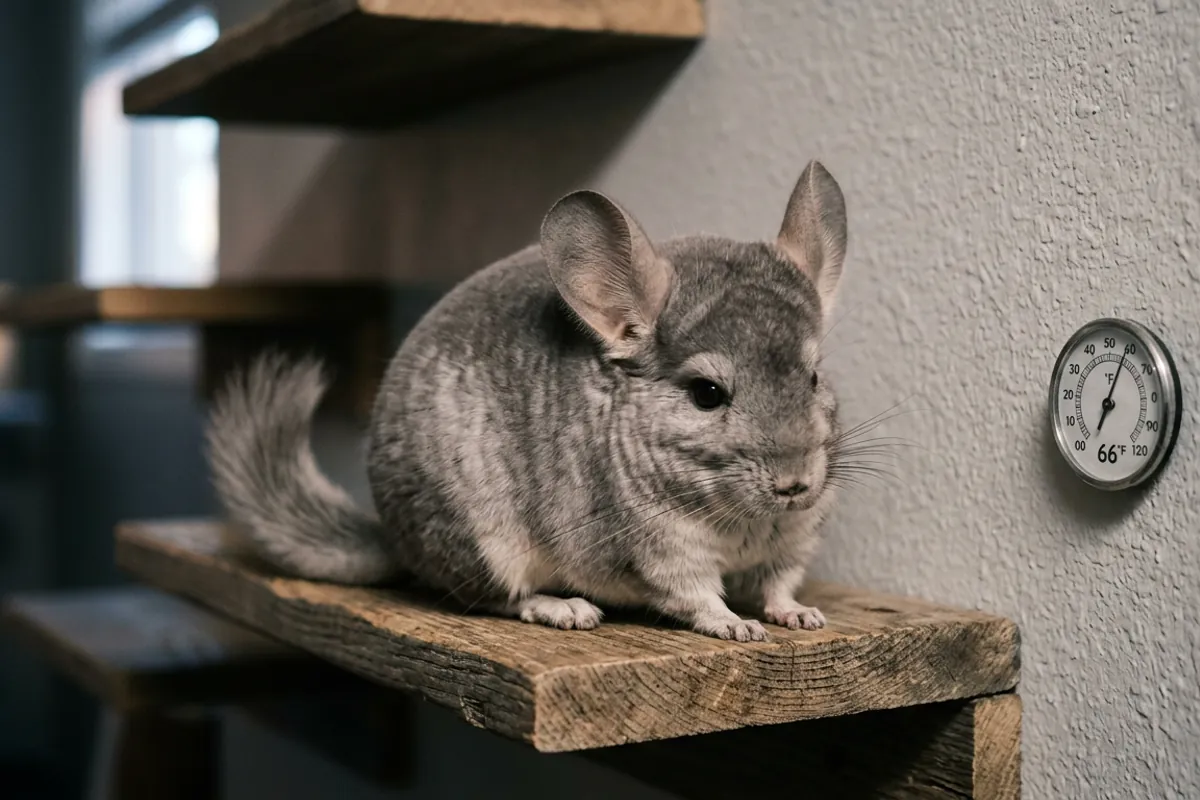
The comfortable range is 60 to 70°F, which is 15 to 21°C. Above 75°F, about 24°C, you are in risky territory. At 80°F, roughly 27°C, and up, you are in an emergency, and humid air makes all of it worse and faster because it strips away what little cooling they can manage. This is not me being cautious. This is the line between a fifteen-year animal and a dead one.
I write about this the way I do because of Pebble. She came to me from a rehome out of an overheated attic, and her first summer here brought a heatwave that nearly took her. We spent a night at the emergency vet, and I have never forgotten how fast a normal-looking chinchilla slid into a crisis. Every heat rule I give is that night turned into instructions. Learn the warning signs before you ever need them, in chinchilla heat stroke warning signs, and use the heat danger calculator to check your own room honestly rather than guessing. A single bad afternoon can erase a decade of otherwise perfect care. There is no undoing it, so the whole game is prevention. The broader plan lives in chinchilla heat safety.
Teeth are the slow way it goes wrong
If heat is the fast killer, dental disease is the slow one, and it takes just as many years off the total in the end. A chinchilla's teeth never stop growing, for its entire life. That is normal biology, and it only stays safe when the animal is grinding those teeth down constantly against the right food. Take that grinding away and the teeth overgrow, the roots can push the wrong way, and you get pain, a chinchilla that stops eating, and a long expensive decline.
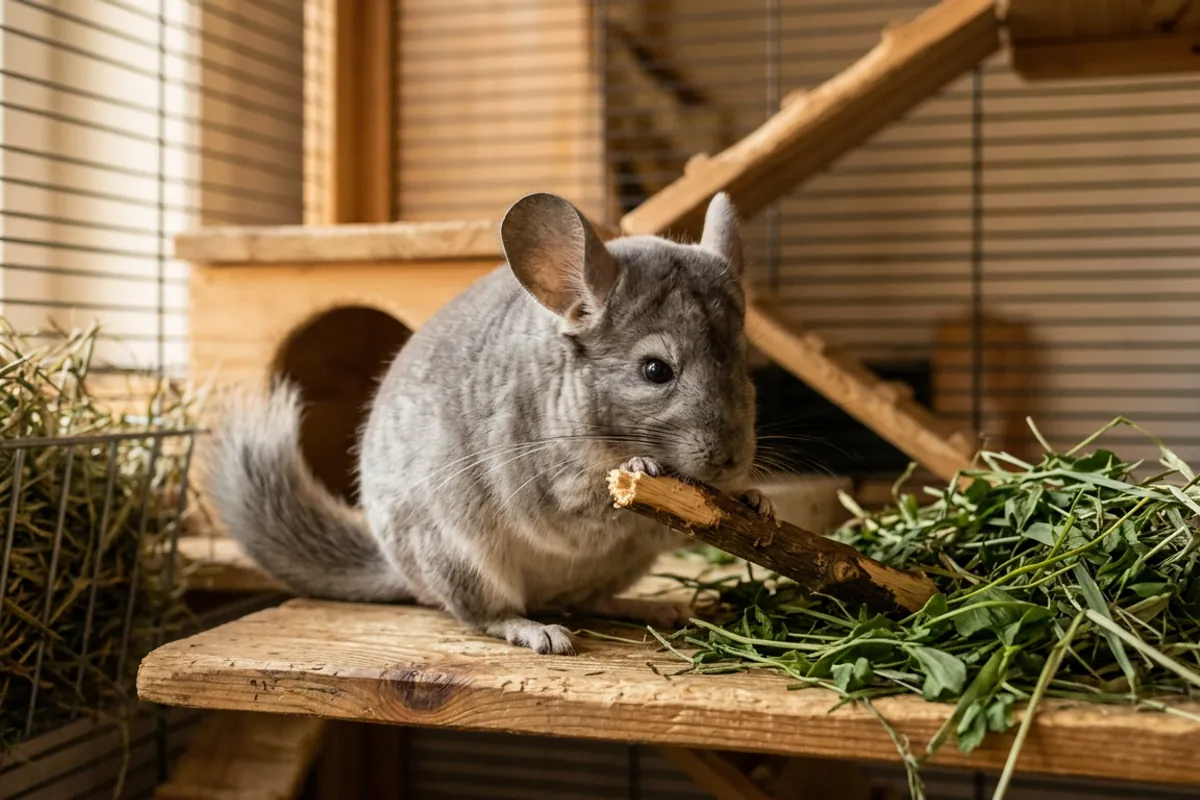
Juniper is the reason I am uncompromising about this. She came to me as a neglected rescue with dental disease I now manage every single day, and living with it up close has shown me exactly what happens when teeth do not get worn down. The prevention is not complicated, but it is non-negotiable: unlimited grass hay in front of them at all times, which is what keeps the teeth in check, plus a real variety of safe wooden chews so they never run out of things to gnaw. Loose timothy hay by the armful is the foundation here.
Oxbow Western Timothy Hay, 9 lb box As an Amazon Associate I earn from qualifying purchases.
Learn to spot trouble early, because a chinchilla in dental pain hides it well until it is bad. Weight loss, drooling, dropping food, pawing at the mouth, or a sudden pickiness all mean a vet visit, not a wait-and-see. I walk through the signs in chinchilla teeth problems and the full routine in chinchilla teeth and health. Teeth are a place where an experienced keeper's eyes buy you time, but the treatment itself belongs to an exotics vet, every time.
What a long life asks of you
A fifteen to twenty year animal changes the maths of ownership, and it is fairer to face that before you bring one home than to discover it halfway through. This is a pet that may outlast jobs, moves, and relationships. It needs a home that can stay cool through every summer of those years, which for a lot of people means air conditioning is not optional. It needs a keeper who will still be interested and available in a decade. I go through the real long-term budget, including the vet fund you should be building from day one, in what a chinchilla really costs, because the price tag at the pet shop is the smallest number you will ever spend on this animal.
The daily version of a long life is simpler than it sounds, and it comes down to a handful of things done consistently. Keep the room in that 60 to 70°F band and never gamble on a hot spell. Feed unlimited grass hay first, with a measured amount of plain pellets as a supplement and nothing sugary. Offer a dust bath in fine volcanic pumice dust a few times a week and never, ever water, because their fur is not built to get wet and dry safely. Give them a tall metal-and-wood cage with room to jump and wooden ledges to climb, and if you use a wheel, use a solid-surface one because wire wheels break legs. I put the full setup together in chinchilla cage setup, and if you are still shopping, choosing a cage without buying the wrong one twice will save you money and save the chinchilla a bad start.
None of that is exotic. It is the same short list, repeated for years, that separates the eight-year chinchilla from the twenty-year one. The diet details are in chinchilla diet, food, and hay, and if you have not brought the animal home yet, do it carefully using how to buy a chinchilla without getting hurt or ripped off, because a healthy start from a decent source is the first year of that long clock already in your favor.
That is really the whole truth about chinchilla lifespan. The long number is real and it is reachable, but it is not a promise that comes in the box. It is the sum of a great many ordinary days where you kept the room cool, kept the hay coming, and did not cut a corner that could not be uncut. Do that, and you are not keeping a small rodent for a couple of years. You are signing up for a companion who could still be leaping around your living room when a good chunk of your own life has gone by.