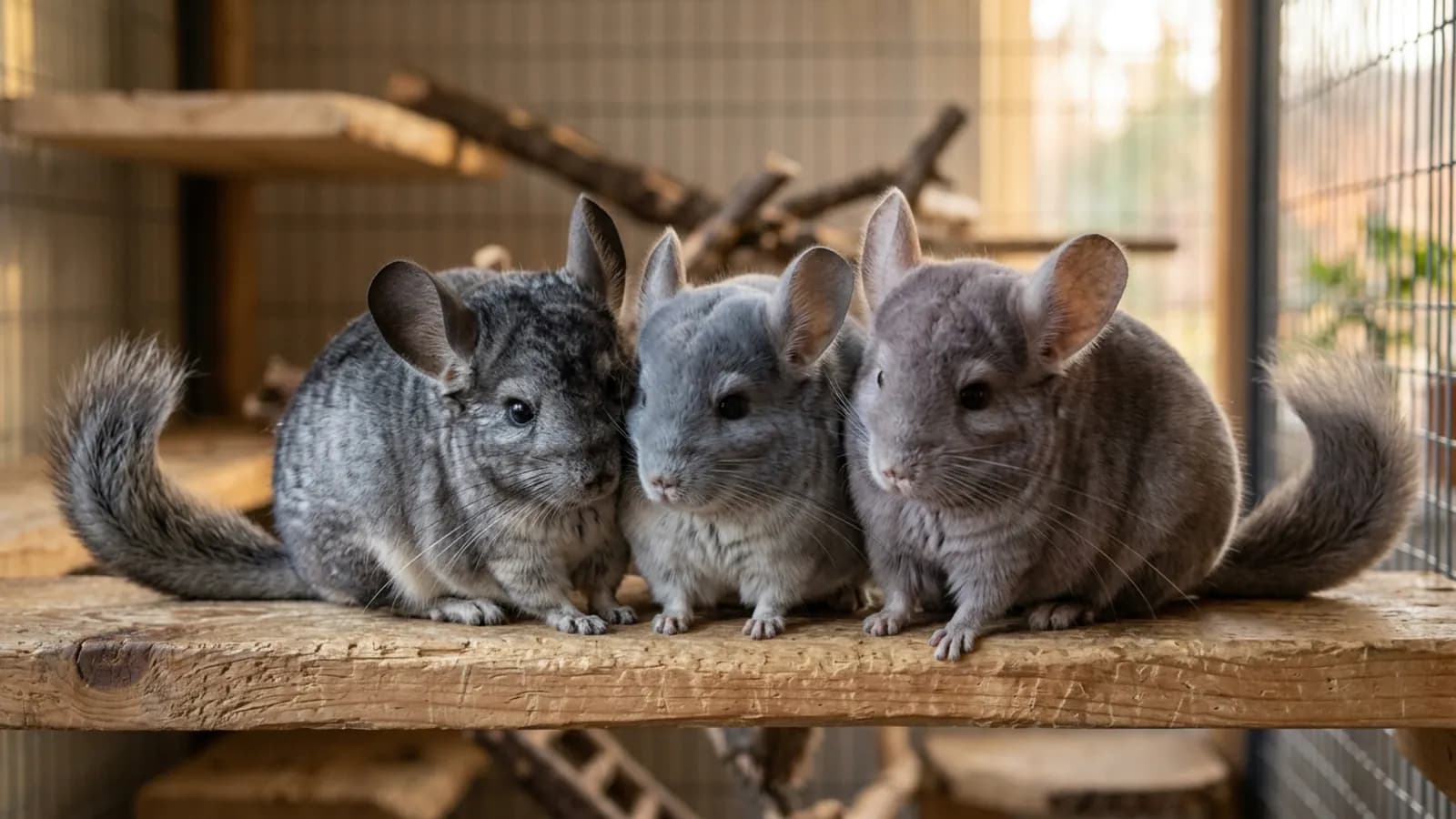
When people ask me about rare chinchilla colors, they almost always have a picture in their head first: a lavender animal, a blue one, something that looks nothing like the silver-gray I started with. Then comes the real question, which is usually about price. After ten years of keeping these animals and a lot of time spent reading up on how their coats are actually built, I have a blunt answer that disappoints some people and reassures others: every rare color is still just a chinchilla, and the color is the only thing that is rare about it. The genetics behind the unusual coats are genuinely interesting, and a few of the "rare" ones carry breeding risks worth understanding. But none of it changes how the animal eats, how it handles heat, or how long it lives. Let me walk through where these colors come from, what actually makes one rare, and where the marketing runs ahead of the biology.
Where chinchilla colors actually come from
Wild chinchillas are one color: the agouti gray that most people picture, a coat that reads silver from a distance but is banded up close, with a dark tip, a lighter middle, and a slate underlayer on each hair. That banding is why a standard gray shimmers when it moves. Everything else you will ever see for sale is a mutation, or a stack of mutations, layered on top of that wild-type base.
A color mutation is a change in a single gene that alters how pigment is laid down in the fur. The first ones showed up in captive breeding populations over the last century, one at a time, and keepers named them after the person or ranch where the mutation first appeared. That is why the names sound so odd next to each other. Wilson white, Tower beige, Gunning black, Sullivan violet: these are not describing shades on a paint chart, they are describing distinct genetic events. Understanding that is the whole key to understanding rarity, because a color is common or rare depending entirely on how its gene behaves when you try to pass it on.
There are two things a gene can be that matter here. It can be dominant, meaning one copy is enough to show the color, or recessive, meaning the animal needs two copies, one from each parent, before the color appears at all. That single distinction sorts almost every chinchilla color into "easy to produce" or "slow and scarce." If you understand nothing else about coat genetics, understand that, because it explains the price tags better than anything a seller will tell you.
What actually makes a color rare
A dominant mutation spreads fast. Because one copy shows, every animal carrying it wears it, so a breeder can see exactly what they have and pair for it in a single generation. Beige, white, and the black velvets are all dominant, and that is why they are everywhere. They are not the wild type, but they are common, and a common mutation is not a rare color no matter how striking it looks.
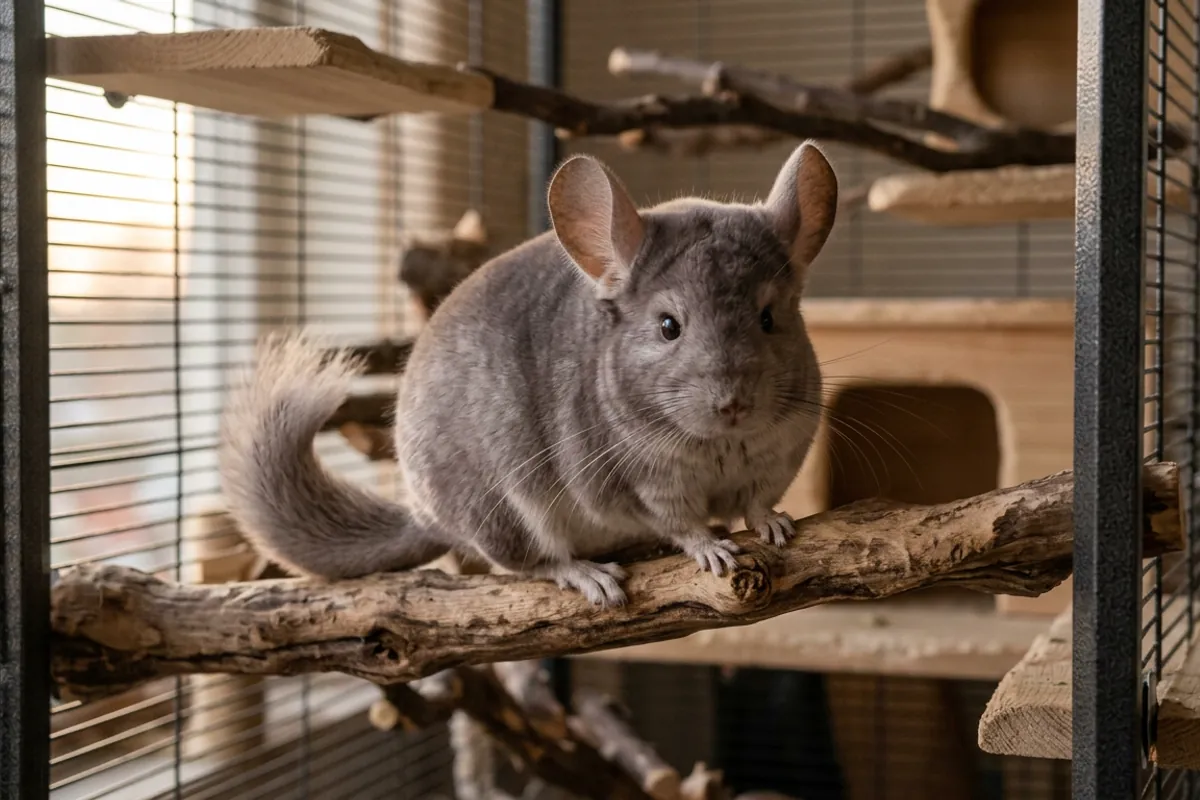
A recessive mutation is the opposite story. An animal can carry one copy and show nothing at all, looking like an ordinary standard gray while quietly holding the gene. To get the color to appear, you have to pair two carriers, and even then only some of the litter will show it. That means a recessive color can hide in a line for generations, and building a herd that reliably produces it takes patience measured in years. Sapphire, violet, and charcoal are recessive. That is the real reason they are rare and expensive: not because the animals are fragile or exotic, but because the gene is slow to bring to the surface.
So when you see a color described as rare, the honest translation is usually "recessive, and therefore slow to breed," or "a newer mutation that few lines carry yet." It is a statement about breeding math, not about the animal's needs or its worth as a pet. A rare-colored chinchilla is not more delicate, does not live longer or shorter, and does not need a single thing that a standard gray does not.
Sapphire and violet, the slow blues
The two colors people most often mean by "rare" are sapphire and violet, and both are recessive dilutions of the standard gray. They soften and cool the coat rather than darkening or lightening it dramatically, which is exactly why they read as special.
Sapphire is a dilute with a genuinely bluish cast, a clean soft gray with a blue undertone instead of the warmer slate of a standard. Because it is recessive, and because the mutation is relatively uncommon in the first place, a good sapphire is one of the harder colors to find. Violet is the one people mistake for purple. It is a recessive gray without the dark tipping of the standard, so instead of a crisp silver you get a soft, hazy coat with a faint lavender or dove tone to it. It is beautiful in person, and it is emphatically not purple in the way a child would draw purple. If you have been told there is a truly purple animal out there, it is worth reading what violet really is and why a purple chinchilla is a description of that same soft gray, not a new pigment. The same goes for sapphire: the blue is real but subtle, and no color of coat changes the animal underneath it.
Both of these take years to establish in a line precisely because you cannot see the carriers. A breeder working toward good violets is playing a long game, tracking which apparently-gray animals carry the gene and pairing accordingly. That labor is what you are paying for when a violet costs several times what a standard does.
Ebony, charcoal, and the dark end
At the opposite end from the dilutes sit the dark colors, and this is where the genetics get genuinely debated. Ebony is the deep, glossy black-into-gray color that keepers prize when it goes truly dark, with the pigment carried all the way down the belly instead of the pale underside a standard shows. Here is the honest part: ebony does not behave like a simple one-gene recessive. Breeders generally treat it as something that builds over generations, deepening with selective pairing, and there is no tidy agreement on the exact genetic model. A light ebony and an extra-dark ebony are the same color name at very different intensities, and that intensity is part of what makes a strikingly dark one uncommon. I would rather tell you plainly that the mechanism is not fully settled than hand you false precision about it.
Charcoal is a separate dark mutation, recessive, and it lacks the sheen that ebony carries. Side by side, an ebony looks polished and a charcoal looks flat and matte, though the two names get muddled constantly in sale listings. Both are dark, both can look dramatic, and neither one changes the fact that you are looking at a normal chinchilla coat with more pigment in it.
The dark colors also stack with other mutations, which is where a lot of the fancy names come from. Combine the black velvet gene with ebony and you get an animal marketed under yet another label, and the black velvet coat itself is one of these stacking pieces rather than a standalone rarity. A brown chinchilla, often sold as brown velvet or tan, is one of these combinations too: the brown is what you get when beige meets ebony, not a separate rare pigment of its own.
The lethal genes hiding behind white and velvet
This is the part I most want owners to understand, because it is the one place where the genetics stop being trivia and start mattering for a living animal. Two of the common dominant mutations, the Wilson white and the Gunning black velvet, carry what breeders call a lethal factor. One copy gives you the color. Two copies, which you would get by pairing two whites together or two velvets together, are not viable, and those embryos are lost.
What that means in practice is that responsible breeders never pair white to white or velvet to velvet. A white chinchilla is always bred to a non-white, and the same rule governs velvet. If you are buying from someone and they cannot tell you the colors of both parents, or they talk about pairing two whites to get "more white babies," that is a real red flag about how much they understand the animals they are selling. This is not a rare-color problem exactly, since white and velvet are common, but it is the reason some of the flashier combination colors are harder to produce safely: you are threading between two lethal genes.
White itself deserves a note because it is so often confused with albino. A true albino, with no pigment at all and pink eyes, is genuinely rare and quite different from the white mutation, which is a patterned or mosaic white with normal dark eyes. Most animals sold as white are the mosaic type, and the difference is worth knowing before you pay a premium for a label. The black and white and mosaic coats are patterns of that same white gene, which is why a mosaic is a pattern and not really a color in its own right.
Beige, brown, and the combination colors
Beige is a dominant mutation, and it comes with a wrinkle worth knowing: it shows incomplete dominance, meaning one copy gives you a medium beige and two copies give you a lighter, pinker animal often called homozygous beige or homo beige. Beige animals typically have red-toned eyes and pinkish ears, which is part of their appeal.
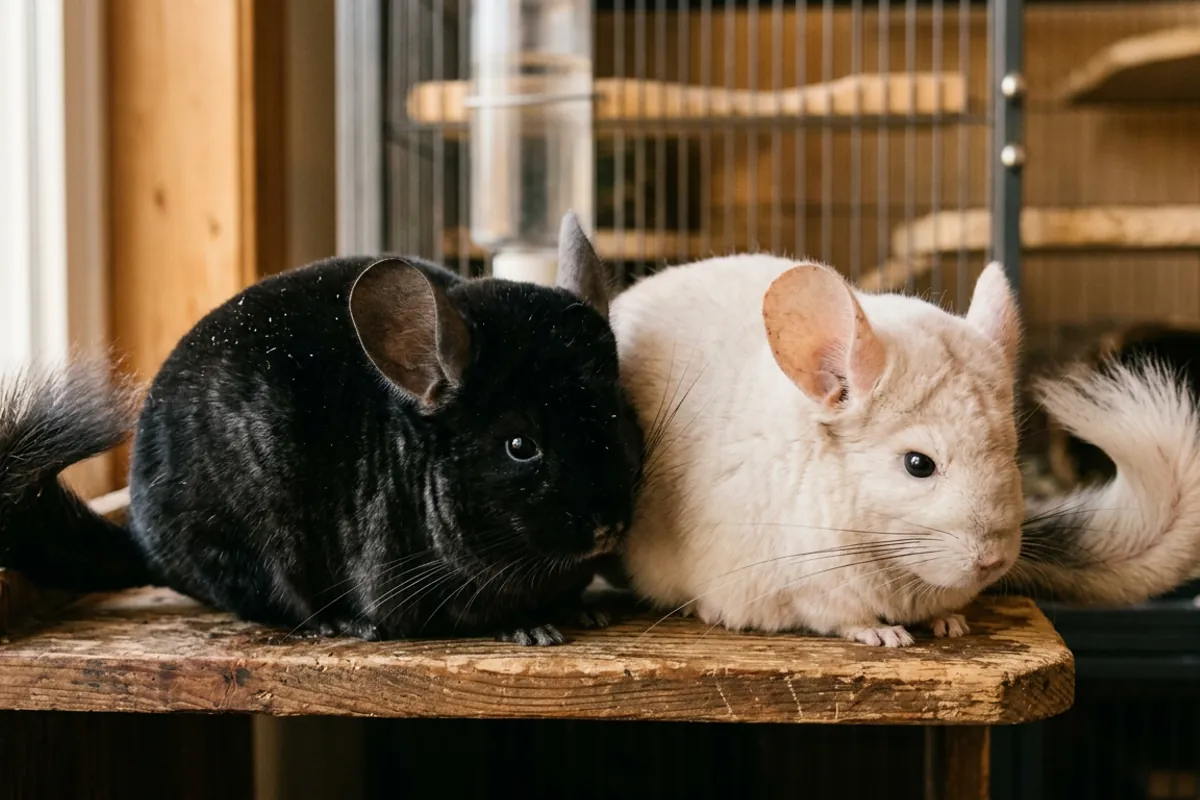
Layer beige onto white and you get the soft cream-and-pink animal sold as pink white, which looks exotic and is really just two well-understood genes sitting together. Layer beige onto ebony and you drift toward the browns. Almost everything with an unusual marketed name is a combination like this: a stack of two or three known mutations, given a new label to make it sound like a distinct rarity. Goldbar is one of the genuinely newer and scarcer mutations, a warm gold-toned coat that few lines carry, and it is fair to call it rare in the sense that it has not spread widely yet. But even there, the honest framing is "an uncommon mutation," not "a different kind of animal."
Once you learn to read the names as genetic ingredients rather than shades, the whole catalog gets a lot less mysterious. A long list of impressive-sounding colors usually resolves into a short list of mutations combined in different ways, with the recessive ones and the newest ones carrying the higher price tags.
What a rare color never changes
Here is the part I care about most, because it is where the money and the animal's welfare actually meet. A rare color changes the price and nothing else. It does not change what the animal eats, how it must be kept cool, how it bathes, or how long it lives.
Every chinchilla, sapphire or standard or the darkest ebony you have ever seen, needs unlimited grass hay as the base of its diet, with plain pellets as a small measured supplement on the side. Oxbow Western Timothy Hay, 40 oz bag As an Amazon Associate I earn from qualifying purchases. Good hay keeps the constantly-growing teeth worn down, and my rescue Juniper, who came to me with dental disease, is the reason I will not soften that point for any coat color. If you want the full picture, the diet and teeth guides lay it out.
Every chinchilla bathes in dust, never water, rolling in fine volcanic pumice to keep that dense coat clean and free of oil. Lixit Blue Beauty chinchilla dust, 3 lb As an Amazon Associate I earn from qualifying purchases. The coat that makes a violet or a sapphire so beautiful is exactly the coat that traps heat and moisture against the skin, which brings me to the thing I am relentless about.
Heat kills chinchillas, and color has nothing to do with it. My Pebble came out of an overheated attic and spent a night at the emergency vet in her first summer, and that scare is why I hold the line hard here. The comfortable range is 60 to 70°F, roughly 15 to 21°C. Above 75°F, about 24°C, you are into risky territory. At 80°F, around 27°C, and up, it is an emergency, and it gets there faster in humid air. A pricey coat does not buy the animal one degree of extra tolerance. If anything, the same dense fur that makes a rare color striking is the fur that cannot shed heat, so the heat safety rules and the temperature guidance apply to your expensive violet exactly as hard as to a standard gray. Know the warning signs of heat stroke before summer, not during it.
So by all means fall for a color. I understand the pull of a soft blue coat completely. Just buy the animal, not the label, keep the parents' colors in mind if you ever hear breeding talk, and spend your real attention on hay, dust, heat, and teeth. Those four things decide whether your chinchilla thrives for its full fifteen-plus years. The color, rare or common, is only ever the part you can see.