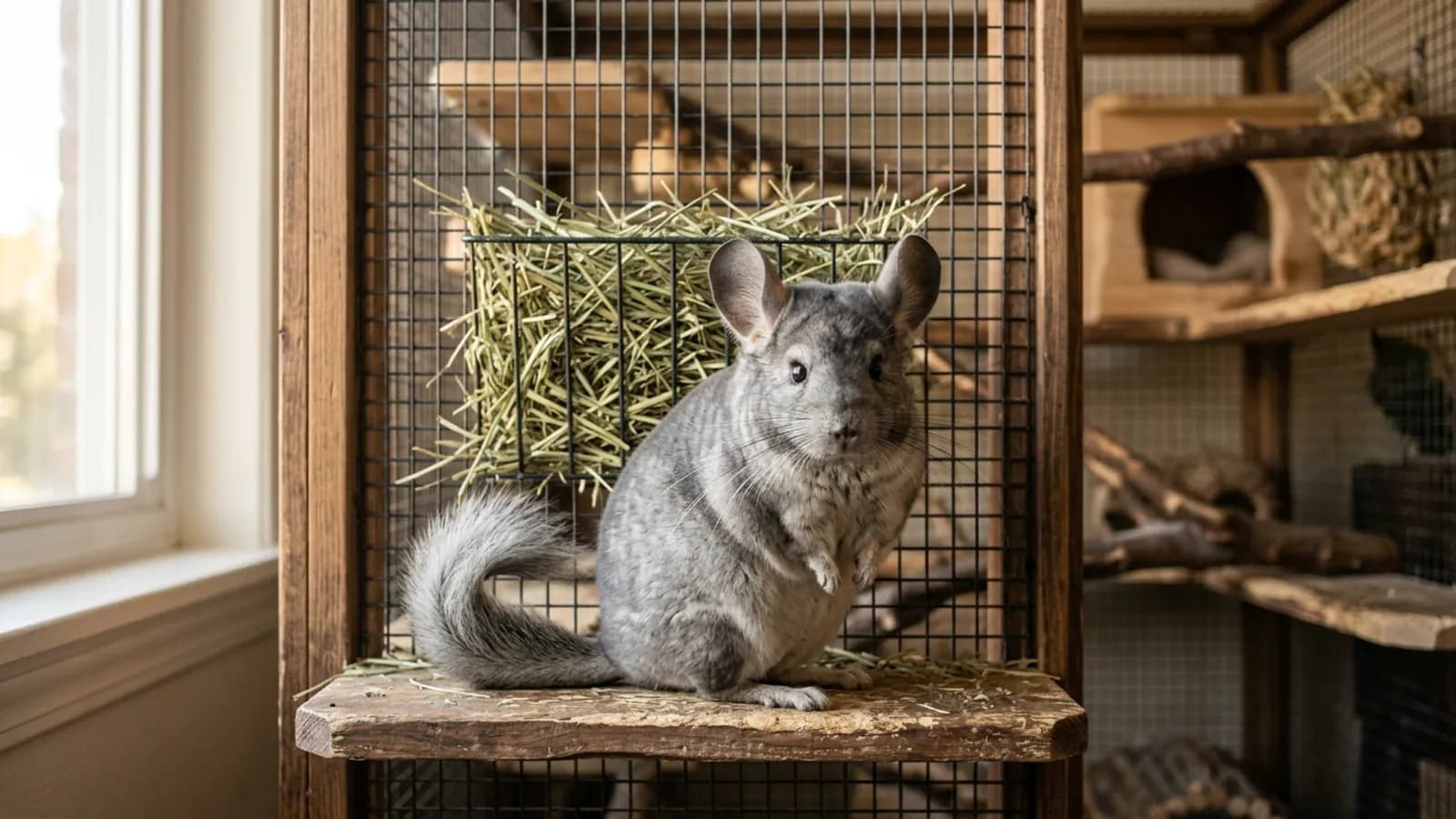
When people ask me what kind of creature a chinchilla is, they usually already have a picture in their head, and it is usually wrong. The chinchilla animal is one of the most misread pets I know, and I say that after keeping them for about ten years. People see the soft silver fur and the enormous round ears and file the animal somewhere near a hamster or a rabbit, something small and undemanding you keep in a corner and mostly forget. That is the wrong drawer entirely. A chinchilla is a high-altitude rodent built for cold, dry mountain air, wrapped in a coat so dense it struggles to shed heat, carrying teeth that grow for its whole life. Nearly everything that goes wrong with a pet chinchilla traces back to treating it like a generic furry thing instead of the specific animal it is. So here is the honest overview: what this animal actually is, where it came from, and what its biology asks of you every single day.
Where the chinchilla animal comes from
To understand the animal in your living room, you have to look at the mountains it evolved in. Wild chinchillas come from the Andes of South America, from high, rocky, dry slopes where the air is thin and cold, the midday sun is fierce, and the shade is chilly. They shelter in rock crevices during the heat of the day and come out at dusk and dawn. That single fact, a cold-adapted animal that hides from the midday sun, explains most of what you will read on this site.
They are crepuscular, which means most active around dawn and dusk, not strictly nocturnal and not diurnal. They live in colonies in the wild, which is why so many keepers house them in bonded pairs. Their whole body plan, the dense coat, the big heat-dumping ears, the powerful back legs for leaping between rocks, is a mountain animal's kit. I wrote a longer piece on what a chinchilla in the wild is really like, because the wild version is not trivia. It is the instruction manual. When you are unsure what your chinchilla needs, the honest question is usually, what would the mountain have given it.
Two species exist, the long-tailed and the short-tailed chinchilla, both native to that Andean range, both driven to the brink by the fur trade. The pet animals kept today descend from long-tailed chinchillas bred in captivity for generations. They are the same animal at the core, with the same needs, just a lot of generations removed from the rock.
What kind of animal you are actually keeping
A chinchilla is a rodent, in the same broad group as guinea pigs and degus, not a rabbit and not a cat, despite the confusing names floating around. If you have ever gone looking and tripped over chinchilla cats or the chinchilla rabbit breed, those are a cat coat colour and a rabbit breed that borrowed the name. The animal I keep is the small Andean rodent, and nothing else.
Size-wise, expect an adult to weigh roughly 400 to 600 grams, so well under a kilogram, with females usually a touch larger than males. Under all that fur the actual body is smaller than people expect. The coat does a lot of visual work. They can live a genuinely long time for a small animal, commonly 10 to 20 years with good care, which is worth sitting with before you buy one. This is not a two-year pet. I go deeper into that number in how long chinchillas really live, but the short version is that you are signing up for a commitment closer to a dog than a hamster.
They are prey animals, and it shows in temperament. A chinchilla is fast, easily startled, and does not naturally want to be held. Some tame down beautifully and will sit with you. Plenty never become lap pets no matter how patiently you work at it. If your picture of this animal is a cuddly ball you scoop up whenever you like, adjust it now, before the animal disappoints a version of it that was never real.
The fur is the whole story
Here is the single most important physical fact about this animal. A chinchilla's fur is the densest of any land mammal, with something on the order of 50 or more hairs growing from every follicle where you or I grow one. That coat is why the species was nearly wiped out for the fur trade, and it is why keeping one is different from keeping anything else.
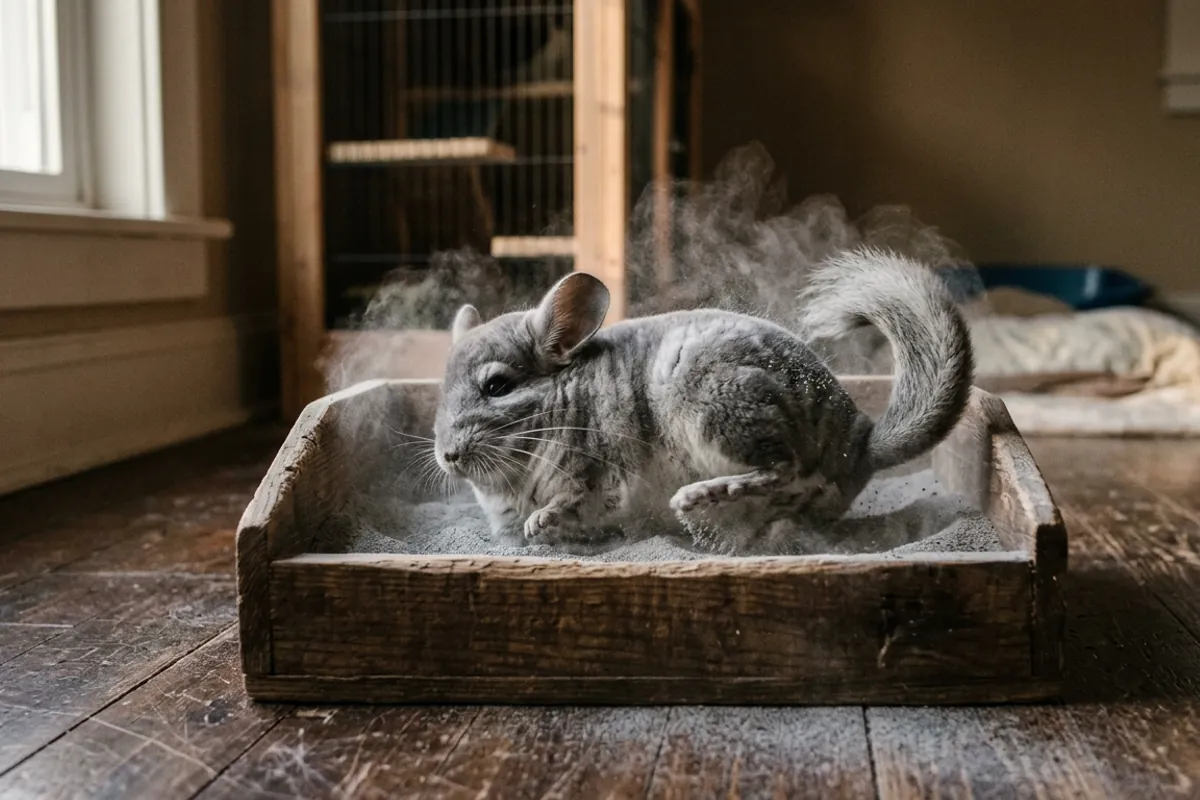
That density is a superpower in the cold Andes and a liability in a warm house. The coat traps heat magnificently, which is exactly the problem, because the animal cannot pant effectively or sweat to cool itself down. It dumps excess heat mainly through those big ears, and that is a limited system. Fur this thick also cannot get wet. A soaked chinchilla coat holds water down against the skin, dries painfully slowly, and can grow fungus. This is why a chinchilla never, ever bathes in water.
Instead they bathe in dust. In the wild they roll in fine volcanic ash that works its way through the coat and carries off excess oil and moisture. At home you give them the same thing, a fine pumice-based bathing powder offered in a bath house a few times a week. Not sand, not craft sand, actual chinchilla bathing dust. Lixit Blue Beauty chinchilla dust, 3 lb As an Amazon Associate I earn from qualifying purchases.
I keep a proper bath house and a good dust and let mine roll a handful of times a week, and I wrote up the how and the how-often in the chinchilla dust bath done right and what bathing dust really is. Leaving the bath in all the time is a mistake, because it dries the eyes and skin, so it goes in and comes straight back out.
Heat is the thing that will kill it fastest
If you take one thing from this whole piece, take this. The animal you are keeping is built for cold, and heat is the fastest way to lose it. This is not caution for its own sake. Pebble, my signature girl, came to me from a rehome out of an overheated attic, and her first summer with me brought a heatwave that ended in a night at the emergency vet. That scare is the reason I am relentless about temperature, and it is why the heat guidance here is written in blunt numbers instead of soft reassurance.
The comfortable range for a chinchilla is 60 to 70°F, which is 15 to 21°C. Above 75°F, that is 24°C, you are into risky territory. At 80°F, 27°C, and up you are in an emergency, and it comes on faster in humid air because humidity strips away what little cooling those ears can do. A chinchilla in heat distress lies flat, breathes fast or through an open mouth, and its ears flush bright red as blood rushes there to shed heat. By the time you see that, you are already late.
So you manage the room, not the animal. Keep the space where the cage lives inside that range year round, which in most homes means air conditioning through summer, full stop. Put a thermometer on the cage and actually read it, because your comfort is not the animal's comfort. A combined thermometer and humidity gauge tells you both numbers that matter. digital thermometer and humidity gauge with remote probes As an Amazon Associate I earn from qualifying purchases.
A chilled granite or ceramic slab in the cage gives a chinchilla somewhere to lie against and shed heat, and it is a genuine help on a warm afternoon, though it is a comfort measure and never a substitute for a cool room. Kaytee Chinchilla Chiller granite stone As an Amazon Associate I earn from qualifying purchases.
I keep a piece on chinchilla heat stroke warning signs and a plain temperature guide, and there is even a heat danger calculator that weighs temperature and humidity together. Use them. Overheating is the emergency that turns a healthy chinchilla into a dead one in an afternoon, and unlike most things on this list, it can happen while you are at work.
Teeth that never stop growing
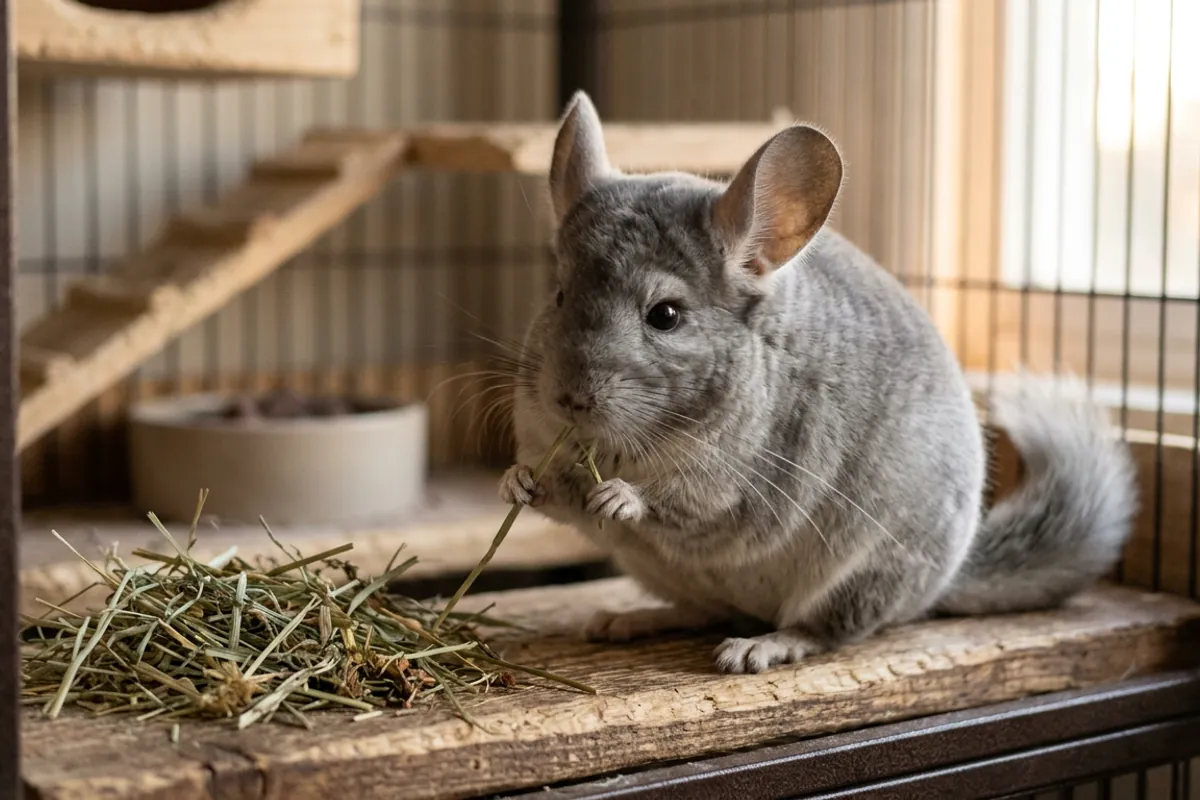
The other biological fact that runs the animal's whole life is its teeth. A chinchilla's teeth, all of them, grow continuously for its entire life. In the wild, chewing tough, abrasive grasses and stripping bark wears them down at the same rate they grow, and the system stays balanced. Take that abrasion away and the teeth overgrow, and overgrown teeth are one of the most common and most miserable health problems this animal gets.
I do not say that lightly. My second girl, Juniper, came to me as a neglected rescue with dental disease I manage day to day, and I have watched up close what happens when teeth do not get worn down. She is why I am uncompromising about two things.
First, unlimited grass hay. Hay is not a side salad for this animal, it is the meal, and it needs to be in front of them all the time. The long, tough fibre is what grinds the back teeth down as they eat, and the near-constant chewing is what keeps the whole system balanced. Timothy hay is the standard, and it should never run out. Oxbow Western Timothy Hay, 40 oz bag As an Amazon Associate I earn from qualifying purchases.
Pellets come second, a measured supplement of a plain chinchilla pellet, not a mixed-fruit muesli, roughly a tablespoon or two a day depending on the animal. They are not the main event. I laid the whole diet out in chinchilla food, hay first and pellets second and why timothy hay is the whole meal.
Second, real chews, and a variety of them. Safe untreated woods like apple, willow, and pear give the front teeth something to work on, and rotating the shapes and textures keeps a chinchilla actually using them. A variety pack of apple wood chews is an easy way to keep that rotation going. emours apple wood chew sticks, 40 count As an Amazon Associate I earn from qualifying purchases.
Watch for the warning signs of dental trouble: dropping weight, drooling or a wet chin, eating slowly, pawing at the mouth, or picking at food it used to eat. Any of those means an exotics vet, not a wait-and-see, because dental disease is one of the things a keeper genuinely cannot fix at home. I wrote chinchilla teeth problems and spotting malocclusion for exactly this reason.
The home this animal needs
Everything above dictates the cage. A chinchilla needs vertical space to jump and climb, because in the wild it leaps between rocks, so height matters more than floor footprint. It needs metal and wood, not plastic, because a chinchilla chews everything and plastic gets swallowed and causes blockages. And it needs wooden ledges at different heights to jump between, not a bare box. A tall metal and wood cage with wooden ledges is the right shape for the animal. Critter Nation double unit small animal cage As an Amazon Associate I earn from qualifying purchases.
I walk through the whole thing in how to build a chinchilla cage setup and why the cage has to be metal, but the short version is tall, a metal frame, safe metal or wood shelving, wooden ledges to leap between, and no plastic anywhere the animal can reach.
An exercise wheel is a good addition if you buy the right kind, and the right kind is a solid running surface. A solid-surface wheel lets a chinchilla run without catching a foot. 15 inch Chin Spin solid surface chinchilla wheel As an Amazon Associate I earn from qualifying purchases. A wire-runged wheel catches feet and tails and breaks legs, and I would never put one in a cage.
They also need out-of-cage time in a safe, chinchilla-proofed room, because no cage is big enough for all the exercise a healthy chinchilla wants. Watch for cords, gaps, and anything chewable, and remember the room still has to be inside that 60 to 70°F range while they are out.
Is a chinchilla the right animal for you
I will not sell you one. After ten years I love these animals, and I still tell people honestly that they are not the easy starter pet the fur suggests. They live for well over a decade, so this is a long commitment. They need a cool room held in range year round, which realistically means air conditioning through summer in most of the world. They are most active in the evening, so a chinchilla that shares your bedroom will keep you company at 2am whether you asked for it or not. Many never become cuddly, and forcing handling on a prey animal only makes it worse.
None of that is a reason not to keep one. It is a reason to walk in with open eyes. The keepers who do best are the ones who wanted this specific animal, the mountain rodent with the impossible fur and the endless teeth, and not a soft grey idea of it. If that is you, read the honest version in chinchilla as pets before you commit, get the room and the cage sorted first, and find an exotics vet before you need one. Get those pieces right and the animal will very likely be with you for fifteen years, and that is a long time to be trusted by a creature that gives its trust on its own terms.