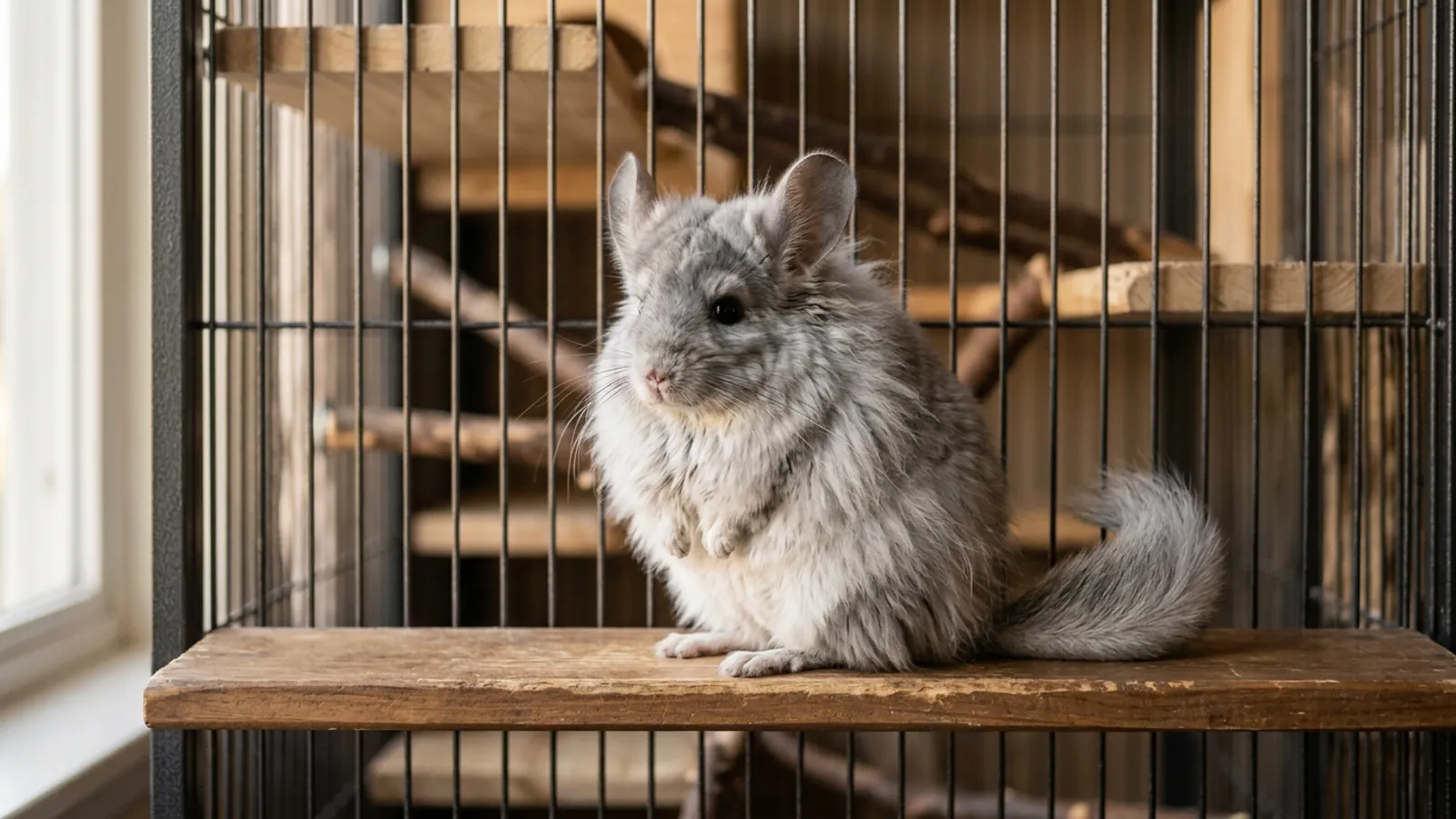
An angora chinchilla is a chinchilla with a long coat, and that is the headline. When people first meet one, they assume it must be a separate species, a special breed, or some rare color worth paying triple for. It is none of those things. It is an ordinary chinchilla carrying one mutation that lets its fur grow long instead of short. I have kept chinchillas for about ten years, both of mine standard-coated, and I want to walk you through what that long coat does and does not change. The marketing around these animals runs a lot louder than the facts, and the facts are what keep an animal alive.
What an angora chinchilla is
A standard chinchilla wears one of the most remarkable coats in the animal kingdom. The fur is short, and it is dense in a way that is hard to picture until you have your hands in it: dozens of individual hairs grow from a single follicle, which is a big part of why chinchillas are said to have the densest fur of any land mammal. That density is not decoration. It evolved in the cold, dry heights of the Andes, and it is the same reason a chinchilla cannot shed heat the way you or I can.
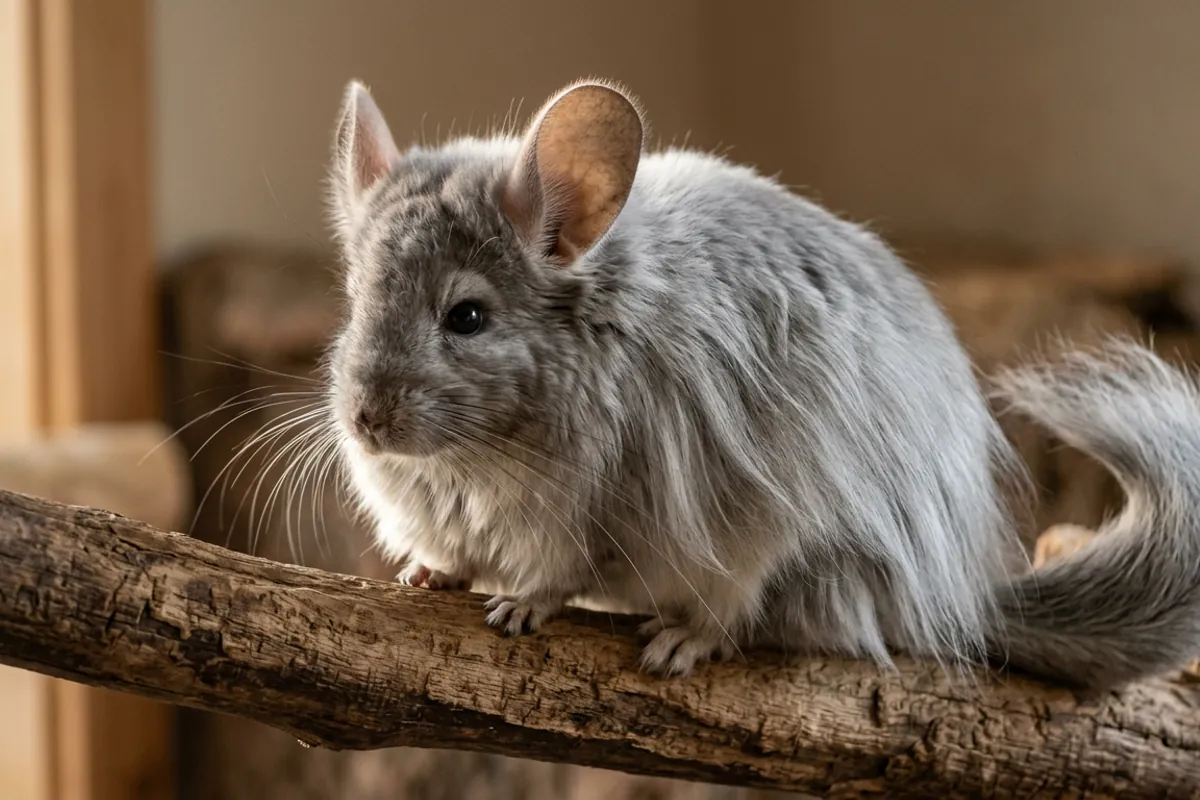
An angora chinchilla has that same undercoat, but the individual hairs grow long. Instead of the tight, plush pile of a standard coat, you get a soft, flowing coat that reaches well past what a normal chinchilla carries. It is a recessive mutation, which is the technical way of saying both parents have to carry the trait for a kit to show it, and that is a large part of why angoras are uncommon and expensive. The animal underneath is still a chinchilla in every respect that matters: same size, same temperament, same lifespan potential, same needs. Only the fur is different.
I want to be clear about the limits of what I know here. I have never kept an angora myself. What I can tell you comes from the same well-established chinchilla facts that govern any coat, plus the obvious consequences of longer fur, which I will get to. Where I am inferring rather than reporting, I will say so.
Angora describes the coat, not the color
This is the single most common mix-up, and it is worth being precise about. Angora is a fur length, not a color. It tells you nothing about whether the animal is gray, black, beige, white, or anything else. You can have an angora in standard gray, and you can have an angora carrying a color mutation on top of the long-hair one. The two things are independent of each other.
That matters because sellers love to stack words. "Rare angora violet" sounds like three special things bundled together, and the price tag follows the adjectives. In reality you are looking at one animal that happens to carry a couple of mutations, and neither the length nor the color changes a thing about how you feed it, cool it, or house it. If you want the longer version of how color labels get oversold, I have written about what rare chinchilla colors really are and about specific ones like the black velvet chinchilla. The through-line is always the same: the coat is cosmetic, the care is not.
Where the "royal persian angora" name comes from
If you have shopped around at all, you have seen the phrase "royal persian angora," and it deserves its own note because it confuses people. That name is a brand, not a species and not a scientific category. It came out of a specific breeding program that developed and popularized the first widely recognized long-haired chinchilla line, and the name stuck to the look. Plenty of long-coated chinchillas today get called royal persian angora whether or not they trace back to that original line, in the same way people reach for a brand name when they mean the generic thing.
None of that is a knock on the animals. A long-coated chinchilla from a careful breeder is a lovely creature. It is just worth knowing that the fancy name is marketing, and that it does not certify health, temperament, or anything you care about when you bring an animal home. The label goes no deeper than that. Buy the animal and the breeder, not the phrase.
The one thing the long coat changes: grooming
Here is where an angora asks something extra of you, and it is real. Longer fur mats. A standard chinchilla coat is short enough that a good dust bath keeps it in order on its own. A long coat can tangle, especially around the rear, the belly, and the hindquarters where the animal sits and moves. Mats are not just a cosmetic problem. They pull at the skin, trap droppings and moisture against the body, and hide skin trouble underneath where you cannot see it.
So an angora needs you to look at and gently work through its coat on a regular basis, checking for tangles before they turn into felted lumps. Some keepers use their fingers, some use a very soft tool, and the whole time the rule that governs every chinchilla still holds: the coat never gets wet. Chinchillas do not bathe in water, ever. Water soaks into that dense undercoat, takes ages to dry, and sets up fungal skin infections. They clean themselves by rolling in fine dust, which lifts oil and debris out of the fur, and an angora needs that dust bath just as much as any other chinchilla, arguably a touch more attention to make sure the dust reaches the skin through all that length.
Use a proper chinchilla dust, the fine volcanic pumice kind, in a container big enough to roll in.
Lixit Blue Beauty chinchilla dust, 3 lb As an Amazon Associate I earn from qualifying purchases.
Offer it a few times a week, not constantly, since leaving dust in around the clock dries the skin and eyes. If you find a mat you cannot gently tease apart, or the skin under it looks red, flaky, or sore, that is a line to hand to an exotics vet rather than yanking at it yourself. For the full method, I keep a walkthrough on the chinchilla dust bath.
Heat is not optional with a coat like this
This is the part that matters most, because it is the part that nearly cost me. My Pebble came to me from a rehome out of an overheated attic, and her first summer brought a heatwave that put us in the emergency vet overnight. Chinchillas do not sweat and they cannot pant effectively. That famous dense fur, the thing everyone wants to touch, is superb insulation, which means it holds heat in exactly when the animal needs to let it go. That is why heat kills chinchillas that a warm room would never bother.
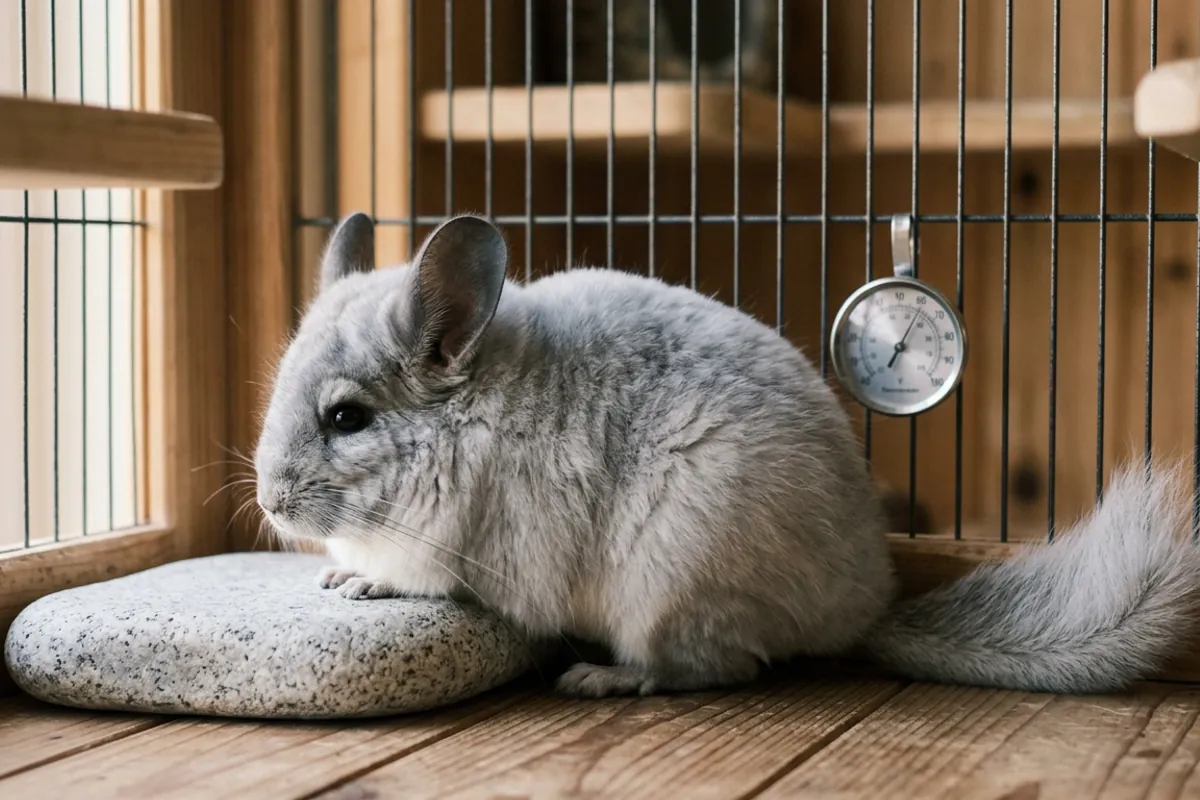
Now add length to that coat. I have not run a study, and I have no numbers specific to angoras, but the logic is not complicated: more fur, more insulation, less margin. An angora deserves at least as much heat vigilance as any chinchilla, and I would treat it as a little less forgiving, not more.
The numbers I keep on the wall do not change with the coat. A chinchilla is comfortable at 60 to 70°F, which is 15 to 21°C. Above 75°F, which is 24°C, you are into risky territory. At 80°F, which is 27°C, and up, you are in an emergency, and humidity makes it worse and faster because damp air strips away what little cooling the animal can manage. Do not guess at the room. Put a real thermometer with a humidity readout at cage height, where the animal lives, not by the door.
digital thermometer and humidity gauge with remote probes As an Amazon Associate I earn from qualifying purchases.
Give it something to lie against that pulls heat away, like a chilled solid stone.
Kaytee Chinchilla Chiller granite stone As an Amazon Associate I earn from qualifying purchases.
And know the warning signs before you need them: ears flushed deep red, lying stretched flat out, breathing fast or open-mouthed, sluggishness. If you want to sanity-check your own room against real conditions, I built a chinchilla heat danger calculator, and I keep a fuller list of red flags in chinchilla heat stroke warning signs. With a long coat, err toward cooler every single time.
Everything else is just good chinchilla care
Strip away the coat and an angora is a chinchilla, so the rest of the care is the same care I would give any of mine, and I will not water it down because the animal is fancy.
Food comes first, and it is simpler than the pet aisle makes it look. The bulk of the diet is grass hay, available at all times, unlimited. Timothy hay is the standard, and it is not a side dish, it is the meal.
Oxbow Western Timothy Hay, 40 oz bag As an Amazon Associate I earn from qualifying purchases.
Hay matters twice over. It keeps the gut moving, and the constant side-to-side chewing wears down teeth that never stop growing. My Juniper is a rescue with dental disease, and managing her day to day taught me exactly what happens when teeth do not get worn down: pain, drooling, weight loss, and vet bills. That is why I am uncompromising about unlimited hay and real variety in chews. On top of hay, feed a measured amount of plain, high-quality pellets, not a colorful muesli mix full of treats the animal will pick through. I lay out amounts in chinchilla food, and the tooth side in chinchilla teeth.
Chewing is dental care, not decoration, so keep a rotation of safe wood the animal can gnaw.
emours apple wood chew sticks, 40 count As an Amazon Associate I earn from qualifying purchases.
Housing is the other big one. The cage should be tall, made of metal and wood, with wooden ledges to jump between, and no plastic anywhere, because chinchillas gnaw everything and plastic in the gut is a real hazard.
Critter Nation double unit small animal cage As an Amazon Associate I earn from qualifying purchases.
Height beats floor space, because these animals are climbers and jumpers by nature. If you run a wheel, and I think exercise is worth it, it has to have a solid running surface, never wire or mesh rungs that catch and break legs and tails.
15 inch Chin Spin solid surface chinchilla wheel As an Amazon Associate I earn from qualifying purchases.
For the full setup, I keep a guide to chinchilla cage setup. None of this is angora-specific. It is just the baseline any chinchilla needs, long coat or short.
What to ask before you buy an angora
Angoras cost more, sometimes a lot more, because the long-hair mutation is recessive and uncommon, so fewer are bred. That price is exactly why you should slow down. A high price tag is not proof of health, and the words "royal persian angora" on a listing certify nothing. Before you commit, see the animal in person if you possibly can, look at the coat for mats and the skin for sores, watch it move, and check that it is bright and alert rather than hunched or drooling.
Ask the seller how they manage the coat and whether the line has any dental or health issues, and listen for whether they treat the animal as a living thing or a luxury product. A breeder who cannot talk about heat, hay, and teeth is a breeder to walk away from. Budget too. The purchase price is the smallest cost you will face; the cage, the ongoing hay and dust, and above all an exotics vet fund for the years ahead are where the real money goes, and an exotic animal that lives well over a decade is a long commitment. I have laid out the numbers in what a chinchilla really costs and how to shop without regret in how to buy a chinchilla.
A long coat is a beautiful thing. Just go in knowing it is a chinchilla first and a hairstyle second, and give it the same unglamorous care, cool air, endless hay, hard chews, and a proper cage, that keeps every chinchilla alive and well.
The name game runs both ways, and the soviet chinchilla shows how far a borrowed label can travel from the animal.