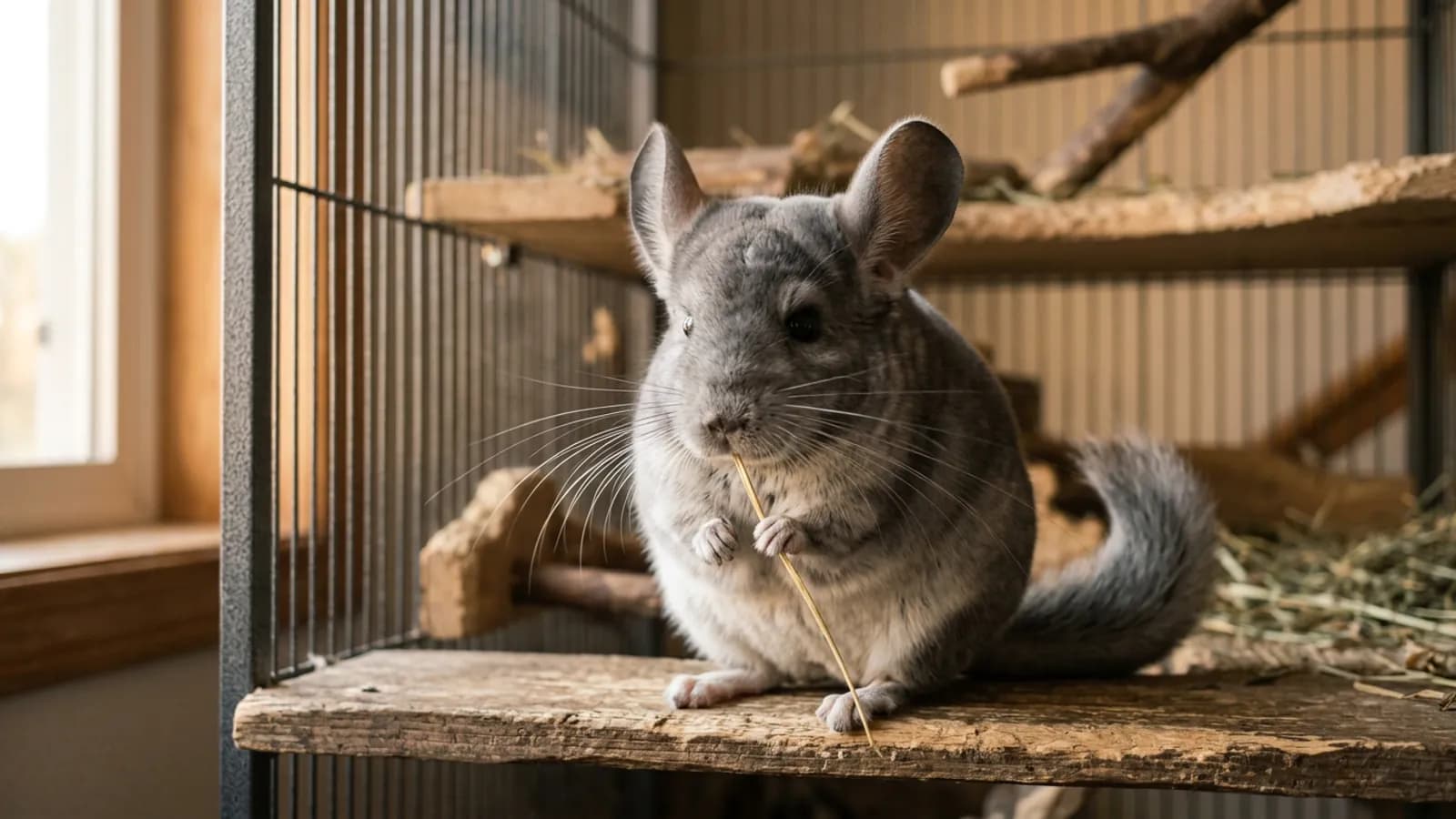
When people type chinchilla cute into a search bar, they are reacting to a very specific set of things: the round body, the oversized ears, whiskers longer than the face is wide, and fur so dense it does not look real. I understand the impulse completely. Ten years in, Pebble can still stop me mid-task by sitting up on her ledge and washing her face with both front paws. But I want to do the thing most cute-animal writing refuses to do, which is take the cuteness apart and show you the biology underneath. Every feature that makes a chinchilla adorable is an adaptation to a cold, dry, high mountain life, and every one of those adaptations carries a care rule you cannot skip. The cuteness and the responsibility turn out to be the same thing seen from two sides.
The fur that makes them cute is also the reason they overheat
The first thing anyone wants to do with a chinchilla is touch it, and the fur is why. Where you or I grow a single hair from a follicle, a chinchilla grows a bundle, more than fifty hairs by common counts and closer to eighty by others. That is the densest fur of any land mammal, and it is the reason the coat feels less like an animal and more like a cloud. That density is also why chinchillas do not carry fleas the way a cat or dog can, since a parasite simply cannot move through fur packed that tightly, a small mercy that owners notice and love. It evolved high in the Andes of South America, where nights are bitterly cold, and its whole job is to trap a layer of still air against the skin and hold heat in.
Here is the catch, and it is the single most important thing on this entire site. Insulation that good works in only one direction. A coat built to keep heat in cannot let heat out, and a chinchilla cannot sweat or pant its way out of trouble the way a dog can. So the same fur that makes yours the softest thing you have ever held is exactly why a warm room is dangerous. Comfortable is 60 to 70°F (15 to 21°C). Above 75°F (24°C) you are into risky territory, and 80°F (27°C) and up is an emergency, faster still when the air is humid, because damp fur traps even more heat.
I am relentless about this because of Pebble. Her first summer brought a heatwave and a night at the emergency vet that I will not repeat here except to say it is why the heat guidance on this site reads like rules and not suggestions. Put a thermometer with a humidity readout on the cage so you are working from a number, not a guess. digital thermometer and humidity gauge with remote probes As an Amazon Associate I earn from qualifying purchases. Give her a slab she can lie against to pull heat out of her body on a warm afternoon. Kaytee Chinchilla Chiller granite stone As an Amazon Associate I earn from qualifying purchases. If you read nothing else, read the chinchilla heat safety guidance and the warning signs of heat stroke, and keep the heat danger calculator bookmarked.
Those big ears are radiators, not decoration
The oversized, rounded ears are near the top of everyone's cute list, and they are working hard. They carry almost no fur, and the blood vessels run close to the surface, which makes them one of the very few places a chinchilla can actually shed heat. Blood flows through the thin ear tissue, loses warmth to the air, and returns cooler. It is the same trick a jackrabbit uses in the desert, scaled down to a palm-sized animal.
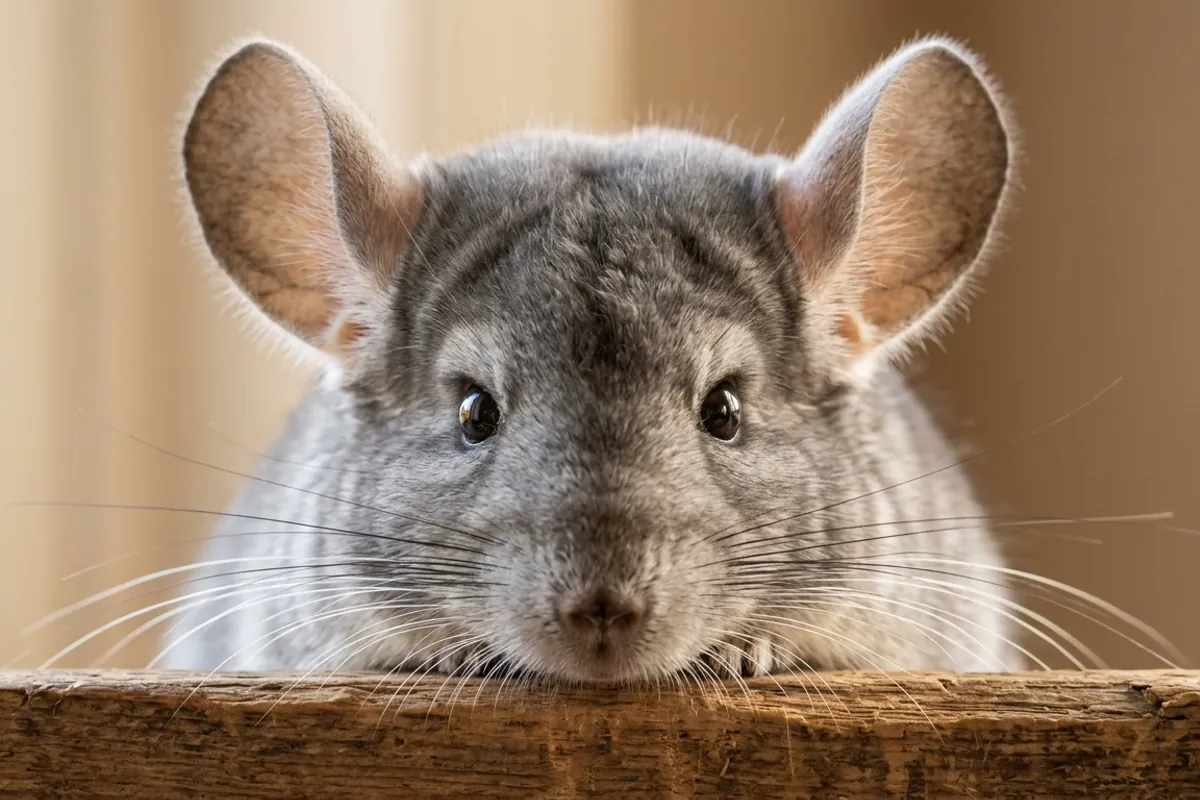
That biology gives you a free diagnostic tool. Ears that flush deep pink and feel hot to a light touch are one of the earliest signs that a chinchilla is struggling to stay cool. On a comfortable day the ears are a soft grey-pink and unremarkable. It is worth learning what the ears look like on a normal, cool day, because you only notice the change if you know the baseline, and I check Pebble's ears without thinking now, the way you would glance at a dashboard. When they go red and warm, the radiator is running flat out, and that is your cue to check the room temperature before anything worse follows.
How small and round they actually are
The silhouette that reads as cutest is a rounded, tail-heavy little ball, and most of that roundness is a trick of the fur rather than the animal. A typical adult chinchilla weighs only about 400 to 600 grams, roughly a can of soup, and the body under the coat is lean and surprisingly narrow. Part the fur, or picture the animal soaked, which should never actually happen, and what is underneath looks almost startlingly small and slight. That gap between the fluffy outline and the small frame beneath it is the whole reason I wrote about how small a chinchilla really is, because people who buy a cage for the pouf they see in photos end up with far less cage than the animal needs.
The bushy tail people treat as a cute accessory is a working part too. A chinchilla built to leap and change direction on rock uses that tail for balance and steering, the same way a squirrel does. And the roundness is not baby fat waiting to slim down, because chinchilla kits are born fully furred, with their eyes open, able to move within hours of birth. A mountain prey animal cannot afford a helpless infancy out in the open, so it arrives more or less ready to run. The cute, round adult you are looking at is a grown version of something that was built to survive from its first day.
The sit-up pose, the tiny hands, and the whiskers
The pose everyone films is a chinchilla sitting back on its haunches and turning a piece of food over in its front paws like it is inspecting the merchandise. Those forepaws have flexible, grippy digits, and they are genuinely dexterous. In the wild that dexterity handles seeds, roots, and tough bark. In your home it is why a chinchilla can hold a single strand of hay and eat it end to end, and it is a large part of why the animal reads as so oddly person-like.
Then there are the whiskers, which can reach a startling fraction of the body length. They are not decoration either. A chinchilla is built for low light and moves through cluttered, rocky ground, and those whiskers map gaps and surfaces in the dark, telling the animal whether a space is wide enough to squeeze through. Trim or damage those whiskers and a chinchilla loses part of how it senses the world, which is one more reason not to let curious children or careless handling near the face. The large, dark eyes belong to the same low-light life. So the face that photographs as pure cuteness is really a finely tuned instrument for finding food and moving safely at dusk.
Why they look so bouncy and clean, and why water ruins it
Part of the appeal is the movement. A chinchilla is light for its size and carries powerful hind legs, because it evolved to leap between rocks and bolt for cover on broken mountain terrain. In a room that becomes the popcorning, wall-bouncing sprint that owners adore. It is also why a solid running surface matters so much, since a wire wheel can catch a foot or a tail on an animal built to move this fast. 15 inch Chin Spin solid surface chinchilla wheel As an Amazon Associate I earn from qualifying purchases.
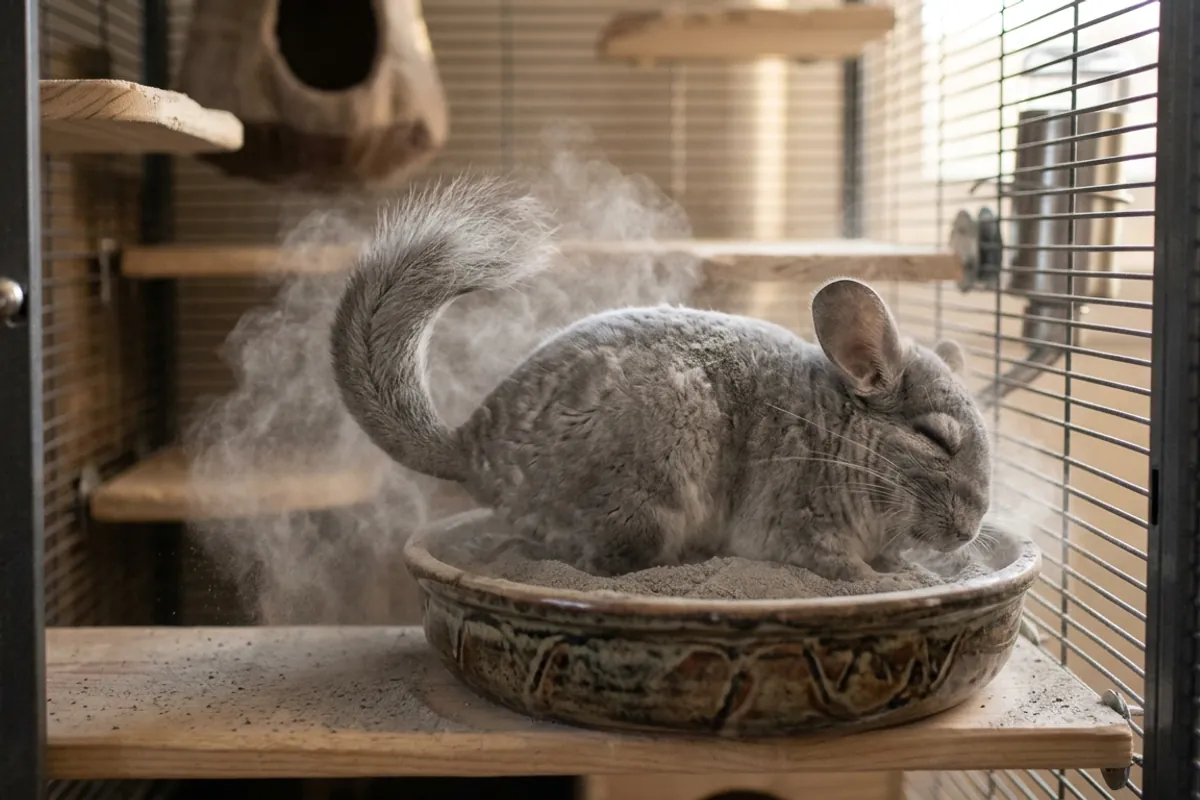
The other half of looking cute is looking immaculate, and chinchillas almost never smell. That is not luck, it is maintenance, and it is where the biggest beginner mistake hides. You must never bathe a chinchilla in water. That miracle fur is so dense it cannot dry out to the skin, and a soaked coat leads to chilling and to fungal rot down where you cannot see it. Instead they roll in fine volcanic pumice dust, which slides between the hairs and carries away oil and dirt. Lixit Blue Beauty chinchilla dust, 3 lb As an Amazon Associate I earn from qualifying purchases. Watching a dust bath is one of the cutest things they do, and it is also basic hygiene. One more quirk fits here: when they are frightened or grabbed too hard, chinchillas can release a clean patch of fur to escape a predator's grip, which is called fur slip. It is a reason to handle gently, not to panic.
The teeth behind that cute face never stop growing
Those rounded cheeks are part of the charm, and behind them sits the feature that decides whether a chinchilla lives a long, healthy life. All twenty of a chinchilla's teeth, the front ones you can see and the molars you cannot, keep growing for the animal's entire life. In the wild, grinding through coarse, abrasive plants all day wears them down at exactly the rate they grow, and the two stay in balance.
Take that abrasive food away and the balance breaks. Overgrown molars form sharp spurs that cut into the cheek and tongue, and dental disease is one of the most common and most painful things that goes wrong in pet chinchillas. You cannot see the molars at the back of the mouth from the outside, which is why dental disease so often goes unnoticed until the animal is already in pain, and why an exotics vet who can look properly is worth finding before you ever need one in a hurry. I know this one up close. Juniper came to me as a rescue with dental problems I manage day to day, and she is why I am uncompromising about the diet. The fix is not clever, it is constant: unlimited grass hay, available every hour of every day, because the long chewing stroke on tough hay is what actually wears the teeth. Oxbow Western Timothy Hay, 40 oz bag As an Amazon Associate I earn from qualifying purchases. Plain pellets are a measured supplement on top of the hay, not the main meal, and a rotation of safe wooden chews gives the teeth more to work against. emours apple wood chew sticks, 40 count As an Amazon Associate I earn from qualifying purchases. The details live in the diet guide, the case for timothy hay, and what is going on with chinchilla teeth. If a chinchilla drools, drops weight, or stops eating, that is a vet visit, not a home fix.
Cute, but on its own schedule
Here is the part the cute videos leave out. Chinchillas are crepuscular, most alive at dawn and dusk and asleep through much of the day. If you picture a fluffy lap pet that dozes on you all evening, you have the wrong animal. A chinchilla will often come alive right as you are winding down, and many of them would rather explore than be held. That is not coldness, it is the schedule their biology runs on.
They are also more fragile than they look. Under all that fur is a small, delicate ribcage, and a squeeze that would be nothing to a cat can injure a chinchilla, which is another reason handling is on their terms and not yours. None of this makes them worse pets, it just makes them honest ones. A chinchilla that trusts you will come to the cage door, take a chew from your fingers, and choose to sit near you, and that earned closeness is better than the forced kind. The trade for patience is real personality. They communicate constantly once you learn to listen, and the range of chinchilla sounds, from soft contact chirps to an alarm bark, is a window into what yours is feeling. Give them a tall cage and time out to run, and the cuteness you signed up for shows up on its own.
Loving something cute means meeting its biology
If there is one thread through all of this, it is that a chinchilla is not cute by accident. The cloud of fur is Andean insulation, the big ears are heat radiators, the tiny hands and long whiskers are tools for a low-light mountain life, and the endless teeth are built for a diet of coarse plants. Every single adorable trait is a fact of biology first, and each one hands you a rule: keep the room cool, never use water, feed hay without limit, and let the animal set the pace.
Meeting those rules means the right home too, which is a tall enclosure of metal and wood with solid ledges and no plastic to gnaw and swallow. Critter Nation double unit small animal cage As an Amazon Associate I earn from qualifying purchases. Do all of that and a chinchilla can share your life for a long time, commonly ten to twenty years, which is far longer than most people expect from a small rodent. If you want the whole picture before you commit, read the honest version of what chinchillas are like as pets and the broader chinchilla care guide. The cuteness is real. It is also a ten to twenty year promise to respect the biology that makes it.