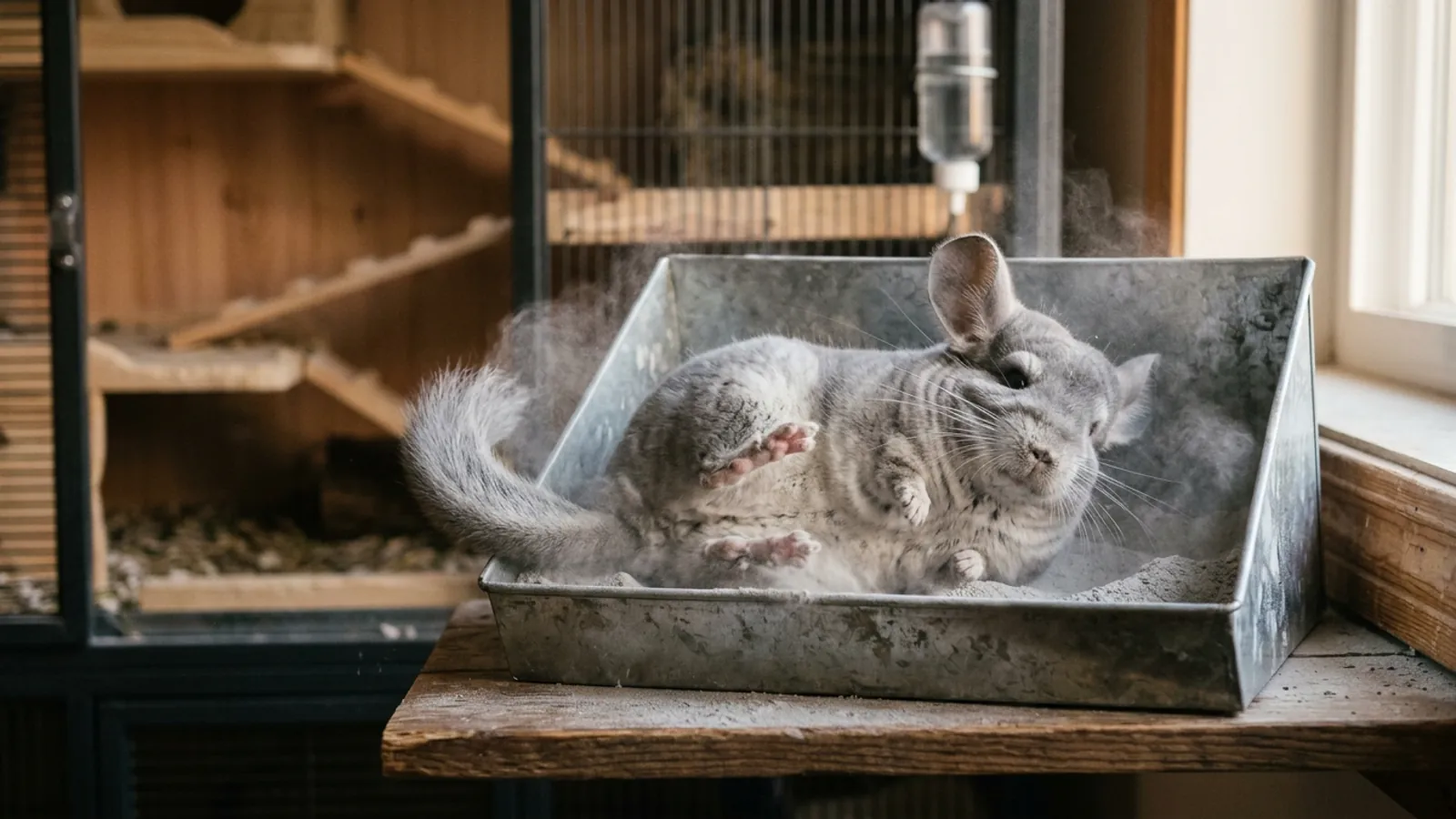
Chinchilla volcanic dust is the one supply in my house that I never let run out. It looks like almost nothing, a soft pale gray powder you could mistake for talc, and yet it is the closest thing I can give Pebble and Juniper to the mountainside their ancestors came from. Chinchillas do not bathe in water, ever. They roll in fine dust, and the dust that works is ground from volcanic rock. Get that one thing right and you have solved most of what keeps a chinchilla coat clean and dry. Get it wrong, with the wrong grit or the wrong routine, and you can quietly wreck a coat that took months to grow, or dry the skin under it raw. So here is the whole story, owner to owner: what volcanic dust really is, why it has to be volcanic and not just any sand, and how I use it day to day.
What volcanic dust is
Chinchillas come from the Andes, the dry, rocky highlands of South America, where the ground is littered with the fine grit that old volcanoes leave behind. Out there a chinchilla keeps its coat in order by throwing itself into that powder and rolling, over and over, until the dust has worked its way down to the skin. There is no standing water to bathe in at that altitude, and their fur could not cope with it if there were. So the whole grooming system evolved around dust, and specifically around the fine, soft, mineral dust that weathered volcanic rock breaks down into.
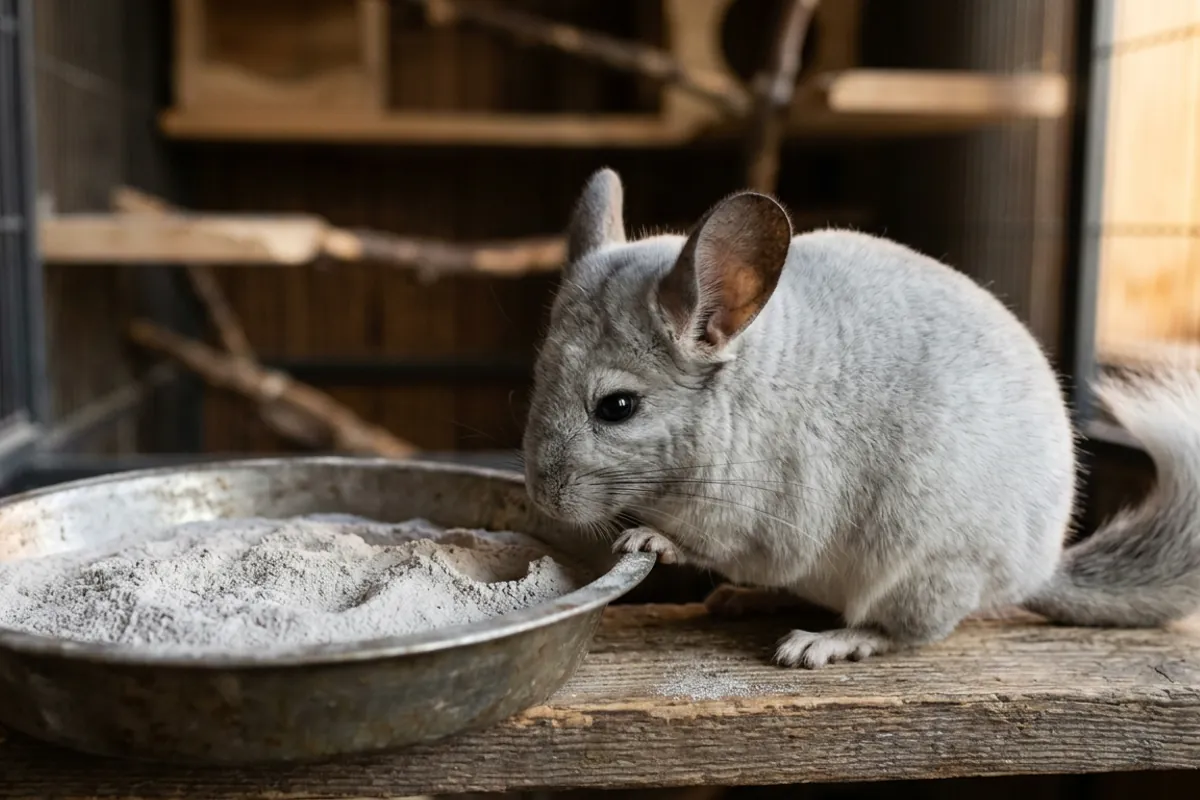
Good chinchilla dust is a manufactured version of exactly that. Most of it is ground pumice, a light volcanic rock full of tiny air pockets, milled down to a powder far finer than sand. Some products are labeled as volcanic ash, some as pumice, and the better ones feel like flour between your fingers rather than grit. One widely sold example is Blue Cloud dust, marketed around that fine volcanic texture. The brand matters less than the particle size and the source: you want a soft, dust-fine volcanic mineral, not something crunchy.
If you want the longer version of what the product is and where it sits among the confusingly named alternatives, I wrote a fuller piece on bathing dust for chinchillas. The key point is that volcanic dust is not a gimmick or a premium upsell. It is the single ingredient the whole animal is built around, and no water bath, no wipe, and no dry shampoo substitutes for it.
Why the coat needs dust and never water
To understand why volcanic dust and not water, you have to understand the fur. A chinchilla's coat is the densest of any land mammal, with something like fifty or more hairs growing from a single follicle where your dog or cat has one. That density is what makes them so soft, and it is also what makes water a genuine hazard.
When water gets into a coat that thick, it does not run off. It soaks in, sits against the skin, and takes a very long time to dry, because almost no air reaches the base of the fur. A damp, warm, airless coat is a perfect place for fungus to grow, and fungal skin infections are miserable to clear once they take hold. A soaked chinchilla can also chill dangerously, because that same insulating fur that traps heat now traps cold and damp against the body. I go into the whole soaked-coat problem in what a wet chinchilla really means, but the rule is simple: a chinchilla should never be bathed in water, and a genuinely wet chinchilla is a problem to fix, not a normal event.
Volcanic dust does the job water would ruin. The fine particles slip down between the hairs all the way to the skin, absorb the oils and the trace of moisture the coat carries, and then fall away when the chinchilla shakes, taking the grease and dirt out with them. It is a dry clean, mechanically, and it leaves the coat fluffed and separated rather than clumped. That is why the roll looks so violent and so joyful at once: they are driving the powder right down to the roots.
Volcanic dust, sand, and the cheaper stuff being sold
The most expensive mistake I see new owners make is buying sand. A chinchilla sand bath sounds like the same idea, and the words get used interchangeably online, but sand and volcanic dust are not the same material and do not behave the same way. Sand is coarse and its grains have hard edges. Rolled through a coat over and over, those edges abrade the fur, break the fine hair tips, and can scratch and irritate the eyes. It also does a worse job of absorbing oil because the grains are too large to reach the skin.
What you want is a product sold specifically as chinchilla dust or chinchilla bath dust, made from milled volcanic pumice, fine enough to hang in the air as a faint cloud when it is disturbed. If it pours like table sand and you can feel individual grains grinding between finger and thumb, it is too coarse. If it feels powdery and almost greasy-soft, that is the texture you are after. I keep the terminology straight in related pieces, on the chinchilla dirt bath name and on what chinchilla dust is, because the naming confuses people at the pet shop.
Be wary of two things on the shelf. First, sand products aimed at reptiles or crafts, which are the wrong grit entirely and sometimes chemically treated. Second, anything scented or colored, which adds fragrance and dye to a powder your chinchilla will breathe and swallow traces of. Plain, unscented volcanic dust is the whole product. It should have one ingredient and no perfume. Cheaper is fine as long as the grade is right; fancy is not better if the source is the same milled pumice.
How I run a dust bath
The setup is almost boringly simple, which is part of why I like it. I use an enclosed dust house rather than an open bowl, because the closed shape keeps most of the powder inside instead of over the whole cage, and a bored chinchilla is less tempted to sit in an open dish and treat it as a toilet. A heavy ceramic or metal bath house with a single round opening is ideal. I avoid plastic ones because chinchillas chew everything, and plastic is the one material I do not want them ingesting.
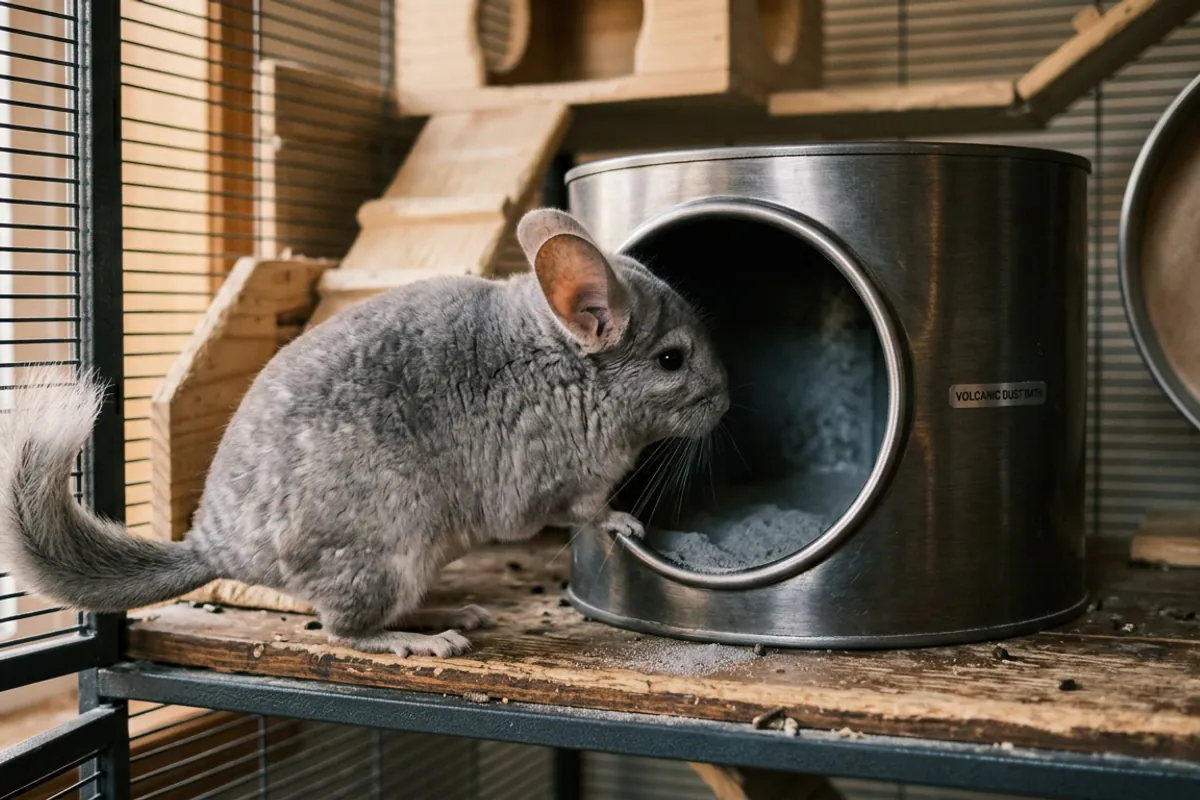
A proper dust bath house with a couple of inches of volcanic dust in the bottom is all the equipment you need. Lixit Blue Beauty chinchilla dust, 3 lb As an Amazon Associate I earn from qualifying purchases.
I put about an inch, maybe two, of dust in the bottom. Enough that they can throw it up and over themselves, not so much that it is a waste. Then I set the house in the cage at bath time and leave it for around ten to fifteen minutes. That is plenty. Most chinchillas dive in within seconds, roll and flip a few times, and are done well before the fifteen minutes are up. When they lose interest, I take the house back out.
The single most important part of the routine is that the dust does not live in the cage. Leaving the bath in full time is how coats get over-dried and how the house becomes a litter box. Bath, then remove. I keep the dust between sessions in a sealed tub so it stays dry, and I sift out the droppings and clumps and top it up rather than throwing the whole lot away each time. A batch lasts a good while that way. If you want the roll itself explained, watching a chinchilla take a dust bath is the best way to see what normal looks like.
How often, and how humidity changes it
Frequency is where I see the most worry and the most over-doing it. The baseline most keepers settle on is two to three dust baths a week, and that is where I would start. It is enough to keep the coat clean and dry without stripping every bit of natural oil out of the skin.
But that number is a starting point, not a law, because the right frequency depends on your air. Volcanic dust works by pulling moisture and oil out of the coat, so the drier your home, the less often they need it, and the more humid your home, the more they do. In a damp climate or a muggy summer, a coat holds more moisture and can start to feel slightly greasy or look separated and stringy, and those chinchillas may want a bath closer to every other day. In a bone-dry winter home with the heating running, twice a week can already be too much, and you will see it in flaky skin.
Humidity matters enough that I keep a cheap combined thermometer and hygrometer near the cage and read it. digital thermometer and humidity gauge with remote probes As an Amazon Associate I earn from qualifying purchases. It earns its place twice over, because the same humidity that changes bath frequency rides alongside temperature in how dangerous heat is for a chinchilla, and heat is the thing I never relax about. The comfortable range is 60 to 70°F (15 to 21°C), and above 75°F (24°C) starts to get risky. If the room is drifting warm, the heat danger calculator is worth a look. Let the coat and the skin, not a fixed schedule, tell you how often to offer the dust.
Reading the coat and skin
The animal will tell you whether the routine is right, if you know what to read. A well-bathed chinchilla has fur that stands up soft and separate, springs back when you part it, and smells of almost nothing. That is the target.
Too little bathing shows first in the look of the coat. It goes flat, faintly greasy, and starts to clump or stripe where the oils have built up, and the fur can pick up a slightly damp feel. If you are seeing that, offer the bath more often before you assume anything is medically wrong. Persistent greasiness despite regular baths, though, is worth a second look, because it can come from a coat the chinchilla cannot groom properly.
Too much bathing goes the other way, into the skin rather than the coat. Over-dried skin flakes, and the chinchilla scratches at it, and in bad cases the skin looks reddened or the fur thins in patches. If you see flaking and itching, the first thing I do is cut the baths back, to twice a week or even once, and watch. Nine times out of ten the skin settles on its own once you stop stripping it.
The one signal I never write off as a bathing problem is bald patches with clean, circular edges, or crusty flaky skin that spreads. That pattern can be ringworm, which is a fungal infection and not a dust issue at all, and it needs a vet rather than a change of schedule. When the skin itself looks diseased rather than just dry, stop guessing.
The dust cloud, the lungs, and the eyes
Here is where I will be clear about what is not fully settled. Volcanic dust is, by design, fine enough to hang in the air, and there is a reasonable question about what breathing that cloud does to a chinchilla's lungs over years, and to yours. I have not seen good long-term studies that put a number on it, so I will not invent one. What I do is treat it as a plausible risk and keep the exposure modest rather than dismiss it.
In practice that means a few simple habits. I keep baths to that ten to fifteen minute window rather than leaving a dust cloud sitting in the cage all day. I bathe in a reasonably ventilated room, not a sealed cupboard. I do not bathe a chinchilla that is wheezing, sneezing repeatedly, or showing any sign of a respiratory infection, because dust and irritated airways do not mix. And I keep the dust fine but not so powder-light that it fogs the whole room; there is a texture that clouds a little and settles, and that is the one I want.
The eyes are the other soft spot. Fine dust can irritate them, and a chinchilla with a weepy, half-closed, or gunky eye after baths is telling you the grit is too sharp or the sessions too long. Sand, again, is the usual culprit there. Real volcanic dust, used briefly, rarely causes it.
When to stop guessing and call a vet
Most dust-bath problems are yours to fix at home by adjusting the grit, the frequency, or the setup. A few are not, and knowing the line matters. I am an experienced keeper, not a vet, and I send anything that looks medical to an exotics vet rather than experiment on the animal.
Book the visit when skin problems do not settle after you cut the baths back and give it a week or two, when there are spreading bald patches or crusty circular lesions that could be fungal, when an eye stays weepy or closed, or when there is any breathing trouble at all. None of those are dust to be dialled in; they are conditions to be diagnosed.
Everything else, the greasy coat, the flaky skin, the chinchilla that will not roll on a bad day, is ordinary keeping, and volcanic dust is the tool that fixes most of it. Buy the fine volcanic grade, offer it a few times a week, adjust to your own air, take the house back out when the roll is done, and you have covered the single most important piece of chinchilla grooming there is.