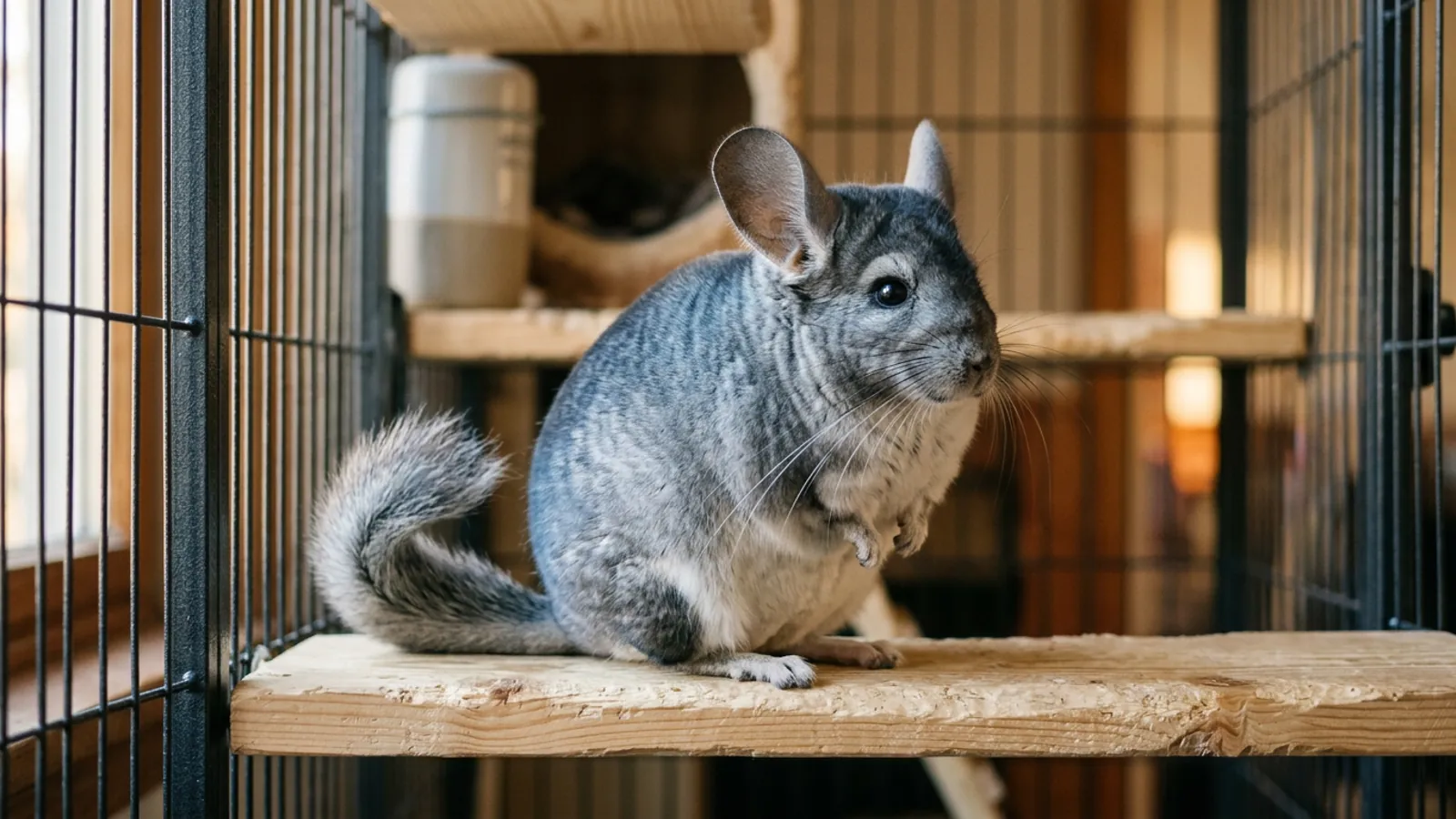
Gray chinchillas are the ones most people picture the moment they hear the word, and that is no accident. The gray coat is the wild type, the color these animals wear on the rocky slopes of the Andes, and every other color you have met in a shop or a breeder's photos was pulled out of it over decades of selective breeding. Both of mine are gray. Pebble is a standard gray, and so is Juniper, and I have spent about ten years looking at that fur up close, in daylight, under cage lights, and with my nose more or less buried in it during a dust bath. So this is what a standard gray chinchilla is, what the shades from light gray to dark gray really mean, and the one thing the color never changes.
The gray coat is the wild type
The proper name for the ordinary gray is the standard gray chinchilla, sometimes written the other way round as chinchilla standard gray. "Standard" here does not mean plain or lesser. It means the original, unmutated coat, the one nature settled on. In the wild that coloring is camouflage against gray rock and shadow, and it does the job so well that a still chinchilla on a ledge nearly vanishes. Everything about the way the color sits on the body serves that: darker across the back and shoulders, fading down the sides, and a clean white belly. That top-dark, bottom-pale arrangement is called countershading, and it flattens the animal's outline so a hawk overhead sees less of it.
When people say gray chinchillas they are almost always describing this standard. It is by far the most common coat in captivity because it is the base breeders started from, and because it is genetically the simplest, carrying none of the added color mutations. If you want the wider picture of how the other coats came to be, I go through them in chinchilla colors, and the wild animal that wears this gray is its own subject in what a chinchilla in the wild is really like.
Why gray fur reads gray and blue up close
Here is the part that surprises people. A standard gray chinchilla is not really a solid gray animal the way a gray cat is. Pull the fur apart and look at a single hair, and you will see it is banded. The base of each hair, the part nearest the skin, is a dark slate blue-gray. Above that sits a paler band. And the very tip is black. Stack together the more than fifty hairs that sprout from a single follicle, across the whole body, and your eye blends the dark tips, the pale bands and the slate roots into what reads as gray with a distinct blue cast. It is the same optical trick that makes salt-and-pepper hair look gray from across a room when it is really black and white.
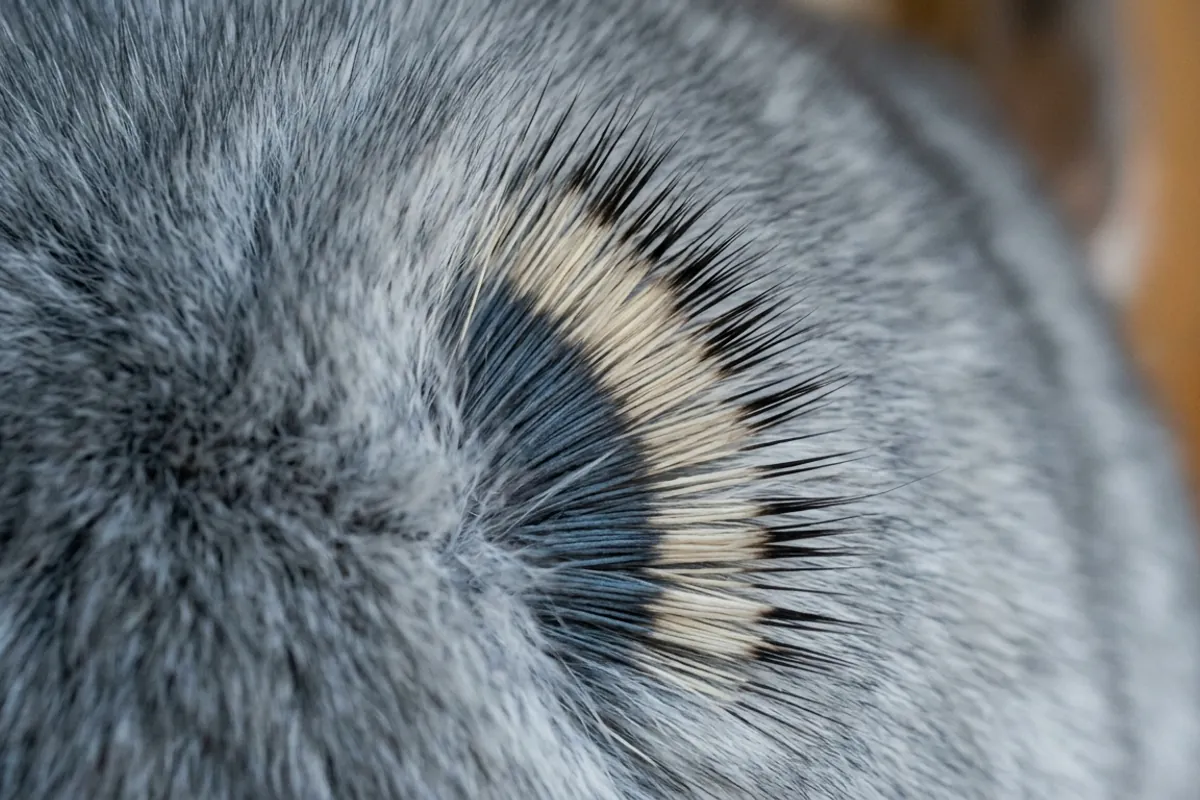
That blue you catch in good light is real, and it comes from the undercolor, the slate base, showing through. It is why keepers talk about a good standard having blue depth rather than a flat, mousey gray. The white belly works differently: those hairs have no dark tip, so they stay white to the end, and the line where the gray side meets the white belly is usually sharp. None of this is dye or surface color. It is structural, built into every hair as it grows, which is also why a chinchilla's color does not wash out or shift with a bath.
Light gray to dark gray, the shades within standard
Standard grays are not all the same depth, and this is where the light gray and dark gray labels come in. Breeders sort them along a range, from light gray through medium to dark gray, and in the darkest a shade often called extra dark. The difference is how much of that black tipping each hair carries and how far down the shaft it runs. More tipping, denser and lower, reads as a darker animal. Less of it reads as a lighter, softer gray.
A light gray chinchilla looks paler and a touch warmer, with the blue undertone less obvious. A dark gray chinchilla looks deeper and often shows that slate blue more strongly, sometimes with darker fur creeping further down the sides toward the belly. Both are still standard grays. Neither is rarer or more valuable in any way that matters to the animal, whatever a seller tells you, and none of it changes a single thing about care. The shade is set by breeding, by which parents were paired for depth of color over generations, not by diet or lighting or anything you do at home. You cannot feed a chinchilla darker, and you should be wary of anyone who implies the shade signals health. A dull, staring coat can mean a sick animal, but that is about condition, not about where the animal sits on the light-to-dark gray scale.
Standard gray, ebony, and where the line is
There is one confusion worth clearing up, because it trips up a lot of new buyers. A very dark standard gray is not the same thing as an ebony chinchilla, even though both look dark. The tell is the belly. A standard gray, however dark its back, keeps that white or pale belly and the sharp line along the side. An ebony carries a separate color mutation that darkens the whole animal, belly included, so the dark wraps all the way round and the white belly is gone. A true, deep ebony can look almost black and glossy, and many animals are bred as ebony crosses, which is where a lot of the in-between "dark" chinchillas come from.
So if you are looking at a dark chinchilla and trying to work out what you are seeing, turn it gently belly-up, or ask the breeder to. White belly with a crisp line means you are looking at a standard gray at the dark end of its range. A dark or smudged belly with no clean line means ebony genetics are in the mix. This matters less for care, which is identical either way, than for knowing what you have and not overpaying because someone called an ordinary dark standard something exotic. If near-black coats are what draw you, the genuinely dark mutations have their own write-ups, like the black velvet chinchilla.
Why gray is the base every other color comes from
Every named color mutation in chinchillas is a change rung against this gray. Beige, white, violet, sapphire, black velvet, ebony, brown, all of them arose as mutations in standard gray stock and are still described in relation to it. Some are dominant, some recessive, and breeders combine them, but the reference point is always the standard. That is why you will hear a coat described as a violet or a sapphire "over" standard, and why pairing a mutation back to a plain gray is such a routine move in a breeding program.
It is also why standard gray is the coat I would steer a first-time keeper toward without hesitation, as long as the animal is otherwise healthy and well raised. It is the most available, usually the most affordable, and it carries no doubled-up mutation genes, some of which come with real problems when stacked. The lethal factor in white-to-white and velvet-to-velvet pairings is the well-known example. It is a breeding concern rather than a pet-owner one, but it is a good reminder that "rarer color" is not a synonym for "better animal." If the color rabbit hole interests you, I lay out which coats are uncommon and which are just marketed that way in rare chinchilla colors.
What the color never changes about care
Here is the line I promised, and it is the whole reason a facts article about color still matters. The gray coat, light or dark, standard or otherwise, changes nothing about how you keep the animal alive. A gray chinchilla needs exactly what every chinchilla needs, and the color is the least important fact about it.
Heat is first, always. Chinchillas are built for a cold, dry climate and they carry that dense coat everywhere they go, so they overheat easily and quietly. Keep them at 60 to 70°F (15 to 21°C). Above 75°F (24°C) is already risky, and 80°F (27°C) and up is an emergency, faster still in humid air. I am relentless about this because Pebble nearly died of heat her first summer, and no coat color buys an animal a single degree of extra tolerance. A cage thermometer that also reads humidity is not optional in my house. digital thermometer and humidity gauge with remote probes As an Amazon Associate I earn from qualifying purchases. A chilled stone slab to lie on takes the edge off a warm afternoon too, though it is a comfort and not a fix for a hot room. Kaytee Chinchilla Chiller granite stone As an Amazon Associate I earn from qualifying purchases. I keep the exact numbers and what to do about them in chinchilla temperature.
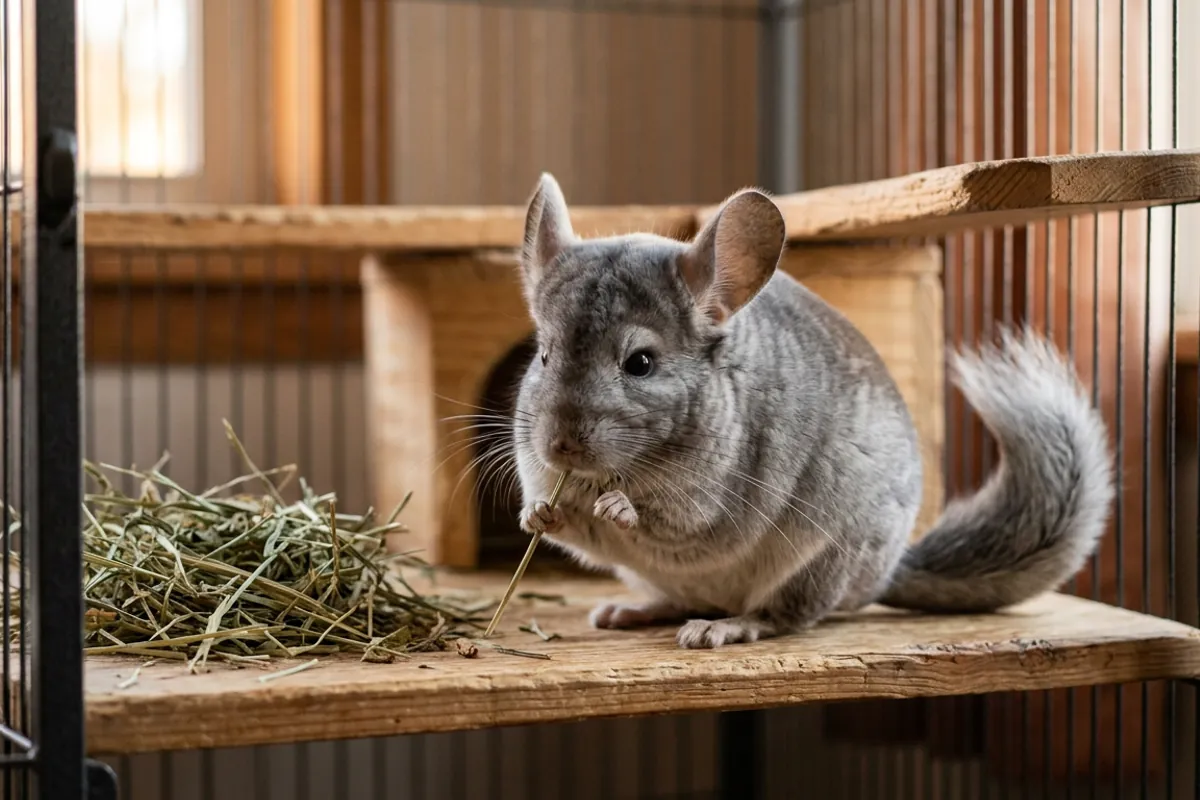
Food is second. Unlimited grass hay is the whole meal, not a side dish, with a measured amount of plain pellets on top and treats kept tiny and rare. That constant chewing is what keeps their ever-growing teeth worn down, which is a daily fight in my house because Juniper has dental disease. Good hay, always available, is the single best thing you can put in the cage. Oxbow Western Timothy Hay, 40 oz bag As an Amazon Associate I earn from qualifying purchases. Alongside the hay, safe wood to gnaw gives the teeth more to do. emours apple wood chew sticks, 40 count As an Amazon Associate I earn from qualifying purchases. I go deeper on why the hay comes first in chinchilla hay.
Protecting the coat that makes the color
The one place the coat does ask for something specific is staying clean, and that is the same for every color too. A chinchilla's fur is so dense that water soaks straight in and cannot dry properly, and trapped damp against the skin invites fungus and rot. So they never, ever bathe in water. They bathe in dust, fine volcanic pumice powder that rolls through the coat and carries oil and dirt out with it. Two or three dust baths a week, a few minutes each, is the usual rhythm, and you adjust by how the coat looks and feels.
Use a proper chinchilla dust, not sand and not craft powder of unknown grit, in a container big enough for a full roll. Lixit Blue Beauty chinchilla dust, 3 lb As an Amazon Associate I earn from qualifying purchases. Leaving the bath in all day is a mistake, because they will use it as a toilet and overbathe until the skin dries and flakes. A clean standard gray coat, dusted well, shows that blue depth I keep going on about, the tips crisp and the fur springing back when you press it. A neglected one goes greasy and clumped and dull, and no amount of color breeding fixes that. If the fur is coming out in patches, that is not a grooming problem, it is a vet question, and it gets an exotics vet, not a change of dust.
Gray, in the end, is just the coat the wild handed these animals, worn by most of the ones you will ever meet. It is beautiful in ordinary daylight, and it asks nothing of you that any other coat would not. Keep the animal cool, keep the hay coming, keep the coat dusted, and the color, light gray or dark, takes care of itself.