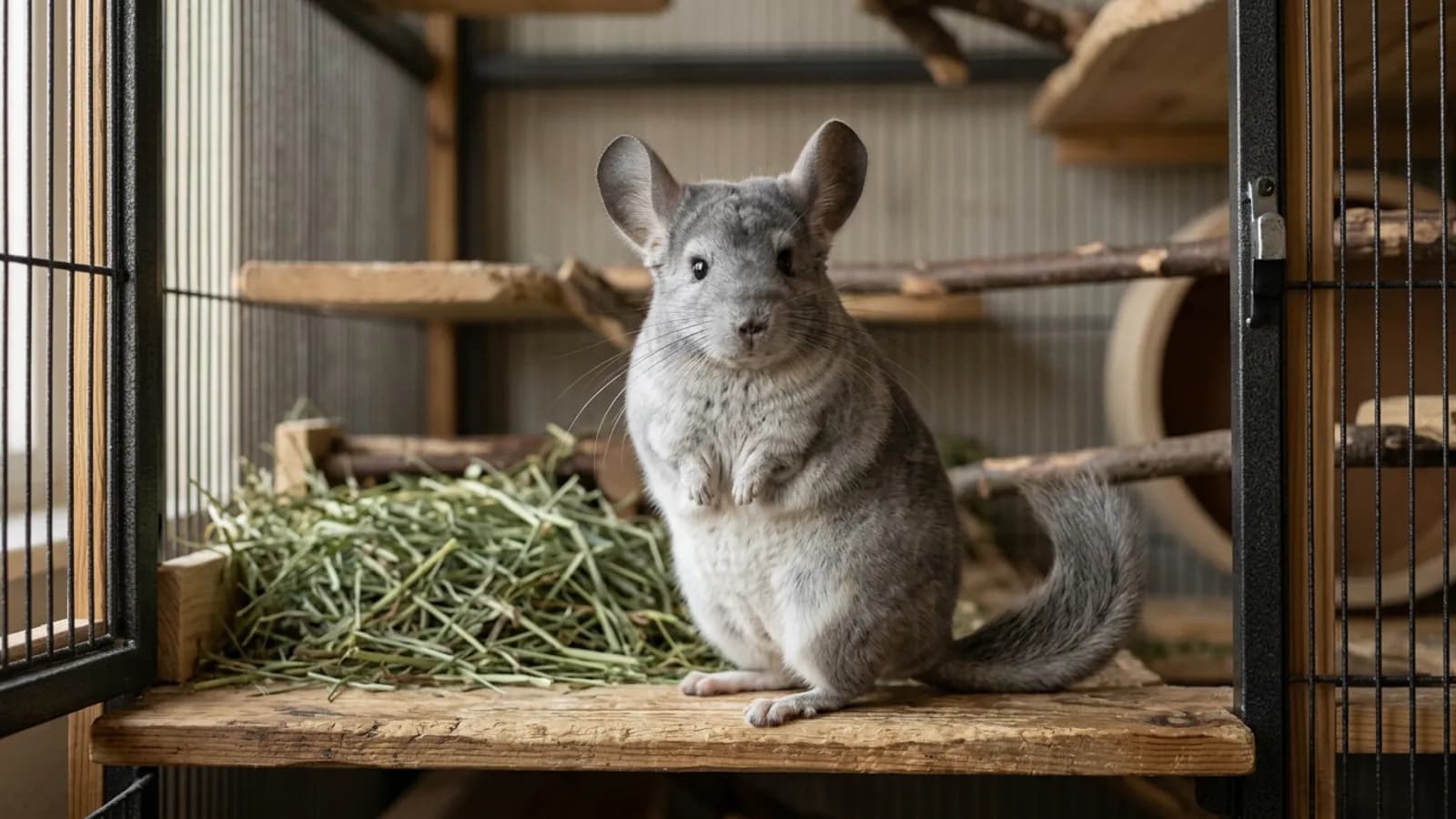
A chinchilla female is, in a handful of ways that genuinely matter, a different animal to live with than a male. She is usually the larger of the two sexes, she often runs the cage, and her reproductive biology is strange enough that it shapes how you house her, how you introduce her to other chinchillas, and how carefully you think before she ever shares a space with an intact male. I have kept females for about ten years, Pebble and Juniper both, and most of what follows is well established biology rather than my opinion. Where the science is genuinely fuzzy, I will say so rather than hand you a tidy number that is not real.
If you are still deciding whether one of these animals belongs in your home at all, start with what a chinchilla really is and come back. This piece is about the female specifically, sex and all.
How to tell a female from a male
Sexing a chinchilla trips up more first-time owners than almost anything else, because a female's anatomy can look, at a glance, exactly like a male's. Both sexes have a cone shaped bump. On a female that cone is the clitoris, and it sits very close to the anus with only a small gap between the two. Lift her gently, support her whole body against your chest, and look at the underside: on a female you see the cone and, right behind it, the anus, with a short slit lying between them. That slit is the vaginal opening. On a male there is a clear gap between the cone and the anus, roughly the width of a small fingertip in an adult, because that space has to hold the penis and the testes.
The catch is that the slit is often sealed. Females have a vaginal closure membrane that stays shut except when they are in season and at the moment of birth, so you may not see an obvious opening at all. That is normal, not a deformity. Kits are the hardest of all to sex because the gap is tiny on everyone, and that is exactly how pet shops and careless breeders end up sending home a "pair" that turns out to be a breeding pair. Handle her briefly and calmly while you check, because a frightened chinchilla can shed a patch of fur to escape your grip. If you are not certain what you are looking at, do not guess your way into a litter. An exotics vet can confirm sex in a minute, and it is worth the visit.
She is usually the bigger, bossier one
Chinchillas are one of those species where the female is the larger sex. It is not a dramatic gap, but adult females tend to outweigh males of the same line. Most adults land somewhere between 400 and 600 grams (about 14 to 21 ounces), with females sitting at the heavier end. In a bonded pair the female is very often the one in charge, and this dominance is normal social behavior rather than a sign that something is wrong. She may chase, nudge, and generally boss a companion around, and a male will usually defer to her.
Females also own the most theatrical defensive move in the species: standing up on the hind legs and spraying a jet of urine at whatever is bothering them. Both sexes are capable of it, but it is far more associated with females, and it is her way of saying back off in the plainest terms she has. If a female sprays you, she is not broken, she is frightened or fed up, and the fix is slower, gentler handling rather than more of whatever set her off. It fades in most well-socialized females and stays rare if you never corner her.
Her reproductive tract runs on a season
A female's cycle is seasonal. Chinchillas are what biologists call seasonally polyestrous, which means she comes into heat repeatedly, but mostly within a breeding season rather than evenly all year. In the Northern Hemisphere that season runs roughly from November into May, though indoor light and steady warmth blur the edges, and some females kept inside cycle more or less year round.
Within the season her estrous cycle averages somewhere around 30 to 40 days, and I want to be honest that this is one of the genuinely variable numbers in chinchilla biology. Individual females range widely, and the figures you see quoted swing from a couple of weeks to more than two months, so treat any single number as an average and not a promise. Around the time she becomes receptive, the vaginal closure membrane opens, and after mating a waxy copulatory plug forms and is later shed, which is one of the odder things you may find on the cage floor if you keep an intact pair. Most of the time, though, you simply cannot tell by looking that a female is cycling at all. She can reach sexual maturity young, often by about 8 months and sometimes as early as 4, which is the whole reason a mis-sexed pair is such a common and expensive mistake.
A pregnancy unlike any other small pet's
Here is where the female chinchilla stops resembling a hamster or a rabbit entirely. Her pregnancy lasts about 111 days, a little over three and a half months. That is enormous for a rodent her size, and it exists because chinchilla kits are precocial: they are born fully furred, with their eyes open, teeth already in, and able to move around within hours. A newborn chinchilla is not the pink, blind, helpless thing you picture from most small mammals. If you ever end up with kits, planned or not, what to expect from a chinchilla newborn walks through those first weeks.
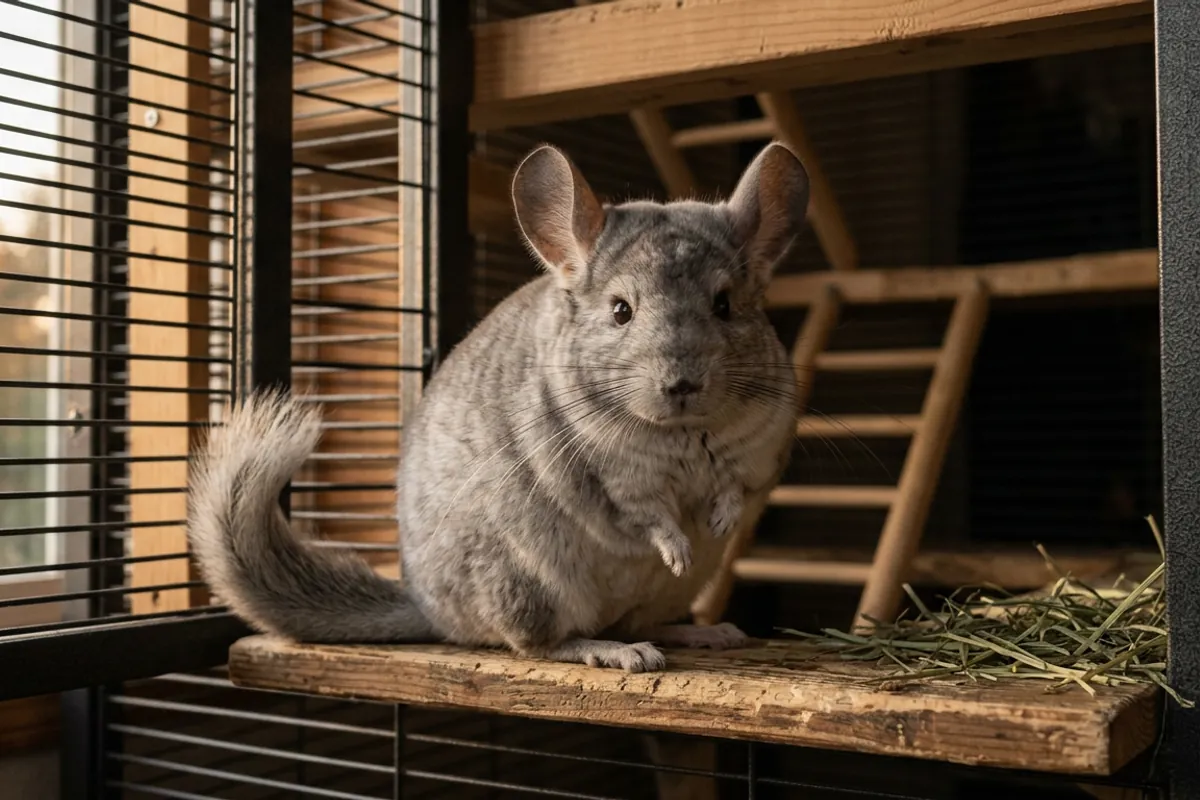
Litters stay small to match the long investment, usually 1 to 3 kits, with twins the common outcome. One quirk of the female's build is worth noting: her nipples sit high on her flanks rather than in a neat row down the belly, which lets more than one kit nurse from odd angles. The long gestation and tiny litters are also why chinchillas were never going to be casual breeders, and why I am so firm that breeding a chinchilla has to be a deliberate, informed decision, never an accident you shrug at afterward.
The postpartum trap that catches new owners
This is the single most important thing to know about a chinchilla female's biology, and the reason I keep hammering on sexing. A female comes back into heat almost immediately after giving birth, within a day or two, sometimes within hours. It is called postpartum estrus, and it means a female housed with an intact male can be pregnant again before her first litter has even properly found its feet.
Back to back pregnancies wreck a female. She is nursing one litter while building the next, on a body that weighs half a kilo, and the drain on her is real and dangerous. This is not a theoretical risk, it is the default outcome of leaving a fertile pair together, and it is why responsible keepers separate the male the moment a planned litter arrives, and why nobody should keep an unsexed or wrongly sexed "pair" and hope for the best. If you want two chinchillas, keep two females, or two males, or a neutered male with a female. A female's body will not protect itself from a pregnancy it did not need, so that protection has to come from you.
What her temperament is actually like
I want to push back gently on the idea that females are just meaner. Individual personality swamps sex almost every time. Pebble is confident and pushy and always has been. Juniper, a rescue, arrived shut down and defensive and softened over months of patient handling. Neither of them is a "typical female," because there is no such thing in any way that predicts the animal in front of you.
What is fair to say is that a female is more likely to be the dominant one in a pairing, a little more likely to spray when she feels cornered, and can be territorial about her cage, especially one who has never had to share. None of that makes a female a bad pet. It makes her a chinchilla with opinions. Biting, when it happens, is almost always fear or overstimulation rather than a female trait, and what chinchilla biting really means covers the real causes and the fixes. Judge the individual in front of you. A calm, well-handled female is as gentle a companion as any male.
Housing a female with other chinchillas
Two females can absolutely live together, but chinchillas are not automatically social with strangers, and a botched introduction can end in real injuries. Sisters raised together, or a young pair introduced slowly and on neutral ground, tend to do best. An older female who has ruled her own cage for years may simply never accept a roommate, and that is a preference to respect rather than override. The whole question of whether to pair at all, and how to read a fight, is do chinchillas need a friend.
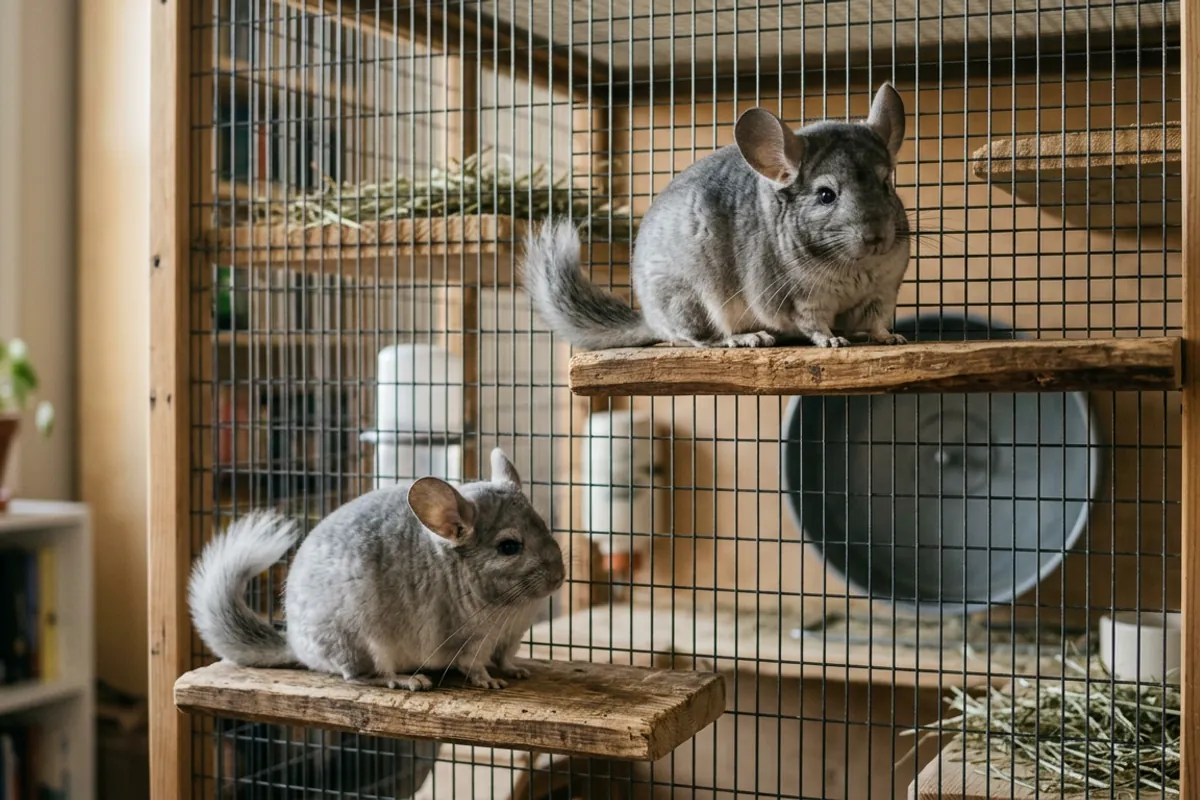
Whatever the pairing, give a female enough room that she is never forced into another chinchilla's face. I keep mine in a tall metal cage with wooden ledges, which lets a lower-ranked chinchilla climb out of the dominant one's way and defuses most squabbles before they start. Critter Nation double unit small animal cage As an Amazon Associate I earn from qualifying purchases.
Height and separate levels matter more than floor space here, and a good setup carries whether you keep one female or a bonded group.
The care that does not change because she is female
Almost everything that keeps a chinchilla alive and well applies identically to both sexes, and it is worth saying plainly so nobody thinks a female needs some special regimen.
Heat comes first, always. Chinchillas are built for cold mountains and they cannot shed heat well. Keep her between 60 and 70°F (15 to 21°C). Above 75°F (24°C) is risky, and 80°F (27°C) and up is an emergency, faster in humid air. Pebble's first summer brought a heatwave near-miss and a night at the emergency vet, and that scare is why I will not soften this: a hot room kills a chinchilla, male or female, and I keep a thermometer clipped to the cage so I am never guessing at the number. digital thermometer and humidity gauge with remote probes As an Amazon Associate I earn from qualifying purchases.
There is more on this at chinchilla heat safety, and it is the reading I would not skip.
Then hay. A female eats unlimited grass hay first, timothy or another grass hay, in front of her at all times. It is the bulk of the chinchilla diet and the thing that wears her constantly growing teeth down, while plain pellets stay a small measured supplement rather than the main event. Oxbow Western Timothy Hay, 40 oz bag As an Amazon Associate I earn from qualifying purchases.
Then the dust bath, which is the same for every chinchilla: fine volcanic dust, never water. She rolls in it a few times a week to keep that dense coat clean and dry, and a chinchilla never, ever bathes in water. Lixit Blue Beauty chinchilla dust, 3 lb As an Amazon Associate I earn from qualifying purchases.
And chews, which are really dental care wearing a fun costume. Juniper's dental disease is the reason I am uncompromising here: watching her up close taught me exactly what happens when those teeth do not get worn down. A variety of safe wood chews keeps a female gnawing and keeps her molars in check. emours apple wood chew sticks, 40 count As an Amazon Associate I earn from qualifying purchases.
None of that shifts because she is female, and neither does her lifespan: a female commonly lives 10 to 20 years in good care, the same long commitment a male asks of you. Get the temperature, the hay, the dust, and the chews right, and the sex of your chinchilla becomes what it should be, a detail about her biology rather than a burden on her care.