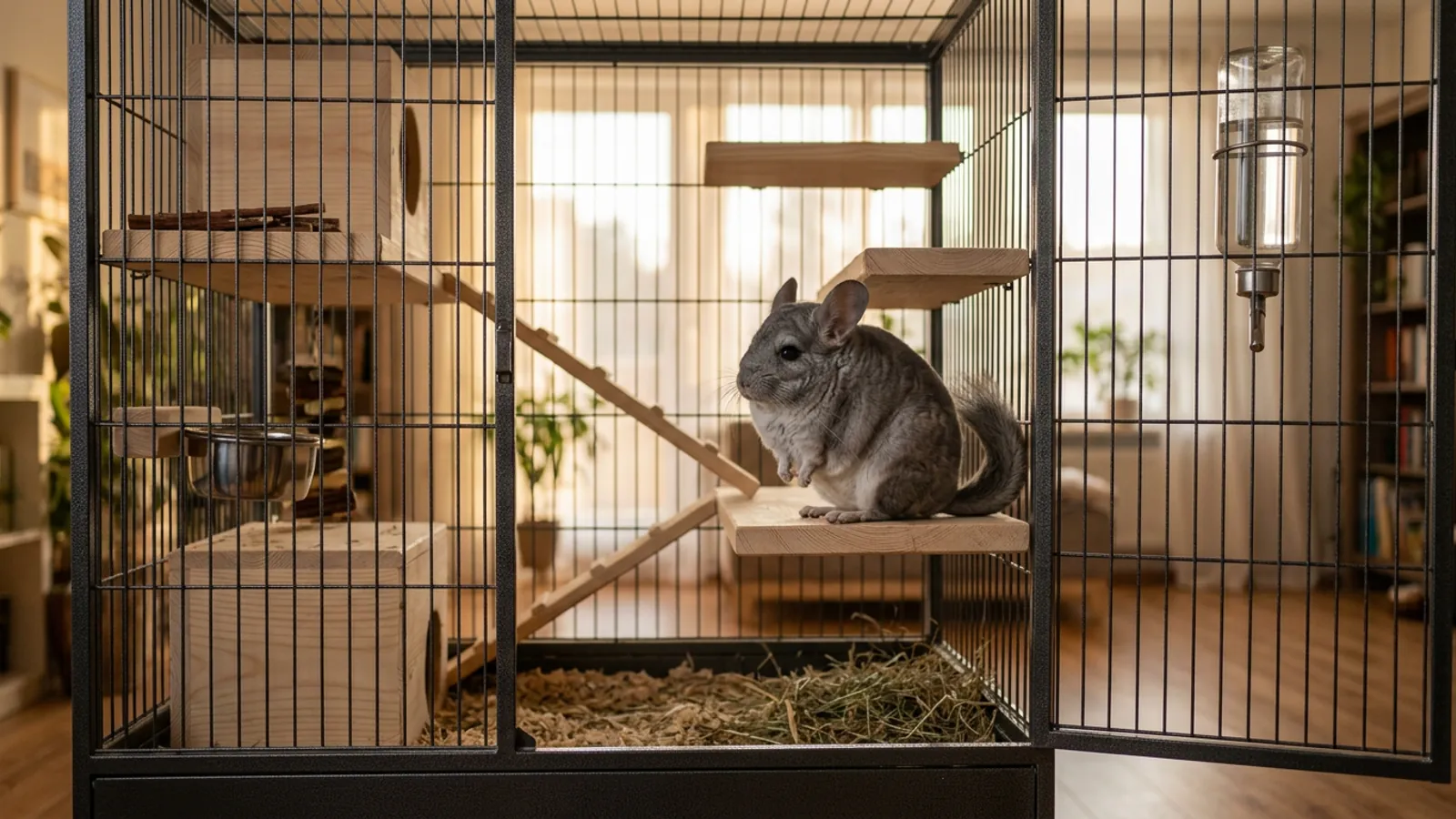
When you set out to buy a chinchilla cage, the easy move is to sort the listings by price and grab the cheapest box that fits the corner you have already picked out. I understand the pull, but that is exactly how you buy twice. The cage is the single most expensive piece of equipment you will own, it is the space your chinchilla lives inside every hour it is not out with you, and it is the one purchase where getting it wrong shows up as a stressed, under-exercised, or overheated animal rather than a mild annoyance you can shrug off. So before you open a single shopping tab, I want to walk you through what matters, in the order it matters, so the first cage you buy is the last one you need. I bought the small one first, ten years ago, and then bought the tall one that should have been the first purchase. Learn from that instead of repeating it.
Buy for size before anything else
Height is the number I care about most, and it is the first thing budget cages skimp on. Chinchillas are vertical animals. In the wild they live on rocky slopes, and they move by jumping, climbing, and dropping from ledge to ledge. A cage that only gives them floor space to shuffle across is a cage that never lets them do the one thing their bodies are built for. A wide, short cage looks roomy in a product photo and feels like a fish tank to the animal standing inside it.
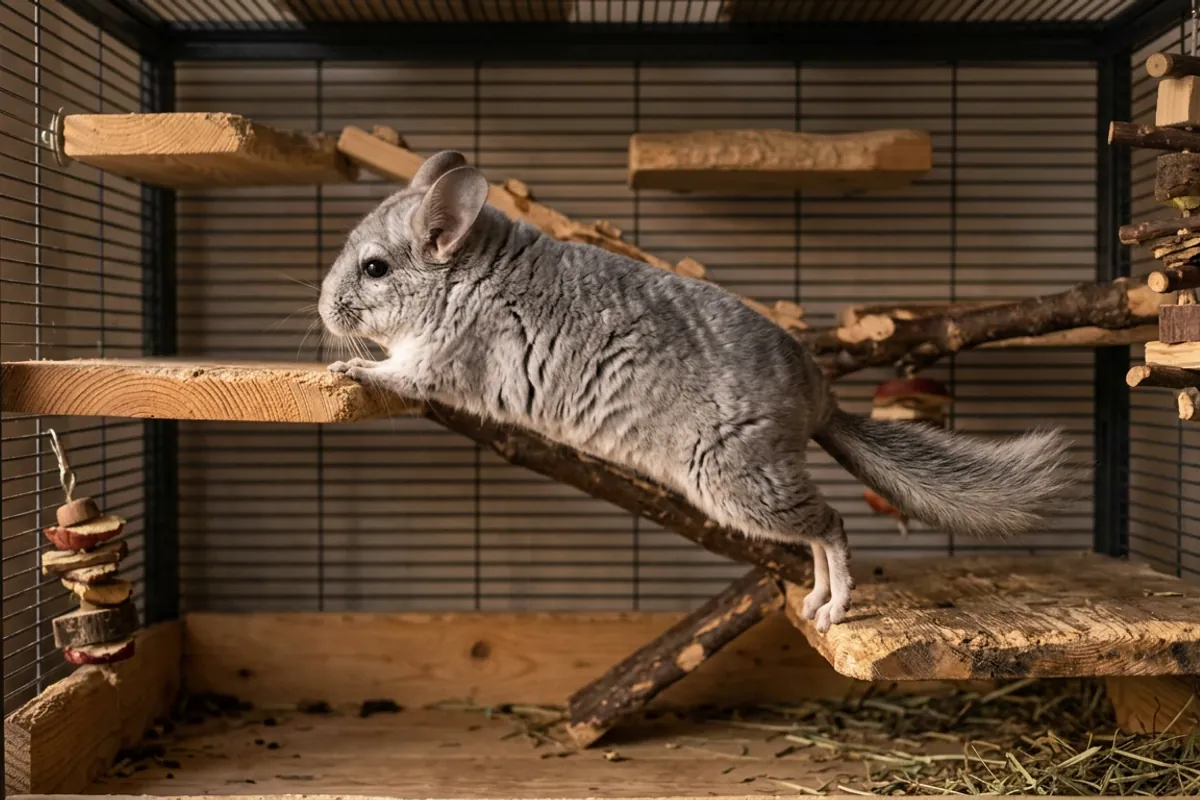
As a floor to build from, I would not go below roughly 3 feet (about 90 cm) tall for a single chinchilla, and taller is better rather than a luxury. More important than the outside dimensions is the vertical run inside: can you fit two or three levels of ledges with real jumping distance between them, or does the manufacturer eat the height with a deep tray and shallow shelves that leave nowhere to leap? I have written the long version of this in why height beats floor space, because it is the mistake I see most often and the one people regret fastest.
Do not talk yourself into a small cage to save money or space. A small cage is a false economy, and I said as much in what is wrong with a small chinchilla cage: you feel the saving for a month and then spend the rest of the cage's life apologizing for it. If you are keeping a pair, you do not just add a little room, you plan for two animals that both need vertical territory and somewhere to get away from each other. Bigger, taller, more ledges. When in doubt, size up. Nobody has ever written to me regretting that their cage was too big.
Metal and wood, never plastic
This is the rule that is not negotiable: the cage has to be metal. Chinchillas chew, constantly and by design, because their teeth never stop growing and grinding is how they keep them in check. Plastic is not a material they leave alone, it is a material they eat. A plastic pan, a plastic shelf, a plastic corner guard, a plastic hidey-house: these get gnawed off, swallowed, and turned into a gut blockage that can kill. There is no plastic cage on the market I would put a chinchilla in, and I would pull the plastic base out of an otherwise decent metal cage and swap it for a metal one before the animal ever moved in.
What you want is a powder-coated metal frame with metal bars, a metal pan on the bottom, and then wood added by you as ledges and platforms. Kiln-dried pine or another chinchilla-safe wood gives them a surface that is warm to sit on, spares the feet from standing on wire, and doubles as something to chew when the mood takes them. A good starting point is a proper tall metal cage built for the job with wooden ledges already in mind.
Critter Nation double unit small animal cage As an Amazon Associate I earn from qualifying purchases.
I go deeper on why even the coating matters in why a chinchilla cage has to be metal. The gist is simple enough to carry into any shop: metal frame, metal pan, wood you add yourself, no plastic anywhere the animal can reach.
Bar spacing, doors, and the details that injure
Once size and material are right, the details are what separate a cage that is merely big from a cage that is safe. Bar spacing comes first. You want the gap between bars narrow enough that a chinchilla cannot force its head through and get stuck, which in practice means roughly 1 inch (about 2.5 cm) or less. Horizontal bars are a bonus because they give the animal something to climb, but the spacing is the safety line, and a cage marketed for rabbits or ferrets often has bars set too wide.
Watch the flooring too. Some cages ship with a wire mesh base or wire shelves, and bare wire under the feet, run on for months, is a known cause of sore, ulcerated hocks. It is not that a strand of wire anywhere is forbidden, it is that you cannot leave the feet on it. I cover the whole floor with wooden ledges, fleece, and a solid pan so there is always somewhere flat and kind to stand.
Doors matter more than people expect. You want doors big enough to lift the animal out calmly with two hands, and big enough to get a full-size wheel and a dust bath house in and out without a fight. Tiny doors turn every daily interaction into a wrestling match, and a chinchilla that comes to associate the cage door with being grabbed gets harder to handle over time. Check the latch as well: it should be something a clever, determined rodent cannot work open, because they will absolutely try. If you are weighing a specific popular model, I wrote up whether the Critter Nation is right for a chinchilla, which is the cage a lot of keepers land on for exactly these reasons.
New, used, or the bundle deal
You do not have to buy new. A solid metal cage is close to indestructible, and the second-hand market is full of them from people whose chinchilla has passed on or who have moved out of the hobby. Buying used is often how you afford a bigger cage than a new budget would stretch to, and I am all for it, with two cautions.
First, disinfect anything used before it goes near your animal. Scrub it, rinse it, and let it dry fully. You do not know what lived in it or what it carried, and a cheap cage is not a bargain if it brings something in with it.
Second, be careful with the combined "chinchilla and cage" listing, the one selling you the animal, the cage, and a heap of accessories together for a single price. Sometimes it is a genuine rehome by a decent owner who wants the whole setup gone at once. Just as often it is a way to move a too-small cage, a wire wheel, and a plastic house by attaching them to a living animal, and to sell that animal to whoever turns up with cash and no questions. I broke down what those listings are really doing in what a chinchilla and cage for sale listing is really selling you. Judge the cage on the same rules you would judge any cage: size, metal, spacing. If it fails them, the bundle is not a deal, it is two purchases you will end up redoing.
Where people buy chinchilla cages
Big pet-store chains sell cages marketed for chinchillas that are, bluntly, too small, and I have said so plainly about the ones I have seen; what to know about a PetSmart chinchilla cage is exactly that conversation. That does not mean never set foot in a chain store. It means walk in already knowing the size and material rules, and be willing to walk out without buying anything.
Specialist small-animal cage makers and the online cage market are usually where you find the tall metal builds worth owning. Read the actual dimensions in the listing, not the marketing word "large", because "large" is not a measurement; I have a whole piece on choosing a large cage that fits the animal for that reason. Treat any listing that leads with plastic accessories or a wire wheel as one written by someone who does not understand the animal, and price accordingly in your head. Wherever you end up buying, the decision framework is the same, and I laid it out step by step in how to pick the best chinchilla cage without buying the wrong one twice. Size, material, spacing, doors, in that order.
What goes inside before your chinchilla does
Buying the cage is only half the job. An empty metal box is not a home, and the fit-out is where a lot of the daily health of the animal is quietly decided. Set it up fully before the chinchilla arrives so the first day is calm rather than a scramble.
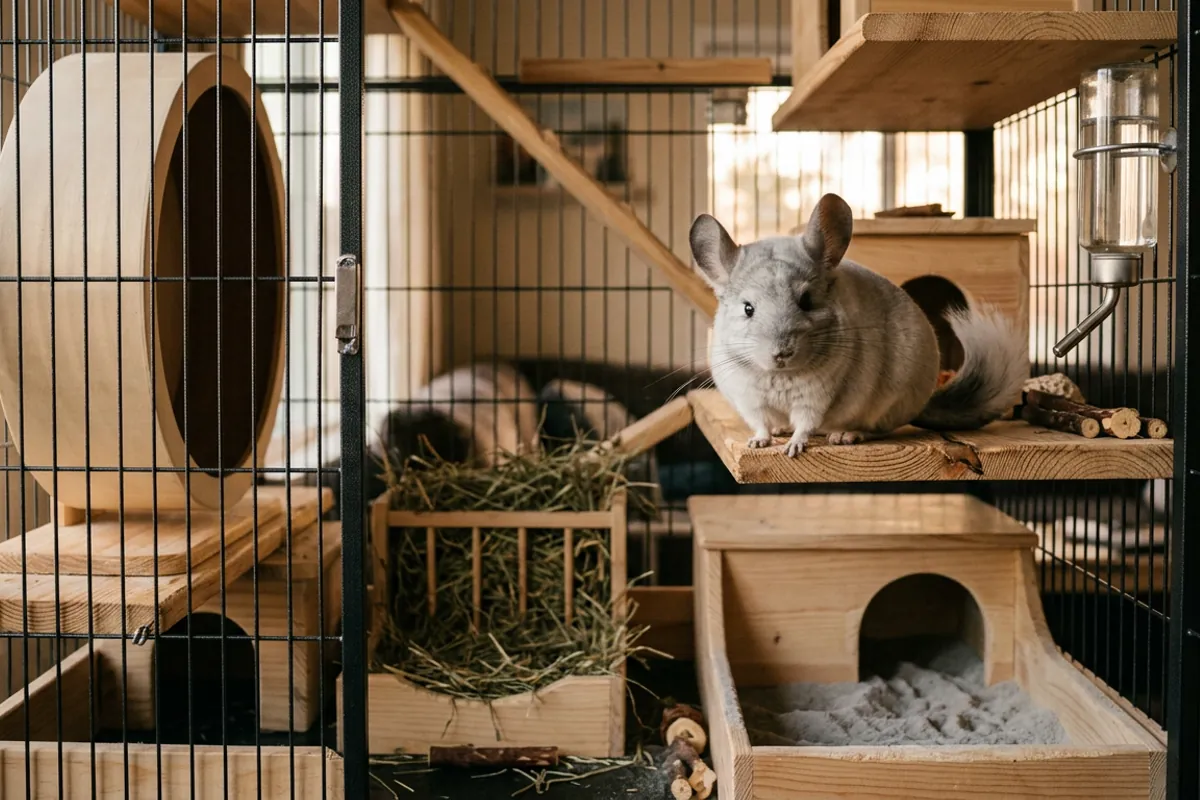
Ledges and platforms at staggered heights, so there is real jumping to do between them. A wooden house to sleep in and hide inside. A water bottle you check and refill daily. Unlimited grass hay, which is not a nice-to-have but the entire foundation of the diet, so a hay feeder that keeps a constant clean supply off the floor earns its place on day one; more on why in my guide to chinchilla hay.
Oxbow Western Timothy Hay, 40 oz bag As an Amazon Associate I earn from qualifying purchases.
A dust bath a few times a week, offered in a house or heavy bowl for about 15 minutes and then taken away, because chinchillas clean that dense fur in fine volcanic pumice dust and never in water.
Lixit Blue Beauty chinchilla dust, 3 lb As an Amazon Associate I earn from qualifying purchases.
An exercise wheel, and here the material rule comes straight back: it must have a solid running surface. Wire-rung and mesh wheels catch feet and tails and cause real injuries, and I will name them as the bad buy they are; what a chinchilla on a wheel really needs goes into the sizing. A large, solid-surface wheel is the only kind I will put in a cage.
15 inch Chin Spin solid surface chinchilla wheel As an Amazon Associate I earn from qualifying purchases.
Chews, plural and varied, because this is dental care and not decoration. Juniper, one of my two, came to me with dental disease I now manage every single day, and watching up close what happens when teeth do not get worn down is why I am uncompromising about a real variety of safe wood to gnaw.
emours apple wood chew sticks, 40 count As an Amazon Associate I earn from qualifying purchases.
I put the full room-by-room version in how to build a cage setup that keeps the animal healthy and setting up a chinchilla cage the right way, once, and I sorted the accessories that earn their spot from the ones that just fill a shelf in cage accessories that earn their place.
What the whole thing really costs
Where you put the cage is part of buying it, and this is the part I will never soften, because it is the scare that made me the keeper I am. Pebble came to me out of an overheated attic, and her first summer brought a heatwave near-miss and a night at the emergency vet. Chinchillas do not shed heat well; that dense fur that makes them wonderful is a blanket they cannot take off. They are comfortable at about 60 to 70°F (15 to 21°C). Push past 75°F (24°C) and you are in dangerous country, and 80°F (27°C) and up is an emergency that humid air hastens. So the cage goes in the coolest, most stable room you have, out of direct sun and away from radiators, and you buy a thermometer for that exact spot on the same order as the cage, not as an afterthought later.
digital thermometer and humidity gauge with remote probes As an Amazon Associate I earn from qualifying purchases.
A cooling stone gives them somewhere to lie against on a warm afternoon, and it is a cheap piece of insurance, though it never replaces keeping the room itself cool.
Kaytee Chinchilla Chiller granite stone As an Amazon Associate I earn from qualifying purchases.
If you want to think in real numbers before a hot spell arrives, the heat danger calculator and the heat-safety guide are the two things I would read next.
Now the money. Budget for the cage as the big line item, then add the fit-out, then, quietly, the part most people forget: an exotics vet fund for the animal itself. A good tall metal cage costs more up front than the small one, and it is still cheaper than buying the small one, watching it fail the animal, and buying the big one anyway. Add hay you will restock forever, dust, a solid wheel, chews, and a thermometer, and you have the true cost of the setup, which I break down without flinching in what a chinchilla really costs. The cage is not where you save money. It is where spending once, correctly, saves you everything after.
If that raised a question, chinchilla hammock goes into it properly.