Treats are where good intentions get chinchillas into trouble, so let me be blunt before we start: chinchilla treats are not a food group, they are a rounding error. A chinchilla's whole body is built to run on grass hay and not much else, and the moment you start handing over dried fruit and yogurt drops because the little face is irresistible, you are working against ten thousand generations of digestive plumbing. I have kept chinchillas for about ten years, and the single most common mistake I see new owners make is treating a chinchilla like a hamster with a sweet tooth. It is not. So this covers the treat question: what is safe, what to hand over and how little, what to never let past the bars, and why the best "treat" in the house is usually a chew.
Why a chinchilla's gut makes treats a real risk
To understand treats you have to understand the animal eating them. A chinchilla is a hindgut fermenter with a very long, very particular digestive tract that evolved on the sparse, dry, fibrous vegetation of the Andes. It runs on a steady march of coarse grass hay through the gut, and that constant fiber is what keeps everything moving at the right pace. Sugar, fat, and moisture are the three things that tract handles worst, and most of what people think of as treats is loaded with at least one of them.
When you introduce a slug of sugar or a wet, rich morsel, you can throw off the balance of gut bacteria fast. The results are not cute. Bloat, gas, soft stool, and full digestive stasis are all on the table, and stasis in a small animal can turn fatal quicker than a first-time owner expects. I am not saying this to scare you off ever handing your chinchilla anything. I am saying it so the portion sizes later in this article read as deliberate rather than stingy. A chinchilla weighs roughly a pound, its whole daily food intake is small, and a treat that would be a token nibble for a rabbit can be a genuine dietary insult to a chinchilla. Scale everything down in your head, then scale it down again.
If you want the full picture of what belongs in the bowl versus what belongs nowhere near it, I have written that out separately in what can a chinchilla eat, and what should you never feed it. This article is the narrower question of the extras.
What counts as a safe chinchilla treat
Good chinchilla treats share a profile: dry, low sugar, low fat, and as close to "plain plant" as you can get. The safest options barely register as treats to a human eye, and that is the point.
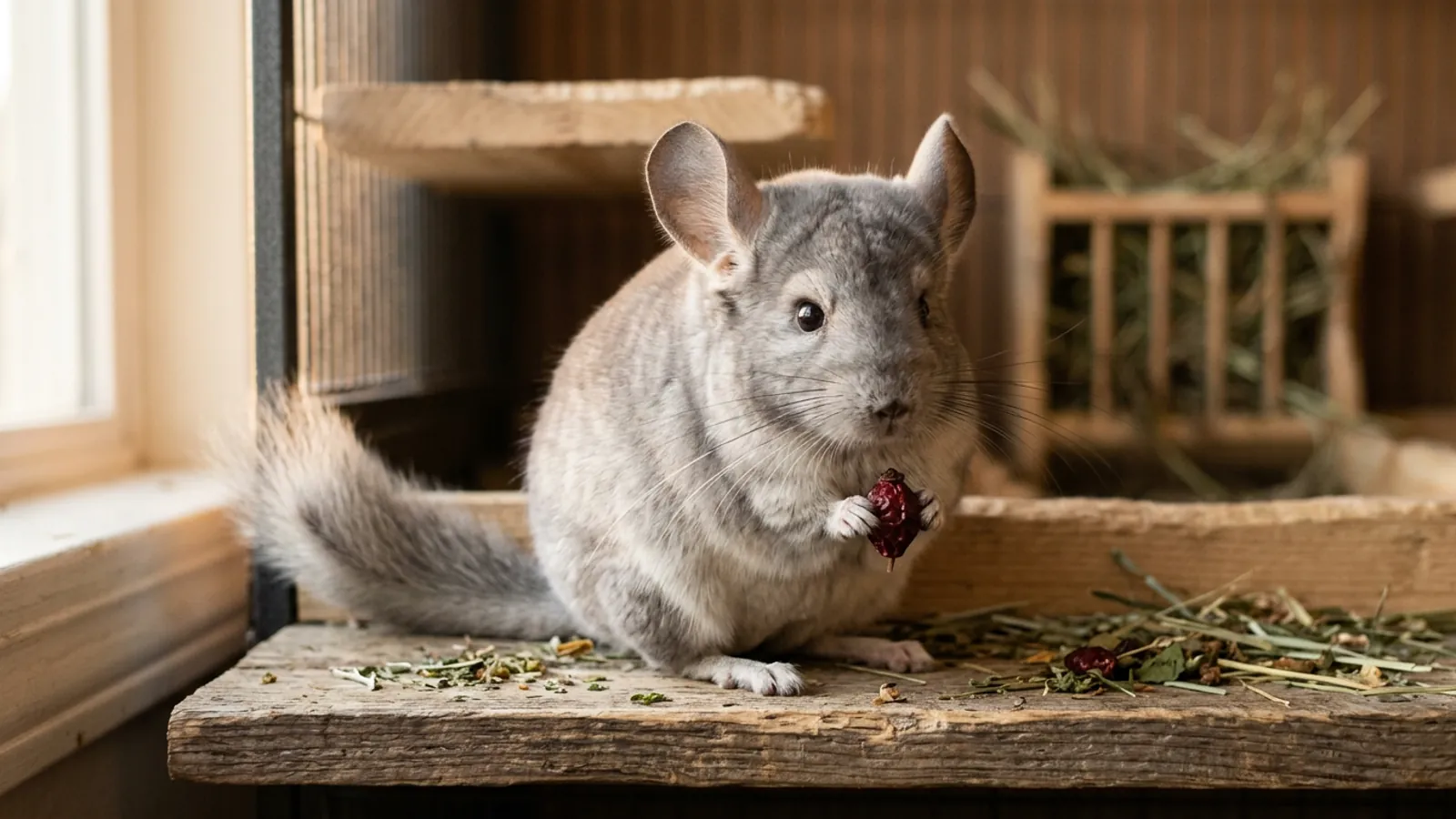
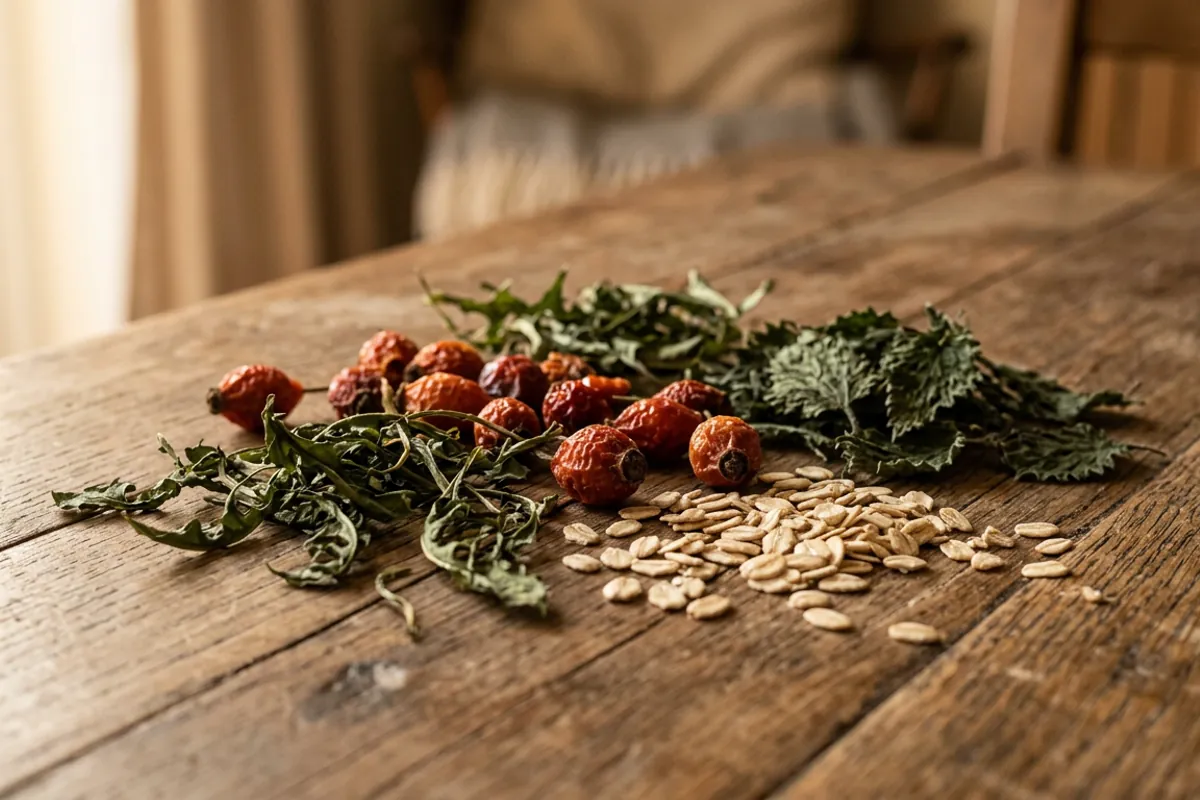
At the top of my list are plain, dried, hay-adjacent things. A single dried rose hip, a small pinch of dried herbs like plain dandelion leaf or nettle, a dried plantain leaf, a few strands of a different grass hay than the one they usually eat. These are the treats I reach for, because they are foods the digestive system already knows how to handle. A rolled oat or two, given dry and whole, is a classic chinchilla favorite and generally fine in tiny numbers, though it is a grain, so it stays occasional.
Notice what is not on this list: fruit. I know dried banana and raisins are sold as chinchilla treats and I know chinchillas will go wild for them. That does not make them healthy chinchilla treats. Dried fruit is concentrated sugar, and while a fleck of dried apple once in a blue moon will not kill a healthy adult, I would rather teach you to reach for a rose hip instead, because once fruit is on the menu the portions creep. If you do offer fruit at all, it should be a rare exception measured in a piece the size of a lentil, not a routine.
The other rule for chinchilla safe treats is one ingredient. If a packaged treat has a list of things you cannot pronounce, added sugar, honey, dairy, or "yogurt coating," it is not a treat, it is a health problem in a bag. More on the commercial shelf below.
The treats that send chinchillas to the vet
Let me name the bad ones plainly, because vague warnings do not save animals.
Yogurt drops are the worst offender on the shelf, and they are everywhere, often labeled specifically for chinchillas. Chinchillas are lactose intolerant, dairy sits badly in that gut, and the drops are mostly sugar and fat on top of that. Skip them entirely, no matter how the packaging is marketed.
Nuts and seeds, including sunflower seeds, are too high in fat. A chinchilla's system is not built to process that fat load, and regular feeding contributes to fatty liver problems over time. Same story for anything with added oils.
Fresh fruit and fresh vegetables are a moisture-and-sugar problem. The classic warning cases are fresh greens like lettuce and vegetables like carrots, which owners assume are "healthy" because they are healthy for us. For a chinchilla the water content alone can trigger soft stool and bloat, and the sugar in a carrot is not doing any favors. Cabbage, broccoli, and other gas-forming vegetables are especially risky. Keep fresh produce out of the cage.
Bread, crackers, cereal marketed for humans, chocolate (which is outright toxic), and any candy are all off the list. So is anything sticky or sugary sold with a cheerful chinchilla on the front. The pet-store label is not a safety certification, it is marketing, and I have watched too many owners trust the bag over the biology.
Finally, a quieter one: raisins and grapes get passed around chinchilla forums as a treat, and while a lot of keepers use a single raisin as a training reward, understand you are handing over pure sugar. If you use one at all, one is the whole portion, and not every day.
Homemade and DIY chinchilla treats
The nice thing about chinchilla treats homemade in your own kitchen is that you control every ingredient, and for this animal that control matters more than for almost any other pet. The bad news is that most "DIY chinchilla treats" recipes floating around online are baked cookies made with flour, honey, banana, and oats, and those are exactly the sugar-and-starch bombs I just told you to avoid. A homemade sugar cookie is still a sugar cookie.
Real diy chinchilla treats keep to the safe profile. The simplest and safest route is buying single-ingredient dried herbs sold for small herbivores, because no veterinary source for this species addresses picking your own at all. If you do dry your own, it has to be from ground you control and positively identified, and chinchilla safe herbs goes through which four herbs have a source behind them and the calcium question hanging over dandelion. Rose hips from an unsprayed bush, dried hard, are another. You can also dry plain rolled oats or offer a small piece of a plain, unsweetened shredded wheat as an occasional grain treat, though I keep grains rare.
Two hard rules for anything homemade. First, positive identification and clean sourcing are non-negotiable. Foraged plants must be pesticide-free, herbicide-free, and correctly identified, because a misidentified plant is a poisoning. If you are not completely certain what a plant is, do not feed it. Second, everything must be fully dried, with no residual moisture, because damp plant matter molds and mold is dangerous. When in doubt, buy dried herbs sold for small animals rather than gambling on your own drying.
The best homemade "treat" is not a recipe at all. It is variety in the hay. Offering a second type of grass hay your chinchilla does not usually get, like orchard grass alongside their regular timothy, is a genuine treat to a chinchilla and it is one hundred percent safe because it is just more of the food they should already be eating.
The commercial shelf, including Oxbow
Walk into a pet store and the chinchilla treats for sale will be a wall of the very things I just warned you off: yogurt drops, dried fruit mixes, honey sticks, seed bars. Reading labels here is a survival skill, not fussiness.
When I do buy a packaged treat, I want a single recognizable plant ingredient and nothing else. No added sugar, no honey, no dairy, no artificial anything. Oxbow chinchilla treats are the brand I trust most on this shelf, mainly because their simpler offerings are things like plain dried herbs or single-ingredient botanicals rather than sugar-coated novelties. That said, brand loyalty is not a free pass. Even within a trusted brand, read the specific bag: a plain baked hay-and-timothy treat is a very different thing from a fruit-and-veggie blend under the same logo. Buy the boring one.
The category the store calls chinchilla snacks and treats mostly is not snacks in any sense a chinchilla needs. Think of the whole aisle as ninety percent things to walk past and ten percent plain dried botanicals worth a small bag. If a product does not tell you plainly and shortly what is in it, put it back.
How much, how often, and how to give it
Here is the part people skip and it is the part that matters most. Treats are a garnish, not a course. My rule of thumb is a tiny amount, a few times a week at most, and for a healthy adult chinchilla only. That means one rose hip, or a pinch of dried herb, or one or two oats, not a handful and not daily. If your chinchilla's stool changes at all after a new treat, softer, smaller, or fewer droppings, stop that treat and go back to hay only.
Introduce anything new one item at a time and in a token amount, then watch for a day or two before you decide it agrees with them. That way if something disagrees you know exactly which thing to blame.
Skip treats entirely for babies, for any chinchilla with a history of digestive trouble, and for any chinchilla that is unwell, because a compromised gut is the last place to add a variable. If your animal has dental disease, talk to your exotics vet about whether treats fit at all. My Juniper came to me as a neglected rescue and I manage her dental disease day to day, and with her I am far stricter about extras than I am with Pebble, because her margins are thinner. For anything where a health condition intersects with diet, that call belongs with a vet, not a blog.
The other thing worth saying: a treat is most useful not as food but as a bridge. A single dried herb offered from a still hand is one of the fastest ways to build trust with a nervous new chinchilla, and later it makes a clean training reward. The value is in the interaction, which means the food part can stay microscopic and still do its job. If you want the wider picture on trust, handling, and daily care, chinchilla how to take care: the plain owner's checklist covers the routine those moments fit into.
Chews and toys are the treat your chinchilla needs
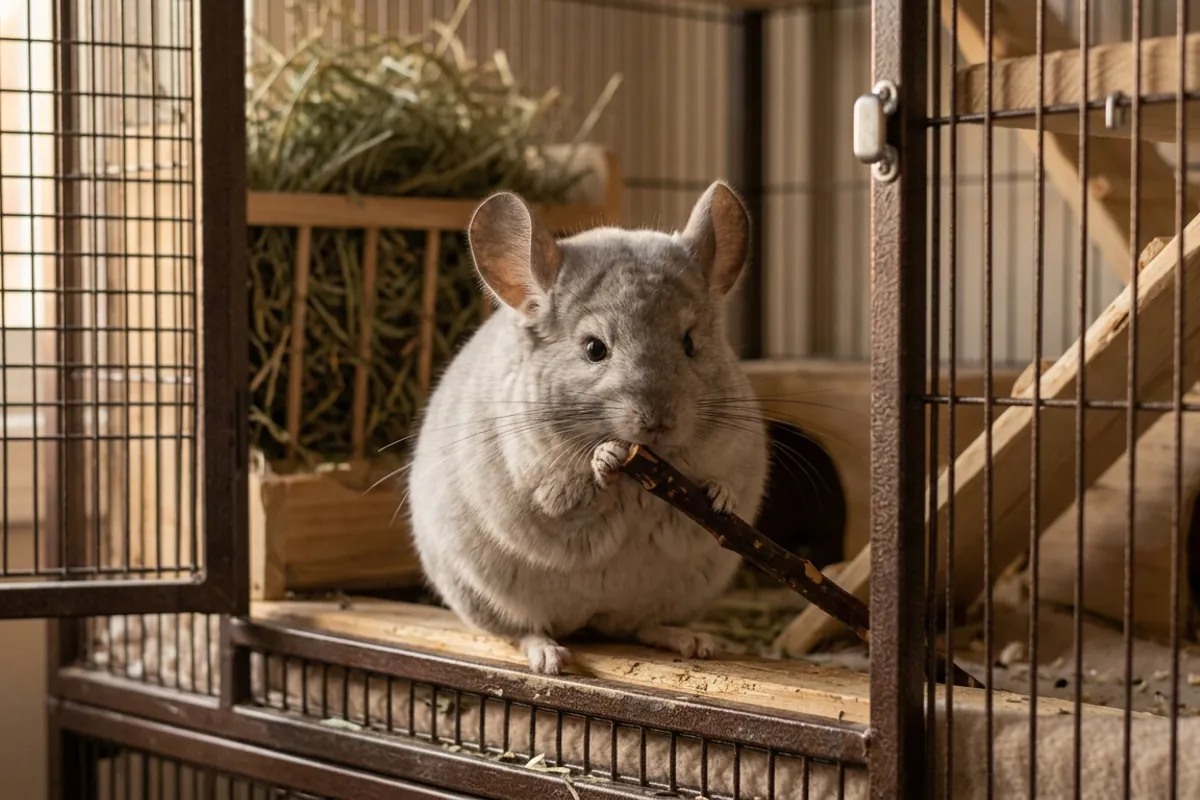
If you take one thing from this article, take this: the treat that improves a chinchilla's life is not edible in the snack sense at all, it is something to chew. When people search for chinchilla treats and toys together they are closer to the right instinct than the ones buying yogurt drops, because a chinchilla's teeth grow continuously for its entire life and the animal has a deep behavioral need to gnaw.
Safe wood chews are the real "treat" I hand out without limit. Apple, pear, willow, and other chinchilla-safe woods give the teeth something to work against and the mind something to do, and unlike food treats there is no digestive downside to a chinchilla wearing its teeth down on wood all day. A variety pack of untreated apple wood and similar safe woods is one of the better things you can put in a cage. emours apple wood chew sticks, 40 count As an Amazon Associate I earn from qualifying purchases.
This is not a small aesthetic point. Overgrown teeth and malocclusion are among the most serious chronic problems chinchillas face, and constant chewing is your first line of defense. Watching Juniper's dental disease up close is exactly why I am uncompromising about unlimited hay and a real variety of chews rather than a single boring stick. If you want to know what to watch for, chinchilla teeth problems: spotting malocclusion before it turns serious walks through the warning signs.
And under all of it sits the actual staple. The best thing you can offer a chinchilla every single day is not a treat at all, it is unlimited fresh grass hay, and keeping a generous, clean supply in front of them is worth more than every novelty in the treat aisle combined. Oxbow Western Timothy Hay, 40 oz bag As an Amazon Associate I earn from qualifying purchases.
Get the hay right, the chews plentiful, and the treats tiny and rare, and you have a chinchilla eating the way its body wants to. Everything on the treat shelf is optional. The hay and the chewing are not.