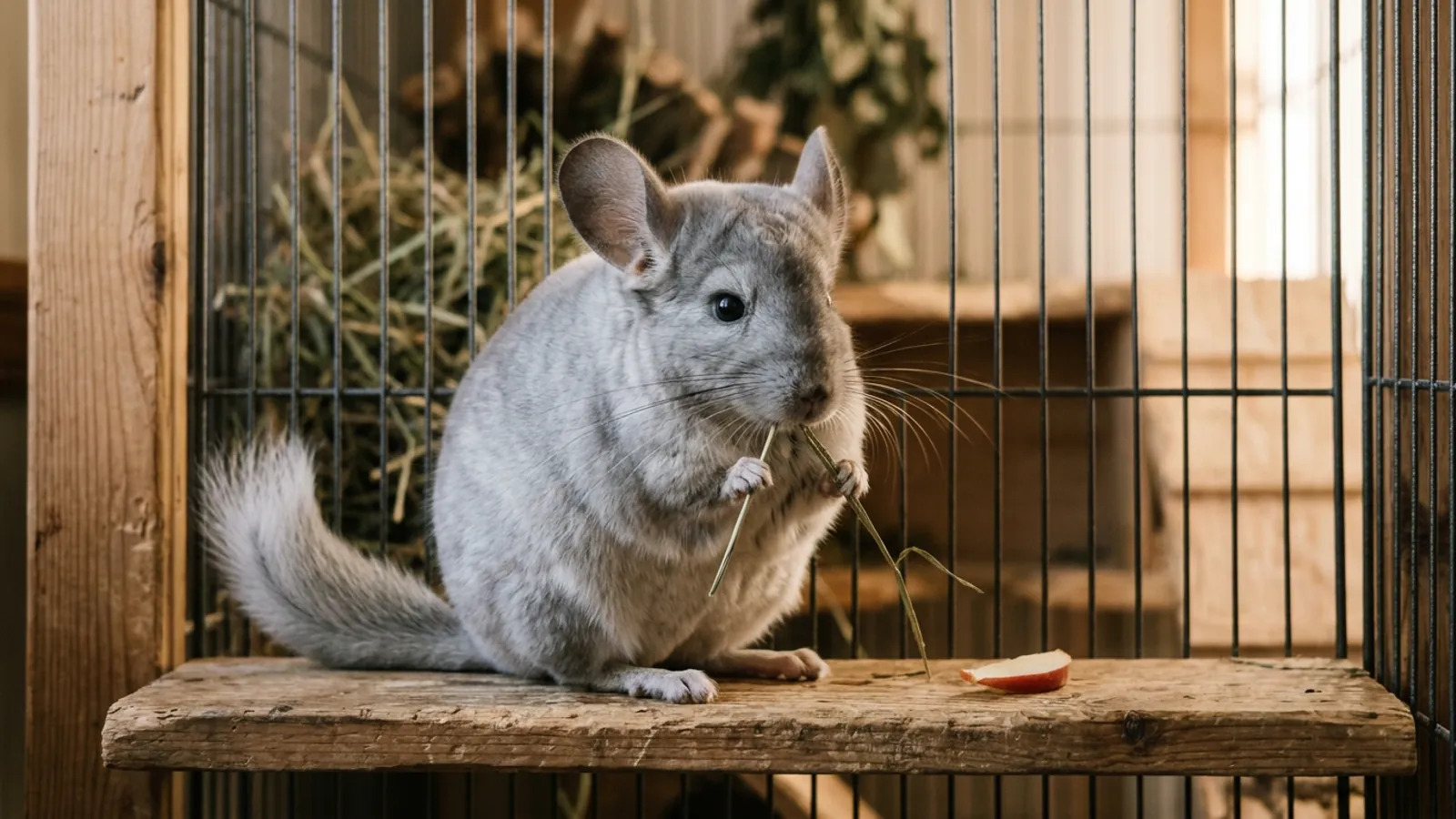
If you have found this page asking what fruits can chinchillas eat, I owe you the blunt version before the detail: very little, very rarely, and none of it is food your chinchilla needs. Fruit is the treat people reach for because it feels wholesome, and a chinchilla is one of the few pets where that instinct works against the animal. I have kept chinchillas for about ten years, and I feed fruit so sparingly that most weeks the bag never leaves the cupboard. That is not me being precious about it. It is what their digestive system is built for, and once that clicks, the whole question of chinchilla fruit stops being about which ones and turns into a question of how little. Here is what is genuinely safe, what I keep out of the bowl, and why hay does the work no fruit ever will.
Why a chinchilla gut treats fruit like a problem
A chinchilla comes from the dry, high slopes of the Andes, where the menu is tough grasses, dried plants, bark, and the odd seed. There is next to no fruit up there, and their body reflects it. The chinchilla gut is a long, slow fermenting system tuned for a diet that is high in fiber and very low in sugar, fat, and moisture. Feed it what it expects and it runs quietly for the better part of two decades. Feed it the sugar and water in a piece of fruit and you are asking it to process something it never evolved to handle.
When that balance tips, the trouble shows up fast in an animal this small. Too much sugar or moisture can throw off the gut bacteria, leave you with soft stool or diarrhea, and set off bloating and gas that a chinchilla cannot easily relieve on its own. In the worst cases the gut slows or stops moving altogether, which keepers call GI stasis, and that is a genuine emergency. It matters, too, that a chinchilla cannot be sick the way we can. Rodents do not vomit, so anything that goes down has to travel all the way through, and gas that builds up has no easy way back out. That one piece of anatomy is why a food that would give you a mild stomachache can turn into a real problem for them. None of this means one raisin-sized sliver of apple will hurt a healthy adult. It means the margin is thin, the upside is basically nothing nutritionally, and the downside is a sick animal. If you want the fuller picture of where every food fits, I laid it out in the chinchilla diet that keeps hay first and treats tiny and in what do chinchillas eat in the wild.
What fruits can chinchillas eat
If you are going to feed fruit at all, keep the list short and the portion tiny. A small sliver of apple is the one most keepers agree on, no bigger than a raisin, with the seeds and core left out because apple seeds contain a compound that is best kept away from a small animal. A little plain pear sits in roughly the same place. That is close to the whole list of fruits chinchillas can eat without much argument, and even then I mean a piece the size of your smallest fingernail, once a week at the absolute most, and less than that in my house. The wider yes-or-no list, beyond fruit, is in what food can chinchillas eat.
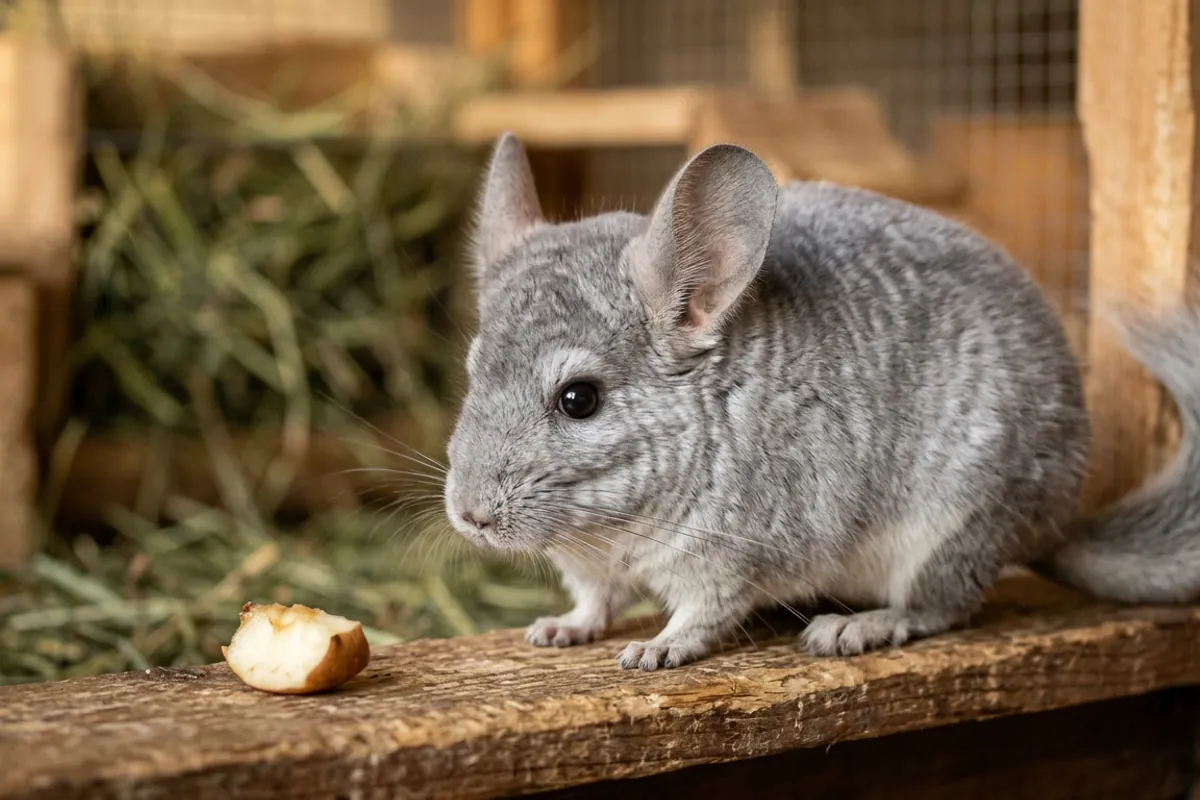
The one "fruit" I keep on hand is the rose hip, which is the fruit of the rose plant. It is dry, high in fiber, lighter on sugar than a fleshy fruit, and chinchillas tend to love it, which is why it is the treat I reach for over anything from the fruit bowl. I wrote about why in dried rose hips for chinchillas. Notice what is not on the list: no banana, no grapes, no berries, no citrus, no melon, none of the sweet, wet fruit people assume a small furry animal would enjoy. They would enjoy it. That is exactly the problem. Sweet and wet is the combination their gut handles worst.
One myth worth clearing up is that chinchillas need fruit for vitamin C. They do not. Unlike guinea pigs, a healthy chinchilla makes its own vitamin C, so there is no nutrient in a grape or an orange segment that your chin cannot get from good hay and pellets. There is simply no nutritional hole that fruit fills. And some chinchillas should get no fruit at all: kits that are still growing, seniors, pregnant or nursing females, and any chin with a history of gut trouble or even a single soft-stool day are all better off with nothing sweeter than a rose hip.
Dried fruit is the version I never feed
Dried fruit for chinchillas gets marketed as the sensible, natural treat, and it is the opposite. Drying a fruit does not remove the sugar, it removes the water and concentrates everything that is left, so a raisin or a strip of dried banana is essentially a small pellet of sugar. Those bright bags of chinchilla treats studded with dried banana, papaya, cranberry, and mango are built to sell to owners, not to suit the animal, and I walk straight past them. The same goes for yogurt drops, which stack dairy on top of sugar, and a chinchilla cannot properly digest dairy either.
The daily ritual is the real trap. One small sweet treat handed over every evening feels like love, and it is how a chinchilla slowly shifts from filling up on hay to holding out for the good stuff, which is the beginning of every diet problem I hear owners describe. I am not telling you a single raisin will kill your chinchilla. I am telling you there is no version of dried fruit that earns its place next to unlimited hay, and the habit of handing over a sugary morsel is how a chinchilla ends up overweight, off its hay, or with a gut that has stopped behaving. If a treat has to come out of a shiny bag, read what is in it, and if the first ingredients are dried fruit and sugar, put it back.
Fruits and vegetables I keep out of the bowl entirely
People often ask about chinchilla fruit and veg together, so let me be just as plain about the vegetable half. Fresh vegetables carry the same core problem as fruit, which is water. A chunk of wet lettuce, cucumber, or tomato is mostly moisture, and moisture in a gut built for dry forage means bloating and loose stool. Leafy greens that look virtuous to us, and gassy vegetables like broccoli, cabbage, and cauliflower, are exactly the ones I keep away. So are corn, which is starchy and sugary, and anything from the onion family.
A few plants belong nowhere near a chinchilla at all. Rhubarb is toxic, avocado is a hard no, and anything you are unsure about is a no until you have checked it against a reliable source rather than a forum guess. When people search for fruits and vegetables for chinchillas hoping for a generous salad list, the answer is that fresh produce is not a food group for this animal. If I want to add a little variety, I do it with dried, safe herbs and forage rather than a fresh fruits and veggies plate. There is a fuller breakdown in what can a chinchilla eat, and what should you never feed it.
What the bowl should hold
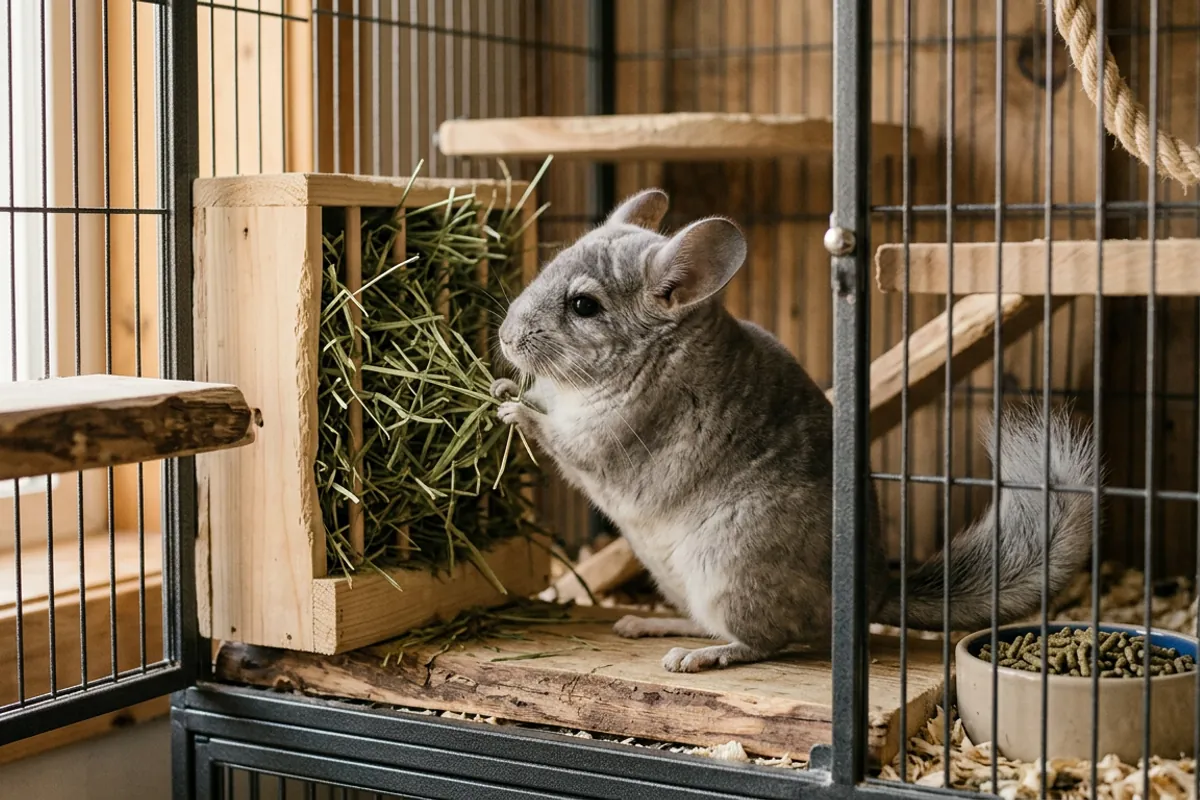
Strip the treats away and a chinchilla's real diet is refreshingly boring. Unlimited grass hay is the whole meal, available every hour of every day, because the constant chewing is what keeps their nonstop-growing teeth worn down and their gut moving. Timothy hay is the standard I feed, and I buy it fresh and in enough quantity that there is always a full rack. Oxbow Western Timothy Hay, 9 lb box As an Amazon Associate I earn from qualifying purchases. It is not a side dish next to something more exciting, it is the something. Buy hay that still smells green and looks fresh rather than dusty and yellow, because a chinchilla that turns its nose up at stale hay is a chinchilla eating less of the one thing it needs most. My Juniper is a rescue whose dental disease I manage every day, and watching what happens when teeth do not get worn down is exactly why I will not let hay slip to second place for a shinier treat. On top of the hay goes a measured portion of plain, high-quality chinchilla pellets, a tablespoon or two a day for an adult, not a bowl topped up all day. Fresh water, changed daily, finishes it. That really is the diet. You can read why hay carries the whole thing in why chinchilla hay is the whole meal and where pellets fit in chinchilla pellets.
Treats I reach for instead of fruit
A treat does not have to be sweet to be a treat, and the ones I trust are the dry, high-fiber kind. Rose hips lead my list, along with small amounts of plain dried herbs and safe dried forage sold for chinchillas and rabbits. They give you the ritual of handing something over and the enrichment of a different taste without the sugar spike.
The best "treat" of all in my house is not food you swallow so much as something to gnaw. Plain, untreated apple wood and other safe chew woods give a chinchilla the chewing it craves and keep those ever-growing teeth in check at the same time, which for a chin like Juniper is not a luxury, it is medicine. emours apple wood chew sticks, 40 count As an Amazon Associate I earn from qualifying purchases. A varied set of chews earns its place in the cage far more than any fruit does. Chews also solve some of the boredom that makes people reach for food in the first place. A chinchilla with plenty to gnaw is not sitting at the bars begging, and you are not tempted to answer that begging with sugar. If you want the wider safe-treat picture, I keep it current in my guide to chinchilla treats.
How to give a treat without ending up at the vet
If you do decide to offer a little fruit, treat it like a small experiment rather than a habit. Introduce one new thing at a time, in a piece no bigger than a raisin, and never two new foods in the same day, so that if something disagrees you know exactly what caused it. Then watch the droppings for the next day or two. Healthy chinchilla droppings are firm, dry, and oval, and the first sign a treat did not sit well is stool that turns soft, small, or scarce. If that happens, stop the treat and go back to plain hay and water until things settle. None of this applies to a young kit or a chin that is unwell, both of which should stay on plain hay, pellets, and water with no fruit in the picture at all.
Know where the line to a vet is, because a chinchilla hides illness until it is serious. A chin that stops eating, sits hunched, feels bloated, or has ongoing diarrhea is not a wait-and-see situation, it is a same-day call to an exotics vet. Not eating in particular is an emergency in this species, because a gut that stalls does not restart on its own. I would rather you feed no fruit at all and never face that phone call than treat a daily slice of apple as harmless. The whole point of understanding what fruits chinchillas can eat is to see how little the question matters next to a full rack of hay, and to spend your worry where it counts.