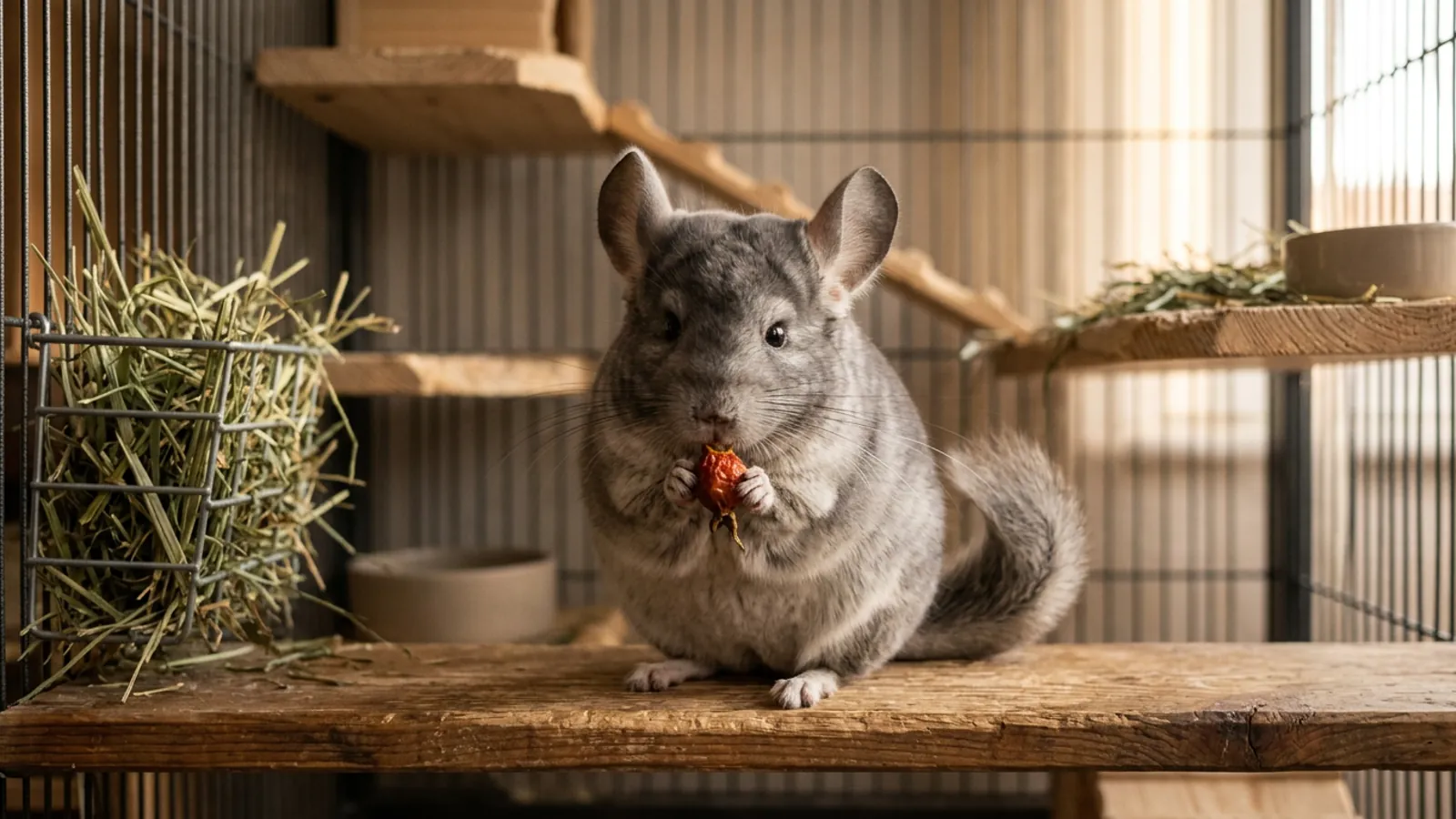
Dried rose hips for chinchillas are one of the very few treats I keep in the house without arguing with myself first. Most of what the pet aisle sells as a chinchilla treat is sugar in a cute shape, and almost all of it goes straight back on the shelf. Rose hips are different. They are the dried fruit of the rose plant, they are high in fiber, and a chinchilla can have a small piece without the sugar hit that comes with dried banana or a yogurt drop. But the word "small" is carrying that whole sentence, and most of the trouble people run into with chinchilla rose hips comes from forgetting it. Here is what they are, how much I give, and where they sit next to the one thing that keeps a chinchilla alive, which is hay. The pressed treat cakes on the same shelf are a separate story, and I sorted the safe chinchilla cakes from the sugar bombs.
What a dried rose hip is
A rose hip is the fruit the rose plant makes after the flower drops. Leave a rose bush alone once it finishes blooming and you get these round, red to orange pods where the petals used to be. Inside is a little pulp and a cluster of seeds. They are tart, they are full of fiber, and they have long carried a reputation for vitamin C, which I will come back to, because that reputation is oversold.
The version you want for a chinchilla is dried, not fresh. Fresh fruit of any kind carries too much water and sugar for an animal built to run on dry desert plants, and moisture is the enemy of a gut that expects roughage. Dried rose hips are shelf stable, they store for months in a sealed jar, and they turn up whole, halved, cut, or ground into a powder. I buy them whole and plain, with nothing added: no sugar coating, no oil, no mystery blend of "fruit pieces." If the bag lists anything besides rose hips, I put it down. People also mix up rose hips with rose petals and rose buds, which are sold as small pet nibbles too; those are fine in the same tiny amounts, but they are not the same thing as the fruit, and it is the fruit we are talking about here.
How I feed rose hips, and how much
This is where people go wrong, so I will be blunt about the numbers. A rose hip is a treat, and a treat for a chinchilla is a rounding error in the day's food, not a course in the meal. I give one small whole hip, or half of a large one, and I do that a few times a week at the very most. Plenty of keepers hold it to one or two a week, and that is closer to right than daily. There is no health reason to give more, and several good reasons not to.
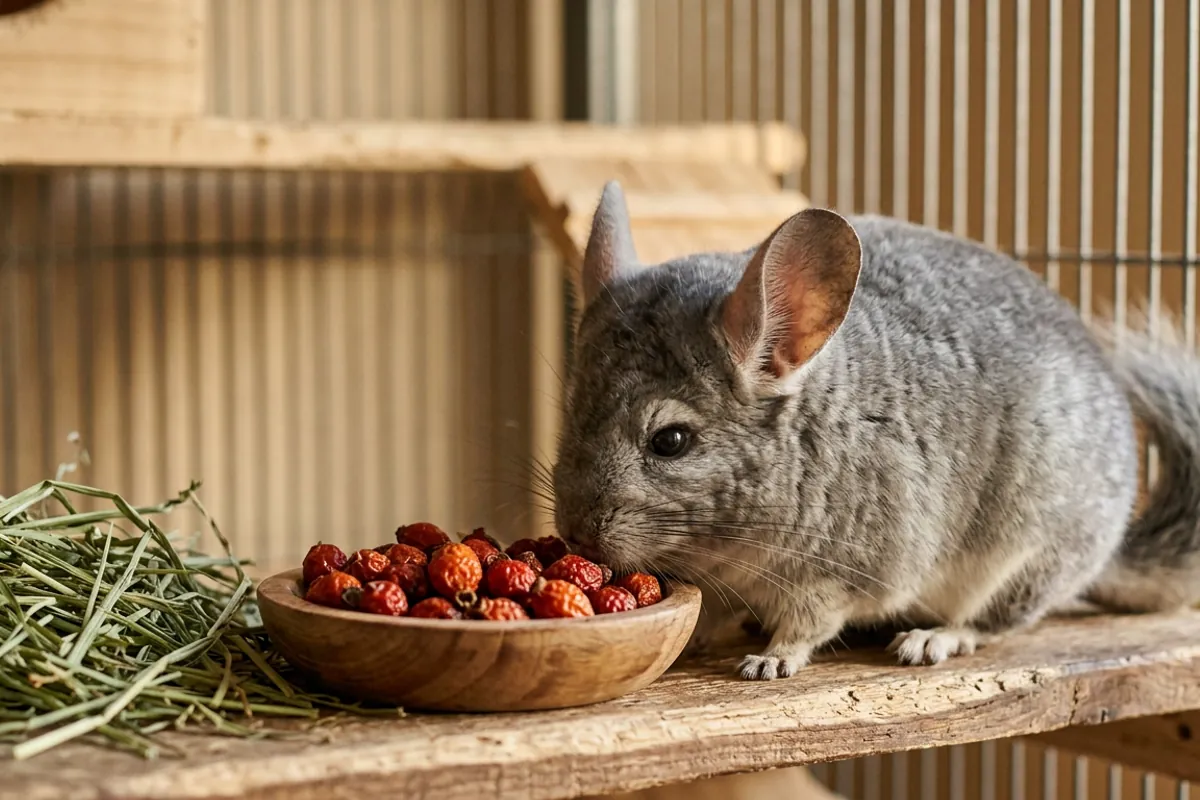
Introduce it slowly the first time. Offer one piece, then watch the droppings for the next day. A chinchilla's stool tells you almost everything: if it stays firm and dry, the treat agreed with them; if it goes soft, or the appetite for hay dips, the treat is done and you go back to plain hay until things settle. Hand feeding a rose hip is also some of the easiest bonding you will ever get, because a chinchilla is deeply food motivated and a rose hip lands like a jackpot. That is exactly why you have to be the adult about it. Do not let the big eyes and the little paws talk you into a second one, and do not fall into feeding a treat every time you walk past the cage, or the "rounding error" quietly becomes a habit.
Hay is the whole meal, not the rose hips
I keep coming back to hay because it is the point, and a treat article that lets you forget the point has failed you. A chinchilla eats unlimited grass hay, all day, every day, and that hay is not a side dish sitting next to the real food. It is the real food. Timothy, orchard grass, meadow hay, the plain grass hays, offered free choice so there is always a fresh pile to pull from. Plain measured pellets sit second, as a supplement, and everything in this article lives in the thin margin around those two.
I feel this one in my bones because of Juniper, who came to me as a rescue with dental disease I still manage day to day. A chinchilla's teeth never stop growing, and the only thing that wears them down evenly is the long, sideways grinding of chewing coarse hay for hours. Pellets do a little of that work; rose hips do almost none. So the hay comes first, in quantity, from a rack that never runs empty. I buy timothy in bulk so I am never tempted to ration it, because a hungry chinchilla is a chinchilla filling up on the wrong things. Oxbow Western Timothy Hay, 9 lb box As an Amazon Associate I earn from qualifying purchases. If you want the long version of why hay is the meal, I wrote it out in why chinchilla hay is the whole meal and again in Timothy hay for chinchillas is the whole meal, not a side dish.
The vitamin C question
Rose hips get sold on vitamin C, and this is where I have to slow the marketing down. It is true that rose hips are one of the richer plant sources of vitamin C. It is also true that the animal you are feeding is not a guinea pig. Guinea pigs cannot make their own vitamin C and genuinely need it in the diet, which is why rose hips get pushed hard in that corner of the pet world. Chinchillas are generally understood to make their own, so a rose hip is not a vitamin they are missing the way a guinea pig would be.
I want to be careful here rather than confident, because chinchilla nutrition still has real gaps in the research, and I am an experienced keeper, not a vet. What I am comfortable saying is this: I do not feed rose hips as medicine, and I would not trust one to fix a deficiency or cure anything. If you think your chinchilla needs a supplement, that is an exotics vet conversation, not a treat-bag one. I feed rose hips for the fiber and for the plain enrichment of watching a chinchilla work a tart little fruit in its paws, and I let the vitamin C be a bonus I do not count on.
What the word rose on a label does not mean
Search for dried rose hips and the pet aisle will hand you other rose-named things that have nothing to do with the fruit. The one that trips people up most is the Prevue Pet Products earthtone dusted rose rat and chinchilla cage. "Dusted rose" there is a paint color, a muted pink on the frame, and it tells you exactly nothing about whether the cage suits a chinchilla. Judge any cage by the same test no matter what its color is called: is it tall, is the frame metal, are the ledges and shelves solid wood rather than plastic, and does it give more height than floor for an animal that lives by climbing. A metal and wood cage built that way is what I trust, and the color name is noise. Critter Nation double unit small animal cage As an Amazon Associate I earn from qualifying purchases. While you are in that same aisle you will also meet kiln dried pine, and it is worth knowing what the words mean. Raw or green pine, and anything cedar, carries aromatic oils you do not want a chinchilla breathing and gnawing all day. Kiln drying bakes most of those oils out, which is why kiln dried pine chinchilla ledges are a common, accepted chew and ledge material, and why kiln dried pine shavings for chinchilla bedding sit in the acceptable column for keepers who use loose bedding at all. Plenty of us run fleece instead and skip shavings entirely, so treat pine as an option, not a rule. None of it, to be clear, is a rose hip or a treat. It is furniture and floor, and it wandered into your search only because it shares a word.
Rose hips are a treat, not a tooth
It is worth pulling apart two jobs that get muddled: feeding and gnawing. A rose hip is soft enough to be food, so it feeds and it delights, but it does close to nothing for the teeth. Teeth need hard surfaces to grind against, and that is a different shopping list altogether. Coarse hay does most of the work. After that come proper chews, and variety matters more than any single toy, because a bored chinchilla ignores the one chew it has stared at for a month.
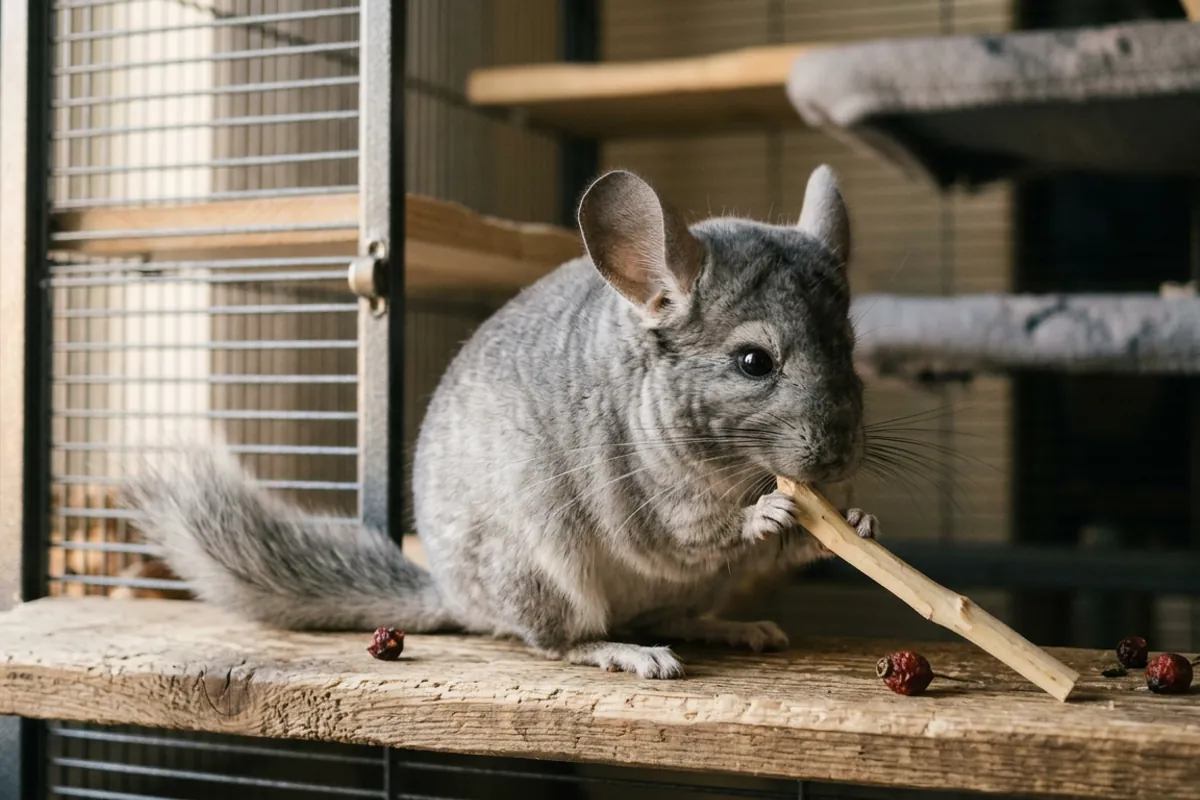
I keep a rotation going: plain apple wood, the kiln dried pine ledges from the last section, and a mix of safe untreated hardwood shapes so there is always something new to work on. An apple wood chew variety pack is an easy way to keep that rotation stocked without buying ten separate bags. emours apple wood chew sticks, 40 count As an Amazon Associate I earn from qualifying purchases. Juniper is the reason I am rigid about this. Watching a chinchilla whose teeth do not get worn down teaches you fast that chew variety is not enrichment fluff, it is dental care that shows up on a vet bill when you skip it. Rose hips ride along in that world as the occasional tasty extra, never the thing doing the work. If you want the deeper version, I laid it out in Chinchilla chew toys, and why they are dental care, not decoration.
Treats I keep, and treats I put back
So where do rose hips sit in the whole treat drawer. Near the top of a very short safe list, next to plain dried herbs, a single plain rose petal, or a few rolled oats now and then. The common thread is plain, dry, low sugar, and given in tiny amounts. Rose hips fit that description better than almost anything else marketed as a chinchilla treat, which is most of why they earned their spot with me.
The put-back pile is longer, and I will name it plainly, because the bright packaging will not warn you. Yogurt drops are sugar and dairy, and a chinchilla is built for neither. Seed and nut mixes are too fatty and can turn rancid. Dried banana, raisins, and most dried fruit are sugar bombs next to which a rose hip looks tame, and the honey-and-seed sticks aimed straight at small pets belong in the bin. The rule I hold to is simple: if I cannot say in one breath what a treat is made of and why it is safe, it does not go in the cage. Rose hips pass that test in a sentence. There is more in my guide to chinchilla treats.
When rose hips are not the answer
A treat can hide a problem or make one worse, so here is the line I hold. If a chinchilla is off its hay, sitting hunched, producing small or soft droppings, or making no droppings at all, put every treat away and look hard at the animal, not the snack bag. Digestive trouble in a chinchilla moves fast, and a gut that stops is an emergency, not a wait-and-see.
Rose hips are not medicine, and they will not fix any of that. They will not settle a bad gut, they will not sharpen worn teeth, and they cannot stand in for hay for even a single day. Anything that looks like illness, appetite loss, drooling, weight dropping, a wet chin, or diarrhea that lasts, is an exotics vet visit, and the sooner the better with an animal this small and this good at hiding how sick it is. Used the way I have described, one small dried rose hip a couple of times a week, they are one of the nice things you can hand a chinchilla. Just keep them in their lane, behind a hay rack that never empties, and they stay a treat instead of a problem.