If you have just brought a chinchilla home, the question that matters most is also the one the internet answers worst: what food can chinchillas eat. The real answer is shorter and duller than the long "safe foods" lists suggest. A chinchilla eats grass hay, unlimited, all day, plus a small measured amount of plain pellets, and very little else. That is not me being cautious for the sake of it. It is what their gut is built for, and I have watched, up close, what happens when it goes wrong. So let me walk through what food do chinchillas eat, what is safe in tiny amounts, and the things that get fed with good intentions and cause real harm.
The short answer is boring, and that is the point
Here is the whole diet in one breath: grass hay first, pellets second, treats as a rare exception, and clean water always available from a bottle. Everything else is a variation on that.
Chinchillas evolved in a dry, sparse part of the Andes, eating tough, fibrous plants. Their digestive system runs on a steady flow of coarse fiber, and it does not cope well with sugar, fat, or a lot of moisture. Feed the wrong things and you get bloat, soft stool, and a gut that stops moving, which in an animal this small turns serious fast.
So when someone asks me for a list of food chinchillas can eat, I push back on the framing. The goal is not to build the widest menu you can. It is to keep a narrow, consistent one that keeps the gut and the teeth working. Ninety percent or more of what your chinchilla eats should be hay. Get that part right and the rest is small print.
Grass hay is the actual meal
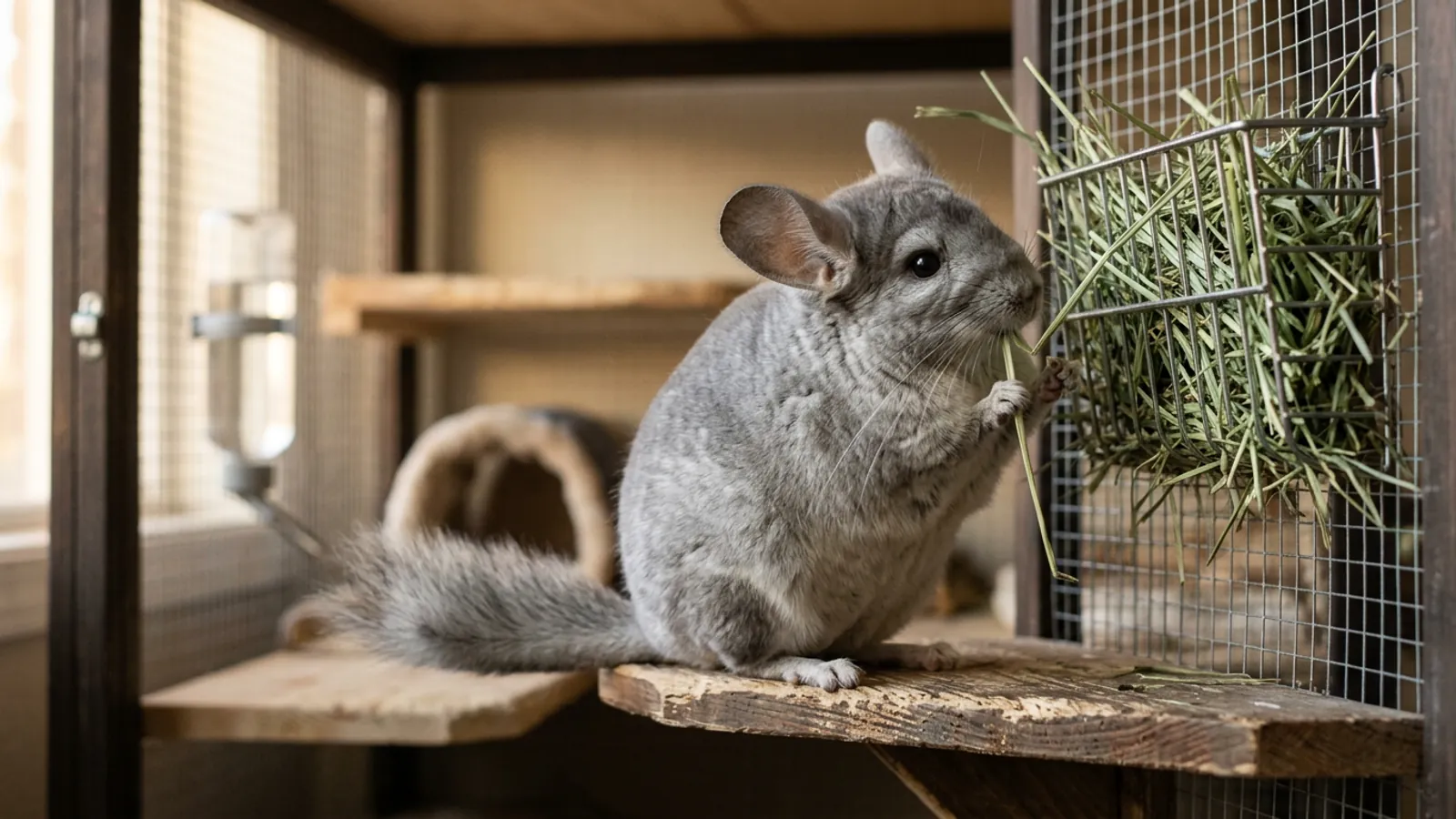
Grass hay is not the side dish. It is the meal, and it needs to be in front of your chinchilla every hour of every day. Timothy hay is the standard, and for good reason: it is a grass hay with the right balance of high fiber and low protein and calcium. I keep a full hay rack topped up and buy a fresh box often enough that it never smells musty. For one chinchilla, a boxed timothy hay is plenty. Oxbow Western Timothy Hay, 40 oz bag As an Amazon Associate I earn from qualifying purchases. If you keep more than one, or you go through it fast, buying timothy hay in bulk is cheaper and means you never run out. Oxbow Western Timothy Hay, 9 lb box As an Amazon Associate I earn from qualifying purchases.
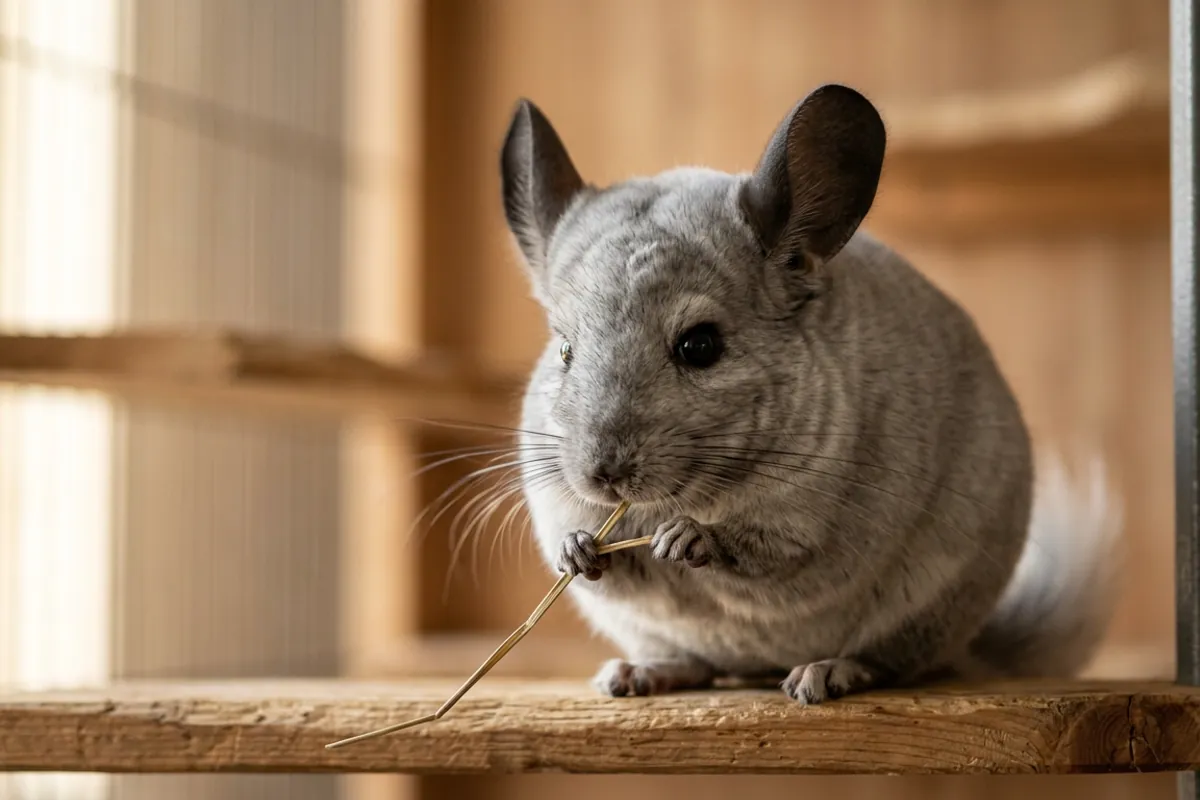
Two things matter beyond just having hay in the cage. First, the unlimited part is not a figure of speech. A chinchilla grazes constantly, and that constant chewing is what keeps their teeth worn down. Their teeth grow for their whole life, and hay is the file that keeps them in check. My Juniper came to me as a neglected rescue with dental disease, and managing her teeth day to day is exactly why I am uncompromising about this. When hay runs low, the teeth are the first thing to pay for it. Chinchilla teeth problems are slow, hidden, and expensive, and unlimited hay is the cheapest prevention there is.
Second, alfalfa is not the same as grass hay. Alfalfa is a legume, higher in calcium and protein, and it is a supplement for growing kits or pregnant females, not a daily base for an adult. If you want variety, orchard grass and other grass hays are good, but timothy is the one I always come back to.
Plain pellets are a measured supplement
Pellets cover the small nutritional gaps hay leaves. They are a supplement, not the main course, and the amount is roughly one to two tablespoons a day for an adult. That is it. A bowl kept permanently full of pellets is how you end up with an overweight chinchilla that picks at hay instead of eating it.
Buy plain, uniform pellets made for chinchillas. What you want is a single dull green pellet and nothing else in the bag. What you do not want is a colorful "gourmet" mix with dried corn, seeds, banana chips, and bright bits. Chinchillas selectively eat the sugary pieces out of those mixes and leave the good part, and the fat and sugar are exactly what their gut cannot handle. Chinchilla pellets are one of the few places brand matters, so pick a reputable timothy-based one and stick with it. Sudden pellet changes upset the gut, so if you switch brands, do it slowly over a week or two.
Chews belong here too, because dental wear is a food question in disguise. Safe untreated wood, like apple wood, gives the teeth something hard to work on between meals. An apple wood chew variety pack keeps a bit of novelty in the cage. emours apple wood chew sticks, 40 count As an Amazon Associate I earn from qualifying purchases. That matters more than it sounds, since a bored chinchilla ignores a single stick it has had for a month.
What fresh food can chinchillas eat
This is the question I get asked most, usually by someone who wants to hear yes. So, what fresh food can chinchillas eat? Almost none, and none of it is necessary. A chinchilla's gut is built for dry, fibrous food, and fresh fruit and vegetables bring water and sugar it is not designed to process. Fresh food is where a lot of avoidable emergencies start.
I do not feed fresh produce as a routine, and I would tell any new owner to skip it entirely until they are confident. If you insist on offering something, it should be a fingernail-sized piece of a safe leafy green, no more than once in a while, and never wet or wilting. Watery vegetables like lettuce and celery, and most fruit, cause soft stool and bloat. Fruit is the one I am most careful with, because the sugar hits hard in an animal this size.
If you take one thing from this section, take this: fresh food is optional, and hay is not. A chinchilla that never eats a single piece of fresh produce in its life is a perfectly healthy chinchilla. There is no deficiency you are filling.
What human food can chinchillas eat
The short list of what human food can chinchillas eat is: dried, plain, and boring, or nothing at all. Plain dried herbs and a few dried plants are the only pantry items I would put anywhere near a chinchilla, and even those are treats, not food.
Everything sweet, fatty, salty, or processed is off the table. No chocolate, no nuts, no seeds, no crackers, no cereal, no bread, and no dairy of any kind. Chinchillas cannot digest fat and sugar the way we can, and "just a little" of the wrong thing is how a gut stall starts. Yogurt drops in particular get sold in pet stores as chinchilla treats, and they are one of the worst things you can buy: sugar and dairy, both of which a chinchilla should never eat.
So when a family member wants to share a snack with the chinchilla, the answer is almost always no, and the safe alternative is a single piece of the chinchilla's own hay or one plain dried rose hip. That is not me being a killjoy. It is that the margin for error in an animal this small is tiny.
Safe treats, and how small small really is
Chinchilla foods they can eat as treats do exist, but the portion is smaller than most people picture. A treat is a fingernail-sized piece, given once every few days at most, not daily.
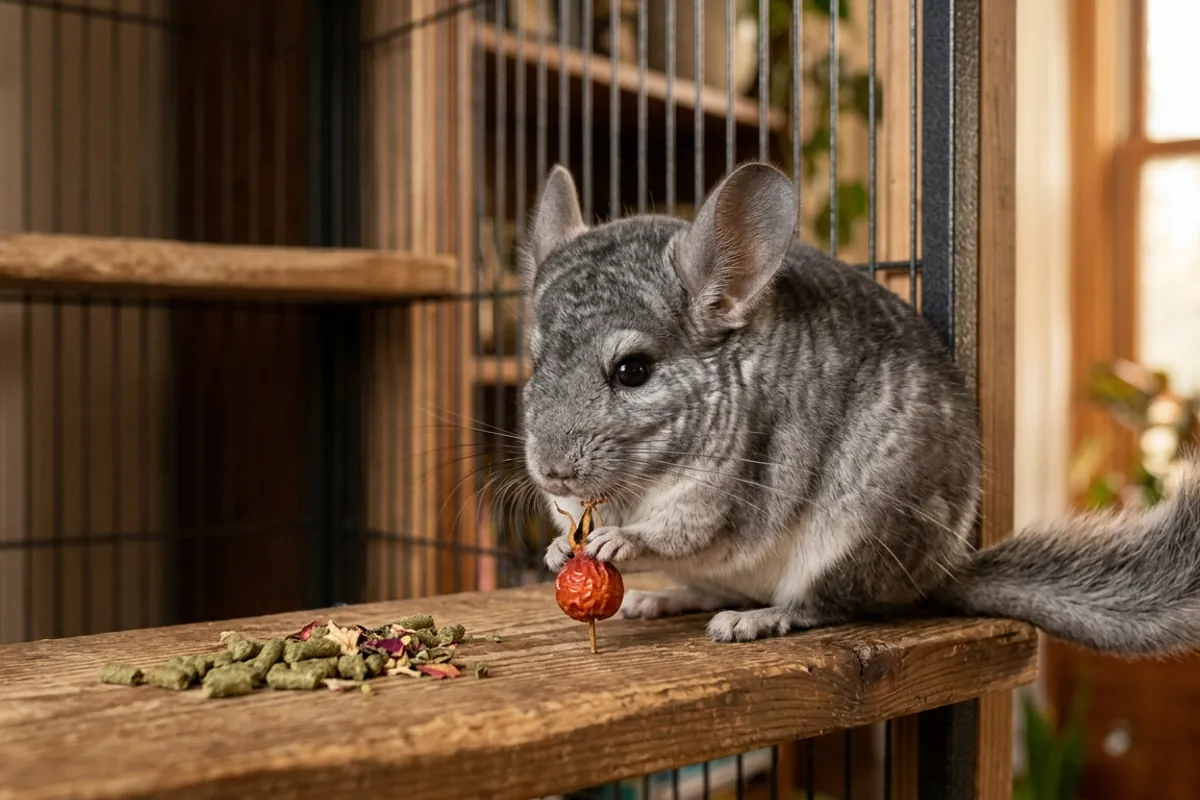
The ones I keep in the house are plain dried rose hips and a small selection of plain dried herbs and safe dried leaves. Dried rose hips are the treat I reach for most, because they are low in sugar compared with fruit and my chinchillas love them. A single plain, dry rolled oat is another one keepers use. That is close to the whole safe treat list, and your chinchilla does not need any of it.
The reason I am strict on portions is not fussiness. Treats displace hay. A chinchilla that fills up on a treat eats less hay, wears its teeth down less, and takes in sugar its gut does not want. Keep treats rare and small and they stay harmless. Make them a daily habit and they quietly become the problem. When in doubt, the treats guide goes through the safe options in more detail.
What to keep out of the bowl entirely
Some foods are not "small amounts only," they are never. It is worth knowing the outright no list before an accident happens.
Never feed nuts, seeds, or corn, which are too high in fat. Never feed chocolate, which is toxic. Never feed fresh grass clippings from a lawn, which ferment and can carry chemicals. Never feed anything moldy, and check hay for must before it goes in the rack. Skip rabbit or guinea pig food as a substitute, since the balance is wrong for a chinchilla. And avoid the colorful commercial treats and mixes entirely, the yogurt drops and dried-fruit blends included.
Water belongs in this section too, because of how they drink and clean themselves. Chinchillas drink from a water bottle, not a bowl, and they never, ever bathe in water. A chinchilla's dense fur does not dry properly when it gets soaked, which leads to fungus and chilling. They clean themselves by rolling in fine dust, not water. That is a bathing rule rather than a feeding one, but it comes from the same underlying fact: this is a dry-adapted animal, and moisture in the wrong place causes trouble.
How to add anything new without a vet trip
If you do decide to try a new pellet, hay, or treat, change one thing at a time and go slow. A chinchilla gut punishes sudden change, so introduce a new pellet by mixing a little into the old over a week or two, and offer any new treat as a single tiny piece, then wait.
The thing to watch is the droppings. Healthy chinchilla poop is firm, dry, and plentiful. After anything new, check that the droppings stay firm and that your chinchilla is still eating hay with its usual appetite. Soft stool, fewer droppings, a hunched posture, or a chinchilla that stops eating are all signs to pull the new food immediately. A chinchilla that has stopped eating or passing stool is not a wait-and-see situation, it is a call to an exotics vet, because gut stasis moves fast in an animal this small.
None of this is complicated once you accept the boring version. What food can chinchillas eat comes down to unlimited grass hay, a measured spoon of plain pellets, clean water, and treats so small and rare they barely count. Get those four right and you have done the single biggest thing for your chinchilla's health. If you want the fuller picture, what to feed a chinchilla and the chinchilla diet guide both go deeper on portions and brands.