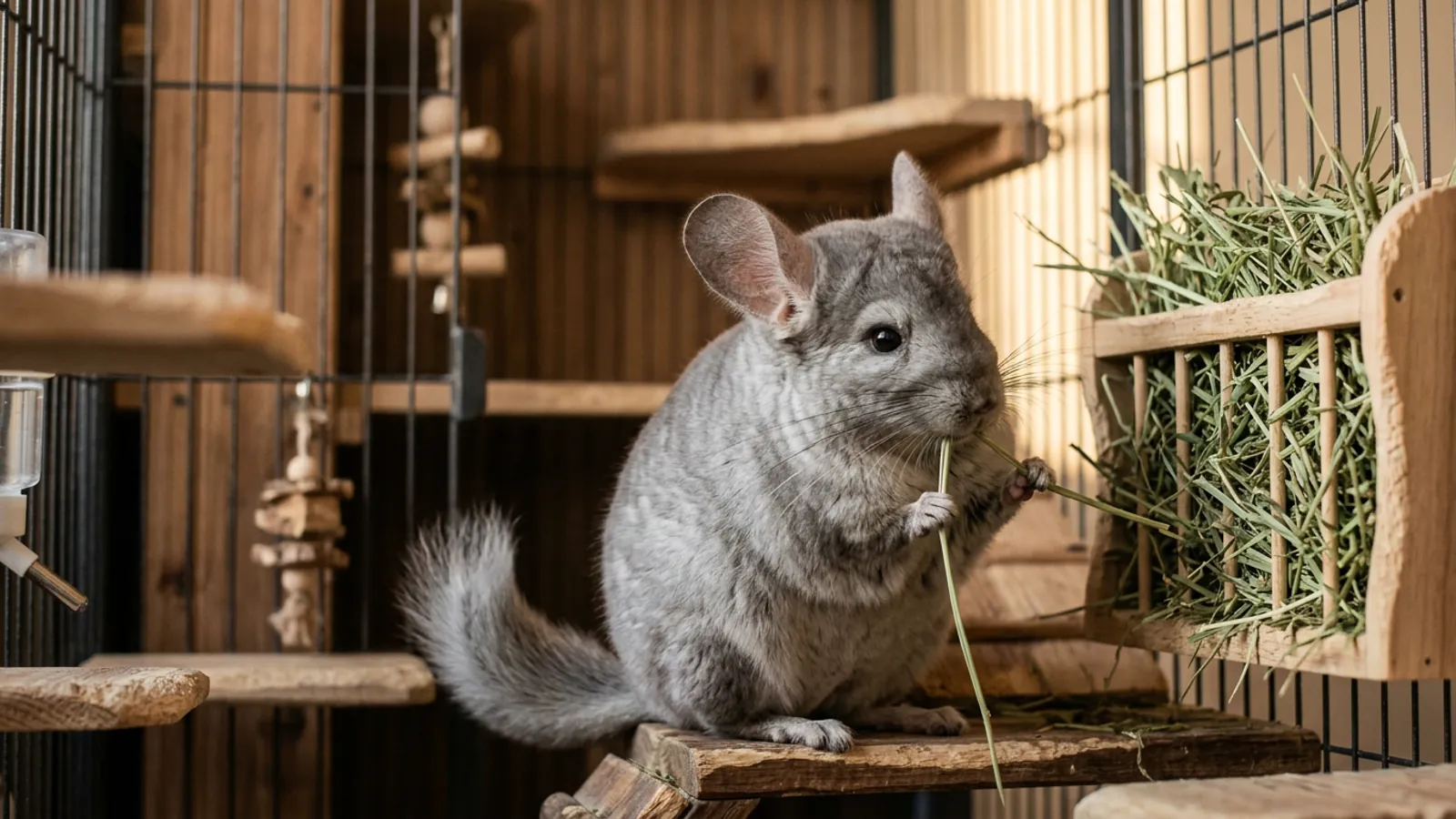
If you just brought a chinchilla home, the question "what can a chinchilla eat" is one of the first that matters, and it is easier to get wrong than most people expect. These are not rabbits, and they are not guinea pigs, even though a pet store shelf will happily sell you the same bag of colorful mix for all three. A chinchilla runs on one thing above everything else: grass hay, all day, for its whole life. Get that right and most of the rest is small adjustments. Get it wrong and you are looking at dental disease and gut trouble that an exotics vet will spend a lot of your money trying to fix. I have kept chinchillas for about ten years, and one of mine, Juniper, came to me as a rescue with dental disease I manage every single day. So when I write about food here, I am not repeating a care sheet. I am telling you what keeps teeth worn down and a gut moving.
Hay first, and it is not close
Here is the whole answer in one line: a chinchilla eats unlimited grass hay, a measured amount of plain pellets, and very little else. If you remember nothing else from this page, remember the proportions. Hay is not a side dish, and it is not bedding you top up when you happen to notice the pile is low. It is the meal. It should be in front of your chinchilla every hour of every day, and it should never run out, not overnight, not while you are at work.
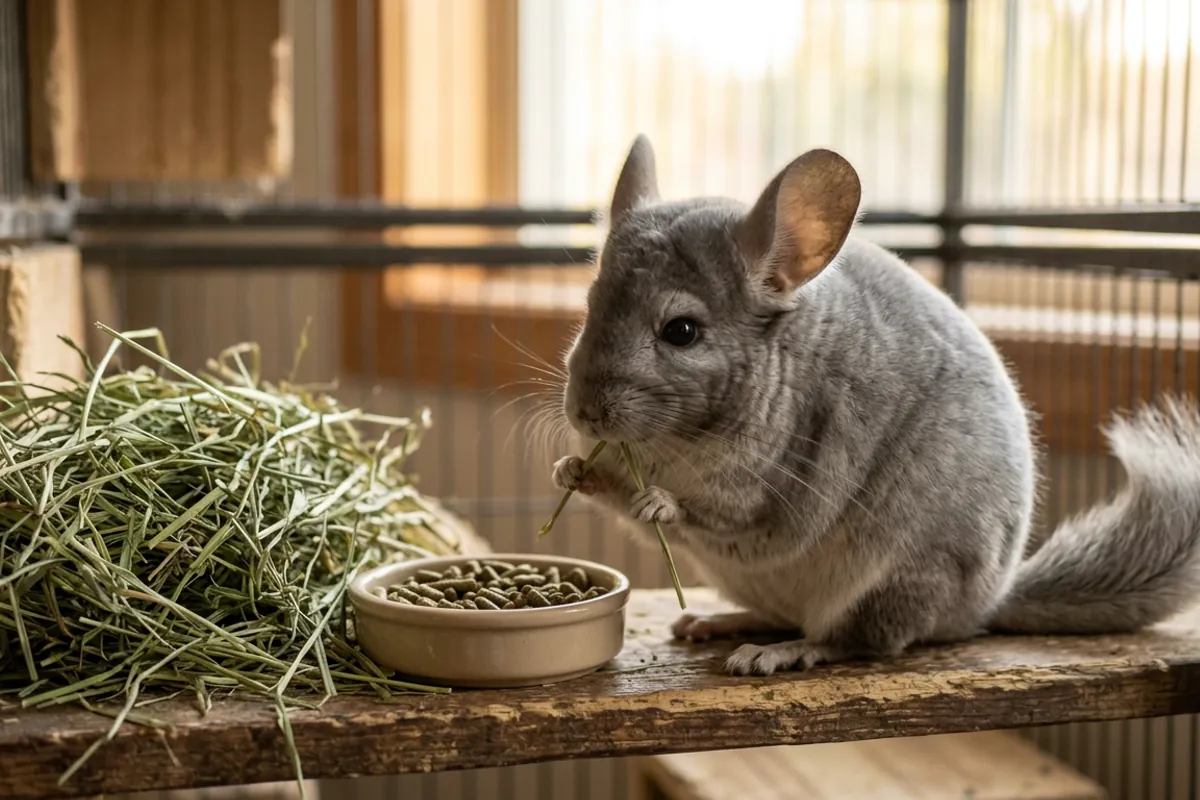
When people ask what do chinchillas eat as pets and picture a bowl of pellets, they have it backward. The bowl is the small part. The hay rack is the big part.
Good grass hays for a chinchilla are timothy, orchard grass, and meadow hay, along with other second-cut grass hays. Timothy is the one most keepers build the diet around because it is easy to find and the fiber is right. What you want is green, sweet-smelling, slightly coarse hay, not the yellow dusty stuff at the bottom of a cheap bag. I buy mine in bulk, because one chinchilla goes through more than you would guess, and buying big keeps it fresher and cheaper per pound.
Oxbow Western Timothy Hay, 9 lb box As an Amazon Associate I earn from qualifying purchases.
The one hay to watch is alfalfa. Alfalfa is a legume, not a grass, and it is high in calcium and protein. It is fine in small amounts for a growing baby or a pregnant female, but as the everyday hay for a healthy adult it is too rich, and over time that extra calcium can feed bladder stones. Keep alfalfa as an occasional thing, never the base. If a "chinchilla hay" bag is mostly alfalfa, put it back and buy plain timothy instead.
Why hay does the real work
To understand why hay sits at the center of everything, you have to understand the teeth. A chinchilla's teeth grow continuously for its entire life, all twenty of them, and the only thing that keeps them the right length is grinding tough, fibrous food for hours a day. That grinding is exactly what chewing long-strand hay produces. Pellets and treats do not deliver it, because they are gone in a few bites. Hay makes a chinchilla work, and that work is what saves the teeth.
When the teeth do not wear down evenly, they overgrow into points and spurs that cut the tongue and cheeks, and the roots can push into the jaw and eye sockets. This is malocclusion, and it is one of the most common serious problems keepers face. Juniper lives with a version of it, which is why I am blunt about hay in a way that can sound obsessive. I have watched what happens up close when teeth do not get worn down. If you want the fuller picture of what to watch for, I wrote about it in chinchilla teeth problems, and there is a broader overview on chinchilla teeth and health.
The gut is the second half of the story. Chinchillas have a long, sensitive digestive tract built to process a steady flow of high-fiber, low-moisture forage. That constant fiber keeps things moving. Take it away, or swap it for rich, sugary, or watery food, and the gut can slow down or tip into diarrhea, both of which are emergencies in an animal this small. Unlimited hay is not just about teeth. It is what keeps the whole system running at the pace it was designed for.
Pellets: measured, plain, and boring on purpose
Pellets are the supplement, not the meal. Their job is to fill small nutritional gaps that hay alone might leave, and a good plain chinchilla pellet does that well. The keyword is plain. You want a uniform, hay-based pellet with nothing else in the bag: no dried fruit, no seeds, no colorful bits, no corn. Those "muesli" style mixes with visible pieces are a trap, because a chinchilla will pick out the sweet parts and leave the fiber, which is the opposite of what you want.
How much? For a healthy adult, roughly one to two tablespoons a day is the range most experienced keepers and exotics vets settle on. I measure it rather than free-pour, because it is easy to let the bowl creep up until pellets start crowding out hay, and that is the exact wrong direction. If your chinchilla is filling up on pellets and ignoring the hay rack, cut the pellets back, not the hay.
Switch pellet brands slowly if you have to switch at all. A chinchilla gut does not like sudden change, so mix the new in with the old over a week or two rather than swapping in one day. Buy pellets in amounts you will use within a few months, because they lose freshness and the fat can go off. For the full diet picture in one place, see chinchilla diet, food, and hay.
What vegetables do chinchillas eat
This is the question I get asked most, usually as some version of what vegetables chinchillas can eat, and the answer disappoints people: a chinchilla does not need vegetables at all, and fresh ones carry real risk. I would rather tell you that plainly than hand you a cheerful list that lands your animal at the vet.
The problem is water content. A chinchilla evolved in a dry, high-altitude environment eating dry forage, and its gut is not built for the moisture in fresh lettuce, cucumber, celery, or leafy greens. A handful of wet vegetables can bring on bloat or diarrhea fast, and diarrhea in a chinchilla is not a minor upset, it is a genuine emergency. So when someone asks what vegetables do chinchillas eat, my real answer is: none that they need, and fresh ones are a gamble I do not take with my own.
If you truly want to offer something in the vegetable direction, some keepers give a very occasional pinch of certain dried herbs or a tiny piece of dried, plain vegetable, in an amount you could balance on a fingertip, no more than once or twice a week. Even then it is a novelty, not nutrition. It does nothing that good hay is not already doing better. If you skip fresh vegetables entirely for the whole of your chinchilla's life, you have taken nothing away from it. Plenty of long-lived, healthy chinchillas have never eaten a vegetable, and mine are among them.
The quick answer to what can chinchillas eat and not eat, on the vegetable question, is that "can eat safely" and "should eat" are not the same claim, and with fresh produce the gap between them is wide enough that I stay on the dry side of it.
Treats that are safe
Chinchillas do have things they like to eat, and treats are fine as long as they are dry, plain, and tiny. When people ask what do chinchillas eat for treats, this is my short, safe list.
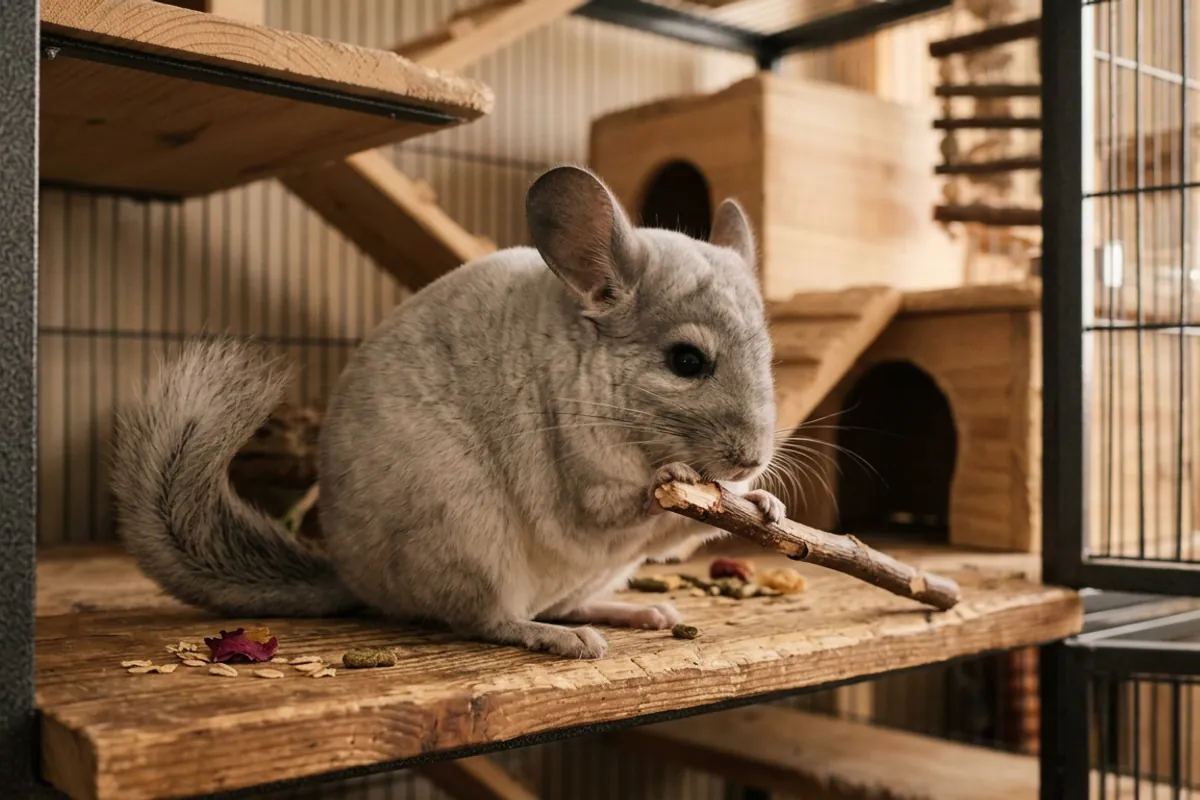
A few plain rolled oats, a small piece of plain shredded wheat with no sugar or frosting, a dried rose hip, or a little plain dried herb like a bit of dried dandelion leaf are all reasonable now and then. The rule I use is dry, unsweetened, and small enough that it is clearly a token, not a meal. One rose hip, not a handful. A couple of oats, not a spoonful.
The best "treat" of all is not food you eat, it is something to gnaw. Safe wood chews give a chinchilla the grinding work its teeth need and keep it busy for hours, which is exactly the behavior you want to encourage. Apple, willow, and other chinchilla-safe woods, untreated and free of pesticides, are ideal. I keep a rotation going so it never gets boring.
emours apple wood chew sticks, 40 count As an Amazon Associate I earn from qualifying purchases.
Avoid anything sold as a chinchilla "yogurt drop" or fruit-and-nut stick. Those are sugar and fat pressed into a cute shape, and they are among the easiest ways to upset a chinchilla gut and grow a fat, unhealthy animal. The pet store puts them by the register for a reason, and it is not your chinchilla's health.
What a chinchilla cannot eat
Just as important as the yes list is a firm no list, because what can chinchillas not eat is where the real danger sits. Some of these will hurt fast, and some will hurt slowly, and both matter.
Keep all of the following away from a chinchilla: fresh fruit in any real quantity, because of the sugar and water; nuts and seeds, which are far too fatty; anything with chocolate, caffeine, or added sugar; dairy of any kind, since chinchillas cannot process it; meat, because they are strict herbivores; and bread, crackers, cereal with sugar, or other processed human snacks. Rhubarb is toxic, and its leaves especially so. Avoid wet leafy greens like lettuce, spinach, and cabbage for the moisture reasons above, and avoid dried fruit too, even though it is dry, because the sugar is concentrated.
Two quieter dangers are worth naming. First, any fresh plant or branch you are not certain is chinchilla-safe and pesticide-free. Well-meaning owners bring in a branch from the garden and do not know the wood is toxic, or that it was sprayed. If you are not sure, do not offer it. Second, sudden diet change of any kind. Even a "good" new food introduced too fast can trigger the gut. Go slow with everything.
If your chinchilla stops eating, stops passing droppings, produces soft or liquid droppings, or sits hunched and quiet, treat it as urgent and call an exotics vet. I am an experienced keeper, not a vet, and gut trouble in an animal this size can turn serious within hours. That is a line I do not improvise across, and neither should you.
Water, dust, and a daily rhythm
Food is most of the answer to what do chinchillas eat, but two other things round out the picture. Fresh, clean water should be available at all times, usually from a bottle rather than a bowl so it stays clean and the fur stays dry. Change it daily and check the spout flows, because a stuck ball on a bottle can leave a chinchilla without water for a day before you notice.
One thing a chinchilla must never do is bathe in water. Their fur is so dense that it does not dry properly when wet, and a soaked coat traps damp against the skin and can cause fungal problems and dangerous chilling. Chinchillas clean themselves by rolling in fine dust, which is volcanic pumice-type powder, never water. A dust bath a few times a week keeps the coat healthy.
Lixit Blue Beauty chinchilla dust, 3 lb As an Amazon Associate I earn from qualifying purchases.
A simple daily rhythm ties it together: check the hay rack is full and refill it, top up the day's tablespoon or two of pellets, refresh the water, and glance at the droppings while you clean, because normal, plentiful, dry droppings are one of the best signs the diet is working. A few times a week, offer the dust bath and swap the wood chews around.
None of this is complicated once it is habit. Keep hay in front of them always, keep pellets measured and plain, keep treats dry and rare, skip the vegetables you were told they needed, and keep the toxic list firmly out of reach. Do that, and you have handled the biggest lever you control over how long and how well your chinchilla lives. If you want the wider context around care, cost, and setup, chinchilla care pulls the pieces together, and it pairs closely with getting the cage setup and the heat safety right, because a chinchilla that is too hot will go off its food before anything else warns you.